

P0751 on 2010-2014 GMC Savana: Shift Solenoid 'A' Performance and Fixes
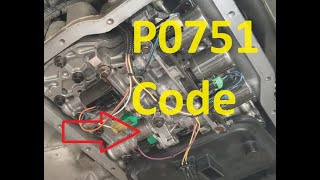
On a 2010-2014 GMC Savana, code P0751 almost always points to a sticking Shift Solenoid 'A' inside the 6L80 or 6L90 transmission, an issue acknowledged by GM in service bulletins. This solenoid is specifically named 'Clutch Select Solenoid Valve 2'. The fix involves replacing the solenoid inside the transmission pan, with shop costs typically ranging from $300 to $700. Due to the well-documented nature of this failure, it is the primary suspect over wiring or fluid issues.
- P0751 on a 2010-2014 Savana is very likely caused by a faulty Shift Solenoid 'A' (also called Clutch Select Solenoid Valve 2).
- Symptoms are serious and affect drivability, including poor acceleration and slipping, so the issue should be addressed promptly.
- Always check the transmission fluid level and condition first, as low or dirty DEXRON-VI fluid can cause similar issues.
- This repair involves working inside the transmission and is generally not recommended for a beginner DIYer.
- Referencing GM's TSBs (#PI1344B/C) can help a technician diagnose the problem quickly, potentially saving time and money by focusing on the known failure point.
What's Unique About the 2010-2014 Gmc SAVANA
For this generation of GMC Savana, which is often equipped with a 6L80 or 6L90 transmission, the P0751 code is a well-documented issue. General Motors released specific Technical Service Bulletins (TSBs) acknowledging that the Clutch Select Solenoid Valve 2 (Shift Solenoid 'A') is prone to sticking or getting scratched in its bore. This known issue makes the solenoid itself the primary suspect, more so than on other vehicles where wiring or fluid might be more common initial causes. Aftermarket companies like TransGo and Sonnax even produce specific valve and spring kits (e.g., Sonnax #104740-02K, Transgo #6L8-CS-TCC) to address this and other related valve body issues in the 6L-series transmissions.
Diagnostic Flowchart
Tap your situation to follow the diagnostic path that matches what you're seeing on this vehicle.
Symptoms You May Notice
- Reduced acceleration, especially from a stop.
- Transmission slipping when launching the vehicle.
- Harsh, abrupt, or delayed shifts between gears.
- Vehicle may get stuck in one gear (limp mode), often starting in 3rd or 4th gear.
- Illuminated Check Engine Light.
- Transmission may feel like it's in neutral when it should be in gear.
- A "clunk" noise when the gear finally engages.
- Decreased fuel economy due to inefficient gear selection.
- Replacing the entire transmission when only a single, inexpensive solenoid or a valve body kit is at fault.
- Replacing the TCM/TEHCM before thoroughly testing the solenoid and its wiring circuit.
- Attributing the fault to the solenoid when the actual cause is a worn check ball or a crack in the valve body separator plate.
Most Likely Causes
- Sticking Shift Solenoid 'A' (Clutch Select Solenoid Valve 2) 🔴 High Probability → Shop Transmission Valve Body GM issued TSBs #PI1344B and #PI1344C specifically for this issue on 2010-2015 models, identifying that this solenoid can stick or get scratched in its bore. 🎬 Watch: Expert breakdown of the P0751 code and TSB details. The aluminum valve body and valve design can lead to wear over time. For models from mid-2010 and earlier, the original clutch select valve springs had excessive force, which could inhibit valve movement and trigger P0751; aftermarket kits from Sonnax provide corrected lower-load springs.
How to confirm: A technician can use a bidirectional scan tool (like a Tech2 or GDS2) to command the solenoid on and off to check for a response. A physical inspection, as detailed in the TSB, involves removing the valve body to check for a stuck valve or scratches on the solenoid body. Resistance for the on/off shift solenoids should be between 20-40 ohms.
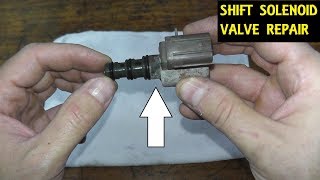
Typical fix: Replace the faulty shift solenoid. In some cases identified by the TSB, if the valve is stuck or scratched, the entire lower valve body may need to be replaced. Aftermarket kits from companies like Transgo (part #6L8-CS-TCC) and Sonnax (#104740-02K) are available to replace the failure-prone valves and springs.
Est. part cost: $40-$150 - Low or Dirty Transmission Fluid 🟡 Medium Probability → Shop Transmission Assembly Work vans like the Savana often experience heavy use, leading to faster fluid breakdown. Debris and sludge in the fluid can clog the fine passages and screens in the solenoid and valve body.
How to confirm: Check the transmission fluid level and condition. The fluid should be at the correct level, red in color, and not smell burnt. For 6L80/6L90 transmissions, the correct fluid is DEXRON-VI. Dark, dirty, or burnt-smelling fluid indicates a problem.
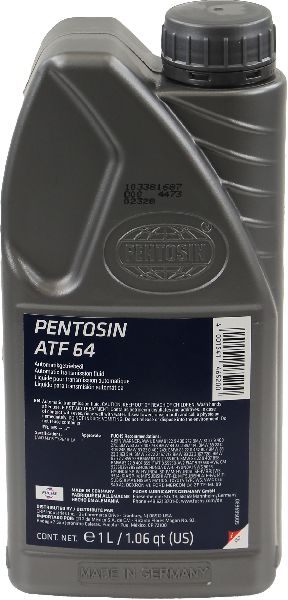
Typical fix: Perform a transmission fluid and filter change using DEXRON-VI fluid. If the fluid is very contaminated, a full flush may be recommended by a professional.
Est. part cost: $70-$180 - Damaged Wiring or Connectors ⚪ Low Probability On Savana vans, the transmission harness routes up over the intake manifold, creating a common chafe point where it can rub through and short wires, particularly the power feed for the TCM.
How to confirm: Visually inspect the transmission wiring harness for any signs of chafing, melting, or corrosion, especially where it routes over the intake manifold and near the exhaust or driveshaft. A multimeter can be used to check for continuity and proper voltage (approx. 12.6V) at the solenoid connector.
Typical fix: Repair or replace the damaged section of the wiring harness or the connector. Applying dielectric grease to connectors can prevent future corrosion.
Est. part cost: $20-$200
Rare But Worth Checking
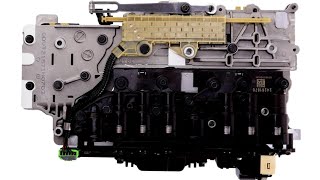
- Faulty Transmission Control Module (TCM): → Shop Transmission Assembly While rare, a failing TCM can stop sending the correct pulse-width-modulated (PWM) signal to the solenoid. This is usually diagnosed only after all other possibilities (solenoid, fluid, wiring) have been ruled out. The TCM is integrated with the valve body solenoids in these transmissions, often replaced as a single unit (TEHCM).
- Internal Hydraulic Blockage or Valve Body Wear: → Shop Transmission Valve Body Debris can clog the small passages within the transmission valve body, or check balls can wear and get stuck in the separator plate, preventing proper fluid flow even if the solenoid itself is functional. Significant wear in the aluminum valve body bores can also cause pressure loss, a condition that may require vacuum testing to diagnose. Ruptured or split pressure switch diaphragms inside the TEHCM are also a known failure point that can cause various shift codes.
Diagnosis Steps
- Check the transmission fluid level and condition. Ensure it is filled with DEXRON-VI fluid.
- Use an OBD-II scanner to confirm P0751 and check for any other related transmission codes.
- With a bidirectional scan tool, command Shift Solenoid 'A' (PC Solenoid 2) on and off to test its electronic response.
- Perform a thorough visual inspection of the external transmission wiring harness and connectors for any visible damage, paying close attention to the area over the intake manifold.
- If the previous steps don't identify the issue, drop the transmission pan to gain access to the valve body.
- Visually inspect the internal wiring and the solenoid itself.
- Test the solenoid's resistance with a multimeter to see if it's within the manufacturer's specifications (20-40 ohms for on/off shift solenoids).
- Following the guidance in TSB #PI1344C, remove and inspect the Clutch Select Solenoid Valve 2 for sticking or scoring. Even a small scratch can cause the issue.
- If the solenoid and wiring are good, inspect the valve body for debris, worn check balls, and cracks in the separator plate.
Parts You'll Likely Need
- Transmission Shift Solenoid 'A' (Clutch Select Solenoid Valve 2)
(OEM #Part of the TEHCM assembly, e.g., 24256523, but individual valves are available aftermarket.)— This is the most common failure part for code P0751 on this vehicle, as identified by GM's own service bulletins.
Trusted brands: ACDelco, Rostra, Transgo (valve repair kit 6L8-CS-TCC)
OEM price range: $60-$120
Aftermarket price range: $40-$80 - Transmission Fluid and Filter Kit (DEXRON-VI) — This is required when dropping the pan to replace the solenoid. Using fresh, correct-spec DEXRON-VI fluid is critical for transmission health.
Trusted brands: ACDelco
OEM price range: $80-$150
Aftermarket price range: $50-$100 - Valve Body Separator Plate Gasket — If the valve body is removed for inspection or solenoid replacement, this gasket should be replaced to prevent leaks. Some rebuilders recommend updating to a notched gasket to improve oil flow.
Trusted brands: ACDelco, Sonnax
OEM price range: $25-$50
Aftermarket price range: $15-$30
Technical Service Bulletins (TSBs) & Recalls
- PI1344C: Diagnostic tips for reduced acceleration at low speed and/or transmission slipping from a launch, DTC P0751 set. Supersedes PI1344B.
- PI1344B: Identifies the cause as Clutch Select Solenoid Valve 2 (359) sticking in the lower valve body.
Platform-Specific Known Issues
- GM Technical Service Bulletin #PI1344C directly addresses DTC P0751 on 2010-2015 GMC Savana models. The bulletins state that reduced acceleration and slipping from a stop can be caused by the 'Clutch Select Solenoid Valve 2' sticking in its bore, which may result in the transmission starting in 4th gear.
- The TSB recommends a specific inspection procedure: remove the valve and check for scratches, as loosening the valve body bolts may temporarily un-stick it, leading to a misdiagnosis.
- Some transmission specialists suggest that an updated valve body spacer plate gasket with a notch can be installed to provide a higher volume of oil to the problem solenoid (Clutch Pressure Control Solenoid 2), helping to prevent future operational delays that trigger the code.
Mechanic-Grade Diagnostic Values
- Shift Solenoid (On/Off type) resistance — expected: 20 - 40 Ohms. Failure: A reading outside this range indicates a failed solenoid coil.
- Pressure Control (PWM type) Solenoid resistance — expected: 3 - 8 Ohms. Failure: A reading outside this range indicates a failed solenoid coil. Note: Shift Solenoid 'A' (Clutch Select Valve 2) is an on/off type.
- Shift Solenoid (On/Off type) current draw — expected: 0.3 - 0.7 Amps at 12V. Failure: Incorrect amperage indicates a failed solenoid.
- Line Pressure at Idle (in gear) — expected: 45 - 80 PSI. Failure: Pressure outside this range can indicate pump, regulator, or fluid issues.
- Solenoid 'A' Voltage (Key On) — expected: Approx. 12V (On), 0V (Off). Failure: Erratic or absent voltage points to a wiring or TCM fault.
Scan Tool Commands That Help
- GDS2 / Tech2: Solenoid Valve State / Output Control — This bidirectional test allows a technician to manually command each shift solenoid on and off to audibly and electronically verify its function without removing the transmission pan. The absence of a click or change in state for Shift Solenoid 'A' points directly to a solenoid or circuit fault.
- GDS2 / Tech2: Transmission Fluid Pressure (TFP) Switch Data — To monitor the state of the five internal pressure switches. A switch that doesn't change state as expected when gears are commanded can indicate a hydraulic leak, a stuck valve, or a failed switch diaphragm, helping to differentiate a solenoid issue from a hydraulic one.
- GDS2 / Tech2: Solenoid Cleaning Process — If a solenoid performance DTC is present, this automated procedure cycles all solenoids to attempt to flush out debris that may be causing them to stick. It should be attempted before replacing the TEHCM.
Wiring & Ground Locations
- Transmission Harness Chafe Point — Where the main harness routes up and over the rear of the intake manifold.. On Savana vans, this is a very common point for the harness to rub through on the plastic intake, causing shorts or opens. A shorted power feed wire (often a red/white wire) to the TCM will cause a loss of communication and multiple transmission codes, including P0751.
- G103 — On the rear of the left-hand (driver's side) engine cylinder head.. This is a critical ground point for the engine and transmission control systems. A loose or corroded connection at G103 can cause erratic behavior and phantom codes from the TCM due to an unstable ground reference. GM issued a bulletin regarding erratic shifting caused by improper grounding.
- 16-Pin Main Transmission Connector — On the passenger's side of the transmission case, a large round connector with a lever lock.. This is the sole electrical interface to the internal TEHCM. Corrosion or bent pins in this connector can cause an open or short in the Shift Solenoid 'A' circuit, mimicking a failed solenoid. The connector sleeve seal can harden and crack over time, allowing moisture intrusion.
Real Owner Repair Stories
- YouTube video by 'GM 2010-2017 4.8L | No Communication TCM, FIXED!!' (2013 GMC Savana 4.8L) — Loss of communication with the Transmission Control Module (TCM).
✅ What actually fixed it The wiring harness had rubbed through on the back of the intake manifold. The specific wire that failed was the red and white power feed wire at pin four of the TCM connector. Repairing the broken wire restored communication and function.
OEM Part Supersession History
24252423, 24252429, 24253556, and others→24256523 (Gen 1 TEHCM)— Part consolidation and minor revisions.
Heads up: The TEHCM used in 6L-series transmissions has two generations. Gen 1 (black solenoids) and Gen 2 (gray/yellow solenoids) are not interchangeable. For 2010-2014 models, it is critical to verify if the vehicle uses a Gen 1 or Gen 2 TEHCM before ordering a replacement. The part number 24256523 is for a Gen 1 unit.
Model Year Variations Within This Range
- 2010 (mid-year and earlier): Vehicles produced in mid-2010 or earlier are more prone to P0751 due to high OE spring force on the clutch select valves. Later models received updated springs from the factory. For these earlier models, an aftermarket spring kit (Sonnax 104740-02K) is a targeted fix.
Helpful Videos


We Have This Part in Stock


The information in this article is provided for general reference and educational purposes only. Vehicle specifications, procedures, and part compatibility can vary by production date, trim level, and region. Always consult your vehicle's factory service manual and verify part numbers before purchasing or performing repairs. Safety-critical components such as airbags, seat belts, and braking systems should be installed by a qualified professional.
- Gmc SAVANA:
- 🧭 Diagnostic Flowchart
- 🎬 Helpful Videos
- 🛍️ Shop This Part
- What's Unique About the 2010-2014 Gmc SAVANA
- Symptoms You May Notice
- Most Likely Causes
- Rare But Worth Checking
- Diagnosis Steps
- Parts You'll Likely Need
- Technical Service Bulletins (TSBs) & Recalls
- Platform-Specific Known Issues
- Mechanic-Grade Diagnostic Values
- Scan Tool Commands That Help
- Wiring & Ground Locations
- Real Owner Repair Stories
- OEM Part Supersession History
- Model Year Variations Within This Range
- 🎟️ Get 5% Off