

P0751 on 2014-2019 GMC Sierra 1500: Shift Solenoid 'A' Causes and Fixes
P0751 on a 2014-2019 Sierra indicates a 'Shift Solenoid A Stuck Off' fault, usually in the 6L80 or 8L90 transmission. This often causes harsh shifting, slipping, or getting stuck in gear, sometimes starting in 4th gear from a stop. The most common fix is replacing the internal shift solenoid, but frequently the entire valve body/TEHCM assembly is replaced due to contamination from debris, often shed by a failing torque converter.
- P0751 on a 2014-2019 Sierra is a serious code indicating a transmission problem that should be addressed immediately to prevent further damage.
- The most common causes are a sticking/failed shift solenoid or low/dirty transmission fluid.
- A frequent underlying issue is debris from a failing torque converter contaminating the entire valve body, meaning a simple solenoid swap may not be a lasting fix.
- Diagnosis and repair are not beginner-friendly and should be handled by a professional service, as it involves accessing internal transmission components.
- The most reliable, though more expensive, repair is often replacing the entire TEHCM (valve body/solenoid/TCM assembly) and changing the fluid and filter.
What's Unique About the 2014-2019 Gmc SIERRA 1500
The 2014-2019 Sierra 1500 spans two generations and primarily uses the 6-speed (6L80) and 8-speed (8L90) automatic transmissions. For these models, P0751 is a well-documented issue. A common root cause is not just the solenoid failing on its own, but contamination from other components, like a failing torque converter, which sheds debris that clogs the solenoid and the entire valve body. GM has issued multiple service bulletins related to this, with TSB PI1344C specifically noting that the Clutch Select Solenoid Valve 2 can stick in its bore, causing a 4th gear start. Some transmission specialists have even developed fixes like a notched valve body spacer plate gasket to improve oil flow to this specific solenoid.
Diagnostic Flowchart
Tap your situation to follow the diagnostic path that matches what you're seeing on this vehicle.
Generation note: This range covers the third generation (K2XX platform, 2014-2018) and the start of the fourth generation (T1XX platform, 2019). The 2019 model year is a split, with both the new T1XX and the older K2XX (as the 'Limited' model) being sold. Both generations used 6L80 and 8L90 series transmissions, and the causes for P0751 are largely consistent across these platforms and their mates like the Silverado.
Symptoms You May Notice
- Check Engine Light is on
- Transmission slipping between gears
- Harsh, delayed, or failed shifts.
- Vehicle stuck in one gear (limp mode), often 3rd or 4th.
- Reduced acceleration, especially from a stop (may feel like it's starting in 4th gear).
- Delayed engagement or no engagement into Reverse.
- Transmission overheating.
- Replacing only the single shift solenoid when the entire valve body is contaminated with debris. The problem will likely return as another solenoid fails.
- Replacing the TEHCM/valve body when the root cause was a failing torque converter shedding metal. The new valve body will soon be damaged by the same debris, leading to a repeat failure.
Most Likely Causes
- Failed or Sticking Shift Solenoid 'A' (Clutch Select Solenoid Valve 2) 🔴 High Probability → Shop Transmission Valve Body Debris from normal wear or other failing components (like the torque converter) can contaminate the fluid and cause the solenoid valve to stick in its bore. TSB PI1344C specifically identifies this valve sticking, sometimes leaving visible scratch marks on the valve spool, as a cause for P0751.
How to confirm: Using a high-end scan tool, command the solenoid on and off to see if it responds. If it doesn't, drop the transmission pan and test the solenoid's resistance with a multimeter. For a 6L80, it should be 20-40 ohms; for an 8L90, 4.5-5.5 ohms. TSB PI1344C also recommends a valve body air test using 90-100 psi.
Typical fix: Replace the faulty shift solenoid. However, due to contamination issues, the more robust repair is often to replace the entire valve body assembly (TEHCM), which includes all solenoids. In cases described by TSB PI1344C, only the lower valve body may need replacement.
Est. part cost: $40-$90 for a single solenoid, $400-$900 for a complete TEHCM assembly (e.g., ACDelco P/N 24287422). - Low or Dirty Transmission Fluid 🟡 Medium Probability → Shop Transmission Assembly These transmissions can run hot, which accelerates fluid breakdown. Degraded fluid loses its hydraulic properties and can't properly actuate components, while low fluid levels can cause pressure drops. Contaminated fluid is a primary cause of solenoid sticking.
How to confirm: These trucks lack a traditional dipstick. The fluid level must be checked via a fill plug on the side of the transmission 🎬 Watch: How to check and fill fluid on these trucks. while the vehicle is level and at a specific temperature (usually 86°F to 122°F). The fluid should be red and clear (DEXRON-VI), not brown, black, or burnt-smelling.
Typical fix: Perform a transmission fluid and filter change using DEXRON-VI fluid. If the level was low, the source of the leak must be found and repaired.
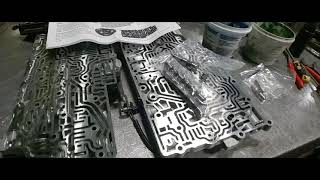
Est. part cost: $70-$150 for a fluid and filter kit. - Internal Transmission Debris / Torque Converter Failure 🟡 Medium Probability → Shop Automatic Transmission Torque Converter A widely documented issue with the 6L80/8L90 transmissions is the torque converter clutch failing, causing a shudder 🎬 See a breakdown of the real causes of 6L80 failure. and shedding metallic debris. This debris travels through the fluid and clogs the small passages in the valve body and the screens on the solenoids, causing them to stick and trigger P0751.
How to confirm: When the transmission pan is removed, inspect the pan magnet for excessive metallic shavings or clutch material. This indicates a more serious internal failure upstream of the valve body. The presence of code P0741 is a strong indicator of this issue.
Typical fix: If significant debris is found, the transmission will likely need to be removed and rebuilt or replaced, along with flushing the cooler lines and replacing the torque converter. A real-world owner repair for this cost approximately $2,800.
Est. part cost: $1500-$5000+ - Wiring or Connector Issue ⚪ Low Probability The wiring harness inside the transmission is submerged in hot fluid, which can make wires and connectors brittle over time. The external connector can also be damaged by road debris or corrosion.
How to confirm: Inspect the main transmission harness connector for damage or corrosion. If the pan is off, check the internal harness for broken wires or loose pins at the solenoid connector. A multimeter can be used to check for voltage and ground at the solenoid connector.
Typical fix: Repair the damaged wiring or replace the internal/external harness.
Est. part cost: $50-$250
Rare But Worth Checking
- Faulty Transmission Control Module (TCM): → Shop Transmission Assembly In 6L80/8L90 transmissions, the TCM is integrated into the valve body assembly (called a TEHCM). It's rare for the computer to fail on its own without a mechanical or solenoid fault, but it is possible. Replacement requires programming to the vehicle's VIN.
- Cracked 1-2-3-4 Clutch Wave Plate: In some cases, a more severe internal mechanical failure can trigger this code. A forum user with a 2015 Silverado and code P0751 reported that the root cause was a cracked 1-2-3-4 clutch wave plate inside the clutch drum, which prevented hydraulic pressure from being applied correctly.
Diagnosis Steps
- Check the transmission fluid level and condition. This is a critical first step, though it requires a specific procedure on these trucks.
- Scan for all diagnostic trouble codes. Note any other transmission codes, as they provide crucial context (e.g., P0741 pointing to the torque converter).
- Using a professional scan tool, observe live data and command Shift Solenoid 'A' (PC Solenoid 2) on and off to check for a response.
- Inspect the external transmission wiring harness and connector for any visible damage, corrosion, or loose connections.
- If the solenoid appears unresponsive via the scan tool, drop the transmission oil pan.
- Inspect the fluid in the pan and the pan magnet for excessive metal debris. A small amount of fine gray material is normal, but large flakes, chunks, or excessive clutch material indicate a serious mechanical failure.
- Visually inspect the internal wiring harness for damage.
- Test the resistance of Shift Solenoid 'A' with a multimeter. Compare the reading to the manufacturer's specification (e.g., 20-40 ohms for 6L80, 4.5-5.5 ohms for 8L90).
- Per TSB PI1344C, if the valve body is removed, inspect the 'Clutch Select Solenoid Valve 2' and its bore for sticking or scratch marks. An air test with 90-100 psi can also be performed.
- If the solenoid tests bad or the valve is sticking, replace the appropriate component (solenoid, lower valve body, or full TEHCM assembly). If significant debris is found, the torque converter and transmission cooler must also be addressed.
Parts You'll Likely Need
- Transmission Electro-Hydraulic Control Module (TEHCM)
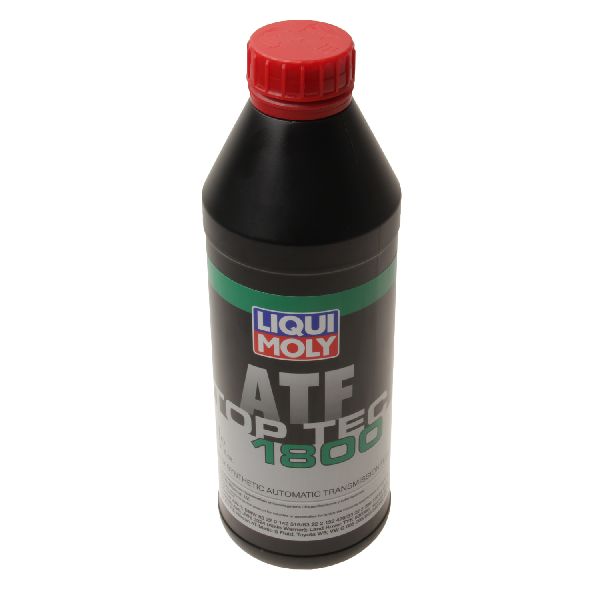
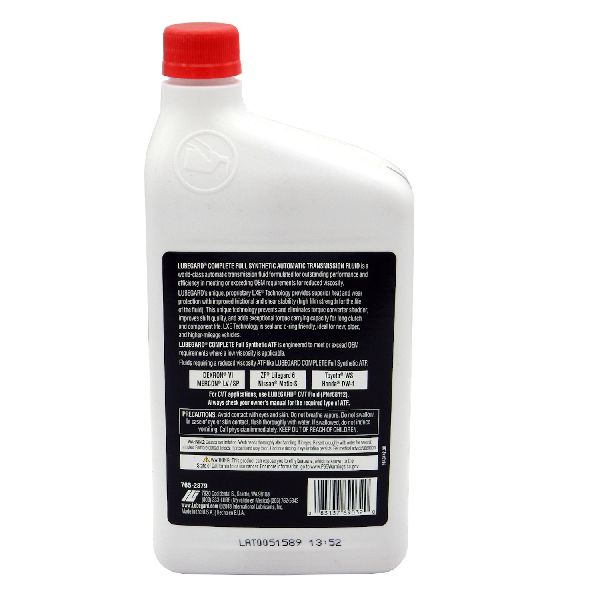
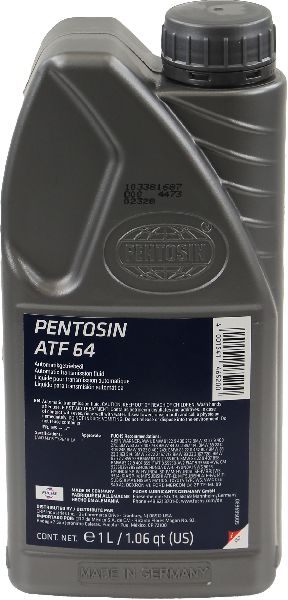
- Transmission Fluid (DEXRON-VI)
- Transmission Filter and Pan Gasket
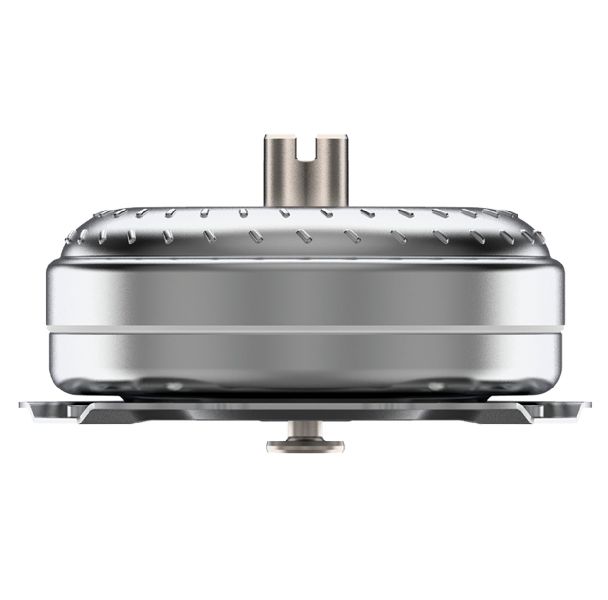
- Torque Converter
- Notched Valve Body Spacer Plate Gasket
Related Codes That Often Appear With This One
- P0700 — This is a general transmission fault code. It's an informational code that means the TCM has stored a specific fault, like P0751, and has requested the Check Engine Light to be turned on.
- P0756 — This code is for 'Shift Solenoid 'B' Performance'. It's common for multiple solenoid codes to appear together, as they are subjected to the same fluid and conditions. This is mentioned in TSB #PIE0371B.
- P0741 — This code indicates 'Torque Converter Clutch Circuit Performance or Stuck Off'. It often appears with P0751 and is a strong clue that the torque converter is failing and creating the debris that is causing the solenoid to stick.
- P0894 — This code means 'Transmission Component Slipping'. It can be triggered by a stuck solenoid that prevents proper gear engagement, leading to clutch slippage.
Technical Service Bulletins (TSBs) & Recalls
- TSB PI1344C: Addresses reduced acceleration and slipping from a launch with DTC P0751. Identifies the cause as a sticking 'Clutch Select Solenoid Valve 2' in the lower valve body, resulting in a 4th gear start. Recommends inspecting the valve for scratches and replacing the lower valve body if damaged.
- TSB PIP4379N: A broad preliminary bulletin covering numerous codes, including P0751, for conditions like delayed or no engagement into Drive or Reverse, especially during cold starts.
- TSB PIE0371B: A request for information from the field on vehicles with a Check Engine Light and being stuck in gear with codes P0751, P0756, and others, indicating a pattern of solenoid performance issues.
- Jasper Engines Tech Update: Not an OEM TSB, but a rebuilder bulletin suggesting that a cause for P0751 is a delay in Clutch Pressure Control Solenoid 2 operation due to lack of oil. Their solution is to install an updated, notched valve body spacer plate gasket to improve oil volume to the solenoid.
Platform-Specific Known Issues
- TSB PI1344C specifically notes that a sticking Clutch Select Solenoid Valve 2 (which functions as Solenoid 'A') can cause reduced acceleration and slipping from a launch. [PI1344C, 4]
- TSB PIE0371B was issued by GM to gather information from the field on vehicles stuck in gear with DTC P0751, indicating it was a recognized issue. [PIE0371B]
- A failing torque converter is a widely known issue on the 6L80 transmission that causes P0751 by shedding debris that contaminates the TEHCM.
- Early 6L80/90E transmissions could trigger a P0751 due to a lack of oil at the Clutch Pressure Control Solenoid 2. An updated valve body spacer plate gasket is the fix.
Mechanic-Grade Diagnostic Values
- Shift Solenoid 'A' (On/Off Type) Coil Resistance (6L80) — expected: 20 - 40 Ohms. Failure: A reading of infinity (open circuit) or near zero (short circuit) indicates a failed solenoid coil.
- Shift Solenoid Coil Resistance (8L90) — expected: 4.5 - 5.5 Ohms. Failure: A reading outside this narrow range indicates a failed solenoid coil.
- PWM Solenoid Coil Resistance (6L80) — expected: 3 - 8 Ohms. Failure: A reading outside this range indicates a failed solenoid coil.
- Transmission Fluid Pressure Rise (Scan Tool Data) — expected: 40 - 60 psi increase when Solenoid 'A' is commanded ON. Failure: No significant pressure change indicates a stuck valve or hydraulic blockage.
- Transmission Fluid Temperature for 'Service Fast Learn' — expected: 160°F - 200°F (71°C - 93°C). Failure: Performing the learn procedure outside this temperature range may result in poor shift quality.
Scan Tool Commands That Help
- GDS2 / Tech2 (or equivalent professional scanner): Solenoid Control / Active Test — This bidirectional command allows a technician to manually command Shift Solenoid 'A' on and off to verify its mechanical and electrical operation. A functional solenoid will produce an audible 'click' and a corresponding pressure change on the live data stream, confirming the circuit and solenoid are capable of functioning.
- GDS2 / Tech2 (or equivalent professional scanner): Transmission Service Fast Learn Adapts — This procedure is mandatory after replacing the TEHCM, valve body, solenoids, or the entire transmission. It performs a series of automated tests to allow the TCM to learn the individual clutch apply pressures and volumes, ensuring smooth shifts and preventing damage.
- GDS2 / Tech2 (or equivalent professional scanner): Solenoid Cleaning Procedure — If debris is suspected, this function can be used before disassembly. It rapidly cycles all solenoids to dislodge and flush minor contaminants from the valves. If DTCs return after cleaning, replacement is necessary.
Wiring & Ground Locations
- Transmission Main Connector (16-pin) — On the passenger side of the transmission case.. This is the primary electrical interface for the entire transmission. Pins 10 & 11 (CAN Hi/Low) are critical for communication between the TCM and the rest of the vehicle. A poor connection here can cause numerous codes, including P0751.
- Chassis and Battery Grounds — Various points on the frame, engine block, and firewall.. The TEHCM relies on solid ground connections to function correctly. High resistance or a loose ground can cause intermittent voltage drops and erratic solenoid behavior, potentially triggering performance codes like P0751.
Real Owner Repair Stories
- Transmission repair forum discussion, cited by Go-Parts (2015 Chevrolet Silverado w/ 6L80 transmission) — P0751 code, no 1st gear.
❌ Tried (didn't work) Fluid and filter change., Replacement of the entire TEHCM/valve body assembly.
✅ What actually fixed it A complete transmission teardown revealed a cracked 1-2-3-4 clutch wave plate inside the clutch drum. The code was triggered because the hydraulic pressure commanded by the solenoid couldn't be applied correctly due to the internal mechanical failure, not an electrical or solenoid fault.
When the Usual Fixes Don't Work
- While P0751 most commonly points to a fault within the TEHCM (solenoid, valve body, or TCM), it can also be a symptom of a severe mechanical failure elsewhere in the transmission. In one documented case for a 2015 Silverado, replacing the entire TEHCM assembly did not resolve the code. The actual cause was a cracked 1-2-3-4 clutch wave plate, which prevented hydraulic pressure from building correctly. This highlights the importance of a thorough diagnosis; if a new TEHCM doesn't fix the issue, the problem is likely a major internal mechanical failure requiring a full teardown.
OEM Part Supersession History
24256523→24275873, 24287419— Internal revisions and improvements to the TEHCM (integrated TCM and valve body assembly) to address reliability issues.
Heads up: Always use the latest part number available for the specific vehicle VIN. Programming is required for all replacements.
Model Year Variations Within This Range
- 2014-2019 (Primarily 6L80 equipped): These models use a mix of on/off solenoids (20-40 ohms) and PWM solenoids (3-8 ohms). The TEHCM is replaced as a complete unit, and a 'Service Fast Learn' is required.
- 2015-2019 (Primarily 8L90 equipped): The 8L90 transmission, introduced in 2015 with the 6.2L V8, uses nine solenoids that all have a consistent resistance of 4.5-5.5 ohms. Crucially, seven of these are individually characterized with a unique performance number (PUN) on the solenoid itself. If an individual solenoid is replaced, the TCM must be reprogrammed with the new PUN using the TIS2Web service. This transmission is also known for a torque converter shudder issue that requires a specific fluid (Mobil 1 Synthetic LV ATF HP), not standard DEXRON-VI.
Helpful Videos
We Have This Part in Stock

The information in this article is provided for general reference and educational purposes only. Vehicle specifications, procedures, and part compatibility can vary by production date, trim level, and region. Always consult your vehicle's factory service manual and verify part numbers before purchasing or performing repairs. Safety-critical components such as airbags, seat belts, and braking systems should be installed by a qualified professional.
- Gmc SIERRA 1500:
- 🧭 Diagnostic Flowchart
- 🎬 Helpful Videos
- 🛍️ Shop This Part
- What's Unique About the 2014-2019 Gmc SIERRA 1500
- Symptoms You May Notice
- Most Likely Causes
- Rare But Worth Checking
- Diagnosis Steps
- Parts You'll Likely Need
- Related Codes That Often Appear With This One
- Technical Service Bulletins (TSBs) & Recalls
- Platform-Specific Known Issues
- Mechanic-Grade Diagnostic Values
- Scan Tool Commands That Help
- Wiring & Ground Locations
- Real Owner Repair Stories
- When the Usual Fixes Don't Work
- OEM Part Supersession History
- Model Year Variations Within This Range
- 🎟️ Get 5% Off