

P0751 on 2011-2015 GMC Sierra: Shift Solenoid 'A' Causes and Fixes
P0751 on a 2011-2015 GMC Sierra most often indicates a faulty Shift Solenoid 'A' (also called 1-2-3-4 Clutch Solenoid or CPC Solenoid 2) inside the 6L80 transmission. The solenoid valve physically sticks or fails electronically. The most common and durable fix is to replace the entire Transmission Electro-Hydraulic Control Module (TEHCM), which includes all solenoids, the valve body, and the TCM, as debris from one failing component often contaminates the whole unit. Expect to pay $500-$1400 for
- P0751 on your Sierra points to a problem with Shift Solenoid 'A', which is inside the transmission.
- The most common causes are a physically sticking solenoid valve or debris in the valve body, both of which are documented by GM in TSBs.
- Driving with this code is not recommended as it can cause further, more expensive damage to the transmission.
- The most reliable fix is often to replace the entire valve body/solenoid pack assembly, along with a new filter and fresh DEXRON-VI fluid.
- This is not a DIY-friendly repair; professional service is strongly recommended.
What's Unique About the 2011-2015 Gmc SIERRA
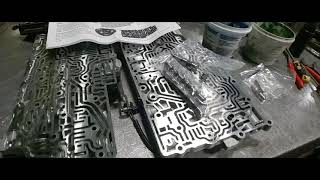
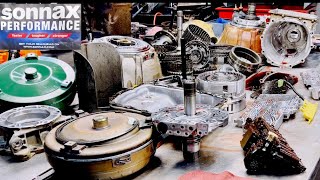
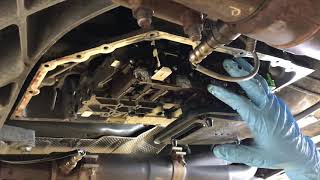
The 2011-2015 GMC Sierra, equipped with the 6L80 6-speed automatic transmission, is known for this issue. The root cause is often not just the solenoid itself, but a systemic problem within the 6L80. A failing torque converter is a primary culprit, shedding metallic debris that contaminates the entire valve body, clogging solenoid screens and scoring valve bores. This debris is the number one cause of catastrophic 6L80 failure. 🎬 Watch: Common 6L80 problems that lead to transmission destruction. GM has released multiple Technical Service Bulletins (TSBs) that point to specific internal failures, including sticking solenoid valves (PI1344B) and debris from aftermarket filters clogging passages (PIP5100A). Because the solenoids, valve body, and TCM are integrated into a single unit (the TEHCM), replacement as a complete assembly is the most common and recommended repair.
Diagnostic Flowchart
Tap your situation to follow the diagnostic path that matches what you're seeing on this vehicle.
Generation note: This range covers the end of the second generation (GMT900, 2011-2013) and the start of the third generation (K2XX, 2014-2015). Both generations commonly used the 6L80 automatic transmission, and the causes and fixes for P0751 are largely the same across these years and also apply to their Chevrolet Silverado 1500 counterparts. The RPO code for the 6L80 is MYC. A key difference is that the 2014+ models operate at a higher transmission fluid temperature (around 196°F+), which can accelerate fluid breakdown and contribute to component failure.
Symptoms You May Notice
- Check Engine Light is on
- Transmission stuck in one gear (limp mode).
- Harsh, abrupt, or clunking shifts.
- Delayed or failed shifts, especially the 1-2 shift.
- Vehicle has reduced acceleration from a stop. [PI1344B]
- Transmission feels like it's slipping when launching. [PI1344B, 16]
- Delayed or no engagement into reverse. [PIP4379K]
- Vehicle will not move in forward or reverse. [PIP5100]
- Reduced fuel economy.
- Transmission overheating.
- Replacing the entire transmission when only a TEHCM and/or torque converter was needed.
- Replacing a single solenoid when debris in the valve body is the root cause, leading to a repeat failure.
- Replacing the TEHCM without addressing a failing torque converter that is shedding metal, which will destroy the new TEHCM.
Most Likely Causes
- Failed Shift Solenoid 'A' (Sticking or Electrical Failure) 🔴 High Probability → Shop Transmission Valve Body TSB #PI1344B specifically calls out the 'Clutch Select Solenoid Valve 2' (which corresponds to Shift Solenoid 'A') as a common cause for sticking. The internal valves can get clogged with debris or the solenoid coil can fail electrically.
How to confirm: A technician can command the solenoid on and off with a bi-directional scan tool to check its response. Resistance can also be checked with a multimeter and should be between 20-40 ohms for an on/off shift solenoid in the 6L80 TEHCM. However, a mechanical sticking issue may not show up as an electrical fault.
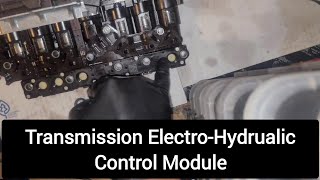
Typical fix: Replace the entire Transmission Electro-Hydraulic Control Module (TEHCM) assembly, which includes all solenoids, the valve body, and the control module. This is the most robust repair as debris often compromises the entire unit.
Est. part cost: $50-$150 for a single solenoid, $300-$600 for a complete valve body assembly. - Contaminated Fluid / Debris from Torque Converter 🔴 High Probability → Shop Automatic Transmission Torque Converter The 6L80 torque converter lock-up clutch is a known weak point that wears and sheds metallic debris into the fluid. This debris travels through the transmission, clogs the small orifices and screens in the TEHCM, and causes solenoids to stick. TSB #PIP5100A also notes debris from failed aftermarket filters can cause this.
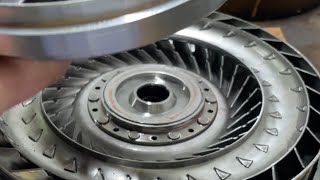
How to confirm: Inspect the transmission fluid for a dark, burnt smell. When the pan is dropped, inspect the magnet for excessive metallic 'fuzz' or 'paste'. Finding significant clutch material or metal shavings points to a failing torque converter or other internal damage requiring more than just a TEHCM replacement. 🎬 See a detailed explanation of common torque converter issues.
Typical fix: If debris is significant, the torque converter must be replaced and the transmission and cooler lines must be thoroughly flushed before installing a new TEHCM. Failure to do so will cause the new TEHCM to fail quickly. If debris is minimal, a TEHCM replacement with a fluid and filter change may suffice.
Est. part cost: $75-$150 for a fluid and filter kit. $300-$800 for a new or remanufactured torque converter. - Low Transmission Fluid Level 🟡 Medium Probability → Shop Transmission Assembly Low fluid causes a drop in hydraulic pressure, preventing solenoids from operating correctly and leading to overheating. This is a common cause for many transmission codes, not just on this platform.
How to confirm: Check the transmission fluid level according to the manufacturer's procedure. These trucks do not have a traditional dipstick and require checking via a fill plug on a level surface with the transmission at a specific temperature (typically 86°F to 122°F).
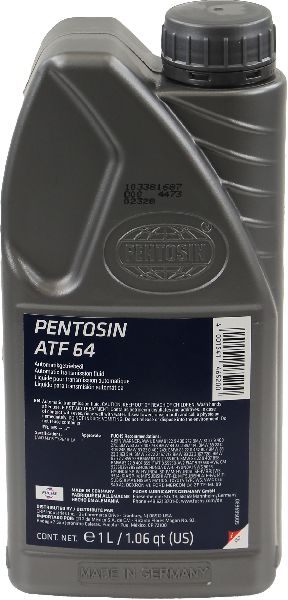
Typical fix: Top off the fluid to the correct level with DEXRON-VI fluid and inspect for leaks that caused the low level.
Est. part cost: $20-$40 for a quart or two of DEXRON-VI fluid.
Rare But Worth Checking
- Wiring or Connector Issue: The internal transmission wiring harness, which is part of the TEHCM assembly, can become brittle or damaged. External wiring to the main transmission connector can also be a cause, though less common. A poor connection can mimic a failed solenoid.
- Faulty Transmission Control Module (TCM): → Shop Transmission Assembly The TCM is integrated into the TEHCM on the 6L80 transmission. While a dedicated electronic failure of the TCM portion is less common than a mechanical solenoid or valve body issue, it does happen. This is typically resolved by replacing the entire TEHCM assembly.
Diagnosis Steps
- Check and verify the transmission fluid level and condition. A burnt smell or metallic sheen is a bad sign.
- Scan the TCM for P0751 and any other related codes, such as P0700 or P0741.
- Using a professional scan tool, monitor live data for Shift Solenoid 'A' command vs. actual status while driving.
- Command the solenoid on and off with the scan tool while the engine is off to listen for an audible click from the transmission pan.
- If the solenoid appears unresponsive, drain the fluid and drop the transmission pan.
- Visually inspect the fluid, pan magnet, and valve body for excessive metal shavings or debris. A paste-like sludge on the magnet indicates torque converter clutch failure.
- Test the resistance of Shift Solenoid 'A' with a multimeter. The reading should be between 20 and 40 Ohms for an on/off type solenoid.
- If significant debris is found, the torque converter is suspect and the transmission cooler lines must be flushed or replaced.
- If the solenoid tests bad or the valve body is contaminated, replace the entire TEHCM assembly and program the new unit to the vehicle's VIN.
Parts You'll Likely Need
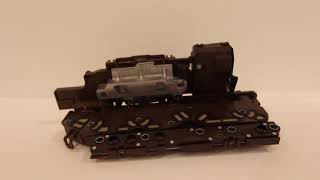
- Transmission Solenoid Valve Body and Control Module Assembly (TEHCM)
(OEM #24256523)— This is the most effective and durable repair. It replaces all solenoids, the valve body, and the TCM in one pre-assembled and tested unit, addressing the most common failure points (sticking valves, debris, bad solenoids, faulty TCM) at once. This part often requires VIN programming.
Trusted brands: ACDelco (OEM), Street Smart Transmission (Remanufactured), TRANSPEED (Refurbished)
OEM price range: $400-$600
Aftermarket price range: $280-$520 - Transmission Fluid and Filter Kit — This is required for any repair that involves dropping the transmission pan. Clean DEXRON-VI fluid and a new filter are critical for transmission health.
Trusted brands: ACDelco
OEM price range: $75-$150
Related Codes That Often Appear With This One
- P0700 — This is a generic code indicating the TCM has requested the Check Engine Light to be turned on. It almost always accompanies a specific transmission code like P0751.
- P0756, P0761, P0776 — These are codes for other shift solenoids ('B', 'C', 'D'). TSB #PIP4379K lists them together, suggesting a common underlying cause like fluid contamination, a failing TEHCM, or an electrical issue affecting the entire valve body.
- P0741 — This code for 'Torque Converter Clutch Circuit Performance or Stuck Off' often appears alongside P0751. It is a strong indicator that the torque converter is failing and shedding debris, which is the root cause of the solenoid issue.
Technical Service Bulletins (TSBs) & Recalls
- PI1344B: Reduced acceleration at low speed, slipping from launch, P0751 caused by sticking Clutch Select Solenoid Valve 2.
- PIP4379K: Lists P0751 with other codes related to delayed engagement or no reverse.
- PIP5100 / PIP5100A: Connects P0751 to a 'no move' condition caused by debris blocking valve body orifices, sometimes from aftermarket filters.
Platform-Specific Known Issues
- TSB #PI1344B: Notes that on some 2015 models, customers may experience reduced acceleration or slipping from a launch, caused by the Clutch Select Solenoid Valve 2 (Shift Solenoid 'A') sticking.
- TSB #PIP5100A: Warns that a 'no move' condition can be caused by debris from an aftermarket spin-on filter clogging the valve body separator plate, triggering P0751 among other codes.
- Torque Converter Failure: A widely documented issue on the 6L80 is the failure of the torque converter clutch, which sheds debris that clogs the TEHCM, causing codes like P0751 and P0741. This is considered the primary cause of most 6L80 failures.
Mechanic-Grade Diagnostic Values
- Shift Solenoid (On/Off type) Resistance — expected: 20-40 ohms. Failure: A reading outside this range indicates a failed solenoid coil.
- Pressure Control & TCC Solenoid (PWM type) Resistance — expected: 3-8 ohms (or 5-6 ohms per another source). Failure: A reading outside this range indicates a failed solenoid coil.
- Shift Solenoid (On/Off type) Current Draw — expected: 0.3 - 0.7 amps at 12 volts. Failure: Incorrect amperage indicates a failed solenoid.
- Pressure Switch Diaphragm Test — expected: Meter reads close to OL (open line) with no pressure, and ~10 ohms when pressure is applied with a pencil eraser.. Failure: An incorrect or nonexistent reading indicates a faulty pressure switch within the TEHCM.
Scan Tool Commands That Help
- GDS2 / Tech2: Solenoid Valve State Control / Output Control — This bidirectional command allows a technician to manually command a specific solenoid ON and OFF to verify its mechanical (audible click) and electrical operation without a test drive.
- GDS2 / Tech2: Service Fast Learn Adapts — This procedure is mandatory after replacing the TEHCM or valve body. It allows the TCM to learn the hydraulic characteristics and clutch volumes of the new components to ensure smooth shifting. The transmission fluid must be between 158°F and 239°F to initiate the process.
Wiring & Ground Locations
- G218 — On 2014+ (K2XX) models, located under the driver's side dash, behind the kick panel and insulation foam.. A poor ground at this location is a known cause of various electrical issues and phantom codes on K2XX trucks. An unstable ground can affect the TCM's operation and its ability to accurately control and monitor the solenoids.
- Main Negative Battery Ground Cable — Connects the negative battery terminal to the engine block and the frame.. Corrosion or failure of this primary ground cable (Part #84634113 for some 2015 models) can cause widespread electrical problems, including erratic transmission behavior and false diagnostic codes due to unstable voltage supplied to the control modules.
- Transmission Main Connector (23-way) — The main external electrical connector on the transmission case.. This is the primary interface between the vehicle's main wiring harness and the internal TEHCM. Corrosion or pushed-out pins in this connector can interrupt the command signal to Shift Solenoid 'A', mimicking an internal failure.
Real Owner Repair Stories
- silveradosierra.com forum user (2011 GMC Sierra 1500 5.3L) — P0751 code, transmission stuck in what felt like 3rd gear (limp mode), hard shifting.
❌ Tried (didn't work) The user did not report trying other fixes first.
✅ What actually fixed it The user took the truck to a transmission shop. The diagnosis was a failed torque converter that sent debris through the transmission. The final repair was replacing the torque converter, replacing the TEHCM (valve body), and flushing the system. The total cost was approximately $2,800.
OEM Part Supersession History
24256523 (mentioned in Pass 2)→Multiple numbers including 24256861, 24256863, 24274046, 24285393, among others, depending on the specific year and calibration.— Updates to improve solenoid performance, pressure switch durability, and address internal circuit failures.
Heads up: TEHCMs are not backward or forward compatible. The unit must be correct for the vehicle's specific year and VIN. Installing the wrong TEHCM will result in immediate limp mode and no-start conditions. Programming to the vehicle's VIN is always required.
Model Year Variations Within This Range
- 2011-2013 (GMT900): These models use an earlier generation of the TEHCM (e.g., part numbers like 24256861/24256863). They also typically run at a lower transmission fluid temperature (around 150-160°F), which may lead to longer fluid life compared to later models.
- 2014-2015 (K2XX): These models use a different TEHCM with integrated calibration changes (e.g., part numbers 24274046/24285393) that are not interchangeable with earlier years. GM programmed these trucks to run a much higher transmission fluid temperature (196°F+) to improve fuel economy, which can accelerate fluid degradation and stress on internal components, potentially contributing to failures.
Helpful Videos
We Have This Part in Stock

The information in this article is provided for general reference and educational purposes only. Vehicle specifications, procedures, and part compatibility can vary by production date, trim level, and region. Always consult your vehicle's factory service manual and verify part numbers before purchasing or performing repairs. Safety-critical components such as airbags, seat belts, and braking systems should be installed by a qualified professional.
- Gmc SIERRA:
- 🧭 Diagnostic Flowchart
- 🎬 Helpful Videos
- 🛍️ Shop This Part
- What's Unique About the 2011-2015 Gmc SIERRA
- Symptoms You May Notice
- Most Likely Causes
- Rare But Worth Checking
- Diagnosis Steps
- Parts You'll Likely Need
- Related Codes That Often Appear With This One
- Technical Service Bulletins (TSBs) & Recalls
- Platform-Specific Known Issues
- Mechanic-Grade Diagnostic Values
- Scan Tool Commands That Help
- Wiring & Ground Locations
- Real Owner Repair Stories
- OEM Part Supersession History
- Model Year Variations Within This Range
- 🎟️ Get 5% Off