

P0751 on 2010-2017 GMC Yukon: Shift Solenoid 'A' Performance and Fixes
On a 2010-2017 GMC Yukon, code P0751 almost always points to a sticking Shift Solenoid 'A' (also called Clutch Select Solenoid Valve 2) inside the transmission's valve body. This can cause the vehicle to feel like it's starting in 4th gear. The fix involves dropping the transmission pan and replacing the faulty solenoid or, more commonly, the entire lower valve body as recommended by GM. The solenoid part itself costs around $40-$80.
- P0751 on a 2010-2017 Yukon specifically points to a performance issue with Shift Solenoid 'A', which GM calls Clutch Select Solenoid Valve 2.
- The most probable cause is the solenoid itself sticking, a known issue confirmed by GM service bulletins.
- Symptoms are serious and include poor acceleration from a stop and harsh shifting, which can be a safety concern.
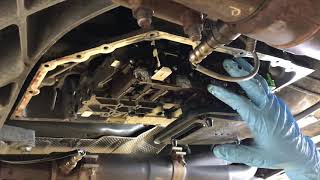
- The fix involves dropping the transmission pan to access and replace the solenoid. While the part is inexpensive, the labor is involved, making professional service highly recommended.
- Always check the transmission fluid level and condition first, as low or dirty fluid can cause a variety of shifting problems.
What's Unique About the 2010-2017 Gmc YUKON
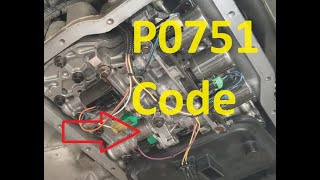
The GMC Yukon, particularly models equipped with the 6L80 6-speed automatic transmission, has a well-documented history with this specific code. General Motors has issued multiple Technical Service Bulletins (TSBs), most notably PI1344C, acknowledging 🎬 Watch: Expert breakdown of the P0751 code and TSB details. that the Clutch Select Solenoid Valve 2 can stick in its bore, leading directly to P0751 and a 4th gear start condition. This isn't just a generic fluid or wiring issue; it's a known mechanical/hydraulic problem with a specific component within the valve body, making diagnosis more direct than on other vehicles.
Diagnostic Flowchart
Tap your situation to follow the diagnostic path that matches what you're seeing on this vehicle.
Generation note: This range covers the end of the third generation (2010-2014) and the beginning of the fourth generation (2015-2017). Both generations primarily used the 6-speed (6L80) automatic transmission, for which this P0751 issue is widely documented in TSBs that span these model years. Some later models (2015+) introduced an 8-speed (8L90) transmission which has its own set of known issues, but P0751 is most commonly associated with the 6-speed in this vehicle range. There are minor internal differences in the 6L80 valve body between these generations; for instance, the separator plate in 2015 and newer models has 8 check balls, whereas 2014 and older models use 7.
Symptoms You May Notice
- Reduced acceleration, especially from a complete stop (feels like starting in a high gear). [PI1344C]
- Transmission slipping when launching from a stop. [PI1344B]
- Harsh or 'clunking' shifts between gears.
- Transmission may get stuck in one gear (often a higher gear, like 4th, resulting in poor acceleration).
- Check Engine Light is illuminated.
- Vehicle feels like it's in neutral when trying to accelerate from a stop, then suddenly engages.
- Replacing the entire transmission when only a single, inexpensive solenoid has failed or the valve body needs service.
- Replacing the TEHCM/TCM before thoroughly testing the specific solenoid, its wiring, and inspecting the valve body bores for wear.
- Performing a fluid flush that temporarily clears the issue, only for it to return because the underlying mechanical sticking problem was not addressed.
Most Likely Causes
- Sticking Shift Solenoid 'A' (Clutch Select Solenoid Valve 2) 🔴 High Probability → Shop Transmission Valve Body As documented in GM Technical Service Bulletin PI1344C, this specific solenoid valve is known to stick in its bore within the lower valve body, sometimes due to physical scratches on the valve itself.
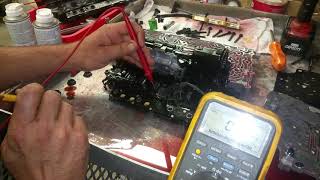
How to confirm: A technician can use a bi-directional scan tool to command the solenoid (PC Solenoid 2) on and off while monitoring transmission data. Physical inspection after removing the valve body may show scoring or sticking. The solenoid's resistance can be tested with a multimeter; a healthy on/off shift solenoid should read between 20-40 ohms.
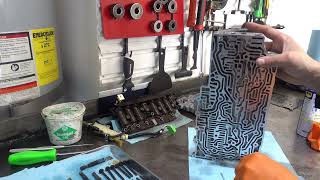
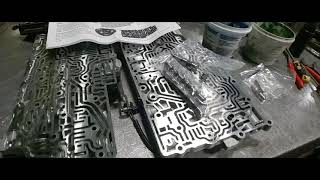
Typical fix: Replace the faulty solenoid. However, GM's TSB recommends replacing the entire lower valve body if the valve is found to be scratched or stuck in its bore. Aftermarket kits (e.g., Sonnax Zip Kit) are also available to repair worn valve bores.
Est. part cost: $40-$80 for a single ACDelco solenoid. - Low or Dirty Transmission Fluid 🟡 Medium Probability → Shop Transmission Assembly Over time, fluid degrades and becomes contaminated with clutch material and debris, which can clog the fine passages in the solenoids and valve body, causing them to stick.
How to confirm: Check the transmission fluid level and condition via the check plug (these models do not have a dipstick). The fluid level check must be done at a specific operating temperature. Fluid should be red (DEXRON-VI) and not smell burnt.
Typical fix: Perform a transmission fluid and filter change. This is often the first and most cost-effective step, though it may only be a temporary fix if the solenoid is already damaged.
Est. part cost: $75-$150 for fluid and a filter kit. - Cracked or Clogged Transmission Filter ⚪ Low Probability → Shop Transmission Assembly
How to confirm: The filter is inspected when the transmission pan is removed. A crack in the filter neck or a dislodged seal can cause a loss of fluid pressure, mimicking solenoid issues.
Typical fix: Replace the transmission filter and pan gasket.
Est. part cost: $30-$60 - Internal Wiring Harness or Connector Fault ⚪ Low Probability → Shop Transmission Wiring Harness The internal harness is submerged in hot transmission fluid, which can make wires brittle or damage connectors over time.
How to confirm: After dropping the pan, visually inspect the wiring harness leading to the solenoids for any signs of damage, chafing, or brittle insulation. Test continuity with a multimeter.
Typical fix: Repair the damaged wire or replace the internal transmission wiring harness.
Est. part cost: $50-$100 for a new harness.
Rare But Worth Checking
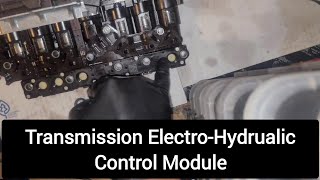
- Faulty Transmission Control Module (TCM/TEHCM): → Shop Transmission Assembly The TCM is integrated with the valve body solenoids in a single unit called the TEHCM (Transmission Electro-Hydraulic Control Module). While the entire unit can fail, it's less common than a single solenoid sticking. This should only be considered after all other possibilities have been ruled out. Replacement requires special programming to the vehicle's VIN.
- Worn Valve Body Check Balls or Bores: → Shop Transmission Valve Body Over time, small check balls in the valve body can shrink or the valve bores can wear, causing internal pressure leaks that can trigger solenoid performance codes. This is typically found in higher-mileage transmissions and often requires a valve body rebuild with a kit (like a Sonnax Zip Kit) or a complete valve body replacement.
Diagnosis Steps
- Check the transmission fluid level and condition. This must be done at the correct operating temperature as per the service manual. If low or dirty, perform a fluid and filter change first using DEXRON-VI fluid.
- Use a professional-grade scan tool to check for other transmission-related codes and to view live data, such as solenoid command status.
- Command Shift Solenoid 'A' (listed as PC Solenoid 2 in many scan tools for this vehicle) on and off using the scan tool to see if it responds mechanically (audible click) and electrically.
- If the solenoid appears unresponsive, drain the fluid and drop the transmission pan.
- Visually inspect the fluid and pan for excessive metal debris, which could indicate a more severe internal failure.
- Inspect the transmission filter for cracks or a dislodged seal.
- Test the resistance of the suspect solenoid with a multimeter. Disconnect the TEHCM and measure the resistance of the solenoid pins. A good on/off shift solenoid should measure between 20 and 40 ohms. An out-of-spec reading confirms a bad solenoid.
- Inspect the internal wiring harness for any visible damage.
- If the solenoid and wiring test good, remove the lower valve body and inspect the Clutch Select Solenoid Valve 2 and its bore for scoring, scratches, or sticking, as recommended by TSB PI1344C.
Parts You'll Likely Need
- Transmission Shift Solenoid 'A' (1-2-3-4 Clutch Solenoid)
(OEM #24259852 (ACDelco))— This is the most common failure point for code P0751 on this platform, as identified by GM's own service bulletins. It is part of the larger TEHCM assembly but can sometimes be sourced individually. [PI1344B]
Trusted brands: ACDelco, Bosch
OEM price range: $60-$90
Aftermarket price range: $30-$50 - Transmission Filter and Pan Gasket Kit
(OEM #24236933 (ACDelco/GM Genuine Parts))— The filter and gasket must be replaced any time the transmission pan is removed for service. A clogged filter can also contribute to the code.
Trusted brands: ACDelco, ATP, Wix
OEM price range: $50-$80
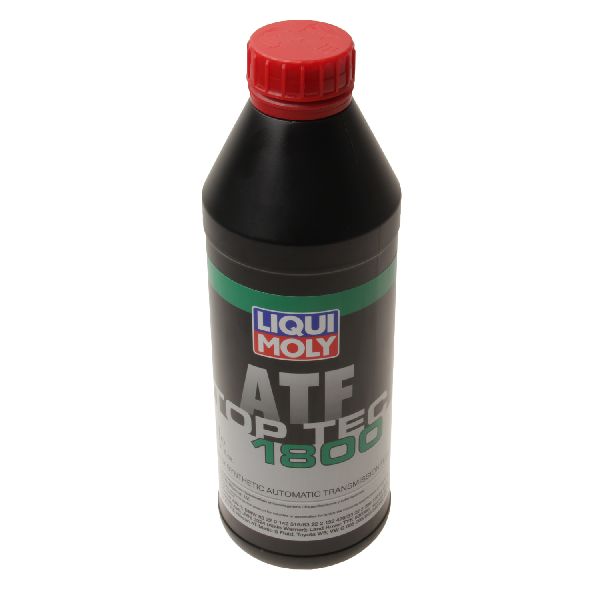
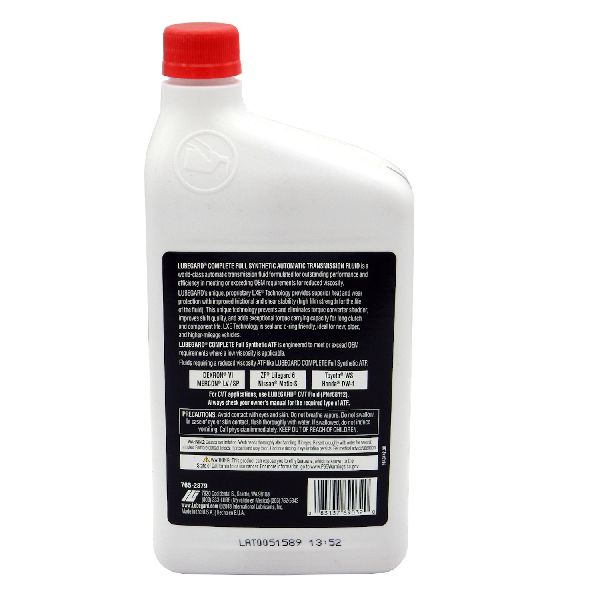
Aftermarket price range: $25-$50 - DEXRON-VI Automatic Transmission Fluid
(OEM #10-9395 / 19418016 (ACDelco))— The correct type and amount of fluid are required when refilling the transmission after the repair. Using the specified fluid is critical for proper transmission function.
Trusted brands: ACDelco, Valvoline, Castrol
OEM price range: $8-$12 per quart
Aftermarket price range: $7-$10 per quart - Transmission Control Solenoid/Valve Body Assembly (TEHCM)
(OEM #24275872 (Remanufactured))— In many cases, especially if the valve body bore is scored or if multiple solenoids are failing, replacing the entire pre-programmed TEHCM assembly is the most reliable repair. A new TEHCM must be programmed to the vehicle's VIN.
Trusted brands: ACDelco (Remanufactured), Street Smart Transmission, Sonnax
OEM price range: $450-$600
Aftermarket price range: $350-$550
Related Codes That Often Appear With This One
- P0700 (Transmission Control System Malfunction): This is a general code indicating the TCM has requested the check engine light. It will almost always be present with P0751.
Technical Service Bulletins (TSBs) & Recalls
- PI1344C: Diagnostic tips for reduced acceleration and slipping with DTC P0751.
- PI1344B: Identifies the sticking Clutch Select Solenoid Valve 2 as a potential cause.
- PIE0376A: Informational bulletin regarding P0751 on vehicles with less than 5,000 miles.
- PIE0376: Initial request for field information on low-mileage vehicles setting code P0751.
Platform-Specific Known Issues
- GM Technical Service Bulletin #PI1344C directly addresses customer complaints of 'reduced acceleration at low speed and/or transmission slipping from a launch' associated with DTC P0751, noting it can result in a 4th gear start. [PI1344C, 25]
- TSB #PI1344B and its successor PI1344C specify that the condition may be caused by the 'Clutch Select Solenoid Valve 2 (359), located in the lower valve body, sticking in its bore'. The TSB advises inspecting the valve for scratches. [PI1344B, 32]
- Early TSBs like #PIE0376 were issued to gather information from the field on low-mileage vehicles (under 5,000 miles) that were setting this code, indicating it was a known issue early in the vehicle's life. [PIE0376, PIE0376A]
Mechanic-Grade Diagnostic Values
- Shift Solenoid (On/Off Type) Resistance — expected: 20-40 Ohms. Failure: A reading outside this range indicates a failed solenoid coil.
- Pressure Control (PWM Type) Solenoid Resistance — expected: 3-8 Ohms. Failure: A reading outside this range indicates a failed solenoid coil. Note: Shift Solenoid 'A' is an on/off type.
- Shift Solenoid (On/Off Type) Current Draw — expected: 0.3–0.7 amps at 12 volts. Failure: Incorrect amperage suggests a failing solenoid, even if resistance is within spec.
- Line Pressure at Idle (in Park) — expected: Approximately 45-80 psi. Failure: Significantly lower pressure could indicate a weak pump, clogged filter, or major internal leak, which could contribute to solenoid performance codes.
Scan Tool Commands That Help
- GM Tech2 / GDS2: Solenoid Valve Diagnosis / Transmission Output Controls — This function allows a technician to command each shift solenoid on and off individually while the engine is running. For P0751, the technician would command Shift Solenoid 1 (or Clutch Select Valve 2) and listen for an audible click from the transmission pan and watch for a change in state on the scan tool data, confirming or denying electrical operation.
- GM Tech2 / GDS2: Transmission Service Stall Speed Test — This automated test cycles all solenoids to help dislodge minor debris that may be causing a solenoid to stick intermittently. It can be used as a diagnostic step to see if the code returns after the cleaning procedure.
Wiring & Ground Locations
- Main Transmission Connector (X214) — External, on the passenger side of the 6L80 transmission case. It is a 16-pin, twist-lock style connector.. This is the single point of electrical connection between the vehicle's main wiring harness and the internal TEHCM. Corrosion, moisture, or a loose connection here can cut power or communication to all solenoids, potentially causing P0751 and other codes.
- G104 / G108 — G104 is located on the back of the left (driver's side) cylinder head. G108 is a major ground point on the engine block, location varies slightly by year.. The TEHCM relies on a solid ground connection to function. A poor ground at these primary engine/chassis points can cause erratic voltage and unpredictable behavior from the transmission control module and solenoids, leading to performance codes like P0751.
- TEHCM Connector Pin 5 — Pin 5 of the 16-pin main transmission connector.. This pin provides the main ground for the TEHCM assembly. A voltage drop test on this pin can quickly identify a bad ground connection causing issues for the entire module.
- TEHCM Connector Pin 4 — Pin 4 of the 16-pin main transmission connector.. This pin provides battery positive voltage to the TEHCM. Checking for stable battery voltage here is a crucial first step in diagnosing any electronic transmission fault.
Real Owner Repair Stories
- Tahoe Yukon Forum (2013 Cadillac Escalade ESV (6.2L V8, 6L80E)) — Harsh 2-1 downshift, flaring shifts, and eventually a P0751 code.
❌ Tried (didn't work) Initial diagnosis pointed towards a solenoid issue.
✅ What actually fixed it The owner performed a comprehensive valve body rebuild. This included rebuilding the internal pressure switches, installing a Sonnax Zip Kit (which includes O-ringed end plugs and other components to seal hydraulic leaks), replacing the TCC regulator valve, and installing a new valve body separator plate. The combination of these component-level repairs within the valve body resolved the hydraulic issues causing the code.
OEM Part Supersession History
24256861, 24256863 (and others)→24275873, GM6L-TEHCM-C6 (Sonnax Reman)— Part numbers for the TEHCM change frequently due to internal hardware and software updates to improve reliability and address common failures like sticking solenoids and failing pressure switches.
Heads up: TEHCMs are NOT interchangeable between year groups. A module from a 2012 vehicle will not work in a 2015 vehicle, even if it physically fits. The internal logic and calibration are different. Always verify the correct part number for the specific VIN. All replacement TEHCMs, new or remanufactured, must be programmed on the vehicle with GM-specific software (SPS2/Techline Connect) to function.
Model Year Variations Within This Range
- 2010-2014 vs 2015-2017: The valve body separator plate design changed. Models from 2014 and earlier use a plate with 7 check balls. Models from 2015 and later use a plate with 8 check balls. While the P0751 cause is often the same, using the wrong plate during a rebuild can cause new issues.
- Mid-2010 and earlier: Early 6L80 transmissions used a different separator plate and clutch select valve springs. An aftermarket spring kit (Sonnax 104740-02K) is available specifically for these early models to correct excessive spring force that contributes to the P0751 code. Installing this kit on a later model is not recommended.
Helpful Videos

We Have This Part in Stock


The information in this article is provided for general reference and educational purposes only. Vehicle specifications, procedures, and part compatibility can vary by production date, trim level, and region. Always consult your vehicle's factory service manual and verify part numbers before purchasing or performing repairs. Safety-critical components such as airbags, seat belts, and braking systems should be installed by a qualified professional.
- Gmc YUKON:
- 🧭 Diagnostic Flowchart
- 🎬 Helpful Videos
- 🛍️ Shop This Part
- What's Unique About the 2010-2017 Gmc YUKON
- Symptoms You May Notice
- Most Likely Causes
- Rare But Worth Checking
- Diagnosis Steps
- Parts You'll Likely Need
- Related Codes That Often Appear With This One
- Technical Service Bulletins (TSBs) & Recalls
- Platform-Specific Known Issues
- Mechanic-Grade Diagnostic Values
- Scan Tool Commands That Help
- Wiring & Ground Locations
- Real Owner Repair Stories
- OEM Part Supersession History
- Model Year Variations Within This Range
- 🎟️ Get 5% Off