

P0751 on 2010-2017 GMC Yukon 6L80: Causes for Shift Solenoid 'A' Stuck Off
On a 2010-2017 GMC Yukon, P0751 almost always means the Clutch Select Solenoid Valve 2 (Shift Solenoid 'A') is mechanically sticking inside the transmission valve body. This causes the vehicle to feel like it's starting in 3rd or 4th gear. The most reliable fix, recommended by GM TSB PI1344C, requires dropping the transmission pan to replace the entire lower valve body assembly if the valve bore is scored.
- P0751 on a 2010-2017 Yukon is a very specific and common code, almost always pointing to a sticking 'Clutch Select Solenoid Valve 2' inside the transmission.
- The most common symptom is severe lack of acceleration from a stop, as if the truck is starting in 4th gear.
- The issue is mechanical, not usually electrical. GM has issued multiple TSBs about this valve physically sticking in the valve body.
- The correct fix often involves replacing the lower valve body, not just the solenoid, especially if scratches are present in the valve bore.
- This is a complex repair that is not recommended for beginners. Professional service is strongly advised to prevent further damage.
What's Unique About the 2010-2017 GMC Yukon
The GMC Yukon with the 6L80 transmission has a well-documented history with code P0751. General Motors issued multiple Technical Service Bulletins (TSBs), such as PI1344C, acknowledging that the Clutch Select Solenoid Valve 2 is prone to physically sticking in its bore within the valve body. This is often not an electrical failure but a mechanical one, causing a distinct symptom of starting in 4th gear from a stop. This known issue makes diagnosis more direct compared to other vehicles where P0751 might have a wider range of potential electrical or wiring causes. The failure is so common it has been reported on vehicles with under 5,000 miles (TSB PIE0376A). Another known issue is a faulty valve body spacer plate, which can cause hydraulic leaks that starve the solenoid circuit of oil.
Generation note: The 2010-2017 year range covers the end of the third generation Yukon (2010-2014) and the start of the fourth generation (2015-2017). Both generations used the 6L80 transmission, and the causes and fixes for P0751 are consistent across this period. The primary issue with the sticking Clutch Select Solenoid Valve 2 is documented for the entire date range. However, there were revisions to the TEHCM hardware and software over these years, so it is critical to match the part number (Tag ID) on the old TEHCM when replacing it.
Symptoms You May Notice
- Vehicle feels like it's starting in a high gear (e.g., 3rd or 4th) from a stop.
- Very poor or sluggish acceleration from a stop.
- Sensation of the transmission being in neutral, then harshly engaging a gear when accelerating from a stop.
- Harsh or clunking shifts between gears.
- Transmission gets stuck in one gear (limp mode).
- Check Engine Light is illuminated.
- Reduced fuel economy.
- Replacing the entire TEHCM (solenoid pack with integrated TCM) when only a single solenoid or the lower valve body was faulty. While sometimes necessary, it's an expensive first step if the issue is a simple sticking valve.
- Replacing only the P0751-related solenoid without inspecting the valve bore for scoring. If the bore is damaged, the new solenoid will soon fail as well.
- Replacing the valve body without addressing the root cause of debris, such as a failing torque converter, which will lead to a repeat failure.
Most Likely Causes
- Sticking Shift Solenoid 'A' (Clutch Select Solenoid Valve 2) 🔴 High Probability → Shop Transmission Valve Body This is a well-documented failure acknowledged by GM in multiple Technical Service Bulletins (PI1344B, PI1344C). The valve physically sticks in its bore within the valve body, which may be due to design, bore wear, or debris. TSB Bulletin #PI1344B specifically notes that customers may comment on reduced acceleration at low speed or the transmission slipping from a launch when this valve sticks.
How to confirm: A technician can use a bi-directional scan tool to command the solenoid on and off to check for a response. The ultimate confirmation is removing the valve body to physically inspect the valve for scoring or sticking and vacuum testing the bore for leaks.
Typical fix: If the valve bore is not scratched or worn, replacing the individual solenoid may work. However, GM's recommended fix is to replace the entire lower valve body assembly if scratches are found. A popular aftermarket alternative is installing a Sonnax Zip Kit (Part #6L45-6L90-ZIP) which includes parts to address wear in multiple areas of the valve body.
Est. part cost: $40-$80 for a single solenoid, $200-$600 for a valve body assembly. - Low or Dirty Transmission Fluid 🟡 Medium Probability → Shop Transmission Assembly Fluid that is low, degraded, or contaminated with debris (often from normal wear or a failing torque converter) can cause hydraulic components like solenoids and valves to operate sluggishly or stick. The 6L80 is sensitive to fluid condition.
How to confirm: Check the transmission fluid level and condition. The check must be done when the fluid is at operating temperature. The fluid should be red (DEXRON-VI) and not smell burnt or contain excessive debris.
Typical fix: Perform a transmission fluid and filter change using ACDelco DEXRON-VI fluid. This is a good first step but may not solve the problem if the solenoid is already mechanically damaged or the valve body is worn.
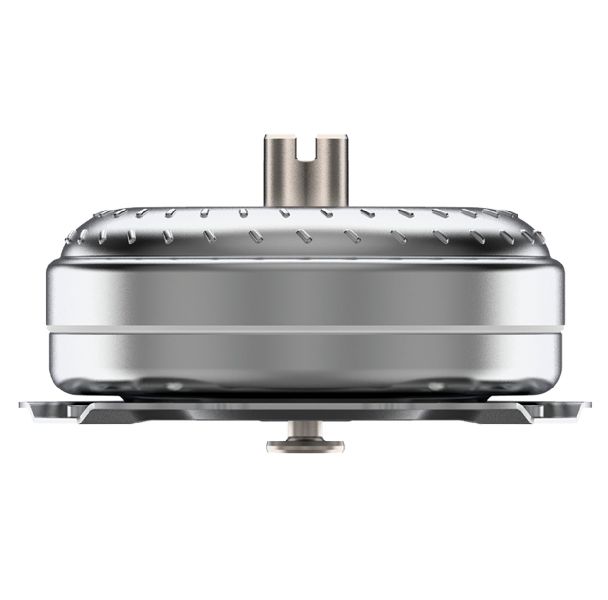
Est. part cost: $75-$150 - Debris from a Failing Torque Converter ⚪ Low Probability → Shop Automatic Transmission Torque Converter The 6L80 transmission is known to have issues with the torque converter clutch (TCC), which can wear out, shudder, and shed metallic debris into the transmission fluid (addressed in TSB 18-NA-355). This debris clogs the fine passages in the valve body and causes solenoids to stick.
How to confirm: Inspect the transmission pan for excessive metallic shavings or glitter when the fluid is drained. A shuddering sensation at highway speeds often precedes this failure.
Typical fix: This requires a full transmission rebuild or replacement, including flushing the transmission cooler lines and replacing the torque converter, valve body, and any other damaged components. Ignoring a failing converter will cause the new valve body to fail again quickly.
Est. part cost: $1500-$4000+
Rare But Worth Checking
- Faulty Transmission Control Module (TCM/TEHCM): → Shop Transmission Assembly The TCM is integrated into the valve body assembly (called a TEHCM). While it can fail electrically, it's far more common for the mechanical valves or solenoids to be the issue for an isolated P0751. This should only be considered after all other causes are ruled out.
- External Wiring Harness Issues: GM TSB 08-07-30-021H notes that the engine wiring harness can chafe against the top of the transmission bell housing, causing shorts that can trigger various transmission codes, including P0751. This typically presents with multiple communication codes, not just P0751 alone.
- Cracked or Damaged Valve Body Separator Plate: → Shop Transmission Valve Body The separator plate, which sits between the valve body halves, has bonded gaskets that can fail or the plate itself can crack, causing internal hydraulic leaks that can lead to various pressure-related codes, including P0751. An updated notched spacer plate gasket is available to provide a higher volume of oil to the solenoid circuit.
Diagnosis Steps
- Check the transmission fluid level and condition. Ensure it is at the correct level and is not burnt or full of debris.
- Use a professional-grade scan tool to confirm P0751 is the primary code and check for other related transmission codes like P0700 or P0776.
- With a bi-directional scan tool, command the Shift Solenoid 'A' (Clutch Select Solenoid Valve 2) on and off to check for an electrical and mechanical response.
- Inspect the external transmission wiring harness and connectors for any visible damage, corrosion, or looseness, particularly near the bell housing as noted in TSB 08-07-30-021H.
- If scan tool tests are inconclusive, drain the fluid and drop the transmission pan. Inspect the pan magnet for excessive metal debris, which would indicate a more serious internal failure like a torque converter.
- Remove the valve body assembly. Physically inspect the Clutch Select Solenoid Valve 2 and its bore for scoring, scratches, or sticking, as detailed in TSB PI1344C.
- While the valve body is removed, inspect the separator plate for cracks or damage to the bonded gaskets.
Parts You'll Likely Need
- Transmission Lower Valve Body Assembly
(OEM #24259877 (Superseded, check with dealer for latest P/N))— This is the official GM-recommended repair if the valve bore for the solenoid is scratched, as noted in TSB PI1344C. It ensures the sticking issue is fully resolved.
Trusted brands: ACDelco
OEM price range: $250-$500
Aftermarket price range: $200-$400 - Clutch Select Solenoid Valve 2 (Shift Solenoid 'A')
(OEM #24259852 (Example P/N, often part of TEHCM))— If the valve bore is undamaged, replacing only the sticking solenoid is a viable, less expensive repair. However, solenoids are often serviced as part of the complete TEHCM assembly.
Trusted brands: ACDelco, Sonnax
OEM price range: $60-$100
Aftermarket price range: $40-$80 - Valve Body Repair Kit
(OEM #6L45-6L90-ZIP)— A popular and effective aftermarket solution that includes upgraded components to repair worn valve bores and prevent future sticking, often without needing to replace the entire valve body.
Trusted brands: Sonnax
OEM price range: N/A
Aftermarket price range: $150-$300
Related Codes That Often Appear With This One
- P0700 — This is a generic code indicating the TCM has requested the Check Engine Light be turned on. It will almost always be present with any specific transmission code like P0751.
- P0776 — This code relates to Pressure Control Solenoid 'B'. If seen with P0751, it may suggest a more widespread hydraulic issue within the valve body or contamination from debris, rather than just a single failed solenoid.
Technical Service Bulletins (TSBs) & Recalls
- PI1344C: The most critical TSB. It addresses customer complaints of reduced acceleration and slipping from a launch with DTC P0751. It identifies the cause as the 'Clutch Select Solenoid Valve 2' sticking in its bore and recommends replacing the lower valve body if scratches are found.
- 08-07-30-021H: Addresses a wide range of electrical issues caused by the engine wiring harness chafing on the transmission bell housing. This can cause shorts that may trigger P0751 among other communication codes.
- PIE0376A: An engineering information bulletin created to gather data on P0751 occurring on very low-mileage vehicles (under 5,000 miles), indicating this can be a premature failure and not just a result of wear.
- PIE0376: A manufacturer service bulletin requesting information from the field regarding vehicles with a check engine light illuminated and DTC P0751 set on vehicles with less than 5,000 miles.
Platform-Specific Known Issues
- A series of Technical Service Bulletins (PI1344B, PI1344C, PIE0376A) were issued by GM specifically addressing P0751 on vehicles with the 6L80 transmission. They identify the root cause as the Clutch Select Solenoid Valve 2 sticking in its bore, resulting in a 4th gear start condition. TSB Bulletin #PI1344C provides diagnostic tips and repair information to correct concerns of reduced acceleration at low speed.
Mechanic-Grade Diagnostic Values
- Shift Solenoid (On/Off type) resistance — expected: 20-40 Ohms. Failure: A reading outside this range indicates a failed solenoid coil.
- Pressure Control Solenoid (PWM type) resistance — expected: 3-8 Ohms. Failure: A reading outside this range indicates a failed solenoid coil. Note: Shift Solenoid 'A' is an on/off type.
- TEHCM Solenoid/Sensor Supply Voltage — expected: 8.3 - 9.3 Volts. Failure: Voltage outside this range could indicate a problem with the TEHCM itself or its power/ground supply.
- TEHCM Main Ground at Connector — expected: Less than 0.1 Volts (Voltage Drop Test). Failure: Higher voltage indicates a poor ground connection at Pin 5 of the 16-pin transmission connector or at chassis ground points like G110.
- TEHCM Main Power at Connector — expected: Battery Voltage (approx. 12.6V). Failure: Low or no voltage at Pin 4 of the 16-pin transmission connector indicates a wiring or fuse issue.
Scan Tool Commands That Help
- GDS2 (GM Dealer Scan Tool) or equivalent professional scanner: Transmission Service Fast Learn — This procedure is mandatory after replacing the valve body, TEHCM, or performing any internal transmission service. It allows the TCM to learn the hydraulic characteristics of the new components to ensure proper shift quality and prevent setting new codes.
- GDS2 or other bi-directional scan tool: Solenoid Control / Activation Test — Used during diagnosis to command Shift Solenoid 'A' on and off while the vehicle is stationary. A functional solenoid will produce an audible click from the transmission pan. The absence of a click suggests an electrical or mechanical solenoid failure.
- GDS2 or other bi-directional scan tool: Solenoid Cleaning Procedure — This function cycles all solenoids automatically to try and dislodge minor debris that may be causing a solenoid to stick. It can be attempted before component replacement but is often a temporary fix if the issue is significant wear or contamination.
Wiring & Ground Locations
- TEHCM Connector (X224) — The main 16-pin electrical connector on the right side of the transmission case.. This is the primary interface for all power, ground, and communication signals to the TEHCM. TSB 08-07-30-021H warns that this harness can chafe on the transmission bell housing, causing shorts.
- Pin 5 (Ground) — Pin 5 of the 16-pin TEHCM connector.. This is the main ground for the entire TEHCM assembly. A poor connection here can cause erratic solenoid behavior and various fault codes, including P0751.
- Pin 4 (Battery +) — Pin 4 of the 16-pin TEHCM connector.. This pin supplies constant battery power to the TEHCM. Loss of voltage here will cause the transmission to default to limp mode.
- G103 / G104 — G103 is on the front of the right-side cylinder head. G104 is on the left rear of the engine block.. These are primary engine block grounds that are critical for the ECM and TCM. A loose or corroded connection at these points can cause unpredictable electronic behavior and communication codes. TSBs recommend ensuring these are clean and tight.
- G110 — On the frame to the rear of the left front tire.. This is a major chassis ground point. A loose connection here has been noted by GM to cause a wide range of electrical issues, including communication loss with the TCM (PIE0548).
Real Owner Repair Stories
- gm-trucks.com forum user (2012 GMC Sierra, 161,000 miles) — Transmission issues, likely including harsh shifts or slipping.
❌ Tried (didn't work) Initial diagnosis pointed towards general transmission wear.
✅ What actually fixed it The root cause was a failed torque converter. The owner replaced the torque converter and the rear main seal. While the transmission was out, the valve body and solenoids were inspected but showed no excessive wear and were not replaced. The fix resolved the transmission issues. - Bimmerpost forum user (with GM 6L45, similar architecture) (2007 BMW with GM 6L45R transmission) — 2-1 downshift 'kick', hunting for gears from a stop, high fluid temperature.
❌ Tried (didn't work) Dealer software update, which only temporarily helped and made other symptoms worse.
✅ What actually fixed it Installation of a Sonnax Zip Kit (6L45-6L90-ZIP). The user reported this solved the issues '90% of the time,' eliminating the harsh downshift and significantly improving gear hunting. This highlights the effectiveness of addressing hydraulic leaks within the valve body itself.
OEM Part Supersession History
24241350 / 24252114 (2006-2009)→24256861 / 24256863 (2010-2013)— Hardware and software updates to improve solenoid performance and pressure switch reliability.
Heads up: TEHCMs are year-range specific and are not interchangeable. Installing an early TEHCM in a later vehicle (or vice-versa) will result in a no-start condition or immediate limp mode because the internal software and calibration are different. Always match the Tag ID from the original part.24256861 / 24256863 (2010-2013)→24274046 / 24285393 (2014-2016)— Further integrated calibration changes for the updated K2XX platform.
Heads up: Not interchangeable with earlier or later units. The TEHCM must be programmed to the vehicle's VIN using GM's SPS2 or Techline Connect software after installation.
Model Year Variations Within This Range
- 2010-2014 (Gen 3) vs 2015-2017 (Gen 4): While the core 6L80 transmission and P0751 causes are the same, the TEHCM hardware and software were revised. The 2014+ models use a different TEHCM (e.g., P/N 24274046) that is not backward compatible with the one used in 2010-2013 models (e.g., P/N 24256861). Swapping these will cause communication failures or a no-start condition.
Diagnostic Flowchart
Used vs. New Parts: Buying Guide for This Vehicle
When a used part is the smart pick: A complete used transmission from a low-mileage donor can be a cost-effective alternative to a full rebuild, especially if your current transmission has a catastrophic hard-part failure beyond the valve body. However, buying just a used valve body or TEHCM is a significant gamble, as it may have the same wear in the valve bores that caused the P0751 code in the first place.
Donor-vehicle mileage cap: roughly under 70000 miles for the part to have meaningful remaining life.
What to inspect on the donor part:
- Check the fluid color and smell from the donor transmission. It should be bright red and not smell burnt.
- If possible, have the seller drop the pan. Inspect the magnet for a fine metallic paste (normal wear), not large metal chunks or excessive clutch material.
- Inspect the main electrical connector for corrosion, bent pins, or damage.
- Look at the front pump seal; if it's hardened or cracked, it indicates the transmission likely overheated.
OEM-only on this vehicle (don't cheap out):
- TEHCM (Control Solenoid Valve Assembly): While remanufactured units are available, using a new ACDelco TEHCM is the most reliable option to avoid programming issues and premature electronic failure. If using a used TEHCM, it MUST be from the correct year range and be reprogrammed to your vehicle's VIN.
Aftermarket brands forum-validated for this vehicle:
- Sonnax: Their 'Zip Kit' (6L45-6L90-ZIP) is highly regarded on forums as a robust solution for repairing worn valve bodies without full replacement.
- TransGo: Their shift kits and replacement valves are also well-regarded by professional builders for addressing known 6L80 weak points.
Brands owners have reported issues with on this vehicle:
- Unbranded, no-name solenoids or TEHCMs from online marketplaces. These often have high failure rates, incorrect calibrations, or cause programming difficulties, leading to repeat repairs.
Real Owner Stories
Aggregated from forums and TSBs cited above. Mileages and costs reflect what owners reported in those sources.
2009 Chevrolet Tahoe
Symptoms: The owner reported an intermittent jerk when moving from a stop light, accompanied by the P0751 code.
What fixed it: The source does not specify the final repair.
Source hint: P0751-00 shift Solenoid 1 valve performance stuck off - Tahoe Yukon Forum
GMC Yukon / Chevrolet Tahoe (Year not specified)
Symptoms: An intermittent issue where the transmission revs up as if it's in neutral before harshly engaging a gear when accelerating from a stop. P0751 was the only code present.
What fixed it: The source does not specify the final repair.
Source hint: P0751 and 1-2 Neutral Symptom - Tahoe Yukon Forum
Related OBD-II Codes
Frequently Asked Questions
My 2012 Yukon is starting in 4th gear and has a P0751 code. What does GM say about this specific issue?
Is just replacing the Shift Solenoid 'A' enough to fix P0751 on my 6L80 transmission?
Could a wiring problem cause the P0751 code on my GMC Yukon?
My Yukon has very low miles and already threw a P0751 code. Is this common?
What is the first and simplest thing I should check for a P0751 code?
I've heard my torque converter could be the real cause of the P0751. Is this a known issue?
Is there a recommended aftermarket kit to fix the valve body issues related to P0751?
We Have This Part in Stock


The information in this article is provided for general reference and educational purposes only. Vehicle specifications, procedures, and part compatibility can vary by production date, trim level, and region. Always consult your vehicle's factory service manual and verify part numbers before purchasing or performing repairs. Safety-critical components such as airbags, seat belts, and braking systems should be installed by a qualified professional.
- GMC Yukon:
- 🧭 Diagnostic Flowchart
- 🛍️ Shop This Part
- What's Unique About the 2010-2017 GMC Yukon
- Symptoms You May Notice
- Most Likely Causes
- Rare But Worth Checking
- Diagnosis Steps
- Parts You'll Likely Need
- Related Codes That Often Appear With This One
- Technical Service Bulletins (TSBs) & Recalls
- Platform-Specific Known Issues
- Mechanic-Grade Diagnostic Values
- Scan Tool Commands That Help
- Wiring & Ground Locations
- Real Owner Repair Stories
- OEM Part Supersession History
- Model Year Variations Within This Range
- Used vs. New Parts: Buying Guide for This Vehicle
- Real Owner Stories
- 2009 Chevrolet Tahoe
- GMC Yukon / Chevrolet Tahoe (Year not specified)
- Related OBD-II Codes
- Frequently Asked Questions
- 🎟️ Get 5% Off