

P0751 on 2008-2012 Honda Accord: Shift Solenoid 'A' Stuck Off Causes and Fixes
This code usually means Shift Solenoid 'A' isn't working, often due to low or dirty transmission fluid. Start by checking the fluid level and condition and use only Honda ATF-DW1 fluid. If the fluid is fine, the solenoid itself or its associated filter is the next likely culprit.
- P0751 on a 2008-2012 Accord points to a problem with Shift Solenoid 'A', which is preventing proper gear changes.
- ALWAYS start by checking the transmission fluid. Low, old, or incorrect fluid is the most common cause. Use ONLY Honda ATF-DW1.
- If the fluid is fine, the solenoid itself is the next most likely culprit. It can be tested for electrical and mechanical function.
- Do not ignore this code. Driving with a faulty shift solenoid can lead to transmission overheating and catastrophic failure.
What's Unique About the 2008-2012 Honda Accord
For the 2008-2012 eighth-generation Accord, Honda transmissions are notoriously sensitive to the type and condition of the automatic transmission fluid (ATF). Many P0751 codes on this platform are triggered simply by using non-genuine Honda fluid or by the fluid becoming old and contaminated, which clogs the fine passages within the solenoid and valve body. Before suspecting major hardware failure, a fluid check and change with the correct Honda ATF-DW1 is the most critical first step. The shift solenoids are often located externally on the transmission case, making them more accessible for testing and replacement than on many other vehicles.
Symptoms You May Notice
- Check Engine Light is on
- Flashing 'D' (Drive) indicator light on the dashboard
- Harsh, delayed, or erratic shifting
- Transmission gets stuck in one gear
- Vehicle enters 'limp mode,' limiting speed
- Reduced fuel economy
- Vehicle fails to shift into higher gears
- Sluggish or no reverse engagement
- Replacing the entire transmission when only a fluid change or a single solenoid was needed.
- Replacing the PCM/TCM before thoroughly testing the solenoid, wiring, and fluid.
- Replacing the wrong shift solenoid, as there are multiple solenoids (A, B, C, etc.) that look similar.
Most Likely Causes
- Low or Dirty Transmission Fluid 🔴 High Probability → Shop Transmission Assembly Honda transmissions are sensitive to fluid quality and level; degraded fluid can easily clog solenoid passages and screens.
How to confirm: Check the transmission fluid dipstick for level and color. The fluid should be red and translucent, not dark brown or black, and should not have a burnt smell. Ensure the engine is warm and the vehicle is on level ground for an accurate reading.
Typical fix: Perform a transmission fluid drain-and-fill using only genuine Honda ATF-DW1 fluid. At least three drain-and-fill cycles are often recommended to replace a majority of the old fluid. 🎬 Watch: Step-by-step guide for a proper Honda ATF drain and fill.
Est. part cost: $40-$80 for fluid - Failed Shift Solenoid 'A' 🟡 Medium Probability → Shop Transmission Valve Body The solenoid can fail electrically from internal winding shorts or become mechanically stuck due to debris from contaminated transmission fluid.
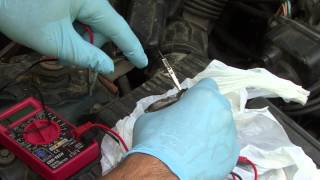
How to confirm: After locating the solenoid on the transmission case, test its electrical resistance with a multimeter (a general range is 12-25 ohms). You can also apply 12V power to the solenoid's terminals to listen for a distinct 'click', indicating it is mechanically actuating. The solenoid can be removed for bench testing and to inspect its screen for clogs.
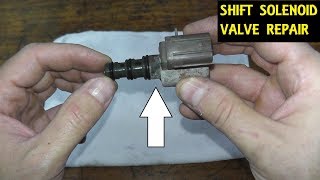
Typical fix: Replace the faulty shift solenoid. It is often sold as a dual-linear or single-linear solenoid assembly.
Est. part cost: $100-$250 - Clogged Transmission Filter or Passages 🟡 Medium Probability → Shop Transmission Assembly Sludge and metal shavings from normal wear can accumulate and block the external in-line transmission filter 🎬 Watch: How to find and replace the hidden transmission filter. or the hydraulic passages in the valve body, starving the solenoid of pressure.
How to confirm: This is difficult to confirm without disassembly. If a fluid change doesn't resolve the issue and the solenoid tests good, a blockage is a likely culprit. Dark, metallic fluid is a strong indicator. The external filter can be replaced as a maintenance item.
Typical fix: Replace the external transmission filter (Honda P/N 25430-PLR-003) and perform multiple fluid drain-and-fills. In severe cases, the valve body may need to be removed and professionally cleaned.
Est. part cost: $20-$60 for a filter - Wiring or Connector Issues ⚪ Low Probability The wiring harness near the transmission is exposed to heat and vibration, which can cause wires to fray or connectors to become contaminated with fluid or dirt over time.
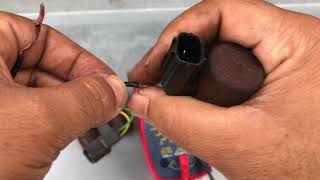
How to confirm: Visually inspect the wiring harness leading to Shift Solenoid A. Check for any signs of damage, melting, or corrosion on the connector pins. Perform a continuity test on the wires from the solenoid connector to the PCM/TCM.
Typical fix: Repair the damaged section of wire or clean/replace the corroded connector.
Est. part cost: $5-$50
Rare But Worth Checking
- Faulty Powertrain Control Module (PCM) or Transmission Control Module (TCM): → Shop Transmission Assembly This is very rare. The module itself can fail, but all other possibilities, especially fluid, wiring, and the solenoid itself, should be exhaustively ruled out first.
- Internal Mechanical Failure: If the transmission fluid contains a significant amount of metal shavings, it could indicate a more severe internal problem like a failing clutch pack or torque converter, which would require a transmission rebuild or replacement.
Diagnosis Steps
- Check the transmission fluid level and condition. If it is low, dark, or smells burnt, perform at least one drain-and-fill with Honda ATF-DW1.
- Scan for other transmission-related trouble codes that could provide more context.
- Inspect the wiring harness and connector for Shift Solenoid 'A' for any visible damage, corrosion, or loose connections.
- Locate Shift Solenoid 'A' on the exterior of the transmission case. Test the resistance of the solenoid with a multimeter. Compare the reading to the manufacturer's specification (a general range is 12-25 ohms).
- Test the mechanical function of the solenoid by applying 12V battery voltage and listening for a click.
- If the solenoid is removed, inspect its filter screens for metallic debris or sludge.
- If fluid is clean and the solenoid tests good, consider replacing the external in-line transmission filter (P/N 25430-PLR-003).
- If the problem persists, the issue may be an internal blockage in the valve body or a failing PCM, which typically requires professional diagnosis.
Parts You'll Likely Need
- Shift Solenoid 'A'
(OEM #28610-RKE-004 (This is often a pressure switch, verify exact solenoid pack for your VIN. A common assembly is 28250-R90-003 for the dual-linear solenoid))— This is the component directly identified by the code. It can fail electrically or become mechanically stuck.
Trusted brands: Honda (OEM), WVE, Rostra
OEM price range: $150-$250
Aftermarket price range: $80-$150 - Honda Genuine ATF-DW1 Fluid
(OEM #08200-9008)— Low or dirty fluid is a primary cause of this code. Using the correct OEM fluid is critical for Honda transmissions.
Trusted brands: Honda (OEM)
OEM price range: $10-$15 per quart - Transmission Filter (External)
(OEM #25430-PLR-003)— A clogged filter can restrict fluid flow, causing pressure issues that lead to the P0751 code. It's an inexpensive and easy part to replace during a fluid service.
Trusted brands: Honda (OEM), Wix, ATP
OEM price range: $30-$60
Aftermarket price range: $15-$40
Related Codes That Often Appear With This One
- P0752 — This code means Shift Solenoid 'A' is Stuck On. Seeing both P0751 and P0752 can point to an intermittent electrical issue, a very problematic solenoid, or a blocked valve body passage.
- P0747 — This code is for Pressure Control Solenoid 'A' Stuck On. Since these solenoids work together to control hydraulic pressure, a fault in one can sometimes trigger a performance code in another, or indicate a widespread hydraulic blockage.
- P0973 — This code indicates a short in the Shift Solenoid 'A' control circuit, pointing directly to an electrical failure of the solenoid or its wiring.
- P0974 — This code indicates an open in the Shift Solenoid 'A' control circuit, pointing to a broken wire, bad connector, or an open coil inside the solenoid.
Platform-Specific Known Issues
- On DriveAccord.net, multiple owners of 8th-gen Accords with the V6 engine reported resolving P0751 by replacing the dual-linear solenoid assembly (often part number 28250-R90-003) and performing a 3x drain-and-fill with Honda ATF-DW1.
- A common repair story involves first changing the fluid. If the code returns, the next step is to replace the accessible external solenoids. One user on a Honda forum noted that after replacing the solenoid, the flashing 'D' light went away immediately and shifting performance returned to normal.
- Some DIY repair videos for this generation show that the shift solenoids are located on the front of the transmission, accessible after removing the splash shield and sometimes the battery tray for better access.
Mechanic-Grade Diagnostic Values
- Shift Solenoid 'A' Coil Resistance — expected: 12 - 25 Ohms. Failure: A reading of 0 Ohms (short circuit) or infinite/OL (open circuit) indicates a failed solenoid coil.
Scan Tool Commands That Help
- Honda Diagnostic System (HDS) or equivalent professional scanner: Solenoid Activation Test / Bidirectional Control — Use this to command Shift Solenoid 'A' on and off while the engine is running. A distinct 'click' should be heard from the solenoid, confirming it is receiving the command and is mechanically capable of moving. Lack of a click points to a bad solenoid or a wiring issue.
Wiring & Ground Locations
- PCM Connector C, Pin 20 — At the Powertrain Control Module (PCM), which is typically located under the hood near the battery or firewall.. This is the specific terminal for the Shift Solenoid 'A' control circuit. It is the primary point for testing continuity and checking for shorts to ground on the wire running from the PCM to the solenoid.
- G101 (Main Engine Harness Ground) — Typically found on the driver's side of the intake manifold or on the transmission case itself.. A poor ground connection at the transmission or engine can cause a variety of electrical issues, including erratic solenoid behavior. While not the first thing to check, verifying this ground is clean and tight is crucial if electrical issues are suspected.
When the Usual Fixes Don't Work
- In cases where the common, inexpensive fixes (multiple fluid drain-and-fills and replacement of the external solenoid assembly) fail to resolve the P0751 code, the root cause is almost certainly a deeper hydraulic circuit issue. This points to a blockage or failure within the main transmission valve body. At this stage, the repair shifts from a simple bolt-on part to a more complex procedure of removing the valve body for professional cleaning or replacement.
OEM Part Supersession History
28250-R90-003→28250-R90-003— No supersession found.
Heads up: This part number for the dual linear solenoid assembly appears to be stable throughout the 2008-2012 generation for both 4-cylinder and V6 models. However, always verify fitment with the vehicle's VIN before ordering.
Model Year Variations Within This Range
- 2008-2012: While both use a 5-speed automatic, the V6 engine (J35) uses a timing belt that requires replacement as a major service item, whereas the 4-cylinder engine (K24) uses a timing chain that is designed to last the life of the engine. This can significantly affect long-term maintenance costs and should be considered when evaluating a used vehicle.
- 2008-2012: Some aftermarket parts listings for the 4-cylinder model specify a 'Red Connector' for Shift Solenoid A, suggesting a possible variation in harness connectors. It is critical to visually inspect the existing part's connector or confirm the part number via VIN to ensure compatibility.
Diagnostic Flowchart
Other Known Issues on This Vehicle
Issues unrelated to this code that are worth knowing about as an owner of this generation:
- VTC Actuator Rattle on Cold Start (4-Cylinder) 🟠 Medium — Very common on K24Z engines. A loud rattle for ~2 seconds upon cold startup. (Ref: Honda TSB 09-010)
- Excessive Oil Consumption (V6 and 4-Cylinder) 🔴 High — Widespread issue, particularly on V6 models with VCM, due to sticking piston rings. Led to a class-action lawsuit. (Ref: Honda TSB 11-033, TSB 12-087; Powertrain warranty was extended as part of a lawsuit settlement.)
- Premature Rear Brake Pad Wear 🟡 Low — Common on 2008-2009 models, requiring rear brake pads to be replaced much sooner than expected.
- Torque Converter Judder/Shudder (V6) 🟠 Medium → Shop Automatic Transmission Torque Converter — Some V6 models experience a shudder during light acceleration due to torque converter lock-up issues. Often addressed with a software update and fluid flush. (Ref: Honda TSB 11-030)
Used vs. New Parts: Buying Guide for This Vehicle
When a used part is the smart pick: For the external shift solenoid assembly, a used OEM part from a reputable salvage yard with a low-mileage donor vehicle is a reasonable, cost-saving option. The part is accessible, making the labor investment low if the used part happens to be faulty.
Donor-vehicle mileage cap: roughly under 100000 miles for the part to have meaningful remaining life.
What to inspect on the donor part:
- Verify mileage of the donor vehicle.
- Inspect the electrical connector for cracks, corrosion, or bent pins.
- Check the solenoid's filter screens to ensure they are free of significant metallic debris.
- Ask for a short warranty period (e.g., 30 days) from the seller.
OEM-only on this vehicle (don't cheap out):
- Automatic Transmission Fluid (ATF) - Only Honda Genuine ATF-DW1 should be used. Using any other fluid is a primary cause of this code and can lead to transmission failure.
- Internal transmission components (clutch packs, torque converter, valve body) - If these are required, they should be purchased new (OEM) or from a professional transmission remanufacturer, not from a junkyard.
Aftermarket brands forum-validated for this vehicle:
- Rostra
- Standard Motor Products (SMP) / Intermotor
- WVE
Brands owners have reported issues with on this vehicle:
- Unbranded, 'white-box' solenoids from major online marketplaces are a gamble and often have high failure rates. It is better to buy a used OEM part than a new, no-name part.
Real Owner Stories
Aggregated from forums and TSBs cited above. Mileages and costs reflect what owners reported in those sources.
2008-2012 Honda Accord V6
Symptoms: Flashing 'D' (Drive) indicator light on the dashboard and vehicle entering limp mode.
What fixed it: Replacing the dual-linear solenoid assembly (part number 28250-R90-003) and performing a 3x drain-and-fill with Honda ATF-DW1.
Source hint: DriveAccord.net
2008-2012 Honda Accord
Symptoms: Flashing 'D' light and poor shifting performance.
What fixed it: Replacing the accessible external solenoid immediately cleared the flashing light and returned shifting to normal.
Source hint: vehicle_specific_issues
2008-2012 Honda Accord
Symptoms: P0751 code present; seeking diagnostic advice.
What fixed it: Checking fluid level and condition first, then testing the solenoid's resistance and wiring.
Source hint: Reddit (r/MechanicAdvice)
Related OBD-II Codes
Frequently Asked Questions
What specific transmission fluid should I use for my 2008-2012 Honda Accord to fix P0751?
Is there a specific part number for the solenoid that commonly fails on the V6 Accord models?
My 2008 Accord has a flashing 'D' light and P0751; is there an external filter I should check?
Could my Accord's P0751 code be related to the excessive oil consumption TSBs?
Where is Shift Solenoid 'A' located on this generation of Accord?
What is the correct electrical resistance for the shift solenoid on a 2008-2012 Accord?
Helpful Videos
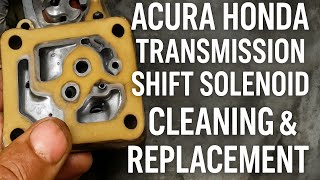
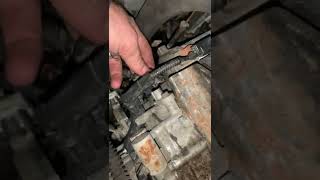
We Have This Part in Stock
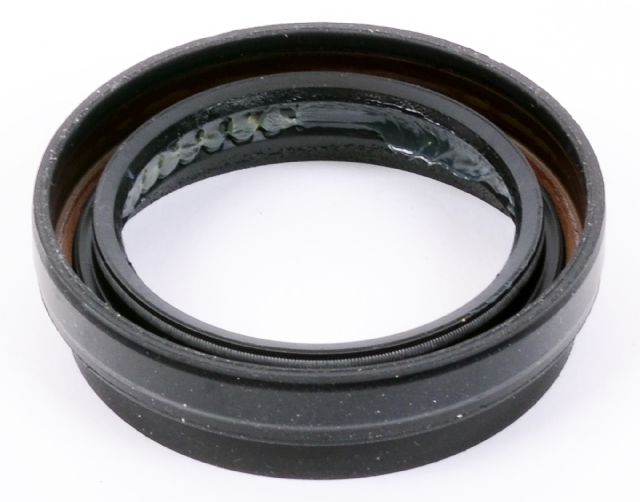
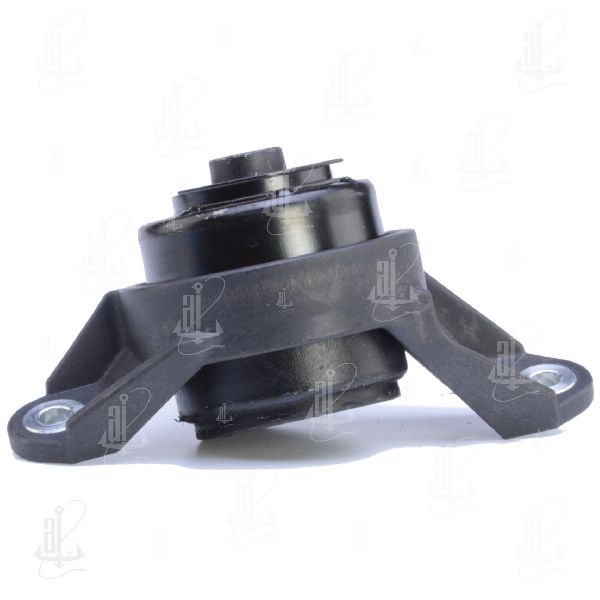

The information in this article is provided for general reference and educational purposes only. Vehicle specifications, procedures, and part compatibility can vary by production date, trim level, and region. Always consult your vehicle's factory service manual and verify part numbers before purchasing or performing repairs. Safety-critical components such as airbags, seat belts, and braking systems should be installed by a qualified professional.
- Honda Accord:
- 🧭 Diagnostic Flowchart
- 🎬 Helpful Videos
- 🛍️ Shop This Part
- What's Unique About the 2008-2012 Honda Accord
- Symptoms You May Notice
- Most Likely Causes
- Rare But Worth Checking
- Diagnosis Steps
- Parts You'll Likely Need
- Related Codes That Often Appear With This One
- Platform-Specific Known Issues
- Mechanic-Grade Diagnostic Values
- Scan Tool Commands That Help
- Wiring & Ground Locations
- When the Usual Fixes Don't Work
- OEM Part Supersession History
- Model Year Variations Within This Range
- Other Known Issues on This Vehicle
- Used vs. New Parts: Buying Guide for This Vehicle
- Real Owner Stories
- 2008-2012 Honda Accord V6
- 2008-2012 Honda Accord
- 2008-2012 Honda Accord
- Related OBD-II Codes
- Frequently Asked Questions
- 🎟️ Get 5% Off