

P0751 on 2011-2015 Honda Civic: Shift Solenoid 'A' Causes and Fixes
On a 2011-2015 Honda Civic, code P0751 is most often caused by low or dirty automatic transmission fluid. Before replacing parts, check the fluid level and condition. A few drain-and-fills with Honda Genuine ATF-DW1 fluid may resolve the issue for under $100.
- Always check your transmission fluid level and condition first. This is the cheapest and most common fix.
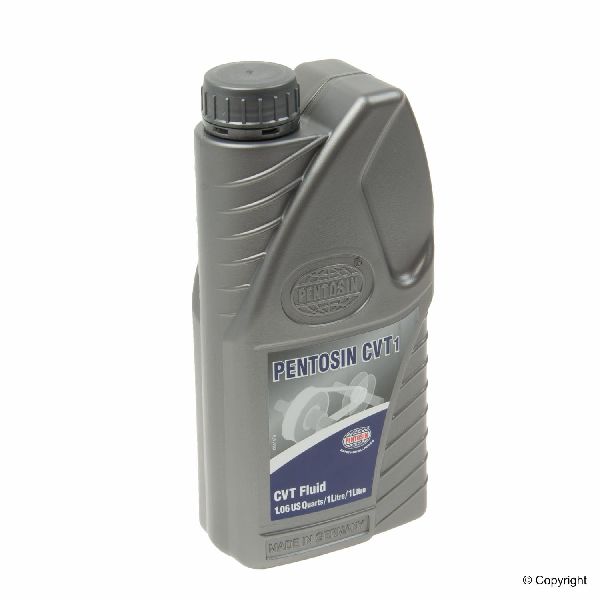
- Only use Honda Genuine ATF-DW1 transmission fluid. Aftermarket fluids can cause shifting problems in these transmissions.
- Driving with P0751 can cause severe, irreversible damage to your transmission. Address the issue promptly.
- If the fluid is clean and at the correct level, the Shift Solenoid 'A' is the next most likely culprit.
- Significant metal debris in the transmission fluid indicates a major internal failure that a new solenoid will not fix.
What's Unique About the 2011-2015 Honda Civic
Honda automatic transmissions are well-known for their sensitivity to the type and condition of the transmission fluid. Using anything other than genuine Honda ATF-DW1, or extending fluid change intervals, can lead to the accumulation of sludge and varnish. This debris can clog the very fine passages and screens within the shift solenoids, causing them to stick and trigger a P0751 code, even if 🎬 Watch: Diagnostic walkthrough for the P0751 shift solenoid code. the solenoid itself is not electrically faulty. Unlike many transmissions that use planetary gearsets, Honda's 5-speed automatic uses a design more like a manual transmission with hydraulic clutches, making clean fluid of the correct viscosity absolutely critical for proper solenoid and clutch pack actuation.
Generation note: This range covers the end of the 8th generation (2011) and the entire 9th generation (2012-2015) Honda Civic. The causes, symptoms, and diagnostic procedures for P0751 are consistent across the 2011-2013 models which use the same family of H5 5-speed automatic transmissions and R18 series engines. For 2014-2015, the 5-speed automatic was replaced by a CVT in most non-Si trims, which has a different architecture.
Symptoms You May Notice
- Check Engine Light is on
- Harsh, erratic, or delayed gear shifts
- Transmission slipping between gears
- Vehicle feels sluggish or fails to accelerate properly
- Transmission gets stuck in one gear (limp mode)
- Reduced fuel economy
- Transmission may overheat
- Immediately replacing the shift solenoid without first checking the transmission fluid. Many times, the code is triggered by old, dirty fluid, and the solenoid itself is functional.
- Performing only a single drain-and-fill, which may not replace enough of the old, contaminated fluid to resolve the problem.
Most Likely Causes
- Low or Dirty Transmission Fluid 🔴 High Probability → Shop Transmission Assembly Honda transmissions are sensitive to fluid quality and level. Old, degraded fluid can cause solenoids to stick. A single drain-and-fill only replaces about 2.5 quarts of the total 6.2-quart capacity.
How to confirm: Check the transmission fluid dipstick with the engine warm and off on a level surface. The fluid should be at the correct level, pink or red in color, and not smell burnt. Dark, brown, or black fluid is contaminated.
Typical fix: Perform two to three transmission drain-and-fill procedures using only Honda Genuine ATF-DW1 fluid. 🎬 See how to perform a simple transmission drain and fill. Drive the vehicle for a few miles between each drain-and-fill to circulate the new fluid. Do NOT use a pressurized flush system, as this can dislodge debris and cause further blockages.
Est. part cost: $40-$120 - Faulty Shift Solenoid 'A' 🟡 Medium Probability → Shop Transmission Valve Body The solenoid has small internal screens that can become clogged with debris from old fluid, or the internal plunger can wear out and stick mechanically.
How to confirm: After confirming the fluid is clean and full, a mechanic can test the solenoid. This involves checking its electrical resistance with a multimeter (should be 12-25 ohms) and using a scan tool or direct 12V power to listen for an audible 'click' when it's commanded on and off. Physical inspection for clogged screens upon removal is the final confirmation.
Typical fix: Replace the Shift Solenoid 'A' assembly. It is an externally mounted dual-linear solenoid located on the front of the transmission case, making it accessible after removing the splash shield.
Est. part cost: $150-$300 - Clogged External or Internal Transmission Filter ⚪ Low Probability → Shop Transmission Assembly Over time, clutch material and other debris can clog the transmission filters, starving the solenoids of the hydraulic pressure needed to operate. The 9th Gen Civic has an external, in-line filter that is designed to be replaced.
How to confirm: If fresh fluid and a new solenoid do not fix the issue, the problem may be flow-related. The external filter (Part No. 25430-PLR-003) can be replaced as a maintenance item. The internal filter requires removing the transmission case for inspection and is usually only serviced during a rebuild.
Typical fix: Replace the accessible external transmission filter. If the internal filter is clogged, it often points to a more serious internal transmission problem, and a rebuild may be necessary.
Est. part cost: $25-$60 for an external filter (OEM Part #25430-PLR-003).
Rare But Worth Checking
- Damaged Wiring or Connector: The wiring harness leading to the transmission can be damaged by heat or road debris. Check for frayed wires or corroded pins at the solenoid connector before replacing parts.
- Failing Transmission Valve Body: → Shop Transmission Valve Body The valve body is the hydraulic control center of the transmission. If its passages are blocked with sludge or it becomes warped, it can cause pressure issues that trigger solenoid codes. This is a complex and expensive repair.
- Internal Mechanical Failure: If you find significant metal shavings when draining the fluid, it indicates a serious internal problem like failing clutches or gears. At this point, the transmission likely needs to be rebuilt or replaced.
Diagnosis Steps
- Read the code with an OBD-II scanner to confirm P0751 is present.
- Check the transmission fluid level and condition with the engine warm and OFF on a level surface.
- If the fluid is low, top it off with Honda ATF-DW1, clear the code, and test drive to see if it returns. Check for leaks.
- If the fluid is dark, burnt, or overfilled, perform at least two transmission drain-and-fill cycles. Each cycle uses about 2.5-3 quarts of ATF-DW1.
- If the code returns with clean fluid, locate Shift Solenoid 'A'. It is part of a dual-linear solenoid assembly on the front of the transmission, accessible from underneath.
- Inspect the wiring harness and connector for any signs of damage, corrosion, or loose connections.
- Disconnect the solenoid and test its resistance with a multimeter. It should measure between 12 and 25 ohms. An open or shorted reading indicates a failed solenoid.
- If resistance is good, you can apply a 12V power source to the solenoid's terminals to listen for a distinct 'click'. No click means the solenoid is mechanically stuck.
- If the solenoid clicks and tests good, remove it (typically held by a few 10mm bolts) and inspect its filter screens for clogging from metallic debris or sludge. Clean or replace as needed.
- If all the above steps fail, consider replacing the external ATF filter (Part #25430-PLR-003).
- If the problem persists, the issue may be a faulty valve body or other internal transmission failure requiring professional diagnosis with a tool like the Honda HDS.
Parts You'll Likely Need
- Automatic Transmission Fluid (ATF)
(OEM #08200-9008 (ATF-DW1))— This is the most common cause. Honda transmissions require this specific fluid for proper operation of hydraulic components like solenoids. At least 2-3 drain-and-fills are often required, needing 6-9 quarts total.
Trusted brands: Honda Genuine
OEM price range: $10-$15 per quart
Aftermarket price range: N/A - Shift Solenoid 'A' Assembly (Dual Linear Solenoid)
(OEM #28250-R90-003)— If fluid does not solve the issue, the solenoid itself is the next most likely part to have failed, either by sticking mechanically or having clogged screens.
Trusted brands: Honda Genuine, Rostra, Beck/Arnley
OEM price range: $200-$350
Aftermarket price range: $80-$180 - External Automatic Transmission Filter
(OEM #25430-PLR-003)— If fluid is very dirty or contains debris, this filter is likely clogged and restricting flow to the solenoids. It's a wise replacement if the fluid condition is poor.
Trusted brands: Honda Genuine
OEM price range: $30-$50
Aftermarket price range: $15-$30
Technical Service Bulletins (TSBs) & Recalls
- Honda TSB 12-089: While for the 2010-11 CR-V, this TSB is relevant as it addresses excessive oil consumption on related Honda engines, a potential platform issue.
- Honda TSB 20-030: Pertains to the Civic Hybrid, extending the warranty on the IMA Motor Power Inverter (MPI), a known issue for that specific trim.
Platform-Specific Known Issues
- Owner Experience: Fluid Change Fix: A user on 9thGenCivic.com with a 2012 Civic experiencing P0751 and harsh shifting reported a complete resolution after performing three consecutive drain-and-fills with Honda ATF-DW1. The code did not return after the fluid service, confirming the issue was caused by degraded fluid and not a faulty solenoid.
Mechanic-Grade Diagnostic Values
- Shift Solenoid 'A' Coil Resistance — expected: 12 - 25 Ohms. Failure: A reading of infinite resistance (OL) indicates an open circuit, while a reading near zero indicates a short. Either requires solenoid replacement.
- Voltage at Solenoid Connector (Key On, Engine Off) — expected: Approximately 12.6V (Battery Voltage). Failure: A voltage drop greater than 0.5V suggests high resistance in the power supply wiring or a poor ground connection.
- Ground Circuit Voltage Drop (Back-probed at TCM) — expected: Below 0.2V. Failure: A reading above 0.2V points to corrosion or a poor connection in the ground circuit for the solenoid.
Scan Tool Commands That Help
- Honda Diagnostic System (HDS): Shift Solenoid Valve A Test (in Miscellaneous Test Menu) — This bidirectional command actively energizes the solenoid. The technician should listen for an audible 'click'. The absence of a click, assuming wiring is intact, confirms the solenoid is mechanically stuck or electrically failed and needs replacement.
OEM Part Supersession History
28250-R90-003→No direct supersession found, this part number remains the standard replacement for the specified application.— N/A25430-PLR-003→No direct supersession found, this part number remains the standard replacement for a wide range of Honda vehicles with 5-speed automatics.— N/A
Heads up: This filter is for the 5-speed automatic transmission found in 2011-2013 Civics. It is NOT compatible with the CVT introduced in most 2014-2015 models.
Model Year Variations Within This Range
- 2014-2015: For the 2014 model year, Honda replaced the conventional 5-speed automatic transmission with a Continuously Variable Transmission (CVT) in most non-Si trims. While a P0751 code is theoretically possible on a CVT, its internal architecture and solenoids are completely different, meaning the causes, parts, and repair procedures discussed for the 5-speed automatic do not apply to the CVT-equipped models.
Diagnostic Flowchart
Other Known Issues on This Vehicle
Issues unrelated to this code that are worth knowing about as an owner of this generation:
- VTC Actuator Rattle on Cold Start 🟠 Medium — Common on R18 and K24 engines, especially noticeable on cold startups. The rattle lasts for a second or two. (Ref: While TSBs like 12-089 exist for other models with similar engines, there isn't a specific, widely-known one just for the 9th gen Civic's R18 engine for this issue.)
- Excessive Oil Consumption 🟠 Medium — Some R18 engines can consume more than 1 quart of oil per 1,000 miles due to sticking piston rings. This is less common than the VTC rattle but more severe. (Ref: Honda addressed this for other models like the 2010-11 CR-V with TSB 12-089, which extended the warranty on pistons/rings. Civic owners have reported similar issues in forums.)
- Premature Starter or Battery Failure 🟡 Low — A relatively common minor issue where the small factory battery fails prematurely, or the starter motor wears out, causing no-start conditions.
- CVT Transmission Issues (2014-2015 models) 🔴 High → Shop Transmission Assembly — For 2014-2015 models equipped with the CVT, a software issue could cause the input shaft pulley to break, leading to transmission failure. (Ref: A recall was issued for 143,676 vehicles to update the transmission software.)
- Cracked Engine Block (2006-2009 extended warranty) 🔴 High — While primarily affecting the 8th generation, the R18 engine family had a known issue with engine blocks cracking and leaking coolant. Honda extended the warranty for this, but it's relevant context for the engine family. (Ref: Honda Service Bulletin 10-048 extended the warranty for this specific issue on earlier models.)
Used vs. New Parts: Buying Guide for This Vehicle
When a used part is the smart pick: A used OEM shift solenoid assembly from a low-mileage donor vehicle can be a cost-effective option, as the genuine Honda part is generally robust. Given the accessibility, it's a reasonable gamble.
Donor-vehicle mileage cap: roughly under 80000 miles for the part to have meaningful remaining life.
What to inspect on the donor part:
- Verify the donor vehicle's mileage.
- Inspect the solenoid's filter screens for any metallic debris or heavy sludge; clean screens are a good sign.
- Check the electrical connector for any corrosion, bent pins, or cracks in the plastic.
- If possible, test the resistance of the used solenoid with a multimeter before purchase to ensure it's within the 12-25 ohm specification.
OEM-only on this vehicle (don't cheap out):
- Automatic Transmission Fluid (ATF) - Only Honda Genuine ATF-DW1 should be used. Using other fluid types is a primary cause of solenoid performance codes.
Aftermarket brands forum-validated for this vehicle:
- Rostra
- Beck/Arnley
- Standard Motor Products (SMP)
Brands owners have reported issues with on this vehicle:
- No-name, unbranded solenoids from online marketplaces should be avoided, as their quality control and material durability are often questionable, leading to premature failure.
Real Owner Stories
Aggregated from forums and TSBs cited above. Mileages and costs reflect what owners reported in those sources.
2012 Honda Civic
Symptoms: The vehicle was experiencing a P0751 error code accompanied by harsh shifting.
What fixed it: Performed three consecutive drain-and-fills using Honda ATF-DW1 fluid. The code did not return and the shifting smoothed out.
Source hint: 9thGenCivic.com thread mentioned in 'Owner Experience: Fluid Change Fix'
Related OBD-II Codes
Frequently Asked Questions
Does Honda TSB 12-089 apply to my 2011-2015 Civic regarding the P0751 code?
Can I use any transmission fluid to fix the P0751 code in my 2012 Civic?
Is there a specific filter I should replace for P0751 on my 9th Gen Civic?
Where is Shift Solenoid 'A' located on the 2011-2015 Civic?
Is there a recall for transmission issues on the 2014-2015 Civic models?
What is the warranty extension mentioned for the Civic Hybrid?
Helpful Videos


We Have This Part in Stock

The information in this article is provided for general reference and educational purposes only. Vehicle specifications, procedures, and part compatibility can vary by production date, trim level, and region. Always consult your vehicle's factory service manual and verify part numbers before purchasing or performing repairs. Safety-critical components such as airbags, seat belts, and braking systems should be installed by a qualified professional.
- Honda Civic:
- 🧭 Diagnostic Flowchart
- 🎬 Helpful Videos
- 🛍️ Shop This Part
- What's Unique About the 2011-2015 Honda Civic
- Symptoms You May Notice
- Most Likely Causes
- Rare But Worth Checking
- Diagnosis Steps
- Parts You'll Likely Need
- Technical Service Bulletins (TSBs) & Recalls
- Platform-Specific Known Issues
- Mechanic-Grade Diagnostic Values
- Scan Tool Commands That Help
- OEM Part Supersession History
- Model Year Variations Within This Range
- Other Known Issues on This Vehicle
- Used vs. New Parts: Buying Guide for This Vehicle
- Real Owner Stories
- 2012 Honda Civic
- Related OBD-II Codes
- Frequently Asked Questions
- 🎟️ Get 5% Off