

P0751 on 2003-2008 Toyota Corolla: Shift Solenoid 'A' Causes and Fixes
On a 2003-2008 Toyota Corolla, P0751 most often means the Shift Solenoid 'A' (S1) has failed or transmission fluid is low/dirty. The ECM logs this code when the commanded gear doesn't match the actual gear reported by speed sensors. Replacing the solenoid is the most common fix, costing around $40-$90 for the part and requiring a transmission fluid and filter change.
- P0751 on a 2003-2008 Corolla points to a problem with Shift Solenoid 'A' (S1) inside the transmission.
- Before buying parts, check the transmission fluid level and condition. Low or dirty fluid is a common cause.
- The most likely fix is replacing the S1 solenoid, transmission filter, and fluid. This is a manageable DIY job for those comfortable with dropping the transmission pan.
- The Toyota Matrix and Pontiac Vibe with the 1.8L engine share this exact problem and repair procedure.
- Be aware of the 1ZZ-FE engine's tendency to consume oil, which is a separate but critical issue for this vehicle generation.
What's Unique About the 2003-2008 Toyota Corolla
The 9th generation Corolla (2003-2008) uses the A245E 4-speed automatic transmission, a unit known for its general reliability but susceptible to issues from neglected fluid maintenance. For this specific P0751 code, the problem is almost always mechanical within the transmission pan (bad solenoid or fluid issue) rather than a complex electronic or wiring problem. The solenoids are relatively easy to access once the transmission pan is removed. This issue is also common on the Toyota Matrix and Pontiac Vibe, which share the same powertrain.
Symptoms You May Notice
- Check Engine Light is on
- Transmission will not shift gears (stuck in 2nd or 3rd gear, also known as 'limp mode')
- Failure to shift into 3rd and 4th gear; RPMs will not climb past a certain point.
- Harsh or delayed gear engagement
- Vehicle may feel like it has no power or is slipping
- Reduced fuel economy
- Transmission overheating
- Replacing the entire transmission without first testing the individual solenoids.
- Assuming the transmission is mechanically failed when the issue is only low or dirty fluid.
- Replacing the S1 solenoid without also changing the clogged transmission filter and old fluid, which may have caused the failure.
Most Likely Causes
- Low or Dirty Transmission Fluid 🔴 High Probability → Shop Transmission Assembly The A245E transmission is sensitive to fluid condition. Old, degraded fluid can cause sludge and varnish to build up, making solenoids stick. Debris can also clog the small passages in the valve body.
How to confirm: Check the transmission fluid dipstick (orange handle) for level and color. The fluid should be bright red and not smell burnt. If it is dark brown/black or low, it needs service.
Typical fix: Perform a transmission fluid and filter change. Use only Toyota Type T-IV fluid or a compatible equivalent. In many cases, this alone may not solve a 'stuck' solenoid and replacement is still necessary.
Est. part cost: $50-$100 - Failed Shift Solenoid 'A' (S1) 🔴 High Probability → Shop Transmission Valve Body
How to confirm: After removing the transmission pan, the solenoid can be tested. Check its resistance with a multimeter (should be 11-15 ohms). Apply 12V power to the solenoid; a healthy solenoid will make an audible 'click'. No click, a weak click, or an out-of-spec resistance reading indicates failure.
Typical fix: Replace the faulty Shift Solenoid 'A' (S1). It is recommended to replace the transmission filter and fluid at the same time. Many owners also replace Solenoid 'B' (S2) proactively as they are the same age.
Est. part cost: $40-$90 - Clogged Transmission Filter 🟡 Medium Probability → Shop Transmission Assembly The filter can become saturated with clutch material and other debris over time, especially if fluid changes are neglected. This restricts fluid flow to the valve body and solenoids, which can trigger the P0751 code.
How to confirm: The filter is located inside the transmission pan. Visual inspection during a fluid service will show if it is dark and clogged with metallic or clutch debris.
Typical fix: Replace the transmission filter and pan gasket as part of a transmission service.
Est. part cost: $25-$50 - Internal Valve Body Issue ⚪ Low Probability → Shop Transmission Valve Body
How to confirm: This is diagnosed after confirming the fluid is clean and the solenoids are functioning correctly. It requires professional inspection of the valve body passages for blockages or stuck valves.
Typical fix: The valve body may need to be removed, cleaned, and inspected. In some cases, a remanufactured valve body is required.
Est. part cost: $200-$500
Rare But Worth Checking
- Faulty ECM (Engine Control Module): Extremely rare for this specific code. The ECM is the last item to suspect. Only consider this if all other transmission components, wiring, and solenoids have been tested and confirmed to be in perfect working order. TSBs for other models (e.g., RAV4 TSB TC002-06) show that ECM failure can cause solenoid codes, but it is not a documented common cause for P0751 on the Corolla.
- Damaged Wiring or Connectors: Possible but unlikely, as the wiring is internal to the transmission and protected. Check the main connector at the transmission case for corrosion or damage before dropping the pan.
Diagnosis Steps
- Check the transmission fluid level and condition using the dipstick. If low, top up and check for leaks. If dirty or burnt, plan for a fluid and filter change.
- Scan the ECM for any other trouble codes to see if other issues are present. Address other codes first if they are not solenoid-related.
- Drain the transmission fluid and remove the transmission pan (typically 18 10mm bolts).
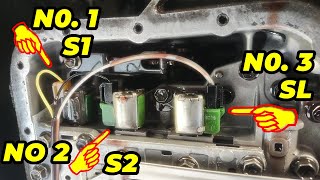
- Locate Shift Solenoid 'A' (S1). On the A245E valve body, it is typically the solenoid with the black electrical connector, distinct from the S2 solenoid.
- Disconnect the solenoid's electrical connector.
- Test the solenoid's resistance using a multimeter. It should be between 11 and 15 ohms. A reading outside this range indicates a failed coil.
- Carefully apply 12V from the vehicle's battery to the solenoid's pin and body. You should hear a distinct 'click'. No click or a weak click indicates it is mechanically stuck.
- If the solenoid fails either test, replace it.
- While the pan is off, it is highly recommended to replace the transmission filter. The filter is held on by three bolts.
- Thoroughly clean the transmission pan and the magnet inside it. The magnet collects metallic debris and will likely be covered in a fine paste.
- Install the new solenoid (if needed), new filter, and reinstall the pan with a new gasket. Some technicians use a thin layer of FIPG (Form-in-Place Gasket) sealant to hold the gasket in place during installation.
- Refill the transmission with the correct amount of Toyota Type T-IV fluid (approx. 3.5-4 quarts for a drain and fill).
- Clear the trouble codes using a scan tool. Some procedures recommend disconnecting the battery for 90 seconds to reset fuel trims and other learned values.
- Perform a test drive, accelerating gently through all gears to ensure proper shifting.
Parts You'll Likely Need
- Shift Solenoid 'A' (S1)
(OEM #35250-12010)— This is the component directly identified by the P0751 code and is the most common mechanical failure point.
Trusted brands: Aisin (OEM), Rostra, Beck Arnley, Duralast (from AutoZone)
OEM price range: $120-$180
Aftermarket price range: $40-$90 - Automatic Transmission Filter Kit
(OEM #35330-12040)— The filter should always be replaced when the transmission pan is removed. A clogged filter can cause the P0751 code by restricting fluid flow.
Trusted brands: Aisin (OEM), Wix, ATP, Fram
OEM price range: $40-$60
Aftermarket price range: $20-$40 - Toyota Type T-IV Automatic Transmission Fluid
(OEM #00279-000T4)— Correct fluid is critical for the transmission's health. A drain and fill requires approximately 3.5-4 quarts.
Trusted brands: Toyota, Idemitsu (OEM supplier), Valvoline MaxLife ATF (often cited by owners as a compatible and effective alternative)
OEM price range: $8-$12 per quart
Aftermarket price range: $7-$10 per quart
Related Codes That Often Appear With This One
- P0756 — This code is for Shift Solenoid 'B' (S2). It's common for these solenoids to age and fail around the same time. If one fails, it's often wise to replace them as a set.
- P0700 — This is a generic code indicating a fault has been registered by the Transmission Control Module (TCM). It is a general request for the check engine light and will always appear alongside a more specific transmission code like P0751.
Technical Service Bulletins (TSBs) & Recalls
- TSB TC002-05: While not directly for P0751, this TSB addresses a 'whistle' or 'hoot' sound from the A245E/A246E transmission in 2003-2006 Corollas between 35-40 mph, fixed by installing redesigned transmission cool
Platform-Specific Known Issues
- Owner Experience: A user on CarKiller.com with a 2007 Pontiac Vibe (a Corolla platform-mate) reported getting code P0751 and had difficulty identifying which of the three solenoids on the valve body was Solenoid 'A'. This highlights the importance of having a repair manual or clear diagram for the A245E transmission before starting the job.
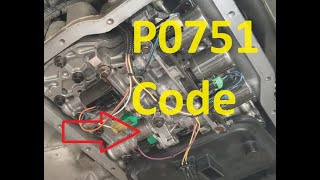
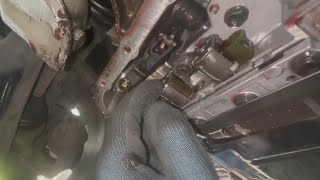
- Repair Story: A YouTube video by Auto Repair Champs shows the repair on a similar generation Corolla. After diagnosis, they found the car would not engage 3rd or 4th gear. The fix involved replacing the S1 solenoid, which was identified as the one with a specific connector on the valve body, located after removing the transmission filter.
Mechanic-Grade Diagnostic Values
- Shift Solenoid 'A' (S1) Resistance — expected: 11 - 15 ohms at 68°F (20°C).. Failure: A resistance reading outside of this range indicates a faulty solenoid coil. A reading of infinite resistance means an open circuit, while a reading near zero means a short.
- Shift Solenoid 'A' (S1) Bench Test — expected: When 12V is applied to the solenoid's pin and the body is grounded, a sharp, audible 'click' should be heard as the internal plunger actuates.. Failure: No click, a weak click, or a buzzing sound indicates the solenoid is mechanically stuck or failing.
- Voltage at Solenoid Connector — expected: Approximately 12.6V (battery voltage) should be present at the solenoid's power supply pin in the harness with the key on, engine off.. Failure: Voltage significantly lower than battery voltage (greater than 0.5V drop) can indicate a wiring issue, corrosion, or a problem with the ECM's power supply.
- Transmission Pan Bolt Torque — expected: 48 in-lbf (5.4 N·m).. Failure: Over-tightening can warp the pan and cause leaks; under-tightening will also cause leaks.
- Valve Body Bolt Torque — expected: 98 in-lbf (11 N·m).. Failure: Incorrect torque can cause valve body distortion, leading to sticking valves and shifting problems.
Scan Tool Commands That Help
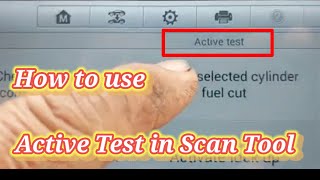
- Toyota Techstream: Active Test: Control the Shift Position — This is a critical non-intrusive diagnostic step. It allows a technician to command Shift Solenoid 'A' (S1) ON and OFF while the vehicle is stationary (engine on or off, depending on test parameters) to verify its operation. You can often hear the solenoid click inside the transmission pan if it's working, confirming the wiring and ECM driver are functional before dropping the pan.
- Toyota Techstream: Data List — Monitor the 'Shift Status' parameter while driving. This will show the gear commanded by the ECM. If the transmission's physical behavior does not match the commanded gear shown on the scan tool, it confirms the fault condition that sets P0751.
Wiring & Ground Locations
- ECM Pin for S1 Solenoid — A wiring diagram for this powertrain shows the S1 solenoid wire connects to Pin 13 on one of the ECM connectors.. Allows for continuity testing of the wire between the ECM and the transmission connector if a wiring fault is suspected after the solenoid tests good.
- Transmission Case Connector — The main electrical connector is located on the outside of the transmission case. The internal solenoid harness plugs into the other side of this connector.. This is the primary point to check for external corrosion or damage. It's also where you can perform resistance and voltage tests of the solenoid circuit without dropping the pan, by testing the appropriate pins leading into the transmission.
- Chassis Ground Point 'IE' — A 2003 Corolla wiring diagram shows a main instrument panel ground point designated 'IE' located at the left dash brace.. A poor ground for the ECM or related control modules can cause erratic behavior and incorrect fault codes. While not a common cause for P0751, it's a key location to check if multiple, seemingly unrelated electronic issues are present.
- Transmission to Chassis Ground — A main ground strap typically runs from the transmission housing to the chassis, often near the driver's side strut tower.. This is the main ground for the entire transmission assembly. Corrosion or a loose connection here can cause a host of electrical problems, including erratic solenoid operation.
Real Owner Repair Stories
- YouTube channel 'Auto Repair Champs' (Toyota Corolla (2009-2013 generation, but with same diagnostic principles as 2003-2008)) — Vehicle would shift through 1st and 2nd gear, but would not engage 3rd or 4th gear. The RPMs would not climb, and it felt like it was slipping or had no power.
❌ Tried (didn't work) The video proceeds directly to diagnosis, confirming the symptoms pointed to a solenoid issue.
✅ What actually fixed it The technician drained the fluid, dropped the transmission pan, removed the transmission filter to gain access, and replaced the Shift Solenoid 'A' (S1). The faulty solenoid was identified by its location and connector type on the valve body.
OEM Part Supersession History
35250-12010→35250-12010 (no direct supersession found, part number remains current for the application)— N/A
Heads up: Some aftermarket kits are sold with multiple solenoids (S1, S2, SL) and may list other part numbers like 35250-12020 or 35250-12030 as being included or compatible, but 35250-12010 is the specific OEM part number for the S1 solenoid on this vehicle.
Diagnostic Flowchart
Other Known Issues on This Vehicle
Issues unrelated to this code that are worth knowing about as an owner of this generation:
- Excessive Oil Consumption (1ZZ-FE Engine) 🔴 High — Very common, especially on 2003-2005 models. Caused by piston rings getting clogged with carbon, preventing proper oil return. Often appears after 50,000 miles. (Ref: Toyota addressed this with redesigned pistons in post-July 2005 engines but did not issue a formal recall. TSB-0134-08 was issued to update the dipstick and oil capacity to mitigate the issue.)
- Intake Manifold Gasket Leak (Cold Weather) 🟠 Medium — Common in climates with subfreezing temperatures. The original gasket shrinks and allows a vacuum leak on cold starts. (Ref: TSB EG045-07 details this issue, which typically causes P0171, P0300, and P0133 codes.)
- Stripped Cylinder Head Bolt Threads 🔴 High — The aluminum block's threads for the head bolts can pull out during head gasket replacement, a common repair. This requires specialized thread repair (e.g., Time-Sert). (Ref: A Toyota TSB reportedly advises block replacement if end-row threads are damaged.)
- Timing Chain Tensioner Oil Leak 🟡 Low — The O-ring on the timing chain tensioner can degrade over time, causing a minor but persistent oil leak at the back of the engine.
- Faulty Engine Control Module (ECM) 🟠 Medium — Noted as a potential problem on the 1ZZ-FE engine, though less common than oil consumption. Can cause a variety of running issues. (Ref: TSB TC002-06 addressed ECM issues on the related RAV4, indicating Toyota has had to revise ECMs for transmission-related codes.)
Used vs. New Parts: Buying Guide for This Vehicle
When a used part is the smart pick: A used OEM shift solenoid from a reputable salvage yard is a very reasonable choice for this repair. They are generally reliable components, and a used part from a lower-mileage donor vehicle can offer OEM quality at a significant discount.
Donor-vehicle mileage cap: roughly under 120000 miles for the part to have meaningful remaining life.
What to inspect on the donor part:
- Check the color of the transmission fluid from the donor car if possible. Pink/red fluid suggests better maintenance history.
- Always test the resistance of the used solenoid with a multimeter before installation. It must be within the 11-15 ohm specification.
- If possible, perform a 12V 'click test' on the used solenoid before installing to ensure the plunger is not stuck.
OEM-only on this vehicle (don't cheap out):
- While not strictly 'OEM-only', using a genuine Toyota or Aisin (the OEM manufacturer) solenoid is highly recommended for fit and longevity. The cost difference is often minimal compared to the labor of re-doing the job.
Aftermarket brands forum-validated for this vehicle:
- Aisin (OEM)
- Rostra
- Beck Arnley
- Idemitsu (for Type T-IV fluid)
- Valvoline MaxLife ATF (as a compatible fluid alternative)
Brands owners have reported issues with on this vehicle:
- Avoid unbranded, no-name solenoids from online marketplaces, as quality control can be highly inconsistent. One eBay listing for a part with the correct number had a review stating the part delivered was completely different from what was advertised.
Real Owner Stories
Aggregated from forums and TSBs cited above. Mileages and costs reflect what owners reported in those sources.
2007 Pontiac Vibe 1.8L 1ZZ-FE
Symptoms: The owner reported getting code P0751 and had significant difficulty identifying which of the three solenoids on the valve body was Solenoid 'A'.
What fixed it: The owner required a repair manual or clear diagram for the A245E transmission to correctly identify and replace the solenoid.
Source hint: Owner Experience on CarKiller.com
2003-2008 Toyota Corolla 1.8L 1ZZ-FE
Symptoms: The vehicle would not engage 3rd or 4th gear.
What fixed it: Replacing the S1 solenoid, which was identified as the one with a specific connector on the valve body located after removing the transmission filter.
Source hint: YouTube video by Auto Repair Champs
2003-2008 Toyota Corolla/Matrix/Vibe
Symptoms: Shift solenoid failure triggering P0751.
What fixed it: Replacement of the S1 solenoid using OEM part number 35250-12010.
Source hint: YouTube: How to Replace Toyota Transmission Solenoids A & B (S1 & S2) by 'makingithappen'
Related OBD-II Codes
Frequently Asked Questions
Which specific solenoid is responsible for the P0751 code on my 2003-2008 Corolla?
What is the correct transmission fluid for my 2003-2008 Toyota Corolla?
Is there a TSB for the strange whistling noise my Corolla makes at 35-40 mph?
What should the resistance reading be for a healthy S1 shift solenoid?
My Corolla is consuming a lot of oil; is this related to the P0751 code?
Can I replace the S1 solenoid myself by just dropping the pan?
Helpful Videos
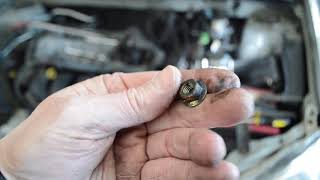
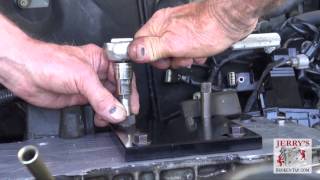
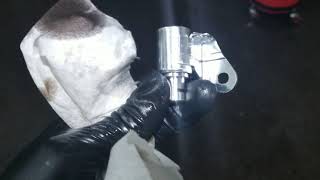
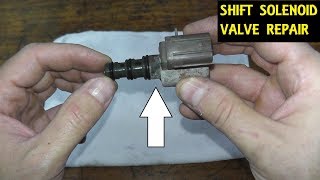
We Have This Part in Stock

The information in this article is provided for general reference and educational purposes only. Vehicle specifications, procedures, and part compatibility can vary by production date, trim level, and region. Always consult your vehicle's factory service manual and verify part numbers before purchasing or performing repairs. Safety-critical components such as airbags, seat belts, and braking systems should be installed by a qualified professional.
- Toyota Corolla:
- 🧭 Diagnostic Flowchart
- 🎬 Helpful Videos
- 🛍️ Shop This Part
- What's Unique About the 2003-2008 Toyota Corolla
- Symptoms You May Notice
- Most Likely Causes
- Rare But Worth Checking
- Diagnosis Steps
- Parts You'll Likely Need
- Related Codes That Often Appear With This One
- Technical Service Bulletins (TSBs) & Recalls
- Platform-Specific Known Issues
- Mechanic-Grade Diagnostic Values
- Scan Tool Commands That Help
- Wiring & Ground Locations
- Real Owner Repair Stories
- OEM Part Supersession History
- Other Known Issues on This Vehicle
- Used vs. New Parts: Buying Guide for This Vehicle
- Real Owner Stories
- 2007 Pontiac Vibe 1.8L 1ZZ-FE
- 2003-2008 Toyota Corolla 1.8L 1ZZ-FE
- 2003-2008 Toyota Corolla/Matrix/Vibe
- Related OBD-II Codes
- Frequently Asked Questions
- 🎟️ Get 5% Off