

P0751 on 2006-2015 Volkswagen Golf: Shift Solenoid 'A' Causes and Fixes
On a 2006-2015 VW Golf with the 09G 6-speed automatic transmission, code P0751 almost always points to a failing shift solenoid 'A' (N92) or a worn valve body. The most common fix is to replace the solenoid set and transmission fluid, which costs around $150-$500 for parts. This is a very common failure on this platform.
- P0751 on a 2006-2015 Golf with an automatic transmission is a strong indicator of a common failure within the 09G transmission.
- The most likely cause is a failed shift solenoid, but it is highly recommended to replace the entire set of solenoids, not just one.
- Degraded transmission fluid is a major contributing factor; a fluid and filter change is essential during the repair.
- If new solenoids do not resolve the issue, the root cause is likely a worn valve body, which will need to be replaced with a remanufactured unit.
- This is a complex repair that should be undertaken by experienced DIYers or a professional shop due to the need for special tools and procedures.
What's Unique About the 2006-2015 Volkswagen Golf
The 2006-2015 Golf models, particularly the Mk5 and Mk6 generations, frequently used the Aisin-Warner TF-60SN 6-speed automatic, which VW designated as the '09G'. This transmission is well-known for developing issues with its shift solenoids and valve body over time. The problem is so common that it's a documented pattern failure; the solenoids wear out or get clogged with debris from aging transmission fluid, leading to pressure loss and erratic shifting that sets codes like P0751. While the code points to a single solenoid, the root cause is often systemic wear within the valve body, a known design characteristic of this specific transmission. Aftermarket companies like Sonnax specialize in providing remanufactured valve bodies and repair kits to address these inherent design flaws.
Generation note: This issue primarily affects the Mk5 (2006-2009) and Mk6 (2010-2014) generations of the Volkswagen Golf that are equipped with the 09G 6-speed automatic transmission. The Mk7 generation (2015+) began to phase in different transmissions (like the DSG), so this code is less common and may have different causes on the newest models in this range.
Symptoms You May Notice
- Harsh or abrupt 'clunking' shifts, especially when downshifting (e.g., 3-2).
- Delayed gear engagement or flaring RPMs between shifts.
- Transmission gets stuck in one gear (limp mode, often 3rd gear).
- Vehicle may slip into neutral unexpectedly.
- Illuminated Check Engine Light or Transmission Warning Light.
- Reduced fuel economy due to inefficient shifting.
- Shuddering or shaking at certain speeds.
- Harsh engagement when shifting from Park or Neutral into Drive or Reverse.
- Replacing only the single N92 solenoid. While this might fix the immediate code, other solenoids are likely near the end of their service life and may cause similar issues soon after.
- Replacing the solenoids when the valve body bores are excessively worn. If the underlying issue is pressure loss from worn bores, new solenoids will not solve the problem long-term.
- Using incorrect, non-specified transmission fluid. The 09G transmission is sensitive to fluid type, and using a generic ATF can cause shifting problems and damage.
Most Likely Causes
- Failed Shift Solenoid 'A' (N92) 🔴 High Probability → Shop Transmission Valve Body The solenoids in the 09G transmission are a known wear item. Over time, internal components wear down or become clogged with metallic debris from normal transmission operation, causing them to stick. This is a very frequent failure point after 80,000 miles.
How to confirm: A professional would test the solenoid's resistance with a multimeter (spec is often 5.0-5.6 ohms for linear solenoids) and may command its operation with a scan tool. However, a solenoid can test good electrically but still be mechanically stuck. Often, replacement is the most practical diagnostic step, as cleaning is not always a permanent fix.
Typical fix: Replace the faulty N92 solenoid. It is highly recommended to replace the entire set of 6-8 solenoids at the same time, as they wear at a similar rate. Aftermarket kits are widely available.
Est. part cost: $150-$500 for a full solenoid kit. - Worn Transmission Valve Body 🟡 Medium Probability → Shop Transmission Valve Body This is a well-documented design issue with the 09G transmission. The aluminum bores in the valve body where the solenoid valves move can wear down. This wear creates gaps, causing hydraulic pressure to leak past the valves, which the TCM interprets as a solenoid performance issue.
How to confirm: This is difficult to confirm without ruling out other causes. If replacing the solenoids does not fix the issue, a worn valve body is the next logical culprit. A specialist may use a vacuum tester on the valve body bores to check for wear. A common owner experience is that the P0751 code returns shortly after a solenoid-only replacement, indicating the valve body was the root cause.
Typical fix: Replace the entire valve body with a new or remanufactured unit that has been updated with oversized valves or sleeves to correct the wear issue. Companies like Sonnax are leaders in providing these corrected valve bodies.
Est. part cost: $400-$800 for a remanufactured valve body. - Low or Degraded Transmission Fluid (ATF) 🟡 Medium Probability → Shop Transmission Assembly Many of these transmissions were marketed with 'lifetime' fluid, leading to owner neglect. Old, degraded fluid loses its lubricating properties and becomes contaminated with clutch material and metal shavings, which can clog the small passages in the solenoids and valve body.
How to confirm: Check the transmission fluid level and condition. The fluid should be reddish/brown and clear, not black, burnt-smelling, or full of debris. Note: These transmissions do not have a dipstick, so checking the level requires raising the vehicle and opening a fill plug at a specific temperature (35-45°C), monitored with a scan tool.
Typical fix: Perform a transmission fluid and filter change using the correct VW G 055 025 A2 specification fluid or a certified equivalent. This is often done along with solenoid replacement. If the fluid is very dirty, this may only be a temporary fix if the components are already damaged.
Est. part cost: $100-$200 for a fluid and filter kit.
Rare But Worth Checking
- Faulty Wiring or Connector: The wiring harness to the transmission lives in a harsh environment. While less common than internal failures, check for corroded pins on the main transmission connector or any visible damage to the harness before condemning internal parts.
- Failed Transmission Control Module (TCM): → Shop Transmission Assembly It is rare for the TCM itself to fail in a way that isolates only this code. This should only be considered after all other possibilities, including the valve body, have been exhausted.
Diagnosis Steps
- Confirm the code is present using an OBD-II scanner. Note any other transmission-related codes.
- Check the transmission fluid level and condition. This requires lifting the vehicle level and removing the fill plug while monitoring fluid temperature (35-45°C) with a scan tool like VCDS.
- Inspect the main electrical connector at the transmission for corrosion, moisture, or damage.
- If the fluid is low or dirty, a fluid and filter change is a good first step, but may not solve the problem if components are already worn.
- The next step is typically to remove the transmission pan and valve body to access the solenoids.
- Test the resistance of Shift Solenoid 'A' (N92). Compare the reading to the manufacturer's specification (typically 5.0-5.6 Ohms for linear solenoids). However, be aware that a solenoid can have correct resistance but be mechanically stuck.
- Given the high failure rate, the standard professional repair is to replace the entire set of shift solenoids.
- While the valve body is out, inspect it for any obvious signs of scoring or wear. If the budget allows, replacing it with a remanufactured unit (e.g., from Sonnax) is the most robust repair.
- Reassemble with a new pan gasket, filter, and the correct type and amount of VW-specific ATF (e.g., G055025A2).
- After reassembly, the transmission control module's adaptations must be reset using a compatible scan tool to ensure proper shifting. This is a critical step.
Parts You'll Likely Need
- Automatic Transmission Shift Solenoid Kit
(OEM #Aftermarket kits are common, e.g., Rostra #52-9032)— This is the most common cause of P0751 on the 09G transmission. Replacing the full set is recommended because they all have similar wear patterns and life expectancies.
Trusted brands: Rostra, Lubeck, Generic Remanufactured - Automatic Transmission Fluid (ATF)
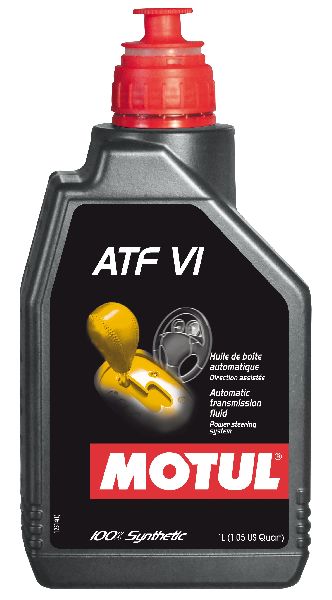
(OEM #G 055 025 A2)— New fluid is required for any internal transmission work. Degraded fluid is a primary cause of the failure.
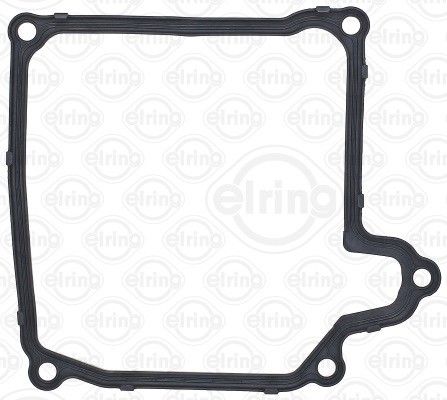
Trusted brands: Genuine VW/Audi, Pentosin, Liqui Moly, Ravenol - Automatic Transmission Filter and Pan Gasket Kit — These are replaced whenever the transmission pan is removed for service.
Trusted brands: Vaico, Meyle, Topran - Remanufactured Valve Body
(OEM #09G325039A (example, verify by VIN))— If new solenoids do not fix the issue, a worn valve body is the likely culprit. Remanufactured units have corrected the original design flaws.
Trusted brands: Sonnax, Street Smart Transmission, Valve Body Pro
Related Codes That Often Appear With This One
- P0756 — This code indicates a fault with Shift Solenoid 'B'. It is common to see multiple solenoid codes together, as they tend to fail at similar rates due to the same root causes (worn solenoids, bad fluid, worn valve body).
- P0741 — This code relates to the Torque Converter Clutch (TCC) solenoid. The TCC solenoid is also located in the valve body and is susceptible to the same wear and contamination issues that cause P0751.
- P0700 — This is a generic code that simply means the Transmission Control Module (TCM) has stored a fault. It will always appear alongside a more specific code like P0751 to signal that a transmission-related problem exists.
Platform-Specific Known Issues
- The Aisin 09G transmission has a well-documented history of premature valve body and solenoid failure, often starting around 80,000 miles. This is considered a pattern failure for this specific transmission used in many VW and Audi models of this era.
Mechanic-Grade Diagnostic Values
- Shift Solenoid (Linear Type) Resistance — expected: 5.0 - 5.6 Ohms. Failure: A reading outside this range indicates a faulty solenoid coil. However, a solenoid can be mechanically stuck even with correct resistance.
- On/Off Solenoid (N88, N89) Resistance — expected: 10 - 40 Ohms (Typical for this type). Failure: A reading outside the expected range suggests a coil failure.
- ATF Temperature for Level Check — expected: 35°C to 45°C (95°F to 113°F). Failure: Checking the fluid level outside this temperature range will result in an incorrect fluid level, which can cause shifting problems.
- TCM Over-Temperature Countermeasure 1 Trigger — expected: Approx. 127°C (261°F). Failure: When ATF temperature reaches this point, the TCM shifts to a protective map with higher RPM shifts and earlier torque converter lockup to reduce heat. This indicates a severe cooling issue or internal slipping.
- K1 Clutch Pressure (at idle) — expected: 28-90 PSI. Failure: Low pressure at the K1 test port can indicate a leak in the K1 clutch circuit, a worn valve body, or a failing N92 solenoid.
Hidden / Shadow Codes Worth Checking
- 00453: Function Limitation due to Over-Temperature. This fault is often stored alongside shift performance codes and indicates the TCM has detected excessive ATF temperature and has engaged protective measures. (see via VCDS (VAG-COM) or other VW-specific professional scan tools.)
Scan Tool Commands That Help
- VCDS (VAG-COM): [02 - Auto Trans] -> [Basic Settings - 04] -> Group 001 -> [Go!] — This procedure is used to clear the learned values (adaptations) for Tiptronic and Kickdown after replacing the valve body or solenoids. The accelerator pedal should NOT be touched during this specific procedure for the 09G.
- VCDS (VAG-COM): [02 - Auto Trans] -> [Basic Settings - 04] -> Group 002 -> [Go!] — This clears the pressure control adaptations. It is recommended to perform this after clearing Group 001.
- VCDS (VAG-COM): [02 - Auto Trans] -> [Adv. Meas. Values] — Used to monitor live data, most importantly 'ATF Temperature', which is critical for setting the correct fluid level. On newer models using the UDS protocol, 'Measuring Blocks - 08' will be unavailable, and this function must be used instead.
- Autel MaxiDAS (or similar): Adaptation -> Channel 00 -> Reset all factory defaults — This is a more forceful reset to erase all learned values and return the TCM to its base settings. This is critical after major repairs like valve body or solenoid replacement to prevent the old, incorrect shift strategies from being applied to new parts.
Wiring & Ground Locations
- Main Case Connector (External) — On the top or side of the transmission case, where the main vehicle harness connects to the transmission's internal harness.. This is the primary electrical interface for all solenoids. Corrosion or damage to the pins in this connector can cause intermittent or permanent solenoid faults. The 09G can have an 8-pin or 14-pin connector depending on the version.
- Internal Solenoid Wiring Harness — Inside the transmission, connected to the solenoids and passing through the case to the main connector. Requires removing the transmission pan and sometimes the valve body to access.. This harness is submerged in hot ATF. Over time, the plastic can become brittle and wires can break or short, causing solenoid codes. Fluid contamination can also wick up into the connector pins.
- TCM (J217) Ground — The TCM for the 09G is typically located in the engine bay, often beneath the left front wheel housing cover. Its ground points are crucial for stable operation.. A poor ground connection for the TCM can cause a host of erratic electronic issues, including incorrect readings from sensors and faulty commands to solenoids, potentially triggering a P0751 code.
Real Owner Repair Stories
- YouTube user 'saneauto' (2004 VW Beetle with 09G transmission (similar platform and issue)) — Brutal 1-2 upshift, firm 3-4 upshift, and hard downshifts, especially into 2nd gear.
❌ Tried (didn't work) Replacing all solenoids with a brand new aftermarket kit purchased online. This resulted in poor connector fitment and made the shifting problems worse.
✅ What actually fixed it The mechanic removed the failed aftermarket solenoids, disassembled the original VW solenoids, cleaned the internal bores and plungers with a drill bit to remove varnish and debris, and reinstalled the original, now-cleaned solenoids. After the repair, a factory settings reset and kick-down adaptation were performed with a scan tool. - Reddit user 'Cog1969' (VW with 09G transmission) — Slipping shifts (3-4), no 4th gear.
❌ Tried (didn't work) Replacing the valve body with a rebuilt Sonnax-enhanced unit. This solved some problems but made others worse because the clutch packs were already worn.
✅ What actually fixed it The user concluded that for high-mileage transmissions with slipping, a valve body alone is insufficient. The true fix requires a full transmission rebuild, including friction plates, pistons, seals, a rebuilt valve body, and a refurbished torque converter. A key part of the rebuild is replacing the K2 clutch drum bushing with an updated Sonnax part that is pinned to prevent spinning and oil starvation. - NHTSA ODI #10608492 (VW GTI) — An owner reported scanning their vehicle and finding several codes, including P0751 for Shift Solenoid 1 (N88), P1746 for the transmission solenoid power relay, and P2723 for pressure control solenoid 5.
OEM Part Supersession History
Large Can Solenoids→Small Can Solenoids / Universal Aftermarket— Manufacturing changes and cost reduction over the production run. Early 09G models used larger-bodied solenoids.
Heads up: Most quality aftermarket solenoids (e.g., Rostra) are designed to be universal and will physically fit and function in place of either large or small can original solenoids. However, it is critical to replace them as a set to ensure matched performance characteristics.09G Valve Body (early versions, e.g., with pressure sensors)→09G Valve Body (later versions, without pressure sensors)— Design simplification and changes in control strategy by VW/Aisin.
Heads up: Valve bodies are not directly interchangeable across all years. It is critical to match the valve body to the vehicle's specific year and model, as casting and component differences exist. Using the wrong version can lead to no-shift conditions or other failures.
Model Year Variations Within This Range
- 2006-2008 vs 2009+: The physical size of the OEM solenoids often differs, with earlier models using 'large can' solenoids and later models using 'small can' solenoids. Furthermore, there are at least five different valve body casting designs used throughout the 2006-2015 period, with changes to pressure switch inclusion and other minor details. While aftermarket solenoids are often universal, the valve body itself must be matched correctly to the vehicle's year.
Diagnostic Flowchart
Other Known Issues on This Vehicle
Issues unrelated to this code that are worth knowing about as an owner of this generation:
- Timing Chain Tensioner Failure (TSI Engines) 🔴 High — Common on 2.0T TSI engines from approx. 2008-2013. Failure can be catastrophic, leading to engine damage. (Ref: VW TSB 15-12-01 addresses this issue.)
- DSG Mechatronic Unit Failure 🔴 High → Shop Transmission Valve Body — A well-known problem on cars equipped with the Direct-Shift Gearbox (DSG), not the 09G automatic. Symptoms include jerky shifting, flashing 'PRNDS' indicator, and loss of drive.
- Water Pump / Thermostat Housing Leak (TSI Engines) 🟠 Medium — Very common across many modern VW engines. The plastic housing is prone to cracking, causing coolant leaks. Typically fails between 40,000 and 100,000 km. (Ref: Subject of a class-action lawsuit and extended warranty program, but not a formal recall for all models.)
- Carbon Buildup on Intake Valves (TSI/FSI Engines) 🟠 Medium — Inherent to direct-injection engines. Becomes noticeable after 60,000-100,000 km, causing rough idle, hesitation, and reduced performance.
- Ignition Coil Failure 🟡 Low — A frequent and relatively simple-to-fix issue on TSI engines, causing engine misfires. Often replaced as a set when one fails.
Used vs. New Parts: Buying Guide for This Vehicle
When a used part is the smart pick: A used valve body from a verified low-mileage donor vehicle (<60,000 miles) can be a cost-effective option, but it is a significant gamble. It carries the same inherent design flaws and may fail soon after installation. It only makes sense if the budget absolutely prohibits a remanufactured unit and the owner accepts the risk.
Donor-vehicle mileage cap: roughly under 60000 miles for the part to have meaningful remaining life.
What to inspect on the donor part:
- Verify the donor vehicle's mileage. Avoid any part from a car with over 80,000 miles.
- Ask for the VIN of the donor car to confirm it had the exact same transmission and part number.
- Inspect the fluid that comes out of the used valve body. If it is black, burnt, or contains metal, reject the part immediately.
- Look for any signs that the valve body has been opened before (stripped screw heads, pry marks). An untouched original is preferable to a poorly rebuilt one.
Aftermarket brands forum-validated for this vehicle:
- Sonnax (for valve body repair kits and remanufactured valve bodies)
- Rostra (for solenoid kits)
- Valve Body Pro (for remanufactured valve bodies)
- Street Smart Transmission (for remanufactured valve bodies)
Brands owners have reported issues with on this vehicle:
- Unbranded, low-cost solenoid kits from online marketplaces have a high rate of failure, with reports of poor fitment and causing new shifting problems immediately after installation.
Real Owner Stories
Aggregated from forums and TSBs cited above. Mileages and costs reflect what owners reported in those sources.
2007 VW New Beetle 2.5L (09G Transmission) — ~85000 miles
Symptoms: Owner experienced symptoms requiring the removal of the valve body and replacement of solenoids to restore proper shifting.
What fixed it: Removal of the valve body and replacement of the shift solenoids followed by a fluid refill.
Source hint: YouTube video titled '09G Transmission Solenoid Removal and Replacement - 2007 2.5L New Beetle Valve Body Repair'
VW Golf/Jetta (09G Transmission) — ~90000 miles
Symptoms: The P0751 code returned shortly after a solenoid-only replacement, indicating the solenoids were not the only issue.
What fixed it: Replacement of the entire valve body with a remanufactured unit featuring updated oversized valves or sleeves.
Source hint: Article context section on 'Worn Transmission Valve Body' describing common owner experience
VW 09G Transmission Vehicle — ~100000 miles
Symptoms: Harsh shifting and solenoid performance issues; owner was advised against cheap aftermarket parts.
What fixed it: Cleaning of the original solenoids and performing critical TCM adaptations after the repair.
Source hint: YouTube video titled 'VW 09G Transmission Solenoid Repair' by a professional mechanic
VW GTI — NHTSA ODI #10608492
Symptoms: An owner reported scanning their vehicle and finding codes P0751 (Shift Solenoid 1 N88), P1746 (Trans. Solenoid Power Relay), and P2723 (Pressure Control Solenoid 5).
What fixed it: The owner contacted the manufacturer regarding potential recalls related to the transmission control system.
Related OBD-II Codes
Frequently Asked Questions
My 2007 Golf is clunking during 3-2 downshifts. Is this a known issue for the 09G transmission?
Can I just clean the N92 solenoid on my Volkswagen to fix the P0751 code?
I replaced the solenoids but P0751 came back. Does my Golf need a whole new transmission?
Does the 2006-2015 Golf transmission require fluid changes, or is it 'lifetime' fluid?
Is there a specific step I need to take after replacing the valve body to ensure my Golf shifts correctly?
Does the P0751 code on my Golf mean I have a timing chain issue?
Helpful Videos
We Have This Part in Stock


The information in this article is provided for general reference and educational purposes only. Vehicle specifications, procedures, and part compatibility can vary by production date, trim level, and region. Always consult your vehicle's factory service manual and verify part numbers before purchasing or performing repairs. Safety-critical components such as airbags, seat belts, and braking systems should be installed by a qualified professional.
- Volkswagen Golf:
- 🧭 Diagnostic Flowchart
- 🎬 Helpful Videos
- 🛍️ Shop This Part
- What's Unique About the 2006-2015 Volkswagen Golf
- Symptoms You May Notice
- Most Likely Causes
- Rare But Worth Checking
- Diagnosis Steps
- Parts You'll Likely Need
- Related Codes That Often Appear With This One
- Platform-Specific Known Issues
- Mechanic-Grade Diagnostic Values
- Hidden / Shadow Codes Worth Checking
- Scan Tool Commands That Help
- Wiring & Ground Locations
- Real Owner Repair Stories
- OEM Part Supersession History
- Model Year Variations Within This Range
- Other Known Issues on This Vehicle
- Used vs. New Parts: Buying Guide for This Vehicle
- Real Owner Stories
- 2007 VW New Beetle 2.5L (09G Transmission) — ~85000 miles
- VW Golf/Jetta (09G Transmission) — ~90000 miles
- VW 09G Transmission Vehicle — ~100000 miles
- VW GTI — NHTSA ODI #10608492
- Related OBD-II Codes
- Frequently Asked Questions
- 🎟️ Get 5% Off