

P0752 on 2020-2023 Ford Explorer: Shift Solenoid 'A' Stuck On Causes and Fixes
On a 2020-2023 Ford Explorer, code P0752 is most often caused by a faulty transmission valve body in the 10R80 10-speed automatic. This is a known issue documented in multiple Ford Technical Service Bulletins (TSBs). The fix typically involves replacing the entire valve body assembly, as sticking valves or internal cross-leaks are common.
- P0752 on a 2020-2023 Explorer indicates Shift Solenoid 'A' is stuck on, causing serious shifting problems.
- This is a well-documented issue on the 10R80 transmission, and Ford has issued multiple TSBs about it.
- The most probable cause is not just a single bad solenoid but a faulty transmission valve body assembly.
- Due to the complexity of the repair, professional service is highly recommended.
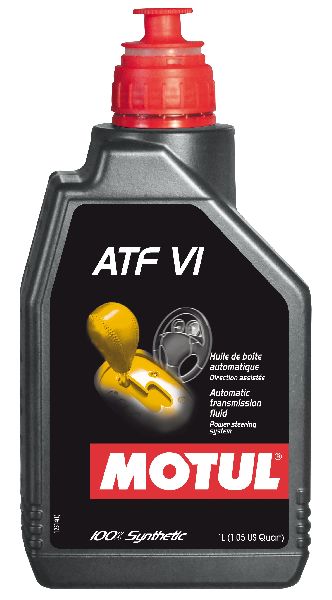
- Always use the specified Motorcraft MERCON ULV transmission fluid during service to prevent future issues.
What's Unique About the 2020-2023 Ford EXPLORER
The 2020-2023 Ford Explorer uses the 10R80 10-speed automatic transmission, co-developed with GM. This specific transmission has a documented history of shift quality issues across various Ford models. Ford has released numerous Technical Service Bulletins (TSBs) that directly link codes like P0752 to internal transmission problems. The most common culprit is the main valve body assembly, which is prone to sticking valves and cross-leaks. Another known, but less frequent, issue is the failure of the CDF clutch drum, where a bushing can move and cause pressure loss, leading to similar symptoms.
Diagnostic Flowchart
Tap your situation to follow the diagnostic path that matches what you're seeing on this vehicle.
Symptoms You May Notice
- Harsh or delayed gear shifts, especially during 1-3 or 3-5 upshifts.
- Delayed or harsh engagement when shifting from Park to Drive or Reverse. 🎬 Watch: Diagnosing delayed reverse issues on 2020+ Explorers.
- Check Engine Light or wrench light is illuminated.
- Transmission may enter "limp mode," limiting available gears and vehicle speed.
- Transmission slipping between gears, sometimes feeling like a brief loss of power.
- A slip or flare in RPM on the 3-4 or 4-5 shift.
- Vehicle may feel stuck in one gear.
- Torque converter shudder at cruising speeds.
- Replacing only a single shift solenoid when the root cause is a faulty or contaminated valve body. The problem may return with a different solenoid code.
- Performing a fluid flush without addressing the underlying mechanical fault. If the valve body is worn or the CDF drum is failing, new fluid will not solve the problem.
- Replacing the transmission when only a valve body overhaul or replacement was needed. This leads to a much higher repair cost.
Most Likely Causes
- Faulty Transmission Valve Body 🔴 High Probability → Shop Transmission Valve Body This is the most common failure. Multiple Ford TSBs (like 22-2428 and 24-2254) for the 2020-2023 Explorer list P0752 as a primary code indicating sticking valves or cross-leaks within the main control valve body. The aluminum construction can be prone to wear and warping.
How to confirm: A technician will use a high-end scan tool to monitor solenoid commands vs. actual states. The presence of multiple solenoid codes (P0751, P0756, P0761, etc.) alongside P0752 strongly points to a systemic valve body issue, as outlined in the TSBs. The TSB repair procedure often involves overhauling or replacing the entire valve body.
Typical fix: Replacement of the entire transmission valve body assembly. This assembly includes all new solenoids and is the Ford-recommended procedure to ensure all worn internal valves and seals are addressed. 🎬 Watch: Step-by-step guide to replacing the 10R80 valve body.
Est. part cost: $700-$1200 - Low or Contaminated Transmission Fluid 🟡 Medium Probability → Shop Transmission Assembly While not specific to the platform, the complexity of the 10R80 makes it sensitive to fluid condition. Debris from normal wear or other failing components can clog passages in the valve body, causing solenoids to stick.
How to confirm: Check the transmission fluid level and condition. This must be done by a technician as there is no dipstick. The fluid must be the correct Motorcraft MERCON ULV specification. Dark, burnt, or glittery fluid indicates internal damage.
Typical fix: Perform a transmission fluid drain-and-fill or a complete fluid flush. Replace the transmission filter. However, if significant debris is found, this is often a temporary fix as the underlying mechanical issue (like a failing valve body or clutch) remains.
Est. part cost: $150-$300 - Failed Shift Solenoid 'A' ⚪ Low Probability → Shop Transmission Valve Body While possible, an isolated solenoid failure is rare on this platform. The widespread TSBs indicate the problem is more often systemic to the entire valve body rather than a single faulty solenoid. Replacing just one solenoid may lead to the problem returning with a different code.
How to confirm: After accessing the valve body, a technician can test the solenoid's electrical resistance with a multimeter. A typical resistance for a 10R80 shift solenoid is around 5 ohms. They can also be commanded on and off with a scan tool to check for mechanical function.
Typical fix: Replace the individual shift solenoid. However, due to the high likelihood of a larger valve body issue, most shops and Ford TSBs recommend replacing the valve body assembly as a whole.
Est. part cost: $50-$150
Rare But Worth Checking
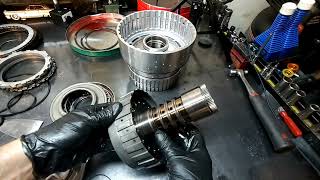
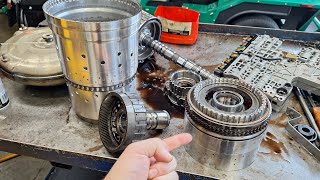
- CDF Clutch Drum Failure: → Shop Transmission Assembly A known weak point in earlier 10R80s is the Clutch Drum F (CDF) assembly. A bushing can slide out of place, damaging a seal and causing a hydraulic pressure leak. This can lead to a variety of shifting symptoms and throw solenoid codes. TSB 24-2254 mentions this failure mode. This is a major internal repair. 🎬 See a teardown of the CDF drum bushing failure.
- Wiring Harness or Connector Issue: A short in the wiring harness leading to the transmission or a corroded connector could cause the solenoid to remain energized. This is less common than internal transmission faults but should be inspected before condemning the transmission.
- Powertrain Control Module (PCM) Fault: In very rare cases, the module that controls the transmission can fail, sending an incorrect signal. This should only be considered after all other possibilities, especially the valve body and wiring, have been exhaustively checked.
Diagnosis Steps
- Verify the code with a quality OBD-II scanner.
- Check for any applicable Technical Service Bulletins (TSBs) for your vehicle's VIN. TSBs 22-2428, 24-2252, and 24-2254 are highly relevant.
- Check the transmission fluid level and condition according to the manufacturer's procedure (requires a lift and scan tool). Look for a burnt smell or metallic debris.
- Inspect the transmission's external wiring harness and connectors for any signs of damage, corrosion, or looseness.
- Use an advanced scan tool to monitor the commanded state and actual state of Shift Solenoid 'A' and other solenoids.
- If multiple solenoid codes are present, follow the diagnostic path outlined in the relevant TSB, which usually points to a valve body overhaul or replacement.
- If only P0752 is present, the next step is to remove the transmission pan to access the valve body.
- Inspect the fluid in the pan for excessive metal shavings or clutch material, which could indicate a more severe failure like the CDF drum.
- Test the resistance of Shift Solenoid 'A' and its wiring from the main connector. The expected resistance is approximately 5 ohms.
- If the solenoid and wiring test good, the fault is very likely within the transmission valve body itself, due to a sticking valve or internal leak.
Parts You'll Likely Need
- Transmission Valve Body Assembly
(OEM #HL3Z-7A100-B)— This is the most common fix for P0752 on the 10R80 transmission, as documented by multiple Ford TSBs. It replaces the entire hydraulic control unit, including all solenoids, to fix issues with sticking internal valves. This part number supersedes HL3Z-7A100-A.
Trusted brands: Motorcraft
OEM price range: $700-$1200
Aftermarket price range: $500-$900 - Automatic Transmission Fluid
(OEM #XT-12-QULV)— The system must be refilled with approximately 8-10 quarts of clean fluid after replacing the valve body. Only MERCON ULV is acceptable.
Trusted brands: Motorcraft MERCON ULV
OEM price range: $15-$25 per quart - Transmission Filter and Pan Gasket — These should always be replaced whenever the transmission pan is removed for service to ensure a clean system and proper seal.
Trusted brands: Motorcraft
OEM price range: $50-$100
Related Codes That Often Appear With This One
- P0751 — This code is for 'Shift Solenoid A Performance/Stuck Off'. Seeing it with P0752 indicates an erratic problem with the same solenoid, further strengthening the case for a sticking valve or debris in the valve body.
- P0756, P0757, P0761, P0762, etc. — These are codes for other shift solenoids (B, C, D, etc.). The presence of multiple solenoid codes is explicitly mentioned in Ford's TSBs (e.g., 22-2428, 23-2123) and strongly points to a systemic failure within the valve body or a fluid contamination issue affecting all solenoids.
- P0729, P0731, P0732, etc. — These are gear ratio error codes. They often accompany solenoid codes when the transmission fails to achieve the commanded gear, confirming a mechanical or hydraulic issue prevents proper shifting.
Technical Service Bulletins (TSBs) & Recalls
- TSB 22-2428: A key bulletin for 2020-2023 models that identifies potential causes as software, sticking valves in the main control body, or a failing CDF clutch cylinder sleeve.
- TSB 24-2254: For 2020-2022 models, specifically points to the CDF clutch cylinder sleeve moving and causing hydraulic leaks as the cause for harsh shifts and numerous DTCs, including P0752.
- TSB 23-2123: Superseded bulletin for 2018-2021 models that recommended overhauling the main control valve body for harsh shifts and solenoid codes.
- TSB 22-2145: Addresses a neutral-out condition on 2020-2021 Explorers, pointing to a leak in the park valve circuit requiring a new valve body separator plate.
Platform-Specific Known Issues
- Ford has issued multiple Technical Service Bulletins for the 10R80 transmission. TSB 22-2428 is a comprehensive bulletin covering 2020-2023 Explorers that attributes harsh shifts and codes like P0752 to sticking valves in the main control body or issues with the CDF clutch cylinder sleeve.
- TSB 24-2254 specifically addresses the CDF clutch cylinder sleeve moving and causing hydraulic leaks, which can trigger P0752 among other codes.
- Owner forums are filled with discussions about the 10R80's harsh shifting, with many confirming that a valve body replacement resolved their issues, often after a dealer followed a TSB.
Mechanic-Grade Diagnostic Values
- Shift Solenoid 'A' (SSA) Coil Resistance — expected: Approximately 5 ohms for 10R80 CIDAS solenoids.. Failure: A reading that is significantly higher, infinite (open circuit), or zero (short circuit).
- Shift Solenoid 'A' (SSA) Control Circuit Voltage — expected: This is a Pulse Width Modulated (PWM) circuit controlled by the TCM/PCM by grounding the circuit. Direct voltage measurement is less useful than observing the duty cycle on a scope or advanced scan tool.. Failure: No activity on the circuit when a shift is commanded, or a constant ground/voltage.
Hidden / Shadow Codes Worth Checking
- P163E: Transmission Control Module (TCM) Programming Error - Solenoid Body Strategy Not Programmed. (see via This DTC can appear after a valve body replacement if the 13-digit solenoid body strategy is entered incorrectly or not at all using a Ford scan tool (IDS/FDRS).)
Scan Tool Commands That Help
- Ford IDS / FORScan: Transmission Characterization Update / PCM – Transmission Strategy Download — This is a mandatory procedure after replacing the transmission valve body. The 13-digit strategy number from the new valve body must be programmed into the PCM/TCM to ensure correct solenoid operation. Failure to do so will cause poor shifting and may set other DTCs.
- Ford IDS / FORScan: Clear Transmission Adaptive Tables — This should be performed after any major transmission repair, including valve body replacement. It resets the learned shift pressures and timing, forcing the TCM to start a new learning process with the new components.
- Ford IDS / FDRS: Adaptive Learning Drive Cycle — After clearing the adaptive tables, a specific drive cycle must be performed to allow the TCM to relearn shift points and pressures. This involves a series of gentle accelerations through all gears and specific shifting sequences between Neutral, Drive, and Reverse.
Wiring & Ground Locations
- C175T — This is one of the main connectors at the Powertrain Control Module (PCM).. Pin 11 on this connector is typically the control circuit for Shift Solenoid 'A' (SSA). A technician can test for continuity and shorts on this wire between the PCM and the transmission's main connector.
- Main Transmission Harness Connector — On the side of the transmission case, connecting the internal transmission harness (and solenoids) to the main vehicle harness.. This is the primary point to disconnect and test the solenoid and wiring. The connector and its pins should be inspected for corrosion, damage, or fluid intrusion before condemning internal components.
OEM Part Supersession History
HL3Z-7A100-A→HL3Z-7A100-B— This is the valve body assembly for certain 10R80 applications. Part supersessions often involve design updates to address known failure points, such as sticking valves or warping.JL3Z-7A100-C (Column Shift), JL1Z-7A100-A (Electronic Shift)→Later revisions exist.— These are valve bodies for 2018+ models. Ford continuously updates parts to improve reliability. TSB 20-2117 lists these as replacements for earlier models with TCC issues.
Heads up: Different part numbers are used for column shift vs. electronic shift (console) models. Using the wrong one will result in compatibility issues.
Model Year Variations Within This Range
- 2020-2022: Vehicles built on or before December 23, 2022, are more prone to CDF clutch drum sleeve movement. Later models likely have the revised drum from the factory, which has a machined lip to prevent the sleeve from walking out of position.
- 2017-2020 vs 2021+: A Ford technician noted that the transmission tuning software differs between these year groups. The 2017-2020 models are tuned more for fuel economy and may skip gears more often, while 2021+ models tend to shift more sequentially and consistently.
Helpful Videos

We Have This Part in Stock


The information in this article is provided for general reference and educational purposes only. Vehicle specifications, procedures, and part compatibility can vary by production date, trim level, and region. Always consult your vehicle's factory service manual and verify part numbers before purchasing or performing repairs. Safety-critical components such as airbags, seat belts, and braking systems should be installed by a qualified professional.
- Ford EXPLORER:
- 🧭 Diagnostic Flowchart
- 🎬 Helpful Videos
- 🛍️ Shop This Part
- What's Unique About the 2020-2023 Ford EXPLORER
- Symptoms You May Notice
- Most Likely Causes
- Rare But Worth Checking
- Diagnosis Steps
- Parts You'll Likely Need
- Related Codes That Often Appear With This One
- Technical Service Bulletins (TSBs) & Recalls
- Platform-Specific Known Issues
- Mechanic-Grade Diagnostic Values
- Hidden / Shadow Codes Worth Checking
- Scan Tool Commands That Help
- Wiring & Ground Locations
- OEM Part Supersession History
- Model Year Variations Within This Range
- 🎟️ Get 5% Off