

P0752 on 2019-2023 Ford Ranger: Shift Solenoid 'A' Stuck On Causes and Fixes
On a 2019-2023 Ford Ranger, code P0752 is most often caused by a faulty transmission main control valve body, not just a single solenoid. This is a known issue documented in Ford Technical Service Bulletins (TSBs). The fix typically involves overhauling or replacing the valve body, which is a job for a professional. In some cases, a more severe internal failure of the CDF clutch drum may be the root cause.
- P0752 on your Ranger indicates Shift Solenoid 'A' is stuck on, but the root cause is usually not the solenoid itself.
- The most likely culprit is a faulty main control valve body, a known issue on the 10R80 transmission acknowledged by Ford in multiple TSBs.
- Symptoms include harsh shifts, delayed engagement, and the Check Engine Light.
- This is a complex repair that requires professional service; it is not recommended for a typical DIYer.
- Ensure only Motorcraft MERCON ULV fluid is used in the transmission, as the wrong fluid can cause or worsen the problem.
What's Unique About the 2019-2023 Ford RANGER
The 2019-2023 Ford Ranger uses the 10R80 10-speed automatic transmission, which is known for having issues related to its complex main control valve body. While P0752 points to a specific solenoid, Ford has issued multiple Technical Service Bulletins indicating that symptoms like harsh shifting and this code are often due to sticking valves within the valve body assembly. A secondary, and more severe, known failure point is the CDF clutch drum, where an internal sleeve can move out of position, causing fluid pressure loss and erratic shifting. This means a fix often requires addressing the entire valve body or even deeper internal transmission components, not just one solenoid.
Diagnostic Flowchart
Tap your situation to follow the diagnostic path that matches what you're seeing on this vehicle.
Symptoms You May Notice
- Harsh or abrupt shifts, particularly noted by some owners on the 3-5 upshift.
- Delayed shifts or engagement into gear.
- Check Engine Light (Malfunction Indicator Lamp) is on.
- Transmission may get stuck in one gear (limp mode).
- Transmission slipping between gears.
- Transmission overheating, sometimes indicated by fluid being pushed out of the vent and coating the underbody or tailgate.
- Flaring shifts, where engine RPMs increase between gears as if in neutral.
- Replacing only the single Shift Solenoid 'A' without addressing the underlying valve body issue. The problem often returns because the new solenoid begins to stick in the same faulty valve body.
- Performing a simple fluid change when the valve body is already mechanically sticking or clogged with debris. While fresh fluid is necessary, it may not be sufficient to free up a stuck valve.
- Replacing the valve body when the actual root cause is a failed CDF drum sleeve, which requires a much more intensive repair.
Most Likely Causes
- Faulty Transmission Main Control Valve Body 🔴 High Probability → Shop Transmission Valve Body Multiple Ford TSBs (e.g., 23-2152, 23-2250) point to sticking valves within the main control valve body as a primary cause for a wide range of shifting issues and related codes, including P0752, on the 10R80 transmission. Wear in the actuator feed limit (AFL) valve bore within the valve body can cause incorrect pressure to all solenoids, leading to these faults.
How to confirm: A technician can use an advanced scan tool to monitor solenoid commands vs. actual gear state. Physical inspection after removing the transmission pan may reveal debris. TSB 23-2152 provides a specific diagnostic procedure that often leads to overhauling the valve body if other DTCs are present. 🎬 Watch: A professional diagnostic process for 10R80 harsh shifting.
Typical fix: Overhaul or replace the entire main control valve body assembly. Ford provides a service procedure for this repair in its TSBs.
Est. part cost: $500-$800 - Low or Contaminated Transmission Fluid 🟡 Medium Probability → Shop Transmission Assembly The 10R80 transmission is extremely sensitive to fluid type and condition. It requires only Motorcraft MERCON ULV fluid. Using incorrect fluid or operating with fluid that is dirty, broken down, or low can cause solenoids and valves to stick. Some owners report transmissions being underfilled from the factory.
How to confirm: Check the transmission fluid level and condition. This is a complex procedure on the 10R80 as there is no traditional dipstick; it must be checked via a plug on the transmission pan at a specific operating temperature (180-195°F). 🎬 See how to properly check and fill your transmission fluid. The fluid should be red and clear, not brown, black, or burnt-smelling.
Typical fix: Perform a transmission fluid drain and fill or a full fluid exchange using only Motorcraft MERCON ULV fluid. If the fluid is heavily contaminated, the pan should be dropped and the filter replaced. A simple fluid change may not fix a pre-existing mechanical issue.
Est. part cost: $100-$250 - Failed Shift Solenoid 'A' ⚪ Low Probability → Shop Transmission Valve Body While the code directly names the solenoid, on this platform, the solenoid itself failing electrically is less common than a mechanical sticking issue caused by the valve body or fluid. The solenoid is part of the valve body assembly, and TSBs direct technicians to service the entire valve body rather than just one solenoid.
How to confirm: Using a diagnostic scan tool, a technician can command the solenoid on and off to check its response. Resistance can also be checked with a multimeter once the transmission pan is removed.
Typical fix: Replace the individual solenoid. However, since this requires removing the valve body, it is often more prudent and is the Ford-recommended procedure to service or replace the entire valve body assembly at the same time.
Est. part cost: $50-$150
Rare But Worth Checking
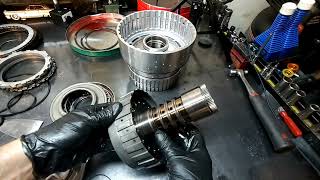
- CDF Clutch Cylinder Sleeve Failure: → Shop Automatic Transmission Coast Clutch Hub A known severe failure on the 10R80 involves a sleeve inside the CDF (Clutch F) drum migrating out of position. This exposes fluid passages, causing significant pressure loss and leading to erratic shifts and multiple codes, including P0752. Ford has released updated CDF drums with a machined lip to prevent the sleeve from moving. 🎬 Watch: See what a failed CDF drum sleeve looks like. This repair requires a full transmission teardown.
- Wiring Harness or Connector Issue: The wiring harness leading to the transmission is exposed to the elements. Damage or corrosion at the main connector can interrupt signals to the solenoids, causing erratic behavior.
- Powertrain/Transmission Control Module (PCM/TCM) Fault: → Shop Transmission Assembly In rare cases, the control module itself can fail or have software glitches that cause it to send incorrect signals. Often, a software reflash as part of a TSB can resolve this, or performing the adaptive learning drive cycle is required after a repair.
Diagnosis Steps
- Verify the transmission fluid level and condition. This must be done at operating temperature (180-195°F) via the check plug. Note if the fluid is dark, burnt, or contains debris.
- Use a professional scan tool to check for all pending, active, and historic DTCs. Note all codes present, as multiple codes are common and point towards a valve body issue per TSBs.
- Inspect the transmission's main electrical connector and wiring harness for any signs of damage, corrosion, or loose connections.
- With a capable scan tool, monitor live data for commanded gear vs. actual gear, solenoid status, and transmission fluid temperature.
- Command Shift Solenoid 'A' on and off with the scan tool to check for an electrical response. A click should be audible from the transmission pan.
- If the solenoid responds electrically but the problem persists, the issue is likely mechanical (sticking).
- Drop the transmission fluid pan and inspect for excessive metal shavings or clutch material. Fine grey material is normal wear, but large flakes indicate a hard part failure like the CDF drum.
- If a valve body is suspected per TSB 23-2152 or 23-2250, remove and overhaul or replace the main control valve body.
- If symptoms are severe and debris is found in the pan, further disassembly and inspection of the CDF clutch drum for a slipped sleeve is warranted.
Parts You'll Likely Need
- Transmission Main Control Valve Body
(OEM #JL3Z-7A100-C)— This is the most common point of failure for shift-related issues on the 10R80 transmission, as documented by multiple Ford TSBs. This part number supersedes JL3Z-7A100-A.
Trusted brands: Motorcraft
OEM price range: $550-$800
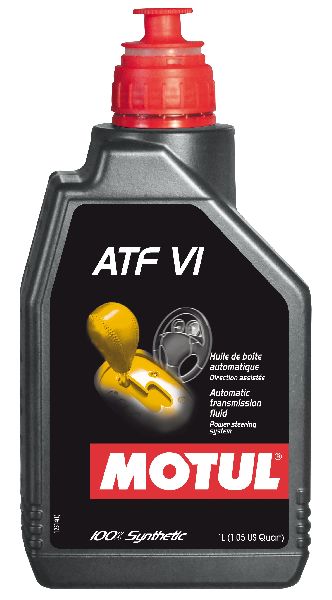
Aftermarket price range: $500-$700 - Motorcraft MERCON ULV Automatic Transmission Fluid
(OEM #XT-12-QULV)— This is the only approved fluid for the 10R80 transmission. Using any other type can cause damage or shifting problems. A valve body replacement will require 8-10 quarts. It is recommended to shake the bo
Related Codes That Often Appear With This One
- P0751 — This code is for 'Shift Solenoid A Performance/Stuck Off'. Seeing it with P0752 indicates an erratic problem with the same solenoid circuit and strongly points to a mechanical (sticking) rather than electrical issue.
- P0756, P0761, P0766, etc. — These are codes for other shift solenoids (B, C, D, etc.). When multiple solenoid codes appear together, it strongly points to a systemic problem like the valve body, fluid contamination, or a power/ground issue affecting all solenoids, which is common per Ford's TSBs.
- P0729, P0731, P0732, etc. — These are gear ratio error codes. They often accompany solenoid codes on the 10R80 and are listed in the same TSBs, indicating the transmission is failing to achieve the commanded gear, a direct consequence of the solenoid/valve body malfunction.
Technical Service Bulletins (TSBs) & Recalls
- TSB 23-2250: Supersedes previous TSBs and lists harsh/delayed shifts and numerous DTCs (including P0752) as being caused by software, the solenoid ID strategy, sticking valves in the main control, or axial movement of the CDF clutch cylinder sleeve.
- TSB 23-2152: Specifically addresses harsh/delayed shifts with a long list of DTCs including P0752, pointing to the main control valve body as the likely culprit requiring an overhaul.
- TSB 24-2046: Similar to other TSBs, addresses harsh/delayed engagement and shifts with a list of codes including P0752.
- TSB 22-2428: An earlier TSB addressing the same shift quality issues and codes.
Platform-Specific Known Issues
- Ford has released multiple Technical Service Bulletins (including TSB 23-2152 and TSB 23-2250) for 2019-2023 Rangers with the 10R80 transmission that exhibit harsh or delayed shifts and may store code P0752 among many others. The bulletins identify potential causes as sticking valves in the main control valve body, issues with the CDF clutch cylinder sleeve, or software problems, and provide a detailed service procedure for diagnosis and repair which often involves overhauling the valve body.
Scan Tool Commands That Help
- FORScan / Ford IDS: Clear Transmission Adaptive Tables — This service function should be used after replacing the valve body, solenoids, or the entire transmission. It erases the learned hydraulic values, allowing the TCM to start fresh. Failure to perform this reset can lead to continued poor shifting as the TCM attempts to use old data for new components.
- FORScan / Ford IDS: Halt/Resume Transmission Adaptive Learning — Some users and tuners use this function to stop the transmission from adjusting shift parameters over time, which they feel provides more consistent performance, especially on tuned vehicles. This is an advanced/off-label use and should be done with caution, as adaptive learning is designed to compensate for wear over the life of the transmission.
- FORScan / Ford FJDS: Solenoid Body Strategy Programming — When a new valve body is installed, its unique 13-digit solenoid strategy ID must be programmed into the PCM/TCM. This calibrates the controller to the specific performance of the new solenoids. The process requires an online connection to Ford's servers to validate the strategy number.
Wiring & Ground Locations
- Main Battery Ground — A large cable runs from the battery negative terminal to a bolt on the frame rail, typically just behind the driver's side (left) headlight.. This is the primary ground for the entire vehicle's electrical system. Corrosion or a loose connection here can cause low system voltage, leading to erratic behavior from control modules like the PCM/TCM and potentially causing incorrect solenoid operation.
- Engine/Head to Firewall Ground — A woven steel ground strap typically connects from a rear head bolt on the engine to the vehicle's firewall.. This provides a critical ground path for the engine block and the sensors mounted to it, as well as for the PCM/TCM which is often grounded through the firewall. A poor connection here can create a voltage differential, disrupting sensor readings and control module logic.
- Driver's Side Kick Panel Ground — Behind the driver's side interior kick panel, there is a factory grounding point used for various interior and accessory electronics, including the OEM trailer brake controller.. While not a primary powertrain ground, issues at this location can indicate a systemic grounding problem or introduce electrical noise that could potentially affect module communication on the CAN bus.
Real Owner Repair Stories
- Ford F150 Forum (2018 Ford F-150 (Same 10R80 transmission)) — Not specified, but required a valve body replacement.
❌ Tried (didn't work) Programming the new solenoid strategy using FORScan., Programming the new solenoid strategy using Ford's official FJDS software with a J2534 interface.
✅ What actually fixed it The user was unable to program the new valve body's solenoid strategy. Both FORScan and the official Ford software returned a "Solenoid Not Found" error from Ford's servers. The resolution required contacting Ford technical support, indicating a potential issue with Ford's backend database not recognizing the new part's strategy ID, which a dealer would need to resolve.
OEM Part Supersession History
JL3Z-7A100-A→JL3Z-7A100-C— Likely an updated design to address sticking valves and other performance issues noted in TSBs. The replacement part includes the auto trans control solenoid and separator plate.
Heads up: The new part requires its unique 13-digit solenoid strategy to be programmed into the vehicle's computer (PCM/TCM) using dealer-level software like IDS/FJDS or a capable tool like FORScan.
Model Year Variations Within This Range
- 2019-2023: While the core mechanicals of the 10R80 transmission have remained largely the same, Ford has issued numerous software and calibration updates over the years to address shifting complaints. Furthermore, an updated CDF clutch drum with a machined lip to prevent sleeve migration was introduced at an unknown date to fix a major failure point. A newer vehicle is more likely to have the updated drum from the factory.
Helpful Videos


We Have This Part in Stock


The information in this article is provided for general reference and educational purposes only. Vehicle specifications, procedures, and part compatibility can vary by production date, trim level, and region. Always consult your vehicle's factory service manual and verify part numbers before purchasing or performing repairs. Safety-critical components such as airbags, seat belts, and braking systems should be installed by a qualified professional.
- Ford RANGER:
- 🧭 Diagnostic Flowchart
- 🎬 Helpful Videos
- 🛍️ Shop This Part
- What's Unique About the 2019-2023 Ford RANGER
- Symptoms You May Notice
- Most Likely Causes
- Rare But Worth Checking
- Diagnosis Steps
- Parts You'll Likely Need
- Related Codes That Often Appear With This One
- Technical Service Bulletins (TSBs) & Recalls
- Platform-Specific Known Issues
- Scan Tool Commands That Help
- Wiring & Ground Locations
- Real Owner Repair Stories
- OEM Part Supersession History
- Model Year Variations Within This Range
- 🎟️ Get 5% Off