

P0752 on 2020-2023 Ford Transit: Shift Solenoid 'A' Stuck On Causes and Fixes
This code indicates Shift Solenoid 'A' is stuck on in the 10R80 transmission. The most common cause is a faulty main control valve body, a known issue documented in Ford TSBs. Another significant cause is a failure of the CDF drum sleeve inside the transmission. Expect a professional repair cost of $1,500-$3,500 for a valve body replacement, with potential for higher costs if internal drum work is needed.
- P0752 on a 2020-2023 Ford Transit almost always points to a known issue with the 10R80 10-speed transmission.
- The most frequent cause is a faulty main control valve body, an issue well-documented by Ford in multiple TSBs.
- Symptoms are serious and include harsh shifting, delayed engagement, and the Check Engine Light.
- This is an expensive repair that is not suitable for DIY. Professional diagnosis is essential to avoid unnecessary costs.
- Ensure any repair shop is aware of the relevant TSBs for the 10R80 transmission.
What's Unique About the 2020-2023 Ford TRANSIT

The 2020-2023 Ford Transit often uses the 10R80 10-speed automatic transmission, a design shared with GM. 🎬 Watch: Overview of common 10R80 transmission failures and problems. This specific transmission is the subject of multiple Ford Technical Service Bulletins (TSBs) for harsh or delayed shifting linked to a wide range of codes, including P0752. The issue is frequently traced back to two well-documented internal problems: sticking valves within the main control valve body or a design flaw where a sleeve on the CDF (Clutch D/F) drum can move, causing hydraulic circuit leaks. These specific mechanical failures make it a more complex issue than just a single bad solenoid.
Diagnostic Flowchart

Tap your situation to follow the diagnostic path that matches what you're seeing on this vehicle.
Symptoms You May Notice

- Harsh or delayed gear shifts.
- Delayed engagement when shifting into Drive or Reverse.
- Check Engine Light (Malfunction Indicator Lamp) is on.
- Transmission may feel like it's slipping or shuddering.
- Vehicle may enter "limp mode," limiting speed.
- Transmission overheating.
- A flare of RPMs between shifts, particularly the 3-4 shift.
- Clunking noises as the transmission downshifts.
- Replacing only the individual Shift Solenoid 'A' without addressing the underlying issue in the valve body, which often leads to the problem returning.
- Assuming the transmission needs a complete rebuild without first diagnosing the specific, and often known, issues with the valve body or CDF clutch sleeve.
- Mistaking a software issue for a mechanical failure. Some early 10R80 issues were addressed with PCM reflashes.
- Condemning the valve body or solenoids when the issue is actually caused by a clogged transmission filter and degraded fluid.
Most Likely Causes

- Faulty Main Control Valve Body 🔴 High Probability → Shop Transmission Valve Body Multiple Ford TSBs (including TSB 24-2254 and TSB 22-2428) point to issues with sticking valves within the main control valve body on the 10R80 transmission as a primary cause for a cluster of codes including P0752. Wear in the valve body bores can cause pressure losses and erratic solenoid function.
How to confirm: A technician will use a high-end scan tool to monitor solenoid commands vs. actual state and perform hydraulic pressure tests as outlined in Ford's service procedures. Inspecting the transmission pan for excessive metallic debris can also point to internal wear caused by the valve body malfunction.
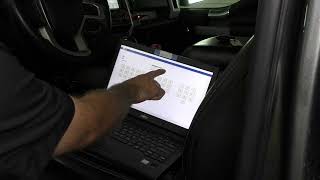
Typical fix: Replacement of the entire main control valve body assembly, which includes all solenoids. This is often followed by a PCM/TCM reprogram to input the new solenoid strategy. 🎬 Watch: How to program the solenoid strategy after replacement.
Est. part cost: $500-$1,200 - Internal Hydraulic Leak (CDF Clutch Cylinder Sleeve) 🔴 High Probability TSB 24-2254 specifically mentions that axial movement of the CDF clutch cylinder sleeve can cause hydraulic circuit leaks, leading to this code and other shifting problems. This is a widely recognized design weakness in the 10R80. The sleeve moves out of position, misaligning fluid passages and causing severe pressure loss.
How to confirm: This requires advanced diagnostics, including hydraulic circuit pressure testing as detailed in TSB 24-2254. This diagnosis often requires partial transmission disassembly to visually inspect the drum.
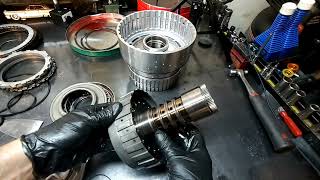
Typical fix: Internal transmission repair to replace the CDF clutch cylinder with an updated part. Ford's updated design includes a machined lip to prevent the sleeve from moving. 🎬 See a detailed breakdown of the CDF drum sleeve failure. This is a major repair requiring transmission removal.
Est. part cost: $200-$500 (part only, labor is significant) - Low or Dirty Transmission Fluid 🟡 Medium Probability → Shop Transmission Assembly While not specific to the platform, the complexity of the 10R80 makes it sensitive to fluid condition. Contaminated fluid can cause solenoids and valves to stick.
How to confirm: Check the transmission fluid level and condition. Note: The 10R80 does not have a traditional dipstick and requires a specific lift and temperature procedure to check the fluid level accurately.
Typical fix: Perform a transmission fluid drain and fill using the correct Motorcraft MERCON ULV fluid. If the fluid is very dirty or contains clutch material, it's a sign of a deeper internal problem.
Est. part cost: $150-$300 - Wiring or Connector Issue ⚪ Low Probability
How to confirm: Visually inspect the transmission wiring harness and connectors for damage, corrosion, or loose connections. A multimeter can be used to test for continuity and proper voltage at the solenoid connector.
Typical fix: Repair or replace the damaged section of the wiring harness or the connector.
Est. part cost: $50-$300
Rare But Worth Checking
- Faulty Powertrain or Transmission Control Module (PCM/TCM): → Shop Transmission Assembly This is very uncommon. The PCM/TCM should only be considered after all other possibilities, including wiring and all mechanical transmission components, have been thoroughly ruled out. Sometimes a software update (reflash) can resolve logic errors.
Diagnosis Steps
- Verify the transmission fluid level and condition. Ensure the correct fluid (Motorcraft MERCON ULV) is being used.
- Use an OBD-II scanner to check for any other transmission-related trouble codes. Note freeze frame data.
- Refer to any relevant Technical Service Bulletins (TSBs). For the 2020-2023 Transit, TSB 24-2254 is highly relevant for diagnosing CDF drum vs. valve body issues.
- Inspect the transmission's external wiring harness and connectors for any signs of damage, corrosion, or moisture.
- Using an advanced scan tool, command Shift Solenoid 'A' on and off to observe its electrical response and listen for a mechanical click. Monitor solenoid state PIDs.
- Perform hydraulic pressure tests of the transmission circuits as specified in Ford's service literature and TSB 24-2254 to check for internal leaks. This may require specialized equipment like the Pressure Vacuum Transducer Kit.
- If tests point to an internal fault, drop the transmission pan to inspect the main control valve body and check for excessive debris.
- Based on TSBs and diagnostic results, the next step will be to replace the main control valve body assembly or perform a more intensive teardown to inspect and replace the CDF clutch cylinder.
Parts You'll Likely Need
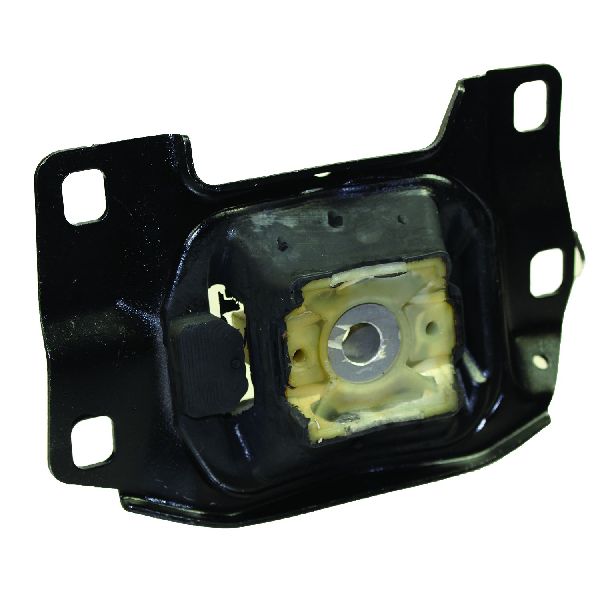
- Transmission Main Control Valve Body
(OEM #JL3Z-7A100-C)— This is the most common point of failure for this code on the 10R80 transmission, as documented in multiple Ford TSBs. It is sold as a complete assembly with solenoids.
Trusted brands: Motorcraft
OEM price range: $550-$1200
Aftermarket price range: $450-$900 - Automatic Transmission Fluid
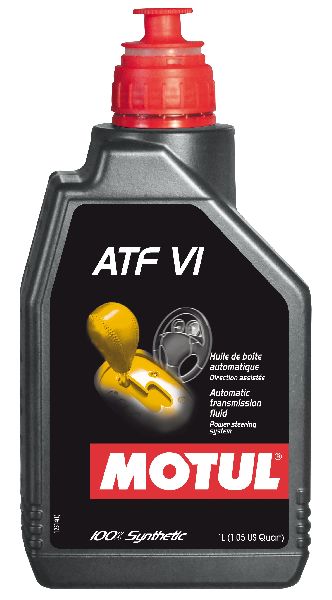
(OEM #Motorcraft MERCON ULV (XT-12-QULV))— The system must be refilled with the correct fluid after replacing the valve body. Using the wrong fluid can cause damage. A valve body replacement can require up to 11 quarts.
Trusted brands: Motorcraft
OEM price range: $15-$25 per quart
Aftermarket price range: $10-$20 per quart - Transmission Filter
(OEM #HL3Z-7A098-A)— Should be replaced any time the transmission pan is removed for service.
Trusted brands: Motorcraft
OEM price range: $30-$75
Aftermarket price range: $20-$40 - Transmission Pan Gasket
(OEM #HL3Z-7A191-A)— The 10R80 uses a reusable gasket, but it should be inspected for damage and replaced if necessary during service.
Trusted brands: Motorcraft
OEM price range: $40-$80
Aftermarket price range: $25-$50
Related Codes That Often Appear With This One
- P0751 — This code is for 'Shift Solenoid 'A' Performance or Stuck Off,' the direct counterpart to P0752. They often appear together as they relate to the same component's erratic function.
- P0756, P0761, P0766, P0771 — These are codes for other shift solenoids (B, C, D, E). The TSBs for the 10R80 transmission list all these codes together, indicating a systemic issue with the valve body or hydraulic circuits affecting multiple solenoids.
- P0729, P0731-P0735 — These are codes for incorrect gear ratios. They are a direct consequence of the shift solenoids failing to engage the correct gear, which is the root cause of P0752.
- P2700 — This code for 'Transmission Friction Element 'A' Apply Time Range/Performance' can appear alongside P0752, indicating a mechanical clutch issue, often related to the hydraulic problems caused by the solenoid or valve body.
Technical Service Bulletins (TSBs) & Recalls
- TSB 26-2046: Mentions P0752 in a list of codes related to various shift quality concerns in Ford vehicles.
- TSB 24-2254: Supersedes TSB 24-2176. Specifically for 2020-2023 Transit (and other models) with the 10R80, citing harsh/delayed shifts and DTC P0752. It details a diagnostic procedure to differentiate between a valve body issue and a leak at the CDF clutch cylinder sleeve.
- TSB 22-2428: An earlier TSB also covering harsh/delayed shifts and P0752 on 10R80-equipped vehicles, pointing to software or valve body problems.
- TSB 24-2176: An earlier version of the bulletin, now superseded by TSB 24-2254, for harsh/delayed shifts and associated DTCs including P0752.
Platform-Specific Known Issues
- Ford has issued multiple Technical Service Bulletins (TSBs) for the 10R80 transmission used in the 2020-2023 Transit. TSB 24-2254, for example, directly addresses harsh/delayed shifts and DTCs including P0752, pointing to potential causes like sticking valves in the main control valve body or hydraulic leaks from the CDF clutch cylinder sleeve.
- The 10R80 transmission has been the subject of class-action lawsuits, primarily concerning F-150 models, for alleged defects leading to harsh shifting, lunging, and hesitation.
Mechanic-Grade Diagnostic Values
- Shift Solenoid (A-F) Current — expected: Proportional; 0 mA for zero pressure, up to ~850 mA for maximum pressure.. Failure: Current reading that does not match the commanded state from the TCM.
- Shift Solenoid Resistance (General) — expected: Approximately 12-25 Ohms. Some Ford specifications can be up to 45 Ohms.. Failure: An open circuit (infinite resistance) or a reading significantly outside the expected range.
Scan Tool Commands That Help
- Ford IDS (Integrated Diagnostic System) or equivalent (e.g., Forscan): PCM – Transmission Strategy Download / Transmission Characterization / Solenoid IDN — This function is mandatory after replacing the main control valve body or the entire transmission. It is used to write the 13-digit solenoid body strategy and 12-digit identification number from the new part into the PCM/TCM. Failure to perform this step will result in erratic shifting and other driveability concerns.
- Ford IDS (Integrated Diagnostic System): Adaptive Learning Drive Cycle — After programming the new solenoid strategy, a specific drive cycle must be performed to allow the TCM to learn the new clutch apply characteristics.
Wiring & Ground Locations
- G203 (example from Transit Connect) — On a similar Ford Transit Connect model, ground G203 is located under the plastic trim in the passenger side kick panel area.. While not confirmed for the 2020-2023 full-size Transit, poor grounds in this area on other Transit models are known to cause major electrical issues, including module communication failures. A bad ground for the TCM or its related circuits could cause erratic solenoid behavior.
Real Owner Repair Stories
- Reddit user in r/f150 (2018 Ford F-150 with 10R80 transmission, 145,000 miles) — Crazy shift problems, including floating between gears and then slamming into another; attempting to shift into 1st gear at 80mph.
❌ Tried (didn't work) Transmission relearn procedure, Valve body replacement
✅ What actually fixed it The ultimate diagnosis was a failed CDF drum, which required internal transmission repair. The user noted the TSB helped confirm the diagnosis. - iCarsoft CR MAX BT advertisement (2020 Ford F-150 with 10R80 transmission) — P0752 code and 'brutal rough shifts'.
❌ Tried (didn't work) The owner almost paid a shop $800 for a full solenoid pack swap based on the code alone.
✅ What actually fixed it A fluid and filter change. The user claims an advanced scan tool helped them determine the fluid was dirty and the filter was clogged, which was the true cause, not a faulty solenoid.
When the Usual Fixes Don't Work
- While the most common fixes for P0752 on the 10R80 are the valve body or CDF drum, there are confirmed cases where the root cause was much simpler. In one instance involving a 2020 F-150 with the same transmission, the code and severe shifting issues were resolved simply by changing the transmission fluid and filter. This suggests that diagnosing the problem based on the code alone can lead to unnecessary, expensive repairs, and that verifying fluid condition should be a primary diagnostic step.
OEM Part Supersession History
JL3Z-7A100-A→JL3Z-7A100-C— Engineering update to address performance or reliability issues in the valve body assembly.
Helpful Videos

We Have This Part in Stock


The information in this article is provided for general reference and educational purposes only. Vehicle specifications, procedures, and part compatibility can vary by production date, trim level, and region. Always consult your vehicle's factory service manual and verify part numbers before purchasing or performing repairs. Safety-critical components such as airbags, seat belts, and braking systems should be installed by a qualified professional.
- Ford TRANSIT:
- 🧭 Diagnostic Flowchart
- 🎬 Helpful Videos
- 🛍️ Shop This Part
- What's Unique About the 2020-2023 Ford TRANSIT
- Symptoms You May Notice
- Most Likely Causes
- Rare But Worth Checking
- Diagnosis Steps
- Parts You'll Likely Need
- Related Codes That Often Appear With This One
- Technical Service Bulletins (TSBs) & Recalls
- Platform-Specific Known Issues
- Mechanic-Grade Diagnostic Values
- Scan Tool Commands That Help
- Wiring & Ground Locations
- Real Owner Repair Stories
- When the Usual Fixes Don't Work
- OEM Part Supersession History
- 🎟️ Get 5% Off