

P0752 on 2012-2017 Honda Accord: Shift Solenoid 'A' Stuck On Causes and Fixes
This code means Shift Solenoid 'A' is stuck on, typically affecting 2012 models and 2013-2017 V6 models with automatic transmissions (not CVTs). The most common fixes are replacing low or dirty transmission fluid or replacing the faulty shift solenoid 'A' itself. A solenoid replacement may cost between $150 and $400.
- P0752 specifically applies to 2012 Accords and 2013-2017 V6 Accords with automatic transmissions, not 4-cylinder models with a CVT.
- Always check the transmission fluid level and condition first. Low or dirty fluid is the most common and cheapest problem to fix.
- The likely culprit is either the fluid or the Shift Solenoid 'A' itself.
- On this platform, the solenoid is often externally mounted, making it a feasible DIY replacement for those with moderate mechanical skill.
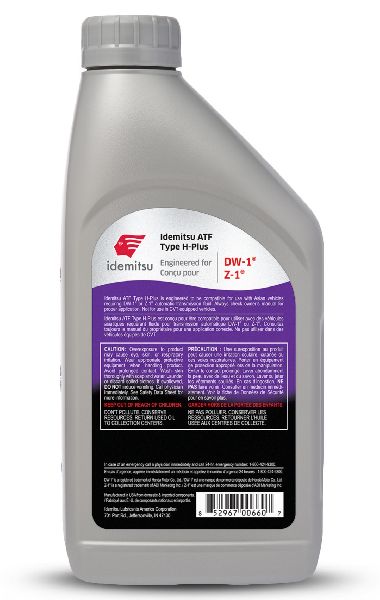
- Always use Honda Genuine DW-1 transmission fluid to avoid further issues.
What's Unique About the 2012-2017 Honda Accord
The 2012-2017 Honda Accord spans two different generations with very different transmissions. This code is relevant for models with traditional geared automatic transmissions: the 2012 Accord (both 4-cylinder and V6) which used a 5-speed automatic, and the 2013-2017 Accord V6, which used a 6-speed automatic. It is generally NOT applicable to the 2013-2017 4-cylinder Accords, which were equipped with a Continuously Variable Transmission (CVT) that does not use shift solenoids in the same way. On these specific automatic transmissions, the shift solenoids are often located on the exterior of the transmission case, making them more accessible than on many other vehicles. For the 2012 4-cylinder, the solenoid is visible looking down past the air intake duct. For the V6 models, the solenoids are often located on the side of the transmission, under the battery and battery tray.
Generation note: Yes, this range covers two generations. The 2012 model is the final year of the 8th generation Accord. The 2013-2017 models are the 9th generation. The key difference is the transmission: P0752 applies to the 5-speed automatic in the 2012 models and the 6-speed automatic in the 2013-2017 V6 models. It does not apply to the CVT in 9th generation 4-cylinder models.
Symptoms You May Notice
- Harsh, erratic, or delayed gear shifts.
- Transmission getting stuck in a single gear (limp mode), often 2nd or 4th gear.
- Illuminated Check Engine Light.
- Flashing 'D' (Drive) indicator light on the dashboard.
- Vehicle fails to shift into higher gears.
- Failure to downshift smoothly when coming to a stop.
- Increased fuel consumption.
- Transmission overheating.
- Replacing the entire transmission when only a fluid change or an external solenoid was needed.
- Replacing the solenoid without first checking the fluid condition, which is the most common and cheapest fix.
- Replacing the solenoid when the true fault is a broken wire or corroded connector leading to it. 🎬 See this breakdown of common causes and fixes for P0752.
Most Likely Causes
- Low or Dirty Transmission Fluid 🔴 High Probability → Shop Transmission Assembly Over time, transmission fluid degrades and can become contaminated with clutch material and metal shavings. This debris can physically obstruct the small passages in the solenoid, causing it to stick. This is the most common and least expensive potential cause.
How to confirm: Check the transmission fluid level and condition using the dipstick (engine off for Hondas). The fluid should be red and clear, not brown, black, or smelling burnt. Draining the fluid through a strainer can reveal metallic debris, which may indicate a more serious internal problem.
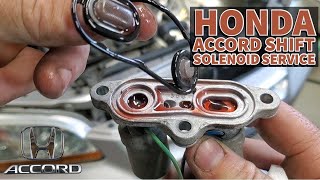
Typical fix: Perform one or more transmission fluid drain-and-fills using Honda Genuine DW-1 ATF. 🎬 Watch: How to perform a fluid change and solenoid service. This is often the first and most recommended step before replacing parts.
Est. part cost: $40-$120 - Faulty Shift Solenoid 'A' 🟡 Medium Probability → Shop Transmission Valve Body The solenoid is an electro-mechanical part that can fail either electrically (coil winding breaks) or mechanically (internal valve sticks from debris or wear).
How to confirm: A mechanic can use a bi-directional scan tool to command the solenoid on and off while listening for a 'click'. The solenoid can also be removed and tested for resistance with a multimeter. A general specification is 12-25 ohms, but a specific range for some Honda 6-speeds is 13.8-17.1 ohms. Finally, applying 12V power directly to the removed solenoid should cause an audible click; if not, it's faulty.
Typical fix: Replace the faulty shift solenoid 'A'. It is often sold as part of a dual-linear or single-linear solenoid assembly. The associated gasket, which contains a filter screen, should always be replaced at the same time.
Est. part cost: $70-$300 - Wiring or Connector Issue ⚪ Low Probability The wiring harness leading to the transmission can be damaged by heat, vibration, or road debris. On some Hondas, the solenoids are located under the battery, where battery acid vapor can cause corrosion on the connectors.
How to confirm: Visually inspect the wiring harness and connector for any signs of corrosion, breaks, or loose pins. Perform a continuity test on the wires between the TCM and the solenoid connector.
Typical fix: Repair the damaged section of wiring or clean/replace the corroded connector.
Est. part cost: $10-$50
Rare But Worth Checking
- Clogged Transmission Valve Body Passages: → Shop Transmission Valve Body If the fluid is heavily contaminated, debris can clog the hydraulic passages within the valve body that the solenoid controls. This can cause the same symptoms even if the solenoid itself is functional. This often requires a valve body cleaning or replacement.
- Faulty Transmission Control Module (TCM) or Powertrain Control Module (PCM): → Shop Transmission Assembly This is very rare. The control module itself can fail, sending an incorrect signal or misinterpreting the data from the transmission. This should only be considered after all other possibilities have been exhaustively ruled out.
Diagnosis Steps
- Check and record any other stored trouble codes.
- Inspect the transmission fluid level and condition. The engine should be off and on a level surface. Note if the fluid is low, dark, or smells burnt.
- If fluid is dirty or low, perform a drain-and-fill with Honda DW-1 ATF. Clear codes and test drive to see if the problem is resolved. This is the most crucial first step.
- If the problem persists, locate Shift Solenoid 'A'. On the 2012 4-cyl, it's visible below the air intake duct. On V6 models, it's typically on the side of the transmission, requiring removal of the battery and battery tray for access.
- Inspect the solenoid's electrical connector and wiring for corrosion or damage.
- If a bi-directional scanner is available, command the solenoid on and off to listen for an audible click, which indicates it's actuating.
- If no scanner is available, remove the solenoid. Test its coil resistance with a multimeter. Check service manual for exact specs, but a common range for Honda is 13.8-17.1 ohms.
- Bench test the solenoid by applying 12V power and ground to its terminals. A healthy solenoid will make a sharp clicking sound. If it's silent or sluggish, it has failed mechanically.
- If the solenoid and wiring test good, the issue may be an internal blockage in the valve body or, rarely, a faulty TCM.
Parts You'll Likely Need
- Shift Solenoid 'A' (Linear Solenoid)
(OEM #28250-R90-003 (For 2012 4-Cyl 5-speed AT) or 28250-R9L-003 (For 2013-2017 V6 6-speed AT). Verify with VIN.)— This is the component identified by the code. It can fail mechanically or electrically, causing the 'stuck on' condition.
Trusted brands: Honda (OEM), WVE, Rostra
OEM price range: $150-$300
Aftermarket price range: $70-$150 - Honda Genuine DW-1 Automatic Transmission Fluid
(OEM #08200-9008)— Low or contaminated fluid is a primary cause of solenoid issues. Hondas are sensitive to fluid type, and using the OEM fluid is strongly recommended.
Trusted brands: Honda (OEM)
OEM price range: $10-$15 per quart - Shift Solenoid Gasket
(OEM #28252-R90-003 (matches 28250-R90-003) or 28252-R9L-003 (matches 28250-R9L-003). Verify with VIN.)— The gasket seals the solenoid to the transmission case and often contains a small filter screen that should be replaced or cleaned during service.
Trusted brands: Honda (OEM)
OEM price range: $10-$25
Aftermarket price range: $5-$15
Related Codes That Often Appear With This One
- P0700 — P0700 is a generic code indicating that the Transmission Control Module (TCM) has stored a fault. It often appears alongside more specific transmission codes like P0752 to signal a general transmission issue.
- P0751 — P0751 is for 'Shift Solenoid A Performance/Stuck Off'. It's the companion code to P0752 and indicates a different failure mode of the same component.
- P0762 — P0762 is for 'Shift Solenoid C Stuck On'. It's common to see codes for multiple solenoids if the root cause is widespread fluid contamination.
Platform-Specific Known Issues
- Owner Experience on DriveAccord.net: A user with a 2012 Accord V6 reported getting code P0752 along with a flashing 'D' light and harsh shifting. After confirming the fluid level was good, they replaced the dual-linear solenoid assembly located on the front of the transmission. The repair resolved all symptoms. This highlights that even with good fluid, the solenoid itself can be the point of failure.
Mechanic-Grade Diagnostic Values
- Shift Solenoid 'A'/'B' Coil Resistance — expected: 13.8 - 17.1 Ω. Failure: A reading outside this range, or an open/infinite reading, indicates a failed solenoid coil.
- General Honda Shift Solenoid Coil Resistance — expected: 12 - 25 Ω. Failure: A reading outside this general range suggests a faulty solenoid.
Scan Tool Commands That Help
- Honda Diagnostic System (HDS): Shift Solenoid Valve A Test (in Miscellaneous Test Menu) — This bidirectional command actively cycles the solenoid on and off. The technician should listen for an audible 'click' from the transmission case. A lack of a click confirms a failed solenoid or a wiring issue, while a click suggests the solenoid is mechanically working and the problem may be hydraulic (clogging) or an intermittent electrical fault.
Wiring & Ground Locations
- G101 — On the right front of the engine. For the V6, this ground point can be difficult to see, located below the knock sensor cover.. G101 is a primary ground distribution point for the engine control system, including the PCM/TCM and various sensors. A loose or corroded G101 can cause erratic behavior from the PCM/TCM, potentially leading to incorrect solenoid commands or false trouble codes.
- Shift Solenoid Connector — Externally on the transmission case, often under the battery and tray on V6 models.. This is the direct connection point for testing the solenoid's resistance and for checking voltage from the TCM. A visual inspection here can quickly identify corrosion or damage. Pigtail connectors are available for repairs.
Real Owner Repair Stories
- Reddit user in r/Honda (2013 Honda Accord V6 Automatic (not CVT), 145k miles) — Slightly tough shifting and a delay when shifting into reverse.
✅ What actually fixed it Performing multiple (3) sequential drain-and-fills of the transmission fluid resolved the shifting issues. This indicates the problem was likely caused by old, degraded fluid rather than a hard part failure.
Model Year Variations Within This Range
- 2013-2017: Honda issued Technical Service Bulletin (TSB) 17-017 for some models in this range experiencing a judder between 20-60 mph. The fix is a PCM software update and a transmission fluid flush, not a solenoid replacement. While not directly for P0752, it highlights that fluid and software issues are known causes of shifting problems on the 9th generation V6 automatic.
Diagnostic Flowchart
Other Known Issues on This Vehicle
Issues unrelated to this code that are worth knowing about as an owner of this generation:
- VTC Actuator Rattle on Cold Start (4-Cylinder) 🟠 Medium — Very common on 2008-2013 4-cylinder models. Causes a brief, loud rattle for 1-2 seconds immediately after a cold start. (Ref: Honda TSB 09-010 describes the issue and repair procedure, which involves replacing the VTC actuator.)
- Premature Starter Motor Failure 🟠 Medium — Common on 2013-2017 models, both 4-cylinder and V6. Symptoms include a single click with no crank, or requiring multiple attempts to start. (Ref: Honda TSB 16-002 was issued for some V6 models experiencing this issue.)
- Excessive Oil Consumption (Earth Dreams 4-Cylinder) 🔴 High — Affects some 2013-2017 4-cylinder engines, leading to low oil levels between changes. This issue was part of a wider problem with Honda's 'Earth Dreams' engines that also included oil dilution in later direct-injection turbo models. (Ref: Honda addressed oil consumption issues related to sticking piston rings in earlier models with TSBs like 12-089, which included a warranty extension.)
- Infotainment System Lag or Freezing (9th Gen) 🟡 Low — Common complaint on 2013-2017 models, especially earlier years of the generation. The touchscreen can become unresponsive, slow, or freeze entirely, sometimes requiring a system reboot.
Used vs. New Parts: Buying Guide for This Vehicle
When a used part is the smart pick: A used solenoid assembly from a reputable salvage yard can be a cost-effective option, especially if the donor vehicle has low mileage. Since these solenoids are external, they are relatively easy to swap if the used part is faulty. However, it remains a gamble on remaining lifespan.
Donor-vehicle mileage cap: roughly under 80000 miles for the part to have meaningful remaining life.
What to inspect on the donor part:
- Check for a clear, red transmission fluid color on the donor vehicle's dipstick if possible.
- Inspect the electrical connector pins on the used solenoid for any signs of corrosion or damage.
- Ask for the VIN of the donor car to verify compatibility and check its history for accidents or flooding.
- Ensure the small filter screens on the solenoid gasket surface are intact and not clogged with heavy debris.
OEM-only on this vehicle (don't cheap out):
- Transmission Fluid: Honda automatic transmissions are notoriously sensitive to fluid type. Only Honda Genuine DW-1 ATF should be used to prevent shifting problems.
Aftermarket brands forum-validated for this vehicle:
- Rostra
- WVE (NGK/NTK)
- Standard Motor Products (SMP)
Brands owners have reported issues with on this vehicle:
- No-name, unbranded solenoids from online marketplaces are a high risk for premature failure or being out-of-spec from the factory.
Real Owner Stories
Aggregated from forums and TSBs cited above. Mileages and costs reflect what owners reported in those sources.
2012 Honda Accord V6
Symptoms: The owner reported getting code P0752 along with a flashing 'D' light and harsh shifting.
What fixed it: After confirming the fluid level was good, the owner replaced the dual-linear solenoid assembly on the front of the transmission, which resolved all symptoms.
Source hint: Owner Experience on DriveAccord.net
Related OBD-II Codes
Frequently Asked Questions
Where is Shift Solenoid 'A' located on my 2012-2017 Honda Accord?
What specific transmission fluid should I use for a P0752 code on my 2015 Accord?
My 'D' (Drive) indicator is flashing. Is this related to the P0752 Check Engine Light?
Can I test the shift solenoid myself without a professional scan tool?
Is it better to just change the fluid first before replacing parts for a P0752 code?
My Accord has the V6 engine. Do other Hondas with this engine have the same P0752 problem?
Helpful Videos
We Have This Part in Stock

The information in this article is provided for general reference and educational purposes only. Vehicle specifications, procedures, and part compatibility can vary by production date, trim level, and region. Always consult your vehicle's factory service manual and verify part numbers before purchasing or performing repairs. Safety-critical components such as airbags, seat belts, and braking systems should be installed by a qualified professional.
- Honda Accord:
- 🧭 Diagnostic Flowchart
- 🎬 Helpful Videos
- 🛍️ Shop This Part
- What's Unique About the 2012-2017 Honda Accord
- Symptoms You May Notice
- Most Likely Causes
- Rare But Worth Checking
- Diagnosis Steps
- Parts You'll Likely Need
- Related Codes That Often Appear With This One
- Platform-Specific Known Issues
- Mechanic-Grade Diagnostic Values
- Scan Tool Commands That Help
- Wiring & Ground Locations
- Real Owner Repair Stories
- Model Year Variations Within This Range
- Other Known Issues on This Vehicle
- Used vs. New Parts: Buying Guide for This Vehicle
- Real Owner Stories
- 2012 Honda Accord V6
- Related OBD-II Codes
- Frequently Asked Questions
- 🎟️ Get 5% Off