

OBD-II Code P0753: Shift Solenoid 'A' Electrical
The Ultimate Expert Guide to Diagnosing and Fixing P0753
- P0753 is strictly an electrical fault code, meaning diagnosis must isolate the wiring, connectors, and solenoid coil before replacing any mechanical parts.
- Testing the solenoid's resistance with a multimeter—typically looking for 11 to 30 ohms depending on the vehicle—definitively proves if the part has failed.
- Driving in limp mode with a P0753 code overheats the transmission, turning a $300 electrical repair into a $3,000 complete rebuild within weeks.
- Always check system voltage first, as a weak battery or failing alternator dropping below 9 volts triggers false solenoid codes.
- Never replace the PCM or TCM unless continuity tests prove the wiring harness is 100% intact and the solenoid resistance is within factory specifications.
What Does P0753 Mean?
P0753 means your car's main computer (Powertrain Control Module or PCM) detects an electrical fault within the control circuit for transmission Shift Solenoid 'A'. This solenoid is a small, electronically controlled valve that manages the flow of transmission fluid to enable gear changes. The 'A' solenoid often controls the 1-2 shift, but its exact function varies by vehicle. The PCM expects a specific voltage when it commands the solenoid on or off; this code triggers when the detected voltage falls outside the expected range, indicating an open circuit (a break) or a short circuit (to power or ground).
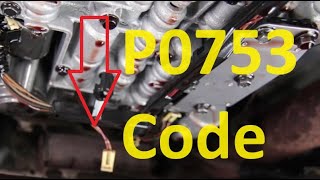
🎬 Watch: A quick overview of P0753 causes and common fixes.Technical definition: The official SAE/OBD-II definition is "Shift Solenoid 'A' Electrical". This diagnostic trouble code (DTC) sets when the Powertrain Control Module (PCM) or Transmission Control Module (TCM) detects a continuous open, short to ground, or short to power in the electrical circuit for shift solenoid 'A'. The computer monitors the circuit for feedback voltage and sets the code when the actual voltage does not match the commanded state (e.g., voltage drops below 9V or resistance goes out of spec).
Can I Drive With P0753?
No, not recommended Driving is strongly discouraged. Your transmission enters a 'limp mode,' locking it in a single gear (often 2nd or 3rd), which results in poor acceleration and high RPMs at speed. This is unsafe in traffic. Continuing to drive causes the transmission to overheat, rapidly degrading the fluid and burning internal clutches. This turns a relatively minor, sub-$500 repair into a major $3,000+ transmission rebuild. Short, low-speed trips to a repair facility are a last resort.
Common Causes
- Faulty or Damaged Wiring or Connectors (Very Common) — The wiring harness leading to and inside the transmission becomes brittle, frayed, or shorted from heat and vibration. Connectors suffer from fluid contamination, corrosion, or loose pins.
- Failed Shift Solenoid 'A' (Common) — The solenoid fails electrically when its internal wire coil breaks (open circuit) or shorts out, preventing it from functioning when commanded by the PCM/TCM.
- Low System Voltage (Bad Battery/Alternator) (Less Common) — Transmission solenoids require a stable voltage. A weak battery, failing alternator, or poor ground connection drops system voltage below the 9V operating threshold, leading the PCM to incorrectly flag an electrical fault.
- Contaminated Fluid or Clogged Filter (Less Common) — Dirty fluid or a clogged filter restricts flow, causing overheating that damages solenoid coils and internal wiring over time.
- Faulty Powertrain/Transmission Control Module (PCM/TCM) (Rare) — The control module's internal driver circuit for solenoid 'A' fails. This is rare and is only considered after definitively ruling out wiring and the solenoid.
- Faulty Ignition Switch (Older GM models) (Rare) — On specific 1997-2002 GM trucks, a failing ignition switch cuts power to the transmission fuse, causing multiple solenoid codes (including P0753) and forcing limp mode.
Symptoms
- Check Engine Light is on — The PCM illuminates the Malfunction Indicator Lamp (MIL) on the dashboard.
- Transmission Stuck in Gear (Limp Mode) — The vehicle locks into a single gear, typically 2nd or 3rd, to prevent damage, resulting in sluggish acceleration.
- Erratic or Harsh Shifting — Shifts are delayed, abrupt, or feel jerky, particularly during the 1-2 shift.
- Transmission Slips or Fails to Engage Gear — The transmission slips out of gear or fails to engage when accelerating from a complete stop.
- Decreased Fuel Economy — The engine runs at non-optimal RPMs because the transmission cannot shift correctly, increasing fuel consumption.
- Engine Stalls at Stops — The engine stalls if the transmission fails to disengage the gear correctly when coming to a stop.
Diagnostic Flowchart
Tap your situation to follow the diagnostic path that matches what you're seeing on this code.
Common Fixes & Costs
- Replace Shift Solenoid 'A' — Parts: $20-$100, Labor: $200-$450, ~2.5 hr book time (Intermediate)
- Repair or Replace Wiring Harness/Connector — Parts: $20-$200, Labor: $150-$600, ~1.5 hr book time (Intermediate)
- Replace Solenoid Pack/Assembly — Parts: $150-$400, Labor: $250-$550, ~2.0 hr book time (Intermediate)
- Change Transmission Fluid and Filter — Parts: $60-$150, Labor: $125-$250, ~1.0 hr book time (DIY)
- Replace Transmission Control Module (TCM) — Parts: $250-$900, Labor: $200-$600, ~2.5 hr book time (Professional)
Used vs. New Parts: Buying Guide
When a used part is worth it: For a simple shift solenoid, the low cost of a new aftermarket part ($20-$50) makes buying used illogical due to the high labor cost of installation. A used solenoid pack assembly is considered if it comes from a verified low-mileage vehicle and the new OEM part is prohibitively expensive (over $400). Never buy a used internal wiring harness, as heat degradation is a primary failure mode.
Donor-vehicle mileage cap: roughly under 60000 miles for the part to have meaningful remaining life.
Donor quality checklist:
- Verify the donor vehicle was not scrapped for transmission failure.
- Match the part number exactly; solenoids are calibrated for specific valve bodies.
- Avoid parts from vehicles in rust-belt regions, as external connectors have hidden corrosion.
Decision logic:
- If Part is a single, inexpensive solenoid → Always buy new. The part cost is a fraction of the labor, and a used part carries too much risk of premature failure.
- If Part is an expensive solenoid pack assembly (> $400 new) and budget is a primary concern → A used part from a donor with less than 60,000 miles is a viable option, but accept the risk of a shorter lifespan.
- If Part is an internal wiring harness → Always buy new. Heat is the main killer of these harnesses, and a used one is already partially degraded.
Warranty tradeoff: Used parts from a salvage yard typically have a 30-90 day warranty on the part only, not labor. New aftermarket parts carry a 1-year to limited lifetime warranty. New OEM parts have a 1-year warranty.
Worst-case if a used part fails: $400-$800 if a used part fails after installation, as you must pay for repeat labor and a second replacement part.
What Happens If You Wait — Timeline
- First Occurrence - 2 Weeks: Check Engine Light comes on. Transmission enters 'limp mode,' getting stuck in 2nd or 3rd gear. Shifting is harsh or delayed. Driving is unsafe and unpredictable. (MPG impact: 5-15%% · Added cost: $0-$20 in wasted fuel)
- 2 Weeks - 2 Months: Continued driving in the wrong gear forces the engine to run at high, inefficient RPMs. The transmission consistently overheats, causing the fluid to darken and develop a burnt smell as it rapidly degrades. (MPG impact: 10-20%% · Added cost: $50-$150 in wasted fuel and accelerated fluid breakdown.)
- 2 - 6 Months: The overheated, broken-down fluid no longer lubricates or cools properly. Internal rubber seals harden and crack. Clutch pack surfaces glaze and burn from the excessive heat and friction, causing slippage. (MPG impact: 15-25%% · Added cost: $600 - $1,200 (The initial electrical problem now requires a valve body replacement or rebuild due to heat damage and contamination).)
- 6+ Months: Catastrophic failure. The burnt clutch material fully contaminates the entire hydraulic system. Planetary gear sets and the torque converter are destroyed by a combination of heat and abrasive, debris-filled fluid. The transmission is completely non-functional. (MPG impact: 100% (Vehicle is undrivable)% · Added cost: $3,000 - $5,000+ (The vehicle now needs a complete transmission rebuild or a full replacement unit).)
Cost of Not Fixing It
- 0-1 month: Noticeable decrease in fuel economy (5-15%), poor acceleration, and unsafe, unpredictable shifting. The vehicle remains stuck in 'limp mode'. (Added cost: Negligible, besides increased fuel cost.)
- 1-6 months: Driving in the wrong gear causes the transmission to run hot, leading to accelerated fluid breakdown and overheating. This causes internal seals to harden and clutch packs to glaze over from excess friction. (Added cost: $250 - $600 if the initial problem is now compounded by needing a valve body cleaning or replacement of multiple solenoids.)
- 6+ months: Catastrophic internal transmission failure. Burnt clutches and contaminated fluid destroy bands, planetary gear sets, and the torque converter. The transmission requires a complete rebuild or replacement. (Added cost: $2,500 - $5,000+)
Diagnosis Steps
- Check Transmission Fluid and Scan for Codes
Check the transmission fluid level and condition. Dark, burnt-smelling fluid indicates a deeper mechanical problem. Use an OBD-II scanner to confirm P0753 and record freeze frame data.
Tools: Rag, OBD-II Scanner (Beginner) - Check System Voltage
Use a multimeter to verify the charging system is stable. A healthy battery reads at or above 12.6 volts with the engine off. The alternator produces 13.8 to 14.7 volts running. Voltage drops below 9V trigger false P0753 codes.
Tools: Multimeter (Beginner) - Visually Inspect External Wiring and Connectors
Thoroughly inspect the wiring harness going to the transmission. Look for chafing, melting, or corrosion. Check the main transmission connector for bent pins and fluid intrusion.
Tools: Flashlight, Mirror (Beginner) - [ADVANCED] Live Data Scan Tool Analysis
Using a bi-directional scan tool, monitor the 'Shift Solenoid A Voltage' PID. Command the solenoid on and off. When commanded ON, the voltage drops, and you hear a click from the transmission. Unchanging voltage suggests a circuit or solenoid issue.
Tools: Advanced Bi-Directional Scan Tool (Advanced) - Test Circuit Power and Ground
Using a wiring diagram, identify the power supply and ground wires for the shift solenoid circuit at the transmission connector. Check for battery voltage on the power feed wire with the key on. Check the ground connection for low resistance (<0.5 ohms).
Tools: Multimeter, Wiring Diagram (Intermediate) - Test the Solenoid Circuit Continuity
Disconnect the PCM/TCM and the transmission connector. Check for continuity on the control wire for solenoid 'A' between the two connectors. An infinite resistance reading (OL) indicates an open circuit. A reading under 5 ohms to ground indicates a short.
Tools: Multimeter, Wiring Diagram (Intermediate) - Drop Transmission Pan and Inspect Internal Harness
Drain the fluid and remove the oil pan. Visually inspect the internal wiring harness for heat damage, brittleness, or broken wires. Inspect the pan for excessive metal shavings, indicating severe mechanical failure.
Tools: Socket Set, Drain Pan, Torque Wrench (Advanced) - Test the Shift Solenoid's Resistance
With the pan off, disconnect the solenoid connector. Measure the resistance across the solenoid's two pins. Compare this to the manufacturer's specification (e.g., GM 4L60E: 20-30 ohms). Zero indicates a short; infinite (OL) indicates an open circuit.
Tools: Multimeter, Service Manual (Advanced) - [PROFESSIONAL] Perform a Solenoid Amperage Draw Test
Use a low-amp probe with an oscilloscope or multimeter. Energize the solenoid and measure the current draw. A healthy solenoid draws 0.25 to 0.75 amps. No draw indicates an open circuit; high draw indicates a short.
Tools: Low-Amp Probe, Oscilloscope/Multimeter, Jumper Wires (Professional)
When This Code Triggers (Freeze-Frame Conditions)
- Engine Coolant Temp: 140-210°F (60-99°C) (The fault occurs when cold but is most often logged after the engine reaches operating temperature.)
- RPM: 1500-2500 RPM (The code sets during or just after a commanded shift event under light to moderate acceleration.)
- Engine Load: 25-60% (Occurs under normal driving conditions, not typically at idle or full throttle.)
- Vehicle Speed: 15-45 mph (24-72 kph) (The fault is most commonly detected when the PCM commands the 1-2 or 2-3 shift.)
Related Codes
- P0700 — P0700 is a generic code from the TCM asking the PCM to turn on the check engine light. It means 'a transmission fault is present.' Seeing P0700 with P0753 is normal; P0753 is the specific fault, and P0700 is the messenger.
- P0750 — P0750 indicates a general malfunction for Shift Solenoid 'A', which is mechanical (stuck) or electrical. P0753 specifically points to an electrical fault (open/short). P0753 helps narrow the diagnosis to electrical testing from the start.
- P0758 — This is the identical electrical fault code but for Shift Solenoid 'B'. If P0753 and P0758 appear together, it is highly unlikely both solenoids failed simultaneously. This combination strongly points to a shared problem, such as the main power feed fuse/relay for the transmission, a common ground wire, or a faulty TCM/PCM.
- P0974 — This code means the Shift Solenoid 'A' Control Circuit is High (Open). It is a more specific version of P0753, explicitly telling you the PCM detects an open circuit (e.g., a broken wire or burnt-out solenoid coil). P0753 is more general, while P0974 directs you to look for a break in the circuit.
Climate & Environmental Factors
- High Heat: Prolonged exposure to high ambient and operational temperatures accelerates the degradation of wiring insulation, making it brittle and prone to cracking or shorting, especially for the internal transmission harness.
- Corrosion (Salt Belt Regions): In areas where road salt is used during winter, moisture and salt cause severe corrosion on external connectors, pins, and wiring. This corrosion increases resistance in the circuit, triggering a P0753 code.
- Humidity and Water Intrusion: High humidity or deep water crossings lead to moisture intrusion into external transmission connectors that have a failing seal. This causes short circuits or corrosion over time.
How to Talk to a Mechanic About This Code
Say this: "I have an active P0753 code for the Shift Solenoid 'A' Electrical circuit, and the transmission is in limp mode. I request a diagnostic that specifically tests the solenoid circuit. Please start by checking the external wiring and connectors, then test the solenoid's resistance and the harness continuity back to the TCM. I want to confirm if the fault is the solenoid, the wiring, or the control module before authorizing parts replacement."
This language signals that you understand P0753 is an electrical fault and that a specific diagnostic sequence must be followed. It directs the shop to prove the failure with data (like resistance readings) rather than immediately replacing the most likely part (the solenoid) or upselling to a transmission rebuild.
Avoid saying:
- 'My check engine light is on, can you just fix it?'
- 'My car is shifting weird, I think I need a new transmission.'
- 'Just do whatever you think is necessary.'
- 'A friend told me to get a transmission flush.'
Questions to ask before authorizing the repair:
- What was the resistance reading of the shift solenoid? Was it in or out of the manufacturer's specification?
- Did you perform a continuity test on the wiring harness between the transmission and the control module? Were there any opens or shorts to ground?
- If the solenoid needs replacement, does your estimate include a new transmission filter and the manufacturer-specified fluid type?
- If you are recommending a TCM replacement, what specific tests did you perform to rule out the wiring and the solenoid as the cause?
- What is the warranty on the proposed repair, covering both parts and labor?
Where to Take It: Dealer vs Independent vs Chain
- Dealer:
A strong, safe choice if cost is not a concern or if a known TCM/programming issue exists. Necessary for any in-warranty repairs.
Best for: Vehicles under warranty., Known manufacturer-specific issues covered by TSBs or extended warranties (e.g., Ford Focus/Fiesta TCM failure)., Complex cases where a PCM/TCM replacement and programming is required.
Downsides: Highest labor rates, often 1.5x to 2x more than independent shops., Dealers are quicker to replace an entire wiring harness or solenoid pack rather than perform a detailed component-level repair. (Typical cost: +50% vs. baseline) - Independent Shop:
Best overall fit for the most common P0753 repairs (wiring, solenoid). Seek out a well-regarded independent shop with transmission experience for the best balance of cost and quality.
Best for: Out-of-warranty vehicles where cost is a major factor., Diagnosing and repairing common electrical faults in wiring or replacing individual solenoids., Finding a shop that specializes in transmission repair to provide dealer-level expertise at a lower cost.
Downsides: Quality and expertise vary greatly; vetting the shop's reputation and certifications (like ASE) is crucial., Independent shops lack the expensive, specialized tools to program a new TCM if one is needed. (Typical cost: +0% vs. baseline) - Chain Shop:
AVOID for diagnosis and repair. The risk of being immediately upsold to a $3,000+ rebuild for what is likely a sub-$500 electrical fault is very high. Use for a code scan only, then go to an independent shop.
Best for: Initial code scan to confirm P0753., Simple, unrelated maintenance like oil changes or brakes.
Downsides: Technician skill for complex diagnostics is highly variable., Transmission-specific chains (e.g., AAMCO) push for a full transmission rebuild, which is rarely the cause of P0753., High pressure to upsell services. (Typical cost: -10% vs. baseline)
When to Walk Away From the Repair
If the estimated repair cost for the transmission exceeds 50% of your car's private-party market value (e.g., from Kelley Blue Book), sell the car as-is or trade it in rather than fixing it.
- Car worth $4000, fix is $600: Fix it. The repair cost is only 15% of the car's value and well below the threshold.
- Car worth $4000, fix is $2500: Walk away. The repair cost is over 60% of the car's value. The money is better spent on a replacement vehicle.
- Car worth $15000, fix is $1400: Fix it. This is a relatively minor repair on a more valuable vehicle.
What Scan Tool You Need for This Code
Minimum: A scanner that reads transmission-specific codes (not all basic readers can) and displays live data for transmission PIDs (Parameter IDs).
A $20 code reader only shows the P0753 code, which you already know from the Check Engine Light. It cannot determine if the cause is the solenoid, wiring, or TCM. To properly diagnose this, you need live voltage data for the solenoid circuit and the ability to command the solenoid on and off.
Budget: BlueDriver Pro Scan Tool (~$100) — Connects to your smartphone via Bluetooth. It reads transmission codes, views freeze frame data, and graphs live data for the shift solenoid circuit voltage, which is a critical diagnostic step.
Mid-range: Foxwell NT510 Elite (~$180) — Offers manufacturer-specific diagnostics. Its key feature for P0753 is bi-directional control, allowing you to command the 'A' solenoid on and off from the tool to confirm if the solenoid clicks and if the circuit voltage responds correctly.
Professional: Autel MaxiCOM MK808 / MP808 (~$450-600) — Offers full bi-directional control to test the solenoid circuit, performs advanced functions like TCM resets and adaptations after a repair, and provides access to a wider range of manufacturer-specific data.
Rent vs buy: For P0753, a free rental scanner from an auto parts store is insufficient as they are typically basic code readers. If you plan to diagnose the issue yourself, buy a scanner with live data and bi-directional capabilities. If this is a one-time repair, pay a shop for a 1-hour diagnostic fee instead of buying a mid-range scanner.
How to Clear the Code After You Fix It
- Reconnect the battery if it was disconnected.
- Use an OBD-II scan tool to clear all diagnostic trouble codes (DTCs).
- Perform a complete drive cycle to allow the vehicle's readiness monitors to run.
Drive cycle (~20 minutes): A general drive cycle involves a cold start (engine temp below 122°F/50°C), idling for 2-3 minutes with electrical load (A/C on), accelerating to 55 mph (88 kph) at moderate throttle, holding a steady speed for 3-5 minutes, and then performing stop-and-go driving. This allows the computer to confirm the repair and run its self-tests.
Readiness monitors affected: Comprehensive Component Monitor, Catalyst Monitor, Oxygen Sensor Monitor
Before emissions retest: drive at least 50 miles to fully set monitors.
Watch out for:
- Disconnecting the battery clears the code, but it also resets all readiness monitors, causing an automatic failure at an emissions testing station.
- The code returns immediately if the underlying electrical fault (bad wire, faulty solenoid) was not correctly repaired.
- Failing to let the vehicle cool down completely before starting the drive cycle prevents certain monitors from running.
Will This Fail Emissions / State Inspection?
Yes — this code typically fails an OBD-II emissions inspection.
- California: A P0753 code causes an automatic failure of the smog check. All OBD-II readiness monitors must be 'Ready,' and clearing the code resets them to 'Incomplete,' requiring a full drive cycle before a retest.
- New York: The NYS vehicle inspection includes an OBD-II scan. An illuminated Check Engine Light and an active P0753 code is an automatic failure.
- Texas: In the 17 Texas counties requiring emissions testing, a vehicle with code P0753 fails the OBD-II portion of the inspection.
Most Commonly Affected Vehicles
- Chevrolet / GMC Silverado, Sierra, Tahoe, Malibu, Equinox (1997-2018) — Very common on trucks with the 4L60E transmission. Failures are often the solenoid itself (resistance should be 20-30 ohms), the internal harness, or, on 1997-2002 models, a faulty ignition switch causing multiple transmission codes.
- Ford F-150, Explorer, Focus, Ranger (2004-2016) — On the F-150 (5R55E/4R75E transmissions), the internal harness and bulkhead connector are frequent failure points. On the Focus, a failed TCM is a more common cause than the solenoid.
- Dodge / Ram / Chrysler Ram 1500, Charger, Grand Caravan, Dakota (2000-2013) — These vehicles use a solenoid 'pack' that must be replaced as a whole unit. On older Ram trucks, a failed transmission relay in the main fuse box is a known cause.
- Hyundai / Kia Sonata, Tucson, Optima, Sportage, Elantra (2010-2018) — Multiple TSBs (e.g., 19-AT-008H, 21-AT-016HG, TSBTRA051R1) address this code. The cause is frequently a failed internal transmission wiring harness, not the solenoid itself. The TSBs advise against replacing the whole transmission.
- Honda Accord, CR-V, Pilot, Odyssey, Civic (2001-2014) — Honda automatics are sensitive to fluid condition. While P0753 points to an electrical issue, it is triggered by solenoid failure exacerbated by old, degraded fluid. Dual-linear solenoids are often involved.
- Toyota Camry, RAV4, Corolla, Highlander (2005-2015) — Solenoid failure is a known issue, with a typical resistance of 11-15 ohms at 68°F (20°C). On some models, the ECM/PCM directly controls the solenoids, making circuit testing between the module and transmission critical.
- Subaru Forester, Outback, Legacy (2004-2014) — Models with the 4EAT automatic transmission throw this code due to a failed duty solenoid inside the valve body. Accessing and testing this specific solenoid is key.
- Volvo S70, C70, V70, S60 (1999-2007) — Common on vehicles equipped with the Aisin AW55-50/51SN transmission. The issue is the solenoid itself, leading to harsh shifting and a 'thump' when engaging reverse.
Manufacturer-Specific Notes
- Ford / Mazda: On many Ford Focus (2012-2016) and Fiesta (2011-2016) models, P0753 is caused by a failed Transmission Control Module (TCM), not the solenoid. The TCM is mounted directly to the transmission case, where it is exposed to excessive heat and vibration. Ford issued an extended warranty program (14M02) to cover this issue for up to 10 years or 150,000 miles.
- General Motors (GM): For older trucks (approx. 1997-2002) with a cluster of codes (P0740, P0753, P0758, P0785, P1860), always check the ignition switch first. TSB 01-07-30-002C identifies a faulty ignition switch that fails to supply 12V power to the transmission fuse (TCM-B) as the root cause.
- Dodge / Chrysler / Ram: These vehicles use a solenoid 'pack' or 'block' where all solenoids are housed in one assembly. A P0753 code requires replacing the entire pack. On 2nd Gen Rams with the 47RE/48RE transmission, the transmission relay in the main fuse box fails, cutting power and causing this code. Swapping it with the horn relay is a quick diagnostic trick.
- Hyundai / Kia: TSBs 19-AT-008H, 21-AT-016HG, and TSBTRA051R1 explicitly advise technicians to inspect the internal valve body wiring harness for damage before replacing any other parts. The harness is a known weak point and replacing it resolves the code without needing a new solenoid or transmission.
Real Owner Stories
2000 Dodge Ram 1500 with Limp Mode
Truck suddenly got stuck in 3rd gear (limp mode) and would not shift up or down. Code P0753 was present.
What they tried:
- Replaced the governor solenoid and pressure sensor, changed fluid and filter. Problem remained and seemed worse.
- A shop wanted to replace all solenoids and sensors again.
Outcome: The owner found a forum post suggesting a different, simpler cause. The transmission relay in the main fuse box had failed. Swapping it with the horn relay for a quick test confirmed the issue. A new $15 relay fixed the problem completely.
Lesson: On certain vehicles like Dodge Rams, always check simple, shared components like fuses and relays before attempting major internal transmission work, especially when multiple solenoid codes appear.
2010 Mazda 3 at 104k miles - A Misdiagnosis Story
Felt a 'thunk' while accelerating onto the highway, followed by Check Engine and AT lights. The car was stuck in limp mode (3rd gear).
What they tried:
- A shop diagnosed P0753 and replaced the shift solenoid for $1,077.
- The problem returned on the drive home from the shop.
Outcome: After further research, the owner discovered that a faulty Transmission Control Module (TCM) is a notorious issue for this model. The shop replaced the TCM (for an additional cost, totaling $1,377), which permanently fixed the issue.
Lesson: Always research manufacturer-specific quirks. For 2nd-gen Mazda 3s and some Ford Focus models, P0753 is very often caused by a failed TCM, not the solenoid itself. Replacing the solenoid first was a costly misdiagnosis.
1997 Jeep Cherokee with recurring P0753
Bought a used Cherokee with known shifting issues. Code P0753 present, transmission stuck in 2nd gear.
What they tried:
- Replaced transmission filter, pan gasket, and fluid, which slightly improved shifting temporarily.
- Replaced only shift solenoid 'A' and cleared the code.
Outcome: The Jeep shifted perfectly through all gears on a test drive, but the code returned after about 15 minutes and the transmission went back into limp mode. The underlying issue was in the wiring harness, as replacing the solenoid only provided a temporary fix.
Lesson: If a new part (like a solenoid) doesn't fix the code permanently, the problem is almost certainly in the electrical circuit leading to that part. The next step is to meticulously test the wiring for opens/shorts between the component and the computer.
2011 Kia Optima Hybrid with P0753
Check Engine Light came on, and the car entered limp mode, locked in 3rd gear.
What they tried:
- The owner researched the code and found it was a very common issue for their vehicle.
Outcome: The issue is a well-documented failure of Shift Solenoid 'A', confirmed by Kia's Technical Service Bulletin (TSB) #TSBTRA051R1. The TSB advises replacing the solenoid (or the full solenoid/harness assembly), not the entire transmission. The repair cost is typically $600-$1200 at a shop.
Lesson: Check for Technical Service Bulletins (TSBs) for your specific vehicle. If a manufacturer has issued a TSB for your code, it provides a direct and credible path to the most likely fix, saving significant diagnostic time and money.
How to Prevent This Code From Triggering
- Regular Transmission Fluid and Filter Changes (Every 30,000-60,000 miles) — Clean fluid is the single most important factor. It prevents overheating and ensures contaminants and metal shavings don't clog solenoid passages or cause abrasive wear on internal components.
- Use ONLY the Manufacturer-Specified Fluid Type (Every fluid change) — Using a non-specified or 'universal' fluid causes chemical damage to seals and alters the friction properties required for proper solenoid and clutch operation, leading to premature failure.
- Install an Auxiliary Transmission Cooler (Once, especially if you tow or live in a hot climate) — Heat is the number one enemy of transmissions. An external cooler reduces fluid temperatures by 50-100°F, dramatically slowing fluid breakdown and preventing heat damage to sensitive electrical components like wiring and solenoids.
- Inspect and Clean External Connectors (Annually, especially in salt-belt regions) — Corrosion on the main transmission harness connector increases electrical resistance and triggers false solenoid codes. Periodically disconnecting, cleaning with electrical contact cleaner, and applying dielectric grease prevents this.
Frequently Asked Questions
Is it safe to drive my car with a P0753 code?
No. The transmission gets stuck in one gear (limp mode), shifts harshly, or causes the car to stall. This is unsafe in traffic, and continued driving causes severe, expensive internal transmission damage from overheating.
What is the most common fix for P0753?
The most common fixes are repairing a damaged wire in the transmission harness or replacing the faulty 'A' shift solenoid itself. The solenoid is located inside the transmission oil pan.
What's the difference between Shift Solenoid 'A' and 'B'?
'A' and 'B' are simply designators used by manufacturers to label specific solenoids. In most transmissions, they work together in a specific on/off pattern to engage different gears. You must consult a service manual for your specific vehicle to know its exact function.
Can a bad battery cause a P0753 code?
Yes. The TCM requires a stable voltage to operate correctly. If a weak battery or failing alternator causes system voltage to drop below 9 volts, the TCM misinterprets this as an electrical fault in the solenoid's circuit.
Will a transmission flush fix P0753?
No. P0753 is an electrical fault code, and a flush only cleans out old fluid and deposits. While dirty fluid contributes to solenoid failure over time, it cannot fix a broken wire, a shorted coil, or a bad connector.
What are the most common misdiagnosis mistakes for P0753?
The biggest mistake is immediately replacing the shift solenoid without testing the circuit. The problem is often the wiring, a corroded connector, or even the TCM. Replacing the solenoid without proper diagnosis wastes money and guarantees the code returns immediately.
How much will it cost to fix code P0753?
A simple wiring repair costs $150 to $400. Replacing a single shift solenoid typically costs between $300 and $600 for parts and labor. If a TCM failure is the cause, expect to pay $700 to $1500 for the part, labor, and required programming.
What does the 'A' in Shift Solenoid 'A' mean?
The 'A' is just an identifier used by the manufacturer and OBD-II standard to label a specific solenoid and its circuit. In one car, 'A' controls the 1-2 shift; in another, it controls the 3-4 shift or torque converter lockup. Consult a service manual for your specific vehicle to know its exact function.
Key Takeaways
- P0753 is strictly an electrical fault code, meaning diagnosis must isolate the wiring, connectors, and solenoid coil before replacing any mechanical parts.
- Testing the solenoid's resistance with a multimeter—typically looking for 11 to 30 ohms depending on the vehicle—definitively proves if the part has failed.
- Driving in limp mode with a P0753 code overheats the transmission, turning a $300 electrical repair into a $3,000 complete rebuild within weeks.
- Always check system voltage first, as a weak battery or failing alternator dropping below 9 volts triggers false solenoid codes.
- Never replace the PCM or TCM unless continuity tests prove the wiring harness is 100% intact and the solenoid resistance is within factory specifications.
Helpful Videos
Shop the Parts Behind P0753
Below are the parts most often responsible for code P0753, ranked by how frequently each one is the actual culprit (per the diagnosis above). Tap any to see what we have for your vehicle.



The information in this article is provided for general reference and educational purposes only. Vehicle specifications, procedures, and part compatibility can vary by production date, trim level, and region. Always consult your vehicle's factory service manual and verify part numbers before purchasing or performing repairs. Safety-critical components such as airbags, seat belts, and braking systems should be installed by a qualified professional.
- 🧭 Diagnostic Flowchart
- 🎬 Helpful Videos
- 🛍️ Shop This Part
- What Does P0753 Mean?
- Can I Drive With P0753?
- Common Causes
- Symptoms
- Common Fixes & Costs
- Used vs. New Parts: Buying Guide
- What Happens If You Wait — Timeline
- Cost of Not Fixing It
- Diagnosis Steps
- When This Code Triggers (Freeze-Frame Conditions)
- Related Codes
- Climate & Environmental Factors
- How to Talk to a Mechanic About This Code
- Where to Take It: Dealer vs Independent vs Chain
- When to Walk Away From the Repair
- What Scan Tool You Need for This Code
- How to Clear the Code After You Fix It
- Will This Fail Emissions / State Inspection?
- Most Commonly Affected Vehicles
- Manufacturer-Specific Notes
- Real Owner Stories
- 2000 Dodge Ram 1500 with Limp Mode
- 2010 Mazda 3 at 104k miles - A Misdiagnosis Story
- 1997 Jeep Cherokee with recurring P0753
- 2011 Kia Optima Hybrid with P0753
- How to Prevent This Code From Triggering
- Frequently Asked Questions
- Is it safe to drive my car with a P0753 code?
- What is the most common fix for P0753?
- What's the difference between Shift Solenoid 'A' and 'B'?
- Can a bad battery cause a P0753 code?
- Will a transmission flush fix P0753?
- What are the most common misdiagnosis mistakes for P0753?
- How much will it cost to fix code P0753?
- What does the 'A' in Shift Solenoid 'A' mean?
- Key Takeaways
- 🎟️ Get 5% Off