

P0756 on 2003-2007 Chevrolet C-Series: Shift Solenoid 'B' Causes and Fixes
On a 2003-2007 Chevy C-Series truck (Silverado/Sierra), P0756 usually means the 2-3 shift solenoid ('B') is stuck off. This is often caused by dirty, contaminated transmission fluid, a mechanically stuck valve in the valve body, or a failed solenoid. Start by checking fluid condition. If dirty, a fluid/filter change is the first step. If the issue persists, the most common fix is replacing the shift solenoid and inspecting/cleaning the valve body bores, which costs around $50-$150 in parts for a
- P0756 points to a problem with the 2-3 shift solenoid, but the root cause is often dirty transmission fluid or debris, not just a bad solenoid.
- The first and most important diagnostic step is to check the level and condition of your transmission fluid.
- If you replace the solenoid, it is highly recommended to clean the valve body passages while you have access to prevent a recurring problem.
- Driving with this code active can cause severe transmission damage, so it should be addressed promptly.
What's Unique About the 2003-2007 Chevrolet C SERIES
The Chevrolet C-Series trucks of this era (GMT800 platform) primarily use the 4L60E or heavy-duty 4L80E automatic transmissions. While the solenoid itself can fail, these transmissions are well-known for debris from normal clutch and torque converter wear accumulating in the transmission fluid. This debris can cause the 2-3 shift valve or other valves within the valve body to stick in their bores, triggering a P0756 code even if 🎬 Watch: Why debris causes P0756 codes in these transmissions. the solenoid's electrical coil is perfectly fine. This makes a thorough cleaning and inspection of the valve body during a solenoid replacement a critical, vehicle-specific step to prevent a recurring problem. In early production of this platform, aluminum flashing from the case manufacturing process was a known cause of debris that could compromise the solenoid and trigger P0756.
Diagnostic Flowchart
Tap your situation to follow the diagnostic path that matches what you're seeing on this vehicle.
Symptoms You May Notice
- Check Engine Light is illuminated.
- Transmission is stuck in one gear (limp mode), often 3rd gear, resulting in poor acceleration.
- Harsh, erratic, or delayed shifting, especially the 2-3 shift.
- Failure to shift into or out of a specific gear.
- Transmission slipping between gears, where engine RPMs increase without a corresponding increase in speed.
- A loud 'clang' or 'clunk' during shifting attempts.
- Reduced fuel economy.
- Replacing the shift solenoid when the actual problem is debris in the valve body causing the 2-3 shift valve to stick. The new solenoid works for a short time until the same debris causes it to stick again, or the code never clears. A user on Chevroletforum.com reported this exact scenario, where the code returned after a cool-down period until the underlying issue was addressed.
Most Likely Causes
- Low or Dirty Transmission Fluid 🔴 High Probability → Shop Transmission Assembly Over time, transmission fluid breaks down and collects clutch material and metal shavings. This contaminated fluid can clog the fine passages in the valve body or cause the solenoid valve to stick.
How to confirm: Check the transmission fluid dipstick. The fluid should be at the correct level, pinkish-red, and not smell burnt. Dark, brown, or gritty fluid indicates a problem.
Typical fix: Perform a transmission fluid and filter change. This is often the first and most effective step.
Est. part cost: $40-$80 - Stuck 2-3 Shift Valve in Valve Body 🔴 High Probability → Shop Transmission Valve Body This is a very common failure on 4L60E/4L80E transmissions. Debris in the fluid creates varnish or gets physically lodged in the valve body, causing the precision-machined aluminum valves to stick in their bores. The solenoid can command the shift, but the stuck valve prevents fluid from being redirected.
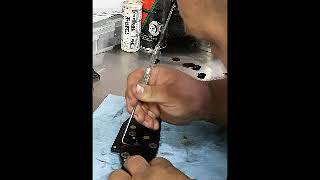
How to confirm: After removing the solenoid, the corresponding valve(s) in the valve body should be checked for free movement. They often require being carefully worked out with a pick and cleaned. A user on GMTNation found their 2-3 shift valve was stuck in the bore. Another user on YouTube demonstrated freeing the stuck valves with low-pressure air and careful manipulation.
Typical fix: Remove the valve body for a thorough cleaning of all valves and bores. In some cases, a stuck valve may need to be freed, polished, or replaced with an oversized valve kit if the bore is damaged.
Est. part cost: $0-$50 if cleaning is successful, more for valve kits. - Failed Shift Solenoid 'B' 🟡 Medium Probability → Shop Transmission Valve Body The solenoid is an electromechanical part that cycles thousands of times and can fail either electrically (coil burns out) or mechanically (plunger gets stuck, often from the same debris that affects the valve body).
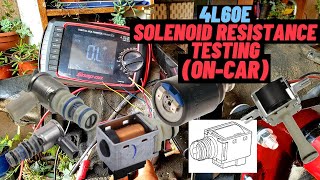
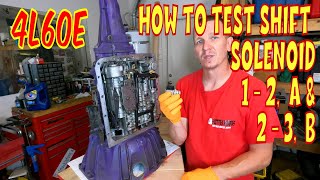
How to confirm: After dropping the transmission pan, the solenoid can be tested with a multimeter for proper resistance (typically 20-40 ohms for these models). You can also try to actuate it with a 9V battery to see if it clicks audibly.
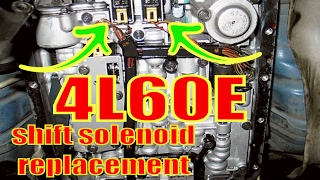
Typical fix: Replace the faulty shift solenoid. They are usually sold individually or as a kit with Solenoid 'A'.
Est. part cost: $25-$60 - Faulty Wiring or Connectors ⚪ Low Probability The internal transmission wiring harness is submerged in hot fluid, which can make insulation brittle over time. The external connector can also suffer from corrosion or damaged pins. On 4L80E models, the harness can be pinched between components if routed incorrectly, causing a short.
How to confirm: Visually inspect the wiring harness for damage or corrosion. Check for continuity and shorts with a multimeter from the TCM connector to the transmission connector.
Typical fix: Repair the damaged wire or replace the internal/external wiring harness.
Est. part cost: $50-$150
Rare But Worth Checking
- Faulty Transmission Control Module (TCM) or Powertrain Control Module (PCM): → Shop Transmission Assembly This is very rare and should only be considered after all other possibilities (fluid, solenoid, wiring, valve body) have been exhaustively ruled out.
- Internal Mechanical Failure: In some cases, a P0756 code can be a symptom of a more severe internal problem, like a failing clutch pack or a broken planetary gear. A user on GMTNation experienced a P0756 code that was ultimately followed by a catastrophic failure requiring a full transmission overhaul. Finding excessive metal shavings in the pan is a strong indicator of this.
- Worn Separator Plate Check Balls: The 4L60E valve body uses several small steel check balls. Over many cycles, these can wear down the aluminum separator plate, causing the ball to become wedged or for fluid to leak past, affecting clutch application pressures. This is a known issue on higher mileage units. Upgraded Torlon® plastic check balls or repair kits are available.
Diagnosis Steps
- Check the transmission fluid level and condition. If it is low, top it off. If it is dark, burnt, or dirty, a fluid and filter change is a good first step, but be aware the underlying cause may have already created debris.
- Scan for codes and document freeze-frame data. Clear the codes and test drive to see if P0756 returns immediately.
- Drop the transmission pan to gain access to the valve body and solenoids.
- Visually inspect the pan for excessive metal shavings or clutch material. A small amount of fine, gray material is normal, but large flakes or chunks indicate serious internal damage.
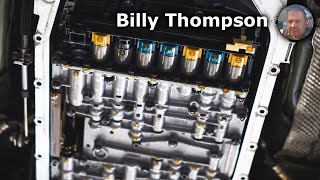
- Locate and remove Shift Solenoid 'B' (the 2-3 solenoid).
- Test the solenoid's resistance with a multimeter. A reading outside the 20-40 ohm range indicates a bad solenoid. Test for a 'click' using a 9V battery.
- CRITICAL STEP: Inspect the 2-3 shift valve in the valve body bore where the solenoid was seated. It should move freely. If it is stuck, it must be carefully removed and the bore cleaned. This is a very common cause of P0756 on these trucks.
- If the solenoid tests bad or the valve was stuck, it is best practice to replace the solenoid and thoroughly clean the valve/bore.
- Reinstall the pan with a new gasket, refill with the correct type and amount of transmission fluid (DEXRON-VI is the modern replacement for DEXRON-III required by these models), and test drive.
Parts You'll Likely Need
- 2-3 Shift Solenoid (Shift Solenoid B)
(OEM #ACDelco 24227792 (May also be listed under GM # 10478131 or 24230298))— This is the component directly identified by the code. While not always the root cause, it is often replaced as part of the repair.
Trusted brands: ACDelco, Delphi, Rostra
OEM price range: $40-$70
Aftermarket price range: $20-$40 - Transmission Filter and Pan Gasket Kit — Must be replaced whenever the transmission pan is removed. A clogged filter can cause low fluid pressure, which is a primary cause of this code.
Trusted brands: ACDelco, Wix, ATP
OEM price range: $30-$50
Aftermarket price range: $15-$30 - Automatic Transmission Fluid — Dirty or low fluid is a leading cause of the code. A fluid change is required when replacing the filter or solenoid. DEXRON-VI is the recommended service fluid.
Trusted brands: ACDelco DEXRON-VI, Valvoline DEX/MERC, Castrol Transmax
OEM price range: $8-$12 per quart
Aftermarket price range: $6-$10 per quart
Related Codes That Often Appear With This One
- P0751 — This code is for 'Shift Solenoid 'A' Stuck Off'. When multiple solenoid codes appear together, it often points to a widespread issue like contaminated fluid, low system pressure, or an electrical problem affecting the whole system.
- P0700 — This is a generic code indicating the Transmission Control Module (TCM) has stored a fault. It is an informational code that tells you to look for more specific transmission codes, like P0756.
Technical Service Bulletins (TSBs) & Recalls
- PIP4379M: Mentions that DTC P0756 can be set along with many other codes for symptoms like no reverse or a range inhibit, and advises technicians to follow published service diagnostics.
Platform-Specific Known Issues
- The provided Technical Service Bulletin (TSB) #PIP4379M lists P0756 among a wide range of transmission codes that can be caused by various internal transmission issues, underscoring that P0756 is not always an isolated solenoid failure.
Mechanic-Grade Diagnostic Values
- 1-2 and 2-3 Shift Solenoid Resistance — expected: 20-40 Ohms. Failure: A reading of 0 Ohms (short) or infinite/OL (open circuit).
- 3-2 Control Solenoid Resistance — expected: 9-14 Ohms. Failure: A reading outside of this range indicates a faulty solenoid.
- Pressure Control (EPC) Solenoid Resistance — expected: 3.5-8.0 Ohms. Failure: A reading outside of this range indicates a faulty EPC solenoid.
Scan Tool Commands That Help
- Tech2 / GDS2: Solenoid Test / Output Control — This function allows a technician to command each shift solenoid on and off individually while the vehicle is stationary. It helps verify if the solenoid is electrically functional and if it 'clicks' audibly, confirming mechanical movement without having to drop the pan initially.
Wiring & Ground Locations
- G101 / G106 — G101 is on the lower front of the engine block (driver's side). It jumpers to G106 on the front center of the frame cross rail under the crank pulley.. This is a primary ground for the Engine Control Module (ECM) and Transmission Control Module (TCM). A poor connection here can cause a variety of erratic electronic issues, including incorrect transmission commands or false sensor readings.
- G103 — Located on the cowl in the left rear of the engine compartment, above the brake booster.. Grounds the Body Control Module (BCM) and the Data Link Connector (DLC). While not a direct transmission ground, a fault here can interfere with communication between modules and the scan tool.
- Transmission Main Connector (13-pin for most of this range) — On the passenger side of the transmission case, with a vertical connection.. Pin 'B' is for the 2-3 Shift Solenoid. Pin 'E' is the 12v+ feed from the PCM. Testing for resistance between pins B and E at the harness connector can test the solenoid and internal wiring without dropping the pan.
Real Owner Repair Stories
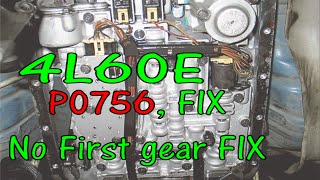
- YouTube user 'Scotties Hobbies' (Chevrolet Tahoe (GMT800 platform)) — Lost 1st gear, but 2nd, 3rd, and 4th worked. Code P0756 was present.
❌ Tried (didn't work) Replaced both shift solenoids (A and B)., Cleared codes and disconnected the battery to reset the computer.
✅ What actually fixed it The 2-3 shift valves inside the valve body were stuck. The user removed the valves, cleaned them and the bores with low-pressure compressed air, flushed the passages, and reassembled. This restored 1st gear and cleared the code. - GMTNation forum user 'sniderjr1' (GMC Envoy, 115,000 miles (shared platform/transmission)) — P0756, loss of power, sluggishness (stuck in a higher gear).
❌ Tried (didn't work) Replaced shift solenoids, filter, and fluid.
✅ What actually fixed it The user removed the valve body and found the 2-3 shift valve was physically stuck in its bore due to a piece of metal debris. They disassembled and thoroughly cleaned the entire valve body, which resolved the issue.
OEM Part Supersession History
10478131→24230298— Standard part evolution and consolidation by GM.
Heads up: The replacement part 24230298 is a direct fit for the 1-2 and 2-3 shift solenoids in this application.
Model Year Variations Within This Range
- 2003-2006: These years typically use a 13-pin main transmission connector. The internal electronics are largely consistent with models from 1996-2006.
- 2007 (late) - 2008: A transition occurred to a 15-pin connector to accommodate an Input Speed Sensor (ISS). While the P0756 fault is diagnosed similarly, the presence of an ISS provides more data for the TCM and a technician to analyze.
- Early production (pre-2005): Early 4L60E transmissions were more susceptible to debris from aluminum flashing left over from case manufacturing, which could cause P0756. GM later added a screen to the separator plate to mitigate this.
Helpful Videos





The information in this article is provided for general reference and educational purposes only. Vehicle specifications, procedures, and part compatibility can vary by production date, trim level, and region. Always consult your vehicle's factory service manual and verify part numbers before purchasing or performing repairs. Safety-critical components such as airbags, seat belts, and braking systems should be installed by a qualified professional.
- Chevrolet C SERIES:
- 🧭 Diagnostic Flowchart
- 🎬 Helpful Videos
- What's Unique About the 2003-2007 Chevrolet C SERIES
- Symptoms You May Notice
- Most Likely Causes
- Rare But Worth Checking
- Diagnosis Steps
- Parts You'll Likely Need
- Related Codes That Often Appear With This One
- Technical Service Bulletins (TSBs) & Recalls
- Platform-Specific Known Issues
- Mechanic-Grade Diagnostic Values
- Scan Tool Commands That Help
- Wiring & Ground Locations
- Real Owner Repair Stories
- OEM Part Supersession History
- Model Year Variations Within This Range
- 🎟️ Get 5% Off