

P0756 on 2023 Ford Explorer: Causes of Shift Solenoid 'B' Faults and Fixes
On a 2023 Ford Explorer, code P0756 almost always indicates a known issue with the 10-speed automatic transmission's (10R60/10R80) main control valve body or a related internal failure of the CDF clutch drum. This is a serious fault requiring professional diagnosis and repair, often costing between $1,500 and $4,500, and is covered by multiple Ford Technical Service Bulletins (TSBs).
- P0756 on a 2023 Ford Explorer is a serious code that points directly to a known issue with the 10-speed transmission's valve body.
- Do not simply replace the 'B' solenoid; it is highly unlikely to fix the problem. The issue is almost always the entire valve body assembly.
- This is not a DIY-friendly repair. It requires specialized tools, adherence to Ford's TSB procedures, and potentially programming the new part.
- Immediately check with a Ford dealer regarding warranty coverage or any open service campaigns related to the TSBs before paying for repairs.
- Driving with this code can lead to severe, and much more expensive, transmission damage.
What's Unique About the 2023-2023 Ford EXPLORER
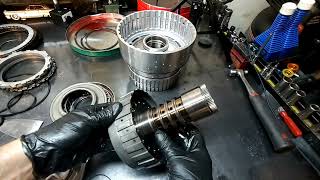
The 2023 Explorer uses Ford's 10-speed (10R60/10R80) automatic transmission, which is known to have issues with its main control (valve body) and the CDF clutch drum. 🎬 Watch: A breakdown of Ford's harsh shifting TSB and fixes. Numerous TSBs have been issued by Ford that link P0756 and a host of other transmission codes to sticking valves within the valve body assembly or a manufacturing flaw where a sleeve in the CDF clutch drum moves and blocks hydraulic passages. Therefore, this code on a 2023 Explorer is less likely to be a simple bad solenoid and more likely a symptom of these well-documented, complex internal transmission problems.
Diagnostic Flowchart
Tap your situation to follow the diagnostic path that matches what you're seeing on this vehicle.
Symptoms You May Notice
- Harsh or delayed gear shifts.
- Delayed engagement when shifting into Drive or Reverse.
- Check Engine Light / Malfunction Indicator Lamp (MIL) is on.
- Transmission may get stuck in one gear (limp mode).
- Feeling of being bumped from behind during shifts.
- Transmission slipping, where engine RPMs flare up without an increase in speed.
- Failure to shift into or out of a specific gear. 🎬 See why your Ford slams into gear with these codes.
- Replacing only the Shift Solenoid 'B'. On this specific platform, the solenoid itself rarely fails. The code is almost always a symptom of a larger hydraulic issue within the valve body or clutch drum.
Most Likely Causes
- Faulty Main Control Valve Body 🔴 High Probability → Shop Transmission Valve Body This is a well-documented issue on Ford's 10R60/10R80 transmissions, with multiple TSBs (including TSB 25-2302, TSB 24-2252, and TSB 22-2428) pointing to sticking valves in the main control as the root cause for a cluster of shift-related codes, including P0756. Debris or normal wear can cause the precision-machined valves to stick in their bores, leading to hydraulic pressure loss.
How to confirm: A technician will follow the diagnostic procedures outlined in the relevant TSBs, which typically starts with a 'Transmission Accelerated Main Control Break In' routine using a Ford-specific scan tool (FDRS). This procedure cycles the solenoids rapidly to try and free any sticking valves. If the issue persists after the break-in routine, valve body replacement is indicated.
Typical fix: Replacement of the entire main control valve body assembly. The new unit comes with a 13-digit solenoid body strategy number that must be programmed into the PCM/TCM for proper operation.
Est. part cost: $370-$900 - Internal CDF Clutch Drum Failure 🟡 Medium Probability → Shop Transmission Clutch Pressure Plate A known manufacturing flaw in some 10R80 transmissions where a sleeve inside the CDF clutch drum can move ('walk') and block hydraulic passages, causing solenoid performance codes. This is a design flaw that was later corrected with an updated drum that has a lip to hold the sleeve in place. TSB 22-2428 specifically mentions this as a possible cause.
How to confirm: This is a complex diagnosis made after ruling out the valve body. It requires transmission removal and disassembly to inspect the drum. TSBs may outline a specific hydraulic or vacuum test to confirm the internal leak before a complete teardown.
Typical fix: Near-complete transmission teardown to replace the CDF clutch cylinder/drum assembly with the updated part. This is a major, labor-intensive repair. 🎬 Watch: A deep dive into the 10R80 CDF drum failure.
Est. part cost: $200-$1500 - Low or Dirty Transmission Fluid ⚪ Low Probability → Shop Transmission Assembly While possible, on this specific platform, this is more often a symptom than a root cause. Contaminated fluid can indicate debris from an impending valve body or CDF drum failure. The transmission is a sealed unit without a dipstick, making owner-level checks difficult.
How to confirm: A technician must check the transmission fluid level and condition via a plug on the transmission case. The fluid should be at the correct level, red in color, and not smell burnt. Ford specifies Motorcraft MERCON ULV fluid for this transmission.
Typical fix: Perform a transmission fluid and filter change. This is a good first step, but if the fluid is heavily contaminated with metallic debris ('glitter'), it strongly signals a larger internal problem like the CDF drum failure.
Est. part cost: $150-$250
Rare But Worth Checking
- Wiring Harness Damage: The wiring harness to the transmission can be damaged by road debris or improper service, leading to electrical faults. A visual inspection and continuity check should be performed before condemning internal components.
- Powertrain Control Module (PCM) or Transmission Control Module (TCM) Failure: → Shop Transmission Assembly This is very rare, but a faulty control module can incorrectly set transmission codes. All other possibilities, especially the known mechanical issues with the 10R80, should be exhausted before considering module replacement.
- Damaged Valve Body to Oil Pump Seal: → Shop Transmission Valve Body A Reddit thread from a transmission technician highlights that if P0756 appears immediately after a repair with a no-move condition, the seal between the valve body and the oil pump may have been damaged, dislodged, or forgotten during reassembly. This is a common mistake for those unfamiliar with the 10R80.
Diagnosis Steps
- Verify the transmission fluid level and condition. Ensure the correct Motorcraft MERCON ULV fluid is used. This must be done by a technician as there is no dipstick.
- Use a professional OBD-II scanner (like Ford's FDRS) to check for all stored DTCs, paying close attention to other transmission codes that can help pinpoint the fault.
- Check for any applicable TSBs for the vehicle's VIN. The provided TSBs (25-2302, 24-2252, 24-2176, 22-2428) are the primary starting point.
- Inspect the transmission's external wiring harness and connectors for any signs of damage, corrosion, or loose connections.
- If TSBs direct, use a Ford-specific scan tool (like FDRS) to perform the 'PCM - Transmission Accelerated Main Control Break-In' routine. This must be done on a lift with the wheels off the ground.
- If symptoms persist after the break-in routine, the next step is typically diagnosing and replacing the main control valve body as per Ford's service procedures.
- If the valve body is ruled out or replaced and issues continue, the diagnosis proceeds to testing for and replacing the internal CDF clutch drum, which requires transmission removal and disassembly.
Parts You'll Likely Need
- Automatic Transmission Valve Body
(OEM #L1MZ-7A100-F)— This is the most common cause of P0756 on the 2023 Explorer, as documented by multiple Ford TSBs pointing to sticking valves within the assembly. This part number supersedes L1MZ-7A100-B.
Trusted brands: Motorcraft
OEM price range: $370-$600
Aftermarket price range: $250-$450 - Motorcraft MERCON ULV Automatic Transmission Fluid and Filter — Required for any repair involving opening the transmission, such as replacing the valve body. Using the correct ULV fluid is critical for 10R80 transmission function.
Trusted brands: Motorcraft
OEM price range: $150-$250 - CDF Clutch Drum Assembly
(OEM #JL3Z-7H351-B)— The second most likely cause, required when a manufacturing flaw causes a sleeve to walk out and create an internal hydraulic leak. This requires a major transmission teardown. This part number is the updated version designed to prevent the failure from recurring.
Trusted brands: Motorcraft
OEM price range: $200-$1500
Related Codes That Often Appear With This One
- P0751, P0752, P0757, P0761, P0762, P0766, P0767, P0771, P0772 — These are all performance codes for other shift solenoids (A, C, D, E). When they appear together, it strongly points to a systemic problem like the main valve body, not individual solenoid failures. [TSB 25-2302, TSB 24-2252, TSB 22-2428, 6]
- P2700-P2705 — These codes relate to transmission clutch application timing. They are frequently stored alongside solenoid codes because the root cause (faulty valve body or CDF drum) affects the hydraulic pressure needed for clutch engagement. [TSB 24-2252, TSB 22-2428, 6]
- P0729, P0731-P0735 — These are incorrect gear ratio codes. They get triggered when the transmission's actual gear ratio doesn't match what the PCM expects, which is a direct result of the shifting malfunction causing P0756. [TSB 22-2428, 6]
Technical Service Bulletins (TSBs) & Recalls
- TSB 25-2302: Addresses delayed engagement, harsh shifts, and a list of DTCs including P0756.
- TSB 24-2252: Cites harsh/delayed engagements and shifts with DTCs including P0756.
- TSB 24-2176: Also links harsh/delayed shifts with a list of DTCs including P0756.
- TSB 22-2428: A comprehensive TSB that points to software updates, sticking valves in the main control valve body, and/or axial movement of the CDF clutch cylinder sleeve as potential causes for harsh shifting and a long list of DTCs including P0756.
Platform-Specific Known Issues
- Multiple Technical Service Bulletins (TSB 25-2302, TSB 24-2252, TSB 24-2176, TSB 22-2428) have been issued for the 2023 Ford Explorer's 10-speed transmission. They address customer complaints of harsh or delayed shifts and link a large group of DTCs, including P0756, to problems with the main control valve body or the internal CDF clutch drum.
Mechanic-Grade Diagnostic Values
- Shift Solenoid 'B' (SSB) resistance — expected: While specific OEM data for the 10R80 is sparse, similar Ford transmissions (like the E4OD) specify a resistance of 20-30 ohms for shift solenoids. The 10R80 solenoids are a different design, but a reading significantly outside this range, or an open/short circuit, would indicate a failure.. Failure: A reading of 0 ohms (short circuit) or infinite ohms/OL (open circuit) on a multimeter.
Scan Tool Commands That Help
- Ford FDRS (Ford Diagnostic & Repair System): PCM - Transmission Accelerated Main Control Break-In — This routine is the first step prescribed by Ford TSBs when addressing harsh shift complaints. It rapidly cycles all solenoids to dislodge minor debris or free up sticking valves within the main control valve body. It's used before condemning the valve body itself.
- Ford FDRS (Ford Diagnostic & Repair System): Module Reprogramming / Solenoid Body Strategy Programming — This is required after replacing the main control valve body or the entire transmission assembly. The new valve body has a unique 13-digit calibration number that must be written to the TCM/PCM to ensure correct shift pressures and timing.
- Ford FDRS (Ford Diagnostic & Repair System): Self-Test / Retrieve and Clear DTCs — Used to read all manufacturer-specific codes beyond the generic P-codes. After a repair, this function is used to clear all codes and verify the fix.
Wiring & Ground Locations
- C175T — This is the main electrical connector for the transmission, connecting the vehicle's wiring harness to the transmission components, including the solenoids. It is located on the left (driver's) side of the transmission case.. This is the primary point for electrical testing. Pin 37 (Violet-Orange wire) is the control circuit for Shift Solenoid B. Technicians test for voltage, ground, and continuity at this connector to rule out wiring issues before condemning internal transmission parts.
- G104 — While specific ground locations can vary, a common primary ground point for the powertrain on similar Ford platforms is G104, typically located on the engine block or near the firewall on the right-hand side. A poor ground here can cause a wide range of electrical issues, including erratic transmission behavior.. A faulty or corroded main ground can cause incorrect sensor readings and improper voltage supply to the solenoids, potentially mimicking an internal transmission fault. Verifying all major powertrain grounds are clean and secure is a critical step in any electrical diagnosis.
Real Owner Repair Stories
- F150forum.com user (2022 Ford F-150 with 10R80 transmission, built the week before August 15, 2022.) — Harsh shifting and transmission-related fault codes.
❌ Tried (didn't work) The user notes that even a complete transmission replacement is not a guaranteed fix if the replacement unit does not have the updated parts.
✅ What actually fixed it The user points to Ford TSB 22-2428, which indicates that vehicles built on or after August 16, 2022, received the updated CDF clutch drum. The definitive fix for affected vehicles is the replacement of the original CDF drum with the updated part to resolve the internal hydraulic leak causing the shift problems.
OEM Part Supersession History
L1MZ-7A100-B→L1MZ-7A100-F— Updated main control valve body assembly, likely with revised components or materials to prevent valves from sticking.HL3Z-7H351-A, JL3Z-7H351-A→JL3Z-7H351-B— The updated CDF clutch drum assembly includes a redesigned 'anti-walk' bushing with a lip that prevents it from migrating and uncovering hydraulic ports, which was the root cause of the internal leak.
Heads up: Vehicles built on or after August 16, 2022, should have the updated drum from the factory, according to TSB 22-2428.
Model Year Variations Within This Range
- 2023 (Early Production): While all 2023 models should have the updated CDF clutch drum from the factory (post-August 2022 production), the primary cause for P0756 on this model year shifts more definitively to the main control valve body issue, as addressed in TSBs like 25-2302 and 24-2252.
Helpful Videos


We Have This Part in Stock


The information in this article is provided for general reference and educational purposes only. Vehicle specifications, procedures, and part compatibility can vary by production date, trim level, and region. Always consult your vehicle's factory service manual and verify part numbers before purchasing or performing repairs. Safety-critical components such as airbags, seat belts, and braking systems should be installed by a qualified professional.
- Ford EXPLORER:
- 🧭 Diagnostic Flowchart
- 🎬 Helpful Videos
- 🛍️ Shop This Part
- What's Unique About the 2023-2023 Ford EXPLORER
- Symptoms You May Notice
- Most Likely Causes
- Rare But Worth Checking
- Diagnosis Steps
- Parts You'll Likely Need
- Related Codes That Often Appear With This One
- Technical Service Bulletins (TSBs) & Recalls
- Platform-Specific Known Issues
- Mechanic-Grade Diagnostic Values
- Scan Tool Commands That Help
- Wiring & Ground Locations
- Real Owner Repair Stories
- OEM Part Supersession History
- Model Year Variations Within This Range
- 🎟️ Get 5% Off