

P0756 on 2012-2018 Ford Focus: Shift Solenoid 'B' Causes and Fixes
On a 2012-2018 Ford Focus, code P0756 is most often caused by a failing Transmission Control Module (TCM), a well-known issue with the DPS6 automatic transmission. While the code points to a shift solenoid, the TCM is the usual culprit. Expect a repair cost of $500-$1000+ for a replacement TCM. In rare cases, the issue is the solenoid itself or related wiring.
- P0756 on a 2012-2018 Focus is most likely caused by a bad Transmission Control Module (TCM), not the solenoid itself.
- Do not replace any parts without a proper diagnosis from a qualified technician, as the TCM requires special programming.
- This is a serious code that should be addressed immediately to prevent further damage and ensure vehicle safety.
- Always check with a Ford dealer for any open recalls or warranty extensions for your specific VIN before authorizing repairs.
What's Unique About the 2012-2018 Ford Focus
The 2012-2018 Ford Focus uses a DPS6 PowerShift transmission, which is a dual-clutch automated manual, not a traditional automatic. This transmission is infamous for widespread, documented problems. While P0756 points to a solenoid, the most common point of failure on this specific platform is the external Transmission Control Module (TCM) that commands the solenoids. These TCMs are known to fail from heat and vibration, leading to a variety of shift-related error codes. Therefore, a P0756 code is more likely a symptom of a bad TCM than a bad solenoid itself. Forum users frequently report that a TCM replacement resolves this and other related codes.
Symptoms You May Notice
- Transmission warning light illuminated
- Check Engine Light on
- Harsh, erratic, or delayed shifting
- Transmission slipping or shuddering, especially from a stop
- Vehicle gets stuck in a single gear
- Inability to select certain gears, particularly 2nd gear
- Vehicle enters 'limp mode' with reduced power
- A 'Service Transmission Now' message on the instrument cluster
- Replacing only the shift solenoid without testing the TCM. On this platform, the TCM is the more likely failure point, and replacing the solenoid will not fix a bad control module.
- Replacing the transmission fluid. While low or dirty fluid can cause this code on traditional automatics, it's an unlikely fix for the DPS6, which is a dry-clutch design and where the TCM is the primary suspect.
Most Likely Causes
- Faulty Transmission Control Module (TCM) 🔴 High Probability → Shop Transmission Assembly The TCM on the DPS6 transmission is mounted externally on the transmission case, exposing it to excessive heat and vibration, which leads to a high failure rate of its internal electronics. This is the most widely documented failure on this platform, with repair shops reporting they have 'stacks of bad ones'.
How to confirm: A professional technician will use a high-level scan tool (like Ford's IDS) to check for communication errors with the TCM (U-codes) alongside the P0756 code. They may also attempt to command the solenoid directly; if the command fails and wiring is good, the TCM is the likely cause. A TCM self-test can also confirm internal faults.
Typical fix: Replace the Transmission Control Module. The new module must be programmed to the vehicle's VIN and undergo a clutch adaptive learning procedure.
Est. part cost: $400-$800 - Faulty Shift Solenoid 'B' ⚪ Low Probability → Shop Transmission Valve Body While any solenoid can fail, it is a much less common failure point than the TCM on this specific transmission. The solenoid itself can fail electrically (open or shorted coil) or mechanically (stuck plunger from debris).
How to confirm: After confirming the TCM is sending a signal, a technician would check the solenoid's resistance with a multimeter to see if it's within factory specifications (typically 10-60 ohms). They would also inspect for debris or blockages in the valve body where the solenoid is located.
Typical fix: Replace the individual shift solenoid or the solenoid body assembly. This is an internal transmission repair.
Est. part cost: $50-$150 - Wiring or Connector Issues ⚪ Low Probability The wiring harness between the TCM and the transmission's internal components can become damaged from heat, vibration, or corrosion. A known issue on these cars is a poor primary ground connection from the battery to the chassis, which can cause a variety of electrical gremlins, including transmission faults.
How to confirm: Visually inspect the wiring harness and connectors going to the TCM and transmission. A technician would perform a continuity test on the wires for Shift Solenoid 'B' between the TCM connector and the transmission connector to check for breaks or shorts. Checking and cleaning the main battery ground strap is a common diagnostic step.
Typical fix: Repair the damaged section of the wiring harness or replace a corroded connector. Clean and secure the main chassis ground point.
Est. part cost: $20-$100
Rare But Worth Checking
- Internal Mechanical Failure: Although less likely to present *only* as P0756, issues with the clutch pack, shift forks, or actuators are common on the DPS6. These problems usually cause noticeable shuddering or grinding noises and may be accompanied by other codes. Leaking input shaft seals can contaminate the dry clutch, causing shudder and slippage.
Diagnosis Steps
- Scan the vehicle for all stored trouble codes. Pay close attention to any U-codes (network/communication) or other P-codes related to the transmission.
- Check for any applicable Technical Service Bulletins (TSBs) or warranty extensions related to the DPS6 transmission for your vehicle's VIN. Ford has issued several, including 19N08 (clutch shudder) and 20B23 (clutch actuator motors).
- Have a professional with a Ford-specific scan tool (IDS) test the TCM for communication and run self-tests.
- Inspect the main battery-to-chassis ground strap for corrosion or looseness. A poor ground is a known issue on this platform.
- Inspect the wiring harness and main connector at the TCM for any signs of corrosion, damage, or loose pins.
- If the TCM and wiring are confirmed to be good, the next step is to test the internal transmission components, including the resistance of Shift Solenoid 'B'. This requires accessing the transmission's internal components.
- Check the transmission fluid level and condition. While the DPS6 is a 'dry clutch' system, it still uses fluid for the gear-changing mechanics. Burnt or contaminated fluid can indicate internal problems.
Parts You'll Likely Need
- Transmission Control Module (TCM)
(OEM #AE8Z-7Z369-F)— This is the most common failure point on the 2012-2018 Focus that causes shift-related codes like P0756. The original units are prone to failure from heat and vibration. The OEM part number AE8Z-7Z369-F supersedes previous versions like AE8Z-7Z369-B and AE8Z-7Z369-D.
Trusted brands: Motorcraft
OEM price range: $700-$750
Aftermarket price range: $400-$700 (Remanufactured)
Related Codes That Often Appear With This One
- P0902 — This code relates to a Clutch Actuator Circuit Low fault, often pointing back to the same root cause: a failing TCM or related wiring.
- U0101 — This code indicates a loss of communication with the TCM. If you see this with P0756, it's a very strong indicator that the TCM itself has failed.
- P07A3 — This code for 'Transmission Friction Element 'A' Stuck On' is another common DPS6 code that points to the underlying control and mechanical issues of this transmission, often related to the TCM or clutch assembly.
Technical Service Bulletins (TSBs) & Recalls
- 19N08 - Extended warranty coverage for the DPS6 transmission clutch to 7 years or 100,000 miles due to shudder.
- 20B23 - Customer satisfaction program for the replacement of clutch actuator motors, which could cause erratic shifting and various codes.
- 16-0109 - Addresses excessive clutch shudder and fluid leaks from input shaft seals, a root cause of many DPS6 issues.
Platform-Specific Known Issues
- The DPS6 PowerShift transmission in this vehicle was the subject of a class-action lawsuit due to high failure rates of the TCM, clutch packs, and shift actuators.
- Ford has issued multiple warranty extensions and customer satisfaction programs for this transmission. It is critical to check with a Ford dealer to see if your vehicle's VIN is covered under any active programs (like 19N08 for clutches or 20B23 for clutch motors) before paying for repairs. Note that many of these programs had time/mileage limits (e.g., 7 years/100,000 miles for 19N08) and may now be expired for most vehicles.
Mechanic-Grade Diagnostic Values
- Shift Solenoid 'B' (SSB) Resistance — expected: Approximately 3.0 ohms at room temperature. A technical bulletin for the similar 6F35 transmission shows a range of 3.43 - 5.32 ohms between 14-32°F (-10 to 0°C), which can be used as a general reference.. Failure: A reading of infinite resistance (open circuit) or near-zero resistance (short circuit). Coils can also fail when hot, so testing at operating temperature is ideal.
- Solenoid 'B' Voltage Command (Live Data) — expected: A 12V pulse from the TCM for a few hundred milliseconds when a shift involving that solenoid is commanded.. Failure: Absence of a voltage pulse when the shift should occur points to a TCM or wiring issue, not a solenoid issue.
- Main Chassis Ground Voltage Drop — expected: Less than 0.5 ohms of resistance between the ground strap and the chassis.. Failure: A higher resistance reading indicates a poor ground, which is a known cause of erratic electronic behavior, including TCM faults.
Scan Tool Commands That Help
- Ford IDS (Integrated Diagnostic System): TCM - Reset KAM (Keep Alive Memory) — This must be performed after replacing the TCM or when attempting to resolve erratic shifting behavior. It clears all learned adaptive tables. The path is typically: Toolbox > Powertrain > TCM > Reset KAM. Simply disconnecting the battery will not clear the TCM KAM.
- Ford IDS (Integrated Diagnostic System): TCM Adaptive Strategy Learn — This procedure is required after replacing the TCM or resetting the KAM to allow the module to relearn clutch engagement points and shift patterns. It involves a specific sequence of driving and braking maneuvers while monitoring transmission fluid temperature.
- High-Level OBD-II Scanner: TCM Solenoid Self-Test / Bidirectional Control — This function allows a technician to command each shift solenoid on and off manually. If the TCM can command the solenoid but no shift occurs, the fault is likely mechanical (solenoid, valve body). If the TCM cannot command the solenoid, the fault is likely in the TCM or wiring.
Wiring & Ground Locations
- G108 — Located on the left rear of the motor compartment.. This is a primary ground point in the engine bay. Corrosion or looseness here can cause a host of electrical issues, including intermittent TCM faults and communication codes.
- G1 / Main Chassis Ground — The main ground strap is located underneath the air cleaner assembly, connecting the transmission case to the chassis.. This is the most critical ground for the transmission and TCM. A poor connection here is a well-documented cause of shifting problems and TCM-related codes on the Focus. Cleaning this connection point is a primary diagnostic step.
- TCM Connectors — Two large connectors on the externally-mounted TCM, located below the airbox assembly.. These connectors are the interface between the TCM and the rest of the vehicle. The pins can corrode or become loose from vibration, interrupting signals to the internal shift solenoids. It is common for one connector to appear less flush than the other, which is normal by design.
Real Owner Repair Stories
- YouTube Commenter on 'Ford Focus TCM Replacement' (2012-2018 Ford Focus (comment from a former Ford dealership technician)) — General transmission issues and faults that would typically lead to a TCM replacement.
❌ Tried (didn't work) Directly replacing the TCM without checking other causes.
✅ What actually fixed it In many cases, the technician found that thoroughly cleaning the main ground points on the body of the car completely fixed the customer's transmission issues, saving them the cost of a new TCM ($987.54). - Reddit user in r/FordFocus (2017 Ford Focus Hatchback Titanium, automatic, ~60,000 miles) — Worsening transmission shudder.
❌ Tried (didn't work) Driving gently or 'babying' the accelerator.
✅ What actually fixed it The owner began driving the car 'harder' by accelerating more firmly through the first few gears. This change in driving style significantly reduced the shudder. The theory is that this helps the adaptive learning of the TCM and ensures firmer clutch engagement, preventing the glazing/shudder that occurs with gentle use. The user passed 130,000 miles with no major repairs after adopting this driving style.
OEM Part Supersession History
AE8Z-7Z369-B, AE8Z-7Z369-D, AE8Z-7Z369-E→AE8Z-7Z369-F— Internal design improvements to address high failure rates. Some remanufactured units feature soldered critical connections instead of the original compliant pins to prevent failure from vibration.
Heads up: AE8Z-7Z369-F is the correct and most current part for all 2012-2018 Focus models with the DPS6. Using older revisions or incompatible part numbers will result in failure. The module requires VIN programming with Ford's IDS software to function.
Model Year Variations Within This Range
- Early models (approx. 2012-2014): Early versions of the TCM were reportedly built with undersized MOSFETs for the clutch motors, leading to a higher rate of failure for those specific components within the module. Later revisions improved upon this design.
Diagnostic Flowchart
Other Known Issues on This Vehicle
Issues unrelated to this code that are worth knowing about as an owner of this generation:
- DPS6 Transmission Clutch Shudder/Failure 🔴 High → Shop Transmission Assembly — Extremely common across all model years. Often caused by leaking input shaft seals contaminating the dry clutch. (Ref: TSB 19N08, TSB 16-0109)
- EVAP Canister Purge Valve Failure 🟠 Medium — Common issue causing rough idle, stalling after refueling, and difficulty starting. (Ref: NHTSA Recalls 18V735000, 19V515000)
- Passenger-Side Engine Mount Collapse 🟠 Medium — The hydraulic passenger-side engine mount frequently fails, causing excessive vibration in the cabin at idle and during acceleration.
- Power Steering Assist Failure 🔴 High — Some models experience a sudden loss of electronic power steering assist, making the vehicle very difficult to steer. Often requires replacement of the entire steering rack.
- Poor Main Chassis Ground Connection 🟡 Low — The ground strap from the battery to the chassis is often poorly connected from the factory (bolted to a painted surface), leading to a wide range of intermittent electrical issues.
Used vs. New Parts: Buying Guide for This Vehicle
When a used part is the smart pick: A used OEM TCM from a junkyard is a very high-risk purchase for this vehicle. The part has an extremely high failure rate, and a used unit may have failed already or have very little life left. A 'remanufactured' or 'refurbished' unit from a reputable seller with a warranty is a much smarter choice if you are avoiding a new OEM part. These often have upgraded internal components (like soldered pins) to be more durable than the original.
Donor-vehicle mileage cap: roughly under 50000 miles for the part to have meaningful remaining life.
What to inspect on the donor part:
- Verify the part number is the latest revision: AE8Z-7Z369-F.
- If buying remanufactured, ensure it comes with a warranty (90 days or more is common).
- Check for any physical damage to the case or connectors.
- Ask if the unit has been tested and if it is guaranteed to be programmable.
OEM-only on this vehicle (don't cheap out):
- Transmission Control Module (TCM) - While remanufactured units with upgrades are a good alternative, cheap, unbranded aftermarket clones should be avoided. A genuine Ford/Motorcraft part or a quality remanufactured unit is essential because it must be programmed with Ford's specific IDS software.
Aftermarket brands forum-validated for this vehicle:
- Freedom Injection (Remanufactured with upgrades)
- Nexenzo (Remanufactured/Programmed)
Brands owners have reported issues with on this vehicle:
- Unbranded, no-name modules from online marketplaces without a warranty or programming guarantee.
Real Owner Stories
Aggregated from forums and TSBs cited above. Mileages and costs reflect what owners reported in those sources.
2012 Ford Focus 2.0L
Symptoms: The primary symptom was a damaged, jammed clutch fork 'B' that would not retract or turn, causing a shuttering feeling while driving.
What fixed it: Diagnosis of a jammed clutch fork 'B' which required replacement to allow the dual clutch to function properly.
Source hint: youtube_comment from House of Tech
2014 Ford Focus 2.0L
Symptoms: Owner reported P0756 and asked if others had experienced the same issue with the DPS6 transmission.
What fixed it: The context identifies the TCM as the most likely fix for this platform, often requiring replacement and a clutch adaptive learning procedure.
Source hint: Reddit r/MechanicAdvice thread '2014 ford focus p0756 anyone have this happen'
Related OBD-II Codes
Frequently Asked Questions
Is there a warranty extension for the clutch shudder I'm experiencing on my 2014 Focus?
My 2012 Focus is stuck in gear and showing P0756; could this be the clutch actuator motors?
Could a bad battery ground cause transmission codes like P0756 on a Ford Focus?
I'm seeing P0756 and fluid leaks near the transmission; what TSB should I look at?
Is the Transmission Control Module (TCM) failure common on the 2011-2016 Ford Fiesta as well?
How much does it typically cost to replace the TCM if it's the cause of my P0756 code?
Helpful Videos

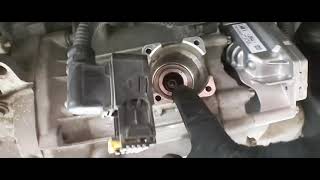



We Have This Part in Stock
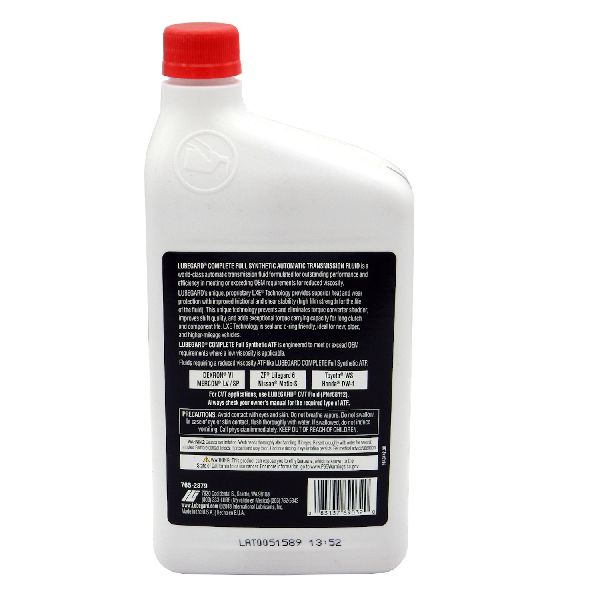
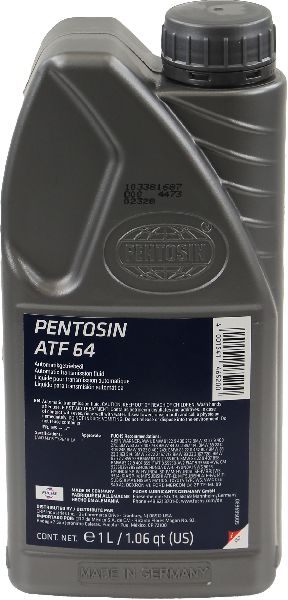


The information in this article is provided for general reference and educational purposes only. Vehicle specifications, procedures, and part compatibility can vary by production date, trim level, and region. Always consult your vehicle's factory service manual and verify part numbers before purchasing or performing repairs. Safety-critical components such as airbags, seat belts, and braking systems should be installed by a qualified professional.
- Ford Focus:
- 🧭 Diagnostic Flowchart
- 🎬 Helpful Videos
- 🛍️ Shop This Part
- What's Unique About the 2012-2018 Ford Focus
- Symptoms You May Notice
- Most Likely Causes
- Rare But Worth Checking
- Diagnosis Steps
- Parts You'll Likely Need
- Related Codes That Often Appear With This One
- Technical Service Bulletins (TSBs) & Recalls
- Platform-Specific Known Issues
- Mechanic-Grade Diagnostic Values
- Scan Tool Commands That Help
- Wiring & Ground Locations
- Real Owner Repair Stories
- OEM Part Supersession History
- Model Year Variations Within This Range
- Other Known Issues on This Vehicle
- Used vs. New Parts: Buying Guide for This Vehicle
- Real Owner Stories
- 2012 Ford Focus 2.0L
- 2014 Ford Focus 2.0L
- Related OBD-II Codes
- Frequently Asked Questions
- 🎟️ Get 5% Off