

P0756 on 2010-2017 GMC Sierra 1500: Shift Solenoid 'B' Stuck Off Fixes
On 2010-2017 GMC Sierra 1500s, P0756 is most often caused by a failed 2-3 shift solenoid ('B') or debris in the transmission valve body, a known issue. The debris frequently originates from a failing torque converter clutch. The fix usually involves dropping the transmission pan to replace the solenoid or the entire TEHCM (valve body/solenoid/TCM assembly) and addressing the source of the contamination.
- P0756 on a 2010-2017 Sierra indicates the 2-3 shift solenoid ('B') is stuck off, which is a serious issue that can make the truck unsafe or undrivable.
- The most common cause is not the solenoid itself, but metallic debris from a failing torque converter that contaminates the transmission fluid and clogs the valve body, causing valves and solenoids to stick.
- Diagnosis must begin by checking the transmission fluid condition. If the fluid is full of debris, simply replacing the solenoid will not be a permanent fix; the source of the debris must be found and addressed.
- This is not a DIY-friendly repair for beginners. Due to the complexity of internal transmission work, professional service is strongly recommended to avoid causing more expensive damage.
- Driving with this code is not recommended as the transmission will be in a 'limp mode' and continued operation can lead to overheating and catastrophic failure.
What's Unique About the 2010-2017 Gmc SIERRA 1500
The 2010-2017 Sierra 1500, spanning two generations (GMT900 and K2XX), commonly uses the 6L80 automatic transmission. This transmission is notoriously prone to torque converter lock-up (TCC) clutch failure. The clutch material delaminates, sending fine metallic debris, often described as looking like 'coffee grounds', throughout the transmission fluid. This debris contaminates the fluid and clogs the small passages in the valve body or causes solenoids and their corresponding valves to stick, which is a primary cause for the P0756 code on this platform. GM has issued multiple Technical Service Bulletins (TSBs) acknowledging that debris in the valve body is a direct cause of this and related solenoid codes. [Bulletin #PIP4831E]
Diagnostic Flowchart
Tap your situation to follow the diagnostic path that matches what you're seeing on this vehicle.
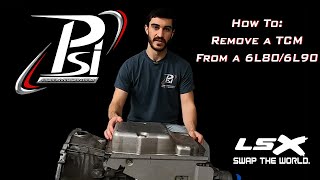
Generation note: This range covers the end of the second generation (GMT900, 2010-2013) and the beginning of the third generation (K2XX, 2014-2017). Both generations commonly used the 6L80 transmission, and the causes and fixes for P0756 are largely the same across these years as they share the same fundamental powertrain architecture. 🎬 Watch: A deep dive into common 6L80 failure points. A notable change occurred mid-2014, when GM began adding an 8th check ball to the valve body to address a clunking issue.
Symptoms You May Notice
- Check Engine Light is on
- Transmission stuck in one gear (limp mode), often 2nd or 3rd. [Bulletin #PIE0371B, 1, 12]
- Delayed, harsh, or erratic shifting. [Bulletin #PIE0371B, 15]
- Inability to shift into certain gears
- Sluggish acceleration from a stop
- No engagement into reverse. [Bulletin #PIP4379M]
- Transmission slipping between gears.
- Transmission overheating.
- Replacing only the shift solenoid without cleaning the valve body or addressing the source of fluid contamination. If debris caused the original solenoid to fail, it will likely cause the new one to fail as well.
- Replacing the shift solenoid when the actual 2-3 shift valve is mechanically stuck in the valve body bore. A new solenoid cannot overcome a physically stuck valve.
Most Likely Causes
- Contaminated Transmission Fluid / Debris in Valve Body 🔴 High Probability → Shop Transmission Assembly As noted in TSB #PIP4831E, debris is a known issue. The torque converter clutch is the most common source of this debris, which then clogs the small orifices and passages within the valve body, causing solenoids and valves to stick. Over 60% of failed 6L80s show evidence of metallic dust from the converter clutch in the pan.
How to confirm: Drop the transmission pan and inspect the fluid and magnet. Dark, burnt-smelling fluid or excessive metallic shavings ('coffee grounds') in the pan are clear indicators of torque converter failure.
Typical fix: If the torque converter is the source, it must be replaced along with a full transmission flush. The valve body assembly (TEHCM) is often replaced as a unit because cleaning the tiny passages is difficult and often unsuccessful.
Est. part cost: $50-$150 for fluid/filter; $300-$800 for a valve body; $400-$1200 for a new torque converter. - Failed Shift Solenoid 'B' (2-3 Solenoid) or Stuck Valve 🔴 High Probability → Shop Transmission Valve Body The solenoid can fail electrically, but more often it fails mechanically (stuck plunger) due to debris in the fluid. Crucially, the mechanical 2-3 shift valve that the solenoid actuates can also get stuck in its bore within the valve body, which will trigger P0756 even with a perfectly functional solenoid.
How to confirm: After accessing the solenoid, it can be tested with a multimeter for correct resistance (typically 20-40 Ohms). A diagnostic scan tool can also command the solenoid on and off. With the solenoid removed, the valve itself should be gently pushed to confirm it moves freely in its bore.
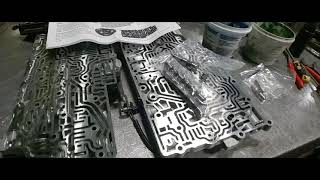
Typical fix: Replace the faulty shift solenoid. Solenoids are part of the complete valve body/solenoid pack assembly (TEHCM) and replaced as one unit. If the valve is stuck, the valve body must be removed for thorough cleaning or replacement. 🎬 See how to rebuild the TEHCM and valve body.
Est. part cost: $40-$100 for a single solenoid; $250-$600 for a solenoid pack/TEHCM. - Low Transmission Fluid Level 🟡 Medium Probability → Shop Transmission Assembly
How to confirm: Check the transmission fluid level according to the manufacturer's procedure. This must be done at the correct operating temperature with the engine running and the vehicle on a level surface.
Typical fix: Top off the fluid to the correct level with the specified DEXRON-VI fluid and inspect for leaks that caused the low level.
Est. part cost: $15-$30 for a quart of fluid. - Faulty Transmission Control Module (TCM) ⚪ Low Probability → Shop Transmission Assembly TSB #PIP4831E advises technicians to review the date code on the TCM, suggesting some batches may be problematic. In the 6L80, the TCM is integrated into the valve body assembly (TEHCM), so it is often replaced as a unit when other valve body issues are present.
How to confirm: This is typically a last resort after all other causes (fluid, solenoids, wiring, valve body) have been ruled out. Requires advanced diagnostics to confirm the TCM is not sending the command signal.
Typical fix: Replace and program the TEHCM assembly. The new module must be programmed to the vehicle's VIN.
Est. part cost: $400-$1000 for a TEHCM assembly (e.g., ACDelco P/N 24256861).
Rare But Worth Checking
- Wiring or Connector Issues: The internal transmission wiring harness can become brittle from heat and fluid exposure over time. A damaged wire or corroded connector pin can interrupt the signal to the solenoid.
- Clogged Valve Body Separator Plate: → Shop Transmission Valve Body TSB #PIP5100A specifically warns that fibrous material from aftermarket transmission filters can break down and clog the small orifices in the valve body separator plate (e.g., OEM P/N 24272467), leading directly to P0756 even if the solenoid and valves are functional.
Diagnosis Steps
- Check the transmission fluid level and condition. Low, dark, or burnt-smelling fluid is the first clue.
- Scan the computer for any other transmission-related codes to get a bigger picture of the problem.
- Drop the transmission pan. Inspect the amount and type of debris on the pan magnet. A coating of fine, metallic 'coffee grounds' points to serious internal wear, likely from the torque converter.
- Inspect the valve body for obviously stuck valves or clogged passages.
- If the fluid and pan are relatively clean, the focus shifts to the solenoid itself. Test the solenoid's resistance with a multimeter (should be 20-40 Ohms).
- With the solenoid removed, gently push on the 2-3 shift valve with a small tool to ensure it moves freely in its bore. If it's stuck, the valve body must be serviced.
- Inspect the internal wiring harness for any signs of damage or corrosion.
- If a new TEHCM/solenoid assembly is installed, it must be programmed to the vehicle's VIN and have the 'Service Fast Learn Adapts' procedure performed.
- If all other components check out, the Transmission Control Module (TCM) may be at fault, though this is rare.
Parts You'll Likely Need
- Control Valve Body Assembly (TEHCM)
(OEM #24256861)— On the 6L80 transmission, the solenoids, valve body, and TCM are integrated into one unit (TEHCM). It is often replaced as a complete assembly to ensure reliability and address widespread contamination, as cleaning is often ineffective.
Trusted brands: ACDelco
OEM price range: $500-$1000
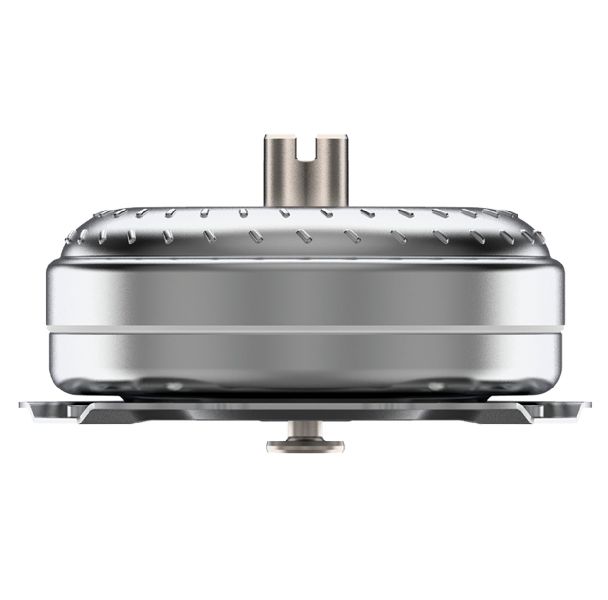
Aftermarket price range: $400-$800 - Torque Converter — This is the most common source of the debris that causes the P0756 code. If significant metallic debris is found in the pan, the torque converter must be replaced to prevent a repeat failure.
Trusted brands: ACDelco, Monster Transmission
OEM price range: $400-$800
Aftermarket price range: $300-$600 - Transmission Filter and Gasket Kit — Always replaced when the transmission pan is removed for service. A clogged filter can restrict fluid flow, and old gaskets will leak.
Trusted brands: ACDelco, Wix
OEM price range: $50-$80
Aftermarket price range: $30-$60 - DEXRON-VI Automatic Transmission Fluid — Required for refilling the transmission after service. Using the correct fluid is critical for transmission health.
Trusted brands: ACDelco, Valvoline, Mobil 1
OEM price range: $15-$30 per quart
Aftermarket price range: $8-$20 per quart
Related Codes That Often Appear With This One
- P0700 — This is a general transmission fault code. It means the TCM has stored a specific code (like P0756) and is telling the main engine computer that a transmission problem exists.
- P0751 — This code is for Shift Solenoid 'A' Stuck Off. Both solenoids are in the same valve body and are susceptible to the same debris and fluid contamination issues. [Bulletin #PIE0371B]
- P0741 — This code indicates a problem with the Torque Converter Clutch (TCC) circuit. A failing TCC is a very common source of the debris that causes P0756, so these codes frequently appear together.
- P2714 — This code is for Pressure Control Solenoid 'D' Performance/Stuck Off. It is listed alongside P0756 in TSB #PIP4831E as being caused by debris in the valve body.
Technical Service Bulletins (TSBs) & Recalls
- PIP4831E: Advises looking for debris in the valve body for a list of codes including P0756.
- PIE0371B: Mentions P0756 in the context of delayed shifts or being stuck in gear.
- PIP4379M: Lists P0756 among codes that can occur with conditions like no reverse or range inhibit.
- PIP5100A: Warns that material from aftermarket filters can clog the valve body separator plate, causing P0756.
Platform-Specific Known Issues
- Technical Service Bulletin #PIE0371B mentions that vehicles may experience a Check Engine Light, delayed shifts, or get stuck in gear with DTC P0756 set.
- TSB #PIP4831E specifically advises technicians to look for debris in the valve body and to check the date code on the Transmission Control Module for a range of solenoid codes, including P0756.
- TSB #PIP4379M groups P0756 with many other codes that can cause severe symptoms like no reverse engagement, pointing to the need for thorough diagnostics. [Bulletin #PIP4379M]
Mechanic-Grade Diagnostic Values
- Shift Solenoid 'B' (SS2) Coil Resistance — expected: 20 - 40 Ohms. Failure: A reading outside this range (e.g., infinite for an open circuit, near zero for a short) indicates a failed solenoid coil.
- Scan Tool Live Data - Gear Box Slip — expected: < 400 RPM. Failure: When 1st gear is commanded, if the calculated gear box slip is greater than or equal to 400 RPM, it can trigger the P0756 fault.
- Scan Tool Live Data - Solenoid 'B' Voltage — expected: A pulse of ~12V for a few hundred milliseconds when a 1-2 shift is commanded.. Failure: Absence of a voltage pulse indicates a problem with the TCM or the wiring, not necessarily the solenoid itself.
Scan Tool Commands That Help
- GDS2 or equivalent high-end scan tool: Solenoid Control / Bidirectional Test — To manually command the Shift Solenoid 'B' on and off while monitoring for an audible click or change in hydraulic pressure. This helps isolate whether the fault is with the solenoid itself or the TCM's command signal.
- GDS2, Autel, or other high-end scan tool: Service Fast Learn Adapts — This procedure is mandatory after replacing the TEHCM, valve body, or performing any major internal transmission service. It allows the TCM to learn the hydraulic characteristics of the individual clutches to ensure smooth shifting. Failure to perform this may result in poor shift quality and new DTCs.
- GM MDI2 or equivalent J2534 Pass-Thru Device: TCM Programming / Calibration Update — Required when installing a new or used TEHCM. The module must be flashed with the correct calibration file that matches the vehicle's VIN. A used TEHCM from a donor vehicle will not work correctly until it is reprogrammed.
Wiring & Ground Locations
- G103 — Typically located on the right rear of the engine block.. A poor engine-to-chassis ground can cause a wide range of difficult-to-diagnose electrical issues, including erratic behavior from the powertrain and transmission control modules. Ensuring this ground is clean and tight is a crucial electrical baseline check. (Note: Location based on similar GMT platform; exact location may vary slightly).
- Transmission Main Connector (X1) — On the side of the transmission case, connecting the main vehicle harness to the internal TEHCM.. This is the single point of failure for all communication and power between the vehicle and the transmission controls. Corrosion or damage to pins in this connector can mimic an internal TEHCM failure.
Real Owner Repair Stories
- Forum Post Summary (GMC Sierra with 6L80 Transmission) — P0756 code, poor shifting.
❌ Tried (didn't work) Replacing the shift solenoids.
✅ What actually fixed it The 2-3 shift valve was found to be physically stuck in the valve body bore due to a small piece of metal debris. The final fix was to remove the valve body, manually free the stuck valve, and thoroughly clean all passages. This proved the issue was a mechanical blockage, not an electrical solenoid failure.
OEM Part Supersession History
24256861→19435614— Manufacturer revision and update.
Heads up: While the new part number is the official replacement, a new TEHCM must always be programmed to the vehicle's VIN to ensure compatibility and proper function.
Model Year Variations Within This Range
- 2014-2017: Starting mid-2014, GM began installing an 8th check ball (#8) in the 6L80 valve body and used an updated spacer plate with a smaller orifice. This was done to resolve a 'clunk' sensation during the release of the low/reverse clutch. The updated spacer plate and extra ball will back-service all earlier 6L80 models.
Helpful Videos
We Have This Part in Stock




The information in this article is provided for general reference and educational purposes only. Vehicle specifications, procedures, and part compatibility can vary by production date, trim level, and region. Always consult your vehicle's factory service manual and verify part numbers before purchasing or performing repairs. Safety-critical components such as airbags, seat belts, and braking systems should be installed by a qualified professional.
- Gmc SIERRA 1500:
- 🧭 Diagnostic Flowchart
- 🎬 Helpful Videos
- 🛍️ Shop This Part
- What's Unique About the 2010-2017 Gmc SIERRA 1500
- Symptoms You May Notice
- Most Likely Causes
- Rare But Worth Checking
- Diagnosis Steps
- Parts You'll Likely Need
- Related Codes That Often Appear With This One
- Technical Service Bulletins (TSBs) & Recalls
- Platform-Specific Known Issues
- Mechanic-Grade Diagnostic Values
- Scan Tool Commands That Help
- Wiring & Ground Locations
- Real Owner Repair Stories
- OEM Part Supersession History
- Model Year Variations Within This Range
- 🎟️ Get 5% Off