

P0756 on 2011-2015 GMC Sierra: Shift Solenoid 'B' Causes and Fixes
On 2011-2015 GMC Sierra trucks with the 6L80 transmission, code P0756 almost always points to a stuck 2-3 Shift Solenoid 'B' or, more commonly, debris inside the transmission valve body preventing the solenoid or its corresponding valve from working. This is a widely documented issue, often stemming from a failing torque converter that contaminates the fluid. The standard repair involves dropping the transmission pan and valve body for cleaning and replacing the entire solenoid body (TEHCM) and
- P0756 on a 2011-2015 Sierra indicates a problem with the 2-3 shift solenoid, but the root cause is often mechanical, not electrical.
- The most common cause is debris from a failing torque converter or faulty filter clogging the transmission valve body.
- Always inspect the fluid and transmission pan for metallic debris before replacing parts. Significant debris means the torque converter and/or transmission needs replacement or rebuilding.
- Simply replacing the shift solenoid without addressing fluid contamination will likely result in the problem returning.
- This is a serious code that can leave you stranded; professional diagnosis and repair are highly recommended.
What's Unique About the 2011-2015 Gmc SIERRA
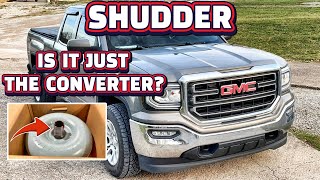
The 6-speed 6L80 automatic transmission used in this generation of Sierra is notorious for issues where the torque converter lock-up (TCC) clutch fails and sheds its friction material. 🎬 Watch: A detailed explanation of 6L80 torque converter failure. This metallic and fibrous debris contaminates the transmission fluid, circulates through the system, and clogs the small passages, screens, and solenoids within the valve body. This makes P0756 a very common code that often indicates a deeper contamination issue rather than just a single failed electrical part. This root cause is supported by multiple GM Technical Service Bulletins (TSBs) and countless owner experiences.
Diagnostic Flowchart
Tap your situation to follow the diagnostic path that matches what you're seeing on this vehicle.
Generation note: This range covers the end of the second generation (GMT900, 2011-2013) and the beginning of the third generation (K2XX, 2014-2015). Both generations commonly used the 6L80 automatic transmission, making the causes and fixes for P0756 very similar across this entire year span. The core issue of torque converter debris causing valve body problems is prevalent in both.
Symptoms You May Notice
- Check Engine Light is on
- Transmission is stuck in one gear (limp mode), often 3rd gear.
- Harsh or delayed shifting, particularly the 1-2 or 2-3 shift.
- Inability to engage reverse or forward gears. [PIP5100]
- Sluggish acceleration from a stop, feeling like the truck is starting in a high gear.
- Transmission slipping between gears.
- Transmission overheating.
- A noticeable "thump" or "clunk" when shifting.
- Replacing only the TEHCM/solenoid body without cleaning the valve body or addressing the source of fluid contamination. If debris from a failing torque converter is the root cause, a new TEHCM will quickly become clogged and fail for the same reason.
- Replacing a single shift solenoid. On the 6L80, individual solenoids are not designed to be serviced; the entire TEHCM assembly must be replaced.
Most Likely Causes
- Debris in Transmission Valve Body from Torque Converter Failure Very-high Probability → Shop Transmission Valve Body The 6L80 transmission's torque converter clutch (TCC) is a well-documented weak point that sheds friction material, which looks like dark, metallic clutch dust in the fluid. This debris clogs the small orifices in the valve body separator plate and causes the clutch select valves or the solenoid's internal plunger to stick. TSBs PIP5100 and PIP5100A directly address this.
How to confirm: Drop the transmission pan and inspect for excessive metal shavings or clutch material that looks like wet coffee grounds or a dark, metallic paste on the magnet. If significant debris is present, the valve body is almost certainly contaminated and the torque converter is the likely source.
Typical fix: The complete fix requires replacing the torque converter, flushing the transmission and cooler lines, removing and cleaning the valve body, and replacing the valve body separator plate and the TEHCM (solenoid body). Simply cleaning the valve body without replacing the faulty torque converter will result in a repeat failure. 🎬 See why you must replace more than just the converter.
Est. part cost: $400-$1200 for a new torque converter, TEHCM, separator plate, fluid, and gaskets. - Failed 2-3 Shift Solenoid 'B' (within TEHCM) 🔴 High Probability → Shop Transmission Valve Body The solenoid itself can fail electrically, but more often, it becomes mechanically stuck due to the same debris that clogs the valve body. In the 6L80, the individual solenoids are not serviceable and are integrated into the Transmission Electro-Hydraulic Control Module (TEHCM), which is replaced as a single unit.
How to confirm: After removing the transmission pan, the entire TEHCM is typically replaced. While a high-level scan tool can command the solenoid to check for a response, a lack of response condemns the entire TEHCM assembly. A technician may also find multiple solenoid-related codes stored, further pointing to a faulty TEHCM.
Typical fix: Replace the entire TEHCM/solenoid body assembly. The new TEHCM must be programmed to the vehicle's VIN using a dealer-level scan tool.
Est. part cost: $250-$600 for a remanufactured or new ACDelco TEHCM. - Low or Dirty Transmission Fluid 🟡 Medium Probability → Shop Transmission Assembly Low fluid level reduces the hydraulic pressure needed to operate the solenoids and clutches. Dirty fluid, often contaminated with TCC material, is the primary cause of the mechanical blockages that trigger P0756.
How to confirm: Check the transmission fluid level and condition per the owner's manual. The fluid should be red and clear (DEXRON-VI), not brown, black, or containing visible debris. A dark or burnt smell indicates a problem.
Typical fix: Perform a transmission fluid and filter change. If the fluid is heavily contaminated, this is only a temporary fix. A full system flush and addressing the source of contamination (usually the torque converter) is necessary.
Est. part cost: $75-$150 for ACDelco DEXRON-VI fluid and a filter. - Stuck Valve in Valve Body 🟡 Medium Probability → Shop Transmission Valve Body Beyond the solenoid itself, the actual 2-3 shift valve or clutch select valve #3 within the valve body can get stuck in its bore from debris or varnish. This will produce the exact same symptoms as a failed solenoid, as the solenoid's action is unable to move the stuck valve.
How to confirm: This is found during a valve body teardown. After removing the TEHCM and separator plate, a technician can manually check if each valve moves freely in its bore. A stuck valve will be physically seized.
Typical fix: Remove, disassemble, and thoroughly clean the valve body and all internal valves. Some shops install aftermarket kits like the TransGo 6L80-TOW&PRO to address known wear points in the valve body. Often done in conjunction with replacing the separator plate.
Est. part cost: $20-$50 for a separator plate, plus cleaning supplies. Valve body kits cost $100-$300.
Rare But Worth Checking
- Wiring or Connector Issues: Damage to the wiring harness leading to or inside the transmission can interrupt the signal to the solenoid, mimicking a failed part. A corroded main transmission case connector is a known, though less common, cause that should be inspected before condemning internal components.
- Faulty Transmission Control Module (TCM): → Shop Transmission Assembly While rare, the TCM itself can fail internally. On the 6L80, the TCM is integrated into the TEHCM, so a TCM failure requires replacing the entire TEHCM assembly. This is usually the last item to suspect after all other causes have been ruled out.
Diagnosis Steps
- Check the transmission fluid level and condition. If it is low, top it off and check for leaks. If it is dark, burnt, or full of debris, a fluid change is necessary, but the root cause of the contamination must be found.
- Scan the TCM for any other pending or active codes. Codes like P0741 (TCC) or other solenoid codes (P0776, P2714) strongly point towards a failing torque converter or TEHCM as the root cause.
- Drop the transmission oil pan and inspect the magnet for metal debris. A small amount of fine, gray paste is normal. Chunks of metal or a thick, gritty, dark sludge indicate a serious internal failure, most likely the torque converter.
- If significant debris is found, the torque converter is the primary suspect. The repair should include replacing the converter, TEHCM, and separator plate, and flushing the cooler lines.
- If the fluid is relatively clean, inspect the wiring harness inside the pan and the main case connector for any obvious damage or corrosion.
- Using a high-level scan tool, a technician can attempt to command the Shift Solenoid 'B' on and off to check for a response. No response or an incorrect response points to a faulty TEHCM.
- If the TEHCM and wiring appear okay, the next step is to remove the valve body to inspect for stuck valves (specifically the 2-3 shift valve).
Parts You'll Likely Need
- Transmission Solenoid Body (TEHCM)
(OEM #24256861, 24275867, 24254908 (Part numbers are year/model specific, must verify by VIN))— On the 6L80 transmission, the solenoids and TCM are integrated into this single unit. It is replaced as an assembly when one or more solenoids are faulty or clogged. Requires programming.
Trusted brands: ACDelco (GM Genuine), Sonnax (Remanufactured)
OEM price range: $400-$600
Aftermarket price range: $250-$450 - Torque Converter — This is the most common root cause of the debris that leads to the P0756 code. If the fluid is full of metallic material, the converter must be replaced to prevent repeat failure of the new TEHCM.
Trusted brands: ACDelco, Transtar, Whatever the transmission shop recommends
OEM price range: $400-$700
Aftermarket price range: $250-$500 - Valve Body Separator Plate
(OEM #24245720 (Verify by year))— The small orifices in the plate get clogged with debris. Updated plates with bonded gaskets offer better sealing. It is best practice to replace this when the valve body is serviced.
Trusted brands: ACDelco
OEM price range: $15-$50
Aftermarket price range: $15-$40 - Transmission Filter Kit (Filter and Gasket)
(OEM #24236933 (ACDelco Kit))— Always replaced during this service. A clogged filter can cause pressure issues, and TSB PIP5100A warns that debris from aftermarket filters can cause blockages. Use an OEM or high-quality filter.
Trusted brands: ACDelco
OEM price range: $30-$60
Aftermarket price range: $20-$40
Related Codes That Often Appear With This One
- P0700 — This is a general transmission fault code. It simply means the TCM has stored a trouble code, which in this case is P0756.
- P0741 — This code indicates a problem with the Torque Converter Clutch (TCC) circuit. Its presence strongly suggests the torque converter is failing and is the source of the debris causing the P0756 code.
- P0776 — This code is for the Pressure Control Solenoid 'B' Stuck Off. Since all solenoids share the same fluid and are housed in the same TEHCM, it's common for multiple solenoid codes to appear when there is widespread contamination or an electronic failure of the TEHCM.
- P2714 — This code is for Pressure Control Solenoid 'D' Stuck Off. Like P0776, its presence alongside P0756 points towards a systemic issue like fluid contamination or TEHCM failure rather than an isolated part failure.
Technical Service Bulletins (TSBs) & Recalls
- PIP5100 / PIP5100A: Points to inspecting valve body separator plate orifices for blockage, sometimes due to aftermarket spin-on filter material, causing no-move conditions and various DTCs including P0756.
- PIP4379K: A general bulletin listing a wide range of transmission codes, including P0756, that can occur related to various drivability issues like no reverse or range inhibit.
- ATRA Technical Document (2012): A document for transmission specialists specifically calls out inspecting clutch select valve #3 in the lower valve body for sticking when diagnosing P0756 on a 6L80.
Platform-Specific Known Issues
- Real-World Repair Story: The Stuck 2-3 Shift Valve: In a detailed forum post, an owner with a P0756 code replaced the shift solenoids with no change in symptoms. Upon further disassembly, they found the 2-3 shift valve was physically stuck in the valve body bore due to a small piece of metal debris. After removing the valve body, freeing the stuck valve, and cleaning all passages, the transmission shifted perfectly, proving the issue was a mechanical blockage, not an electrical failure.
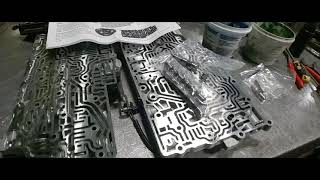
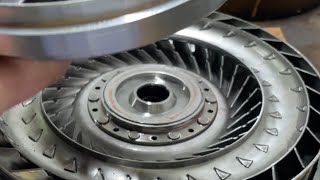
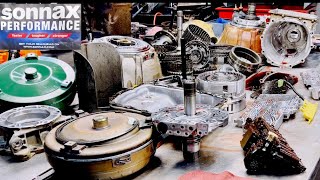
- Video Evidence: Torque Converter Debris Contamination: → Shop Automatic Transmission Torque Converter A YouTube video by a transmission specialist on a 2017 GMC with a 6L80 shows the teardown process after a torque converter shudder complaint. The video clearly displays a scored front pump, metallic debris coating the pan magnet, metal embedded in the clutch fibers, and dark, contaminated fluid in the valve body, visually confirming how TCC failure spreads destructive material throughout the entire transmission.
Mechanic-Grade Diagnostic Values
- Shift Solenoid 'B' (On/Off type) Resistance — expected: 20-24 Ohms. Failure: A reading significantly outside this range, or an open/short circuit, indicates a failed solenoid coil, requiring TEHCM replacement.
- Pressure Control Solenoids (PWM type) Resistance — expected: 5-6 Ohms. Failure: While not directly for P0756, an incorrect reading on other solenoids within the same TEHCM points to a systemic failure of the module.
- Main Line Pressure at Idle (in Drive) — expected: 45-80 PSI. Failure: Significantly lower pressure can indicate a worn pump, clogged filter, or major internal leaks, preventing proper solenoid actuation.
- Main Line Pressure at Wide Open Throttle (WOT) — expected: Up to 300 PSI. Failure: Failure to build adequate pressure under load will cause slipping and performance codes. Do not maintain WOT for long during testing.
Scan Tool Commands That Help
- GDS2 / Tech2: Solenoid Valve Test / Output Controls — Used with the engine off and key on to individually command each shift solenoid. A technician can listen for an audible 'click' from the transmission pan. A lack of a click from Solenoid 'B' helps confirm a failure in the solenoid or its circuit within the TEHCM.
- GDS2 / Tech2: Service Fast Learn Adapts — This is a mandatory procedure after replacing the TEHCM or rebuilding the transmission. It allows the new control module to learn the specific hydraulic characteristics and clutch fill volumes of the transmission. Skipping this step will result in harsh shifting and potential damage.
- GDS2 / Tech2: Solenoid Cleaning Process — If a performance DTC is set and debris is suspected, this automated function cycles all solenoids to attempt to flush out contaminants. It can be used as a diagnostic step before committing to replacing the TEHCM.
Wiring & Ground Locations
- G110 — On the rear of the driver's side cylinder head.. This is a major ground for the engine and powertrain control systems. A loose or corroded connection at G110 can cause erratic voltage and communication errors for the TEHCM, potentially mimicking internal transmission faults.
- 16-Pin Main Transmission Connector (X214) — On the passenger side of the transmission case, it's a large, round connector.. This is the sole electrical interface for the entire transmission, including the TEHCM. All power, ground, and CAN bus communication pass through this connector. Corrosion or bent pins here can cause a loss of communication or power, leading to P0756 and other codes.
Real Owner Repair Stories
- gmtnation.com forum user (GM Truck with 4L60E (similar logic to 6L80)) — P0756 code, loss of power in first gear.
❌ Tried (didn't work) Replacing both shift solenoids ('A' and 'B').
✅ What actually fixed it The user removed the valve body and found a piece of metal physically stuck in the 2-3 shift valve bore, preventing the valve from moving. Cleaning the debris out of the valve bore resolved the issue without replacing any more parts. - silveradosierra.com forum user (2011-2014 Silverado/Sierra with 6L80) — P0756, harsh shifting, limp mode.
❌ Tried (didn't work) Replacing only the TEHCM/solenoid pack.
✅ What actually fixed it The code returned after a few thousand miles. The final, permanent fix required replacing the torque converter which was shedding debris, flushing the cooler lines, and replacing the TEHCM again.
OEM Part Supersession History
24256861 (Common early TEHCM)→Multiple, including 24274046, 24285393, 24294364 (depending on year and calibration)— Updates to internal logic, improved pressure switches, and better heat tolerance.
Heads up: TEHCM units are not backward or forward compatible. The correct part number MUST be selected based on the vehicle's VIN. Installing the wrong year or model of TEHCM can cause no-start conditions or immediate transmission failure.Separator Plate (Type 2, 7 check balls, pre-2014)→Separator Plate (Type 3, 8 check balls, 2014+)— The design was updated to add an eighth check ball and change orifice sizing to improve shift quality and durability.
Heads up: While a newer Type 3 plate can be retrofitted to an older transmission, it may require additional modifications (like a clutch select valve spring kit from an aftermarket supplier like Sonnax) to function correctly and avoid setting new codes. Simply swapping the plate without understanding the hydraulic changes can cause issues.
Model Year Variations Within This Range
- 2014-2015 (K2XX Platform): Starting in 2014, the 6L80 transmission used an updated 'Type 3' valve body separator plate with 8 check balls, compared to the 'Type 2' plate with 7 check balls used from 2010-2014. The orifice sizing was also changed. While the root causes of P0756 are the same, using the wrong separator plate during a repair can introduce new shifting problems.
Helpful Videos
We Have This Part in Stock

The information in this article is provided for general reference and educational purposes only. Vehicle specifications, procedures, and part compatibility can vary by production date, trim level, and region. Always consult your vehicle's factory service manual and verify part numbers before purchasing or performing repairs. Safety-critical components such as airbags, seat belts, and braking systems should be installed by a qualified professional.
- Gmc SIERRA:
- 🧭 Diagnostic Flowchart
- 🎬 Helpful Videos
- 🛍️ Shop This Part
- What's Unique About the 2011-2015 Gmc SIERRA
- Symptoms You May Notice
- Most Likely Causes
- Rare But Worth Checking
- Diagnosis Steps
- Parts You'll Likely Need
- Related Codes That Often Appear With This One
- Technical Service Bulletins (TSBs) & Recalls
- Platform-Specific Known Issues
- Mechanic-Grade Diagnostic Values
- Scan Tool Commands That Help
- Wiring & Ground Locations
- Real Owner Repair Stories
- OEM Part Supersession History
- Model Year Variations Within This Range
- 🎟️ Get 5% Off