

P0756 on 2013-2016 GMC Sierra Denali: Shift Solenoid 'B' Performance / Stuck Off Fixes
On a 2013-2016 GMC Sierra Denali with the 6L80 transmission, code P0756 is most often caused by contaminated transmission fluid from a failing torque converter, which creates blockages in the valve body or causes the 2-3 Shift Solenoid 'B' to stick. The fix typically involves dropping the transmission pan, replacing the affected solenoid pack (TEHCM), and addressing the source of contamination, which may require torque converter replacement and a full system flush.
- P0756 on a 2013-2016 Sierra Denali points to a problem with the 2-3 Shift Solenoid 'B', often caused by internal debris.
- This is a serious code that makes the vehicle unsafe to drive; the transmission may enter a 'limp mode' or fail to move at all.
- The most likely cause is contaminated transmission fluid clogging the valve body or the solenoid itself, a known issue referenced in GM service bulletins.
- The fix requires dropping the transmission pan for inspection and parts replacement. Simply replacing the solenoid without addressing fluid contamination will likely lead to a repeat failure.
- Due to the complexity and need for a clean working environment, this repair is recommended for professionals or highly experienced DIY mechanics.
What's Unique About the 2013-2016 Gmc SIERRA DENALI
The 2013-2016 Sierra Denali spans two truck generations (GMT900 and K2XX), but most models in this range are equipped with the 6-speed 6L80 automatic transmission. This transmission is notoriously prone to torque converter lock-up (TCC) clutch failure. The clutch material delaminates, sending fine metallic debris ("coffee grounds") throughout the transmission fluid. As highlighted in multiple GM Technical Service Bulletins (TSBs), this debris inevitably clogs small passages in the valve body and the sensitive solenoids within the TEHCM (Transmission Electro-Hydraulic Control Module), causing them to bind. This makes P0756 a very common and well-documented issue on this platform, often pointing to a deeper problem than just a single bad solenoid.
Diagnostic Flowchart
Tap your situation to follow the diagnostic path that matches what you're seeing on this vehicle.
Generation note: This range covers the last year of the second generation (GMT900, 2013 model) and the first years of the third generation (K2XX, 2014-2016). Both generations primarily used the 6L80 6-speed automatic transmission (RPO code MYC), which is where this fault commonly occurs. Therefore, the causes and fixes, particularly those related to torque converter debris, are highly consistent across this year range.
Symptoms You May Notice
- Check Engine Light is on
- Transmission is stuck in one gear (often 3rd gear limp mode).
- Delayed, harsh, or erratic shifting, especially a hard clunk when shifting from Park.
- Failure to shift into 2nd gear.
- Vehicle will not move in forward or reverse. [Bulletin #PIP5100A]
- Transmission slipping (engine RPMs increase but speed does not).
- Shuddering at light acceleration, especially between 35-55 mph.
- Transmission overheating.
- Decreased fuel economy.
- Replacing only the shift solenoid without addressing fluid contamination. If debris from the torque converter is present, the new solenoid/TEHCM will fail quickly for the same reason as the original.
- Assuming the solenoid is bad when the issue is a stuck valve in the valve body. A user on gmtrucks.com reported having to manually clean the valve that the solenoid actuates to resolve the code after a solenoid replacement didn't work.
Most Likely Causes
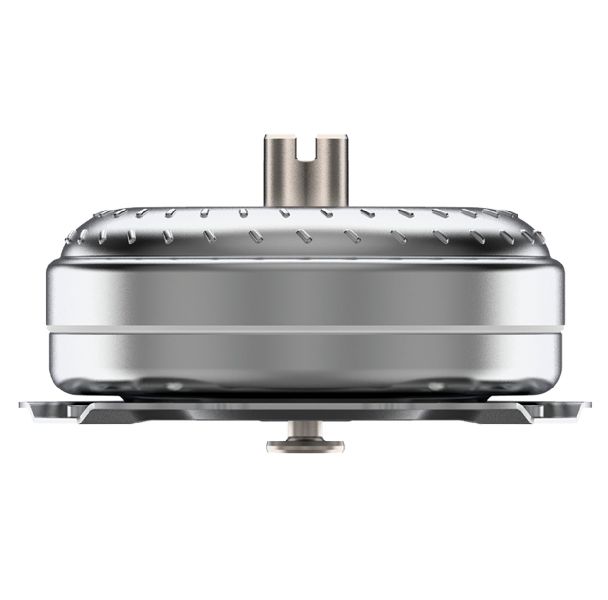
- Contaminated Transmission Fluid & Clogged Passages from Torque Converter Failure Very-high Probability → Shop Automatic Transmission Torque Converter The OEM 6L80 torque converter's lock-up clutch is a known weak point, designed for fuel economy over durability. 🎬 Watch: Understanding the root causes of 6L80E transmission failure. It tends to overheat and shed its friction material, sending metallic dust throughout the transmission. This debris is the primary cause of valve body and solenoid failure. TSB #PIP5100A directly links debris to blocked valve body orifices and this code.
How to confirm: Drop the transmission pan and inspect the fluid and pan magnet. The presence of excessive, fine, glittery metal dust (often described as looking like 'coffee grounds' or metallic sludge) is a tell-tale sign of torque converter failure. Dark, burnt-smelling fluid is also a key indicator.
Typical fix: A simple fluid/filter change is insufficient. The root cause must be addressed. This involves replacing the torque converter, thoroughly flushing the transmission and cooler lines, and replacing the TEHCM (valve body/solenoid assembly). Some specialists also recommend disabling the Displacement on Demand (DoD) system via tuning to reduce stress on the TCC.
Est. part cost: $300-$1000+ for a new torque converter and TEHCM; $100 for fluid and filter. - Failed Shift Solenoid 'B' / TEHCM Assembly 🔴 High Probability → Shop Transmission Valve Body The solenoid itself can fail mechanically (stuck plunger) or electrically. Mechanical failure is almost always caused by the aforementioned fluid contamination. In the 6L80, the solenoids are integrated into the TEHCM (Transmission Electro-Hydraulic Control Module), which is serviced as a complete unit. It is not recommended to replace just one solenoid.
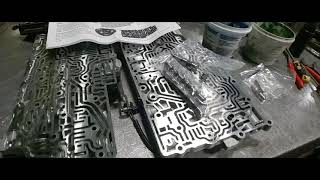
How to confirm: After dropping the pan, the entire TEHCM is typically replaced. While individual solenoids can be tested for resistance (typically 20-40 ohms), the failure is often mechanical (sticking) and intermittent, making a bench test unreliable. A diagnostic scan tool can command the solenoid, but a lack of response 🎬 See this walkthrough on diagnosing and fixing the P0756 code. points to the TEHCM as a whole.
Typical fix: Replace the entire TEHCM unit, which includes the valve body, solenoids, and control module. The new TEHCM must be programmed to the vehicle's VIN.
Est. part cost: $250-$600 for a complete TEHCM assembly. - Low Transmission Fluid Level 🟡 Medium Probability → Shop Transmission Assembly
How to confirm: Check the transmission fluid level according to the manufacturer's procedure (engine running, transmission at operating temperature, in Park). Low fluid can cause pressure drops, leading to erratic solenoid function and air ingestion by the pump.
Typical fix: Top off the fluid to the correct level with DEXRON-VI fluid and inspect for leaks that caused the low level. If the level was very low, damage from starvation may have already occurred.
Est. part cost: $10-$30 for a quart of fluid.
Rare But Worth Checking
- Wiring or Connector Issue: The internal transmission wiring harness, which is part of the TEHCM assembly, can become brittle from heat and fluid exposure. A damaged wire or corroded connector pin at the main transmission case connector can interrupt the signal to the solenoid.
- Faulty Transmission Control Module (TCM): → Shop Transmission Assembly While rare, the TCM itself can fail. In the 6L80, the TCM is integrated into the TEHCM, so it gets replaced with the solenoids and valve body as one unit. This should only be considered after all other possibilities have been ruled out.
- Worn Valve Body Bores: → Shop Transmission Valve Body Over time, valves within the valve body can wear their bores, causing hydraulic pressure leakage. This can prevent solenoids from actuating properly. Aftermarket kits like the TransGo 6L80-TOW&PRO exist to address these wear issues.
Diagnosis Steps
- Check the transmission fluid level and condition. If it's low, dark, smells burnt, or has a glittery/metallic appearance, this is a major clue pointing to torque converter failure.
- Scan the TCM for all stored trouble codes. Note any other codes, especially P0700 and P0741.
- Using a bi-directional scan tool, command the Shift Solenoid 'B' on and off to check for an audible click and response. Monitor the solenoid status and transmission gear ratio data.
- Perform a visual inspection of the transmission's external wiring harness and main connector for any visible damage, corrosion, or fluid intrusion.
- Drop the transmission oil pan. Inspect the pan magnet for excessive metal debris. A small amount of fine gray material is normal, but chunks, flakes, or a thick metallic sludge indicate serious internal damage, likely from the torque converter.
- If the pan is full of debris, the diagnosis is clear: the torque converter has failed. The transmission, TEHCM, and cooler lines are contaminated and must be replaced/flushed.
- If the fluid is clean, the problem is more likely isolated to the TEHCM. Inspect the valve body for sticking valves as noted in TSBs and forum posts.
Parts You'll Likely Need
- Transmission Control Module (TEHCM / Solenoid Pack)
(OEM #24275868, 24256861 (verify by VIN))— This is the complete valve body, solenoid, and controller assembly. It is the component directly identified by the code and is almost always replaced as a unit. It must be programmed.
Trusted brands: ACDelco (GM Genuine)
OEM price range: $400-$600
Aftermarket price range: $250-$450 (Remanufactured) - Transmission Filter Kit (Filter and Pan Gasket)
(OEM #24236933 (ACDelco TF466))— Must be replaced anytime the transmission pan is removed. A clogged filter can cause pressure issues that mimic solenoid failure.
Trusted brands: ACDelco, Wix, ATP
OEM price range: $30-$50
Aftermarket price range: $20-$40 - Torque Converter
(OEM #Varies by specific engine/year (e.g., 24263103))— If significant metallic debris is found in the pan, the original torque converter has failed and is the source of the contamination. Replacing it is mandatory to prevent repeat failure of the new TEHCM.
Trusted brands: ACDelco, Transtar, Circle D Specialties (Performance)
OEM price range: $400-$700
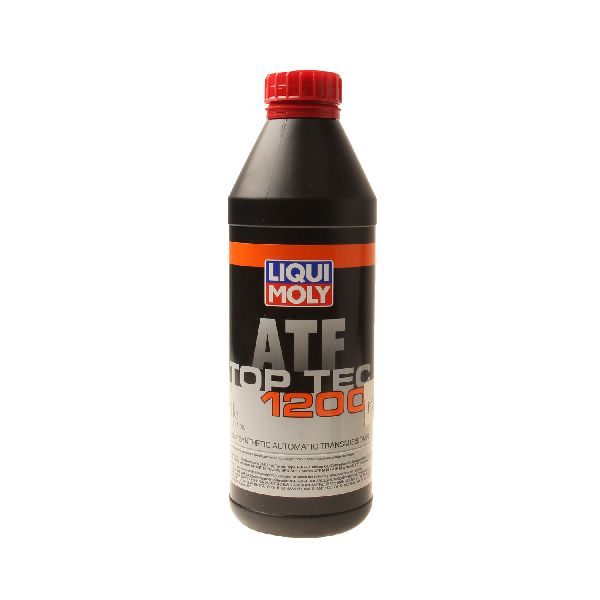
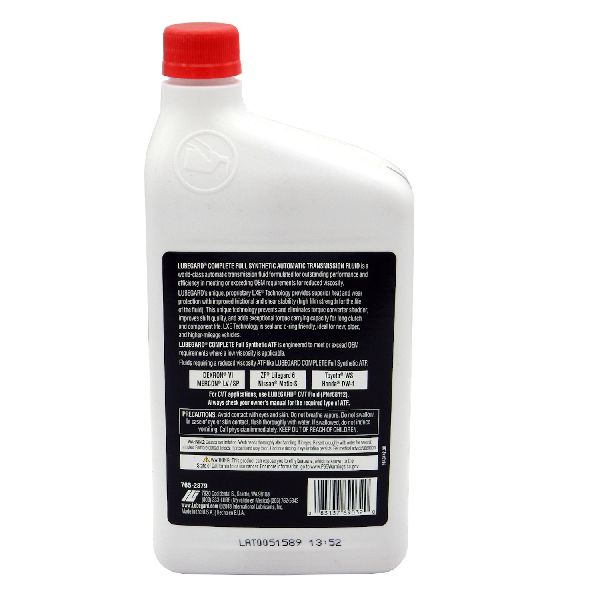
Aftermarket price range: $250-$800+ - DEXRON-VI Automatic Transmission Fluid
(OEM #10-9395 / 19418016 (ACDelco))— This is the only specified fluid for the 6L80 transmission. A full flush and fill (approx. 12-13 quarts) is required when replacing major components like the torque converter and TEHCM.
Trusted brands: ACDelco, Valvoline, Castrol
OEM price range: $8-$12 per quart
Aftermarket price range: $7-$10 per quart
Related Codes That Often Appear With This One
- P0700 — This is a general transmission fault code that indicates the TCM has stored a specific fault, like P0756. It often appears alongside more specific transmission codes.
- P0741 — This code for 'Torque Converter Clutch Circuit Performance or Stuck Off' is a strong indicator that the torque converter is failing and is the source of the debris causing the P0756 code.
- P0757 — This code is for 'Shift Solenoid B Stuck On'. It's the companion code to P0756 and indicates a different failure mode of the same component.
- P0751, P0752, P0761, P0762 — These are codes for other shift solenoids ('A', 'C', etc.). They often appear with P0756 when there is a widespread issue like severe fluid contamination or a failing TEHCM (solenoid pack). [Bulletin #PIE0371A]
Technical Service Bulletins (TSBs) & Recalls
- PIE0371A
- PIP4379M
- PIP5100A
- PIP5100
Platform-Specific Known Issues
- TSB #PIE0371A: Notes that a Check Engine Light, delayed shifts, or a transmission stuck in gear can be caused by DTCs including P0756.
- TSB #PIP5100A & #PIP5100: Specifically call out that vehicles may not move in forward or reverse and may have P0756 set. The bulletins direct technicians to inspect the valve body separator plate for blockage, sometimes caused by debris from an aftermarket spin-on filter or internal component failure.
- TSB #PIP4379M: Groups P0756 with a long list of other transmission codes that can result from internal issues, directing technicians to follow standard diagnostic procedures.
- Torque Converter Debris: The most significant vehicle-specific issue is the failure of the TCC lockup clutch, which sheds material that clogs the entire hydraulic system. A majority of 6L80 failures with codes like P0756 can be traced back to this root cause.
Mechanic-Grade Diagnostic Values
- Shift Solenoid 'B' (SS2) Resistance — expected: 20 - 40 Ohms. Failure: A reading outside this range indicates a failed solenoid coil. An infinite reading means an open circuit.
- Shift Solenoid 'B' (SS2) Current Draw — expected: 0.3 - 0.7 Amps at 12V. Failure: Incorrect amperage suggests a failing solenoid, even if resistance is within spec.
- Transmission Line Pressure at Idle (in Park/Neutral) — expected: 45 - 80 psi. Failure: Pressure significantly below this range can indicate a weak pump, clogged filter, or major internal leak.
- Transmission Line Pressure at Wide Open Throttle (WOT) — expected: Up to 300 psi. Failure: Failure to build high pressure under load points to a pump, regulator, or valve body issue.
- Solenoid Operational Voltage from TCM — expected: 8.3 - 9.3 Volts. Failure: Voltage outside this range could indicate a problem with the TCM itself or the power supply to it.
Scan Tool Commands That Help
- GDS2 / Tech2 or equivalent: Solenoid Output Control / Test — Used to manually command the shift solenoid on and off. A technician can listen for an audible 'click' from the solenoid inside the pan. With a test plate installed on a bench, this command should show pressure building and exhausting on a gauge.
- GDS2 / Tech2 or equivalent: Solenoid Cleaning Process — This automated function cycles all solenoids to dislodge and flush minor debris. It can be attempted if a performance DTC is set but before deciding to replace the TEHCM, especially if fluid contamination is suspected but not severe.
- J2534 Pass-Thru Device: Module Reprogramming / SPS — This is mandatory after installing a new or remanufactured TEHCM. The module must be programmed with the vehicle's specific VIN and calibration files, otherwise the vehicle will not start or shift correctly.
Wiring & Ground Locations
- G218 — Located under the defroster grille on the left (driver's) side of the dashboard.. This is a major instrument panel ground. While not directly for the transmission, poor grounds can cause erratic behavior in control modules that communicate with the TCM, including the BCM and instrument cluster.
- Main Transmission Connector (X224) — On the exterior of the transmission case, where the main vehicle harness connects to the internal TEHCM wiring.. This is the primary electrical interface for the entire transmission. Corrosion on pins or damage to this connector can interrupt power or data signals to the TCM and solenoids, directly causing codes like P0756.
- K2XX Dash Ground Studs — Behind the kick panels on both driver and passenger sides, often covered by foam insulation.. On 2014+ K2XX trucks, there is a known issue where foam insulation can get trapped under the ground nut, causing a poor connection over time. This can lead to a host of bizarre, seemingly unrelated electrical issues, including module communication faults that could potentially affect the transmission.
Real Owner Repair Stories
- GMTNation.com forum user (2005 GMC Envoy (4L60-E transmission, but identical PCM logic for the code)) — Sudden loss of power in first gear, sluggishness, Check Engine Light with code P0756.
❌ Tried (didn't work) Replaced both shift solenoids (A and B).
✅ What actually fixed it The user replaced the solenoids but the problem persisted. The community advice was that the code remained because the root cause was not the solenoid's electrical function, but a mechanical blockage. The final fix involved dropping the pan again, removing the valve body, disassembling it, cleaning all valves and passages, and reinstalling. This highlights that replacing the solenoid/TEHCM is often not enough if the valve body itself is contaminated or has sticking valves.
OEM Part Supersession History
24256861, 24256939, 24257213, and others→Multiple revisions exist. Aftermarket remanufacturers like Sonnax offer a single part (e.g., GM6L-TEHCM-C6) that replaces a wide range of OE numbers for 2011-2020 models.— Revisions were made to improve solenoid durability, update pressure switch designs, and enhance thermal tolerance.
Heads up: TEHCMs for 2014-2016 models have integrated calibration changes and are not interchangeable with earlier (pre-2014) units. Installing the wrong year group will result in a no-start or immediate limp mode, even after programming.
Model Year Variations Within This Range
- 2014-2016 (K2XX Platform): The TEHCM used in these model years contains different internal logic and calibration compared to the 2013 (GMT900 platform) TEHCM. They are not cross-compatible. Additionally, K2XX trucks have known ground locations behind the dash/kick panels that can become problematic and should be inspected for any electrical fault diagnosis.
Helpful Videos

We Have This Part in Stock

The information in this article is provided for general reference and educational purposes only. Vehicle specifications, procedures, and part compatibility can vary by production date, trim level, and region. Always consult your vehicle's factory service manual and verify part numbers before purchasing or performing repairs. Safety-critical components such as airbags, seat belts, and braking systems should be installed by a qualified professional.
- Gmc SIERRA DENALI:
- 🧭 Diagnostic Flowchart
- 🎬 Helpful Videos
- 🛍️ Shop This Part
- What's Unique About the 2013-2016 Gmc SIERRA DENALI
- Symptoms You May Notice
- Most Likely Causes
- Rare But Worth Checking
- Diagnosis Steps
- Parts You'll Likely Need
- Related Codes That Often Appear With This One
- Technical Service Bulletins (TSBs) & Recalls
- Platform-Specific Known Issues
- Mechanic-Grade Diagnostic Values
- Scan Tool Commands That Help
- Wiring & Ground Locations
- Real Owner Repair Stories
- OEM Part Supersession History
- Model Year Variations Within This Range
- 🎟️ Get 5% Off