

P0756 on 2003-2008 Honda Pilot: Shift Solenoid 'B' Causes and Fixes
This code means Shift Solenoid 'B' is stuck off, causing shifting problems. For the 2003-2008 Pilot, this is often due to old, dirty transmission fluid or a failed solenoid. Start by checking the fluid; a solenoid replacement costs around $50-$180 for an aftermarket part. A fluid change is the first and most critical step.
- P0756 on a 2003-2008 Pilot points to a problem with Shift Solenoid 'B', often causing a flashing 'D' light and harsh shifting.
- The most likely cause is old, dirty transmission fluid or a failed solenoid. Always start by checking the fluid.
- Use only Honda-specific ATF and consider using an OEM or high-quality aftermarket solenoid, as this transmission is sensitive to part quality.
- Do not ignore this code. Continued driving can lead to severe and costly internal transmission damage.
What's Unique About the 2003-2008 Honda Pilot
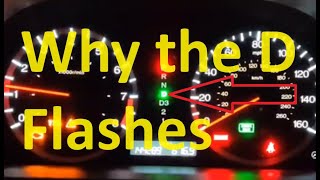
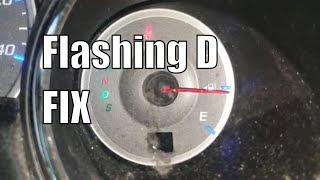
The 5-speed automatic transmission in the first-generation (2003-2008) Honda Pilot (model BVGA) is known for being particularly sensitive to fluid condition and quality. On these vehicles, a P0756 code is frequently a direct result of degraded transmission fluid causing clutch material and other debris to clog the small screens on the solenoid itself. A tell-tale sign of a transmission issue on this Pilot, including a solenoid fault, is a flashing green 'D' (Drive) indicator light on the instrument cluster. 🎬 See why your 'D' light is flashing and how to fix it. Early models (2003-2004) were subject to a recall to install a revised oil cooler return line to improve lubrication to second gear, highlighting the transmission's known vulnerabilities.
Symptoms You May Notice
- Flashing 'D' (Drive) light on the dashboard
- Check Engine Light is on
- Harsh, erratic, or delayed shifting
- Transmission slipping between gears
- Failure to shift into or out of a specific gear
- Vehicle enters 'limp mode' (stuck in one gear, usually 2nd or 3rd)
- Reduced fuel economy
- Transmission overheating
- Replacing the entire transmission without first diagnosing the fluid, external solenoids, and wiring.
- Replacing the wrong solenoid. The 2003-2008 Pilot has multiple solenoids on the transmission case. Shift Solenoid 'B' is a specific part, typically with a brown connector, located on the front of the transmission.
Most Likely Causes
- Low, Dirty, or Contaminated Transmission Fluid 🔴 High Probability → Shop Transmission Assembly The transmission in this generation of Pilot is extremely sensitive to fluid condition. Old fluid breaks down and clutch material contaminates it, clogging passages and the solenoid itself. This is the most common trigger for P0756.
How to confirm: Check the transmission fluid dipstick for level and color. The fluid should be red, not dark brown or black, and should not smell burnt. Drain a small amount through a coffee filter or strainer to check for metal shavings or debris.
Typical fix: Perform a transmission fluid drain-and-fill. It is often recommended by owners to do this 3 times (driving a short distance between each drain/fill) to replace most of the old fluid. 🎬 Watch: Step-by-step guide for a Honda Pilot transmission fluid change. Use only Honda Genuine ATF-DW1 (which supersedes the original ATF-Z1).
Est. part cost: $40-$120 for fluid - Failed Shift Solenoid 'B' 🔴 High Probability → Shop Transmission Valve Body Solenoids are a common failure item as these vehicles age due to either electrical failure of the internal coil or, more commonly, mechanical failure from getting stuck with debris.
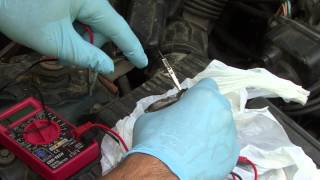
How to confirm: A mechanic can command the solenoid on and off with a diagnostic scan tool while listening for an audible click. The solenoid's electrical resistance can also be tested with a multimeter; it should be between 12-25 Ohms.
Typical fix: Replace the Shift Solenoid 'B' and its associated gasket/o-rings. It is critical to clean the port and any filter screens during replacement.
Est. part cost: $150-$400 for OEM, $50-$180 for aftermarket - Clogged Solenoid Screens or Transmission Filter 🟡 Medium Probability → Shop Transmission Assembly Debris from normal wear and tear accumulates in the fluid and gets caught in the small filter screens attached to the solenoids, restricting fluid flow and causing the solenoid to report a performance issue.
How to confirm: This is typically found during the replacement of the solenoid. The screens will be visibly clogged with a dark, metallic sludge.
Typical fix: Clean the screens with brake cleaner if they are metal and reusable. Often, new screens and gaskets are included with a new solenoid. The gasket should always be replaced.
Est. part cost: $10-$25 for a new gasket assembly - Damaged Wiring or Connector ⚪ Low Probability The wiring harness and connector for the solenoid are located on the front of the transmission and can be exposed to heat, road debris, and corrosion.
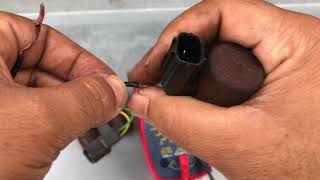
How to confirm: Visually inspect the wiring leading to the brown electrical connector for Shift Solenoid 'B' for any signs of cracking, melting, or corrosion. Check for a secure connection.
Typical fix: Repair the damaged section of wire or replace the connector pigtail.
Est. part cost: $15-$40 for a pigtail
Rare But Worth Checking
- Internal Transmission Failure: → Shop Transmission Assembly If fresh fluid and a new solenoid do not resolve the code, it may be a symptom of a larger problem. A failing torque converter or clutch pack can release excessive debris, repeatedly clogging the new parts. This is a known weak point of this transmission and requires a transmission specialist.
- Faulty Powertrain Control Module (PCM): This is extremely rare. The PCM should only be considered after all other possibilities, including wiring and the transmission itself, have been exhaustively checked.
Diagnosis Steps
- Check for other stored trouble codes to see if the problem is part of a larger system fault.
- Inspect the level and condition of the automatic transmission fluid (ATF). Note color, consistency, and smell. A burnt smell or dark color is a major red flag.
- If fluid is low, top it off, clear the code, and test drive. If the fluid is dark or dirty, perform a series of drain-and-fills (3x is common practice) with Honda ATF-DW1 fluid.
- Locate Shift Solenoid 'B' on the front of the transmission. It is a single solenoid with a brown electrical connector.
- Inspect the connector and nearby wiring for any signs of damage, corrosion, or loose connections.
- Disconnect the solenoid connector and test its resistance with a multimeter. A healthy solenoid should read between 12 and 25 ohms between the terminal and the solenoid body (ground). An open circuit (infinite resistance) or short (zero resistance) indicates a failed solenoid.
- If resistance is good, you can (carefully) apply 12V from the battery to the solenoid's terminal to listen for a distinct 'click', confirming mechanical operation.
- If the solenoid fails electrical tests or is mechanically stuck, replace it along with its gasket (Part No. 28252-PAX-000).
- If the problem persists after replacing the fluid and solenoid, the issue may be internal to the transmission (valve body, clutch pack) and requires professional diagnosis.
Parts You'll Likely Need
- Shift Solenoid 'B'
(OEM #28500-P6H-013 (supersedes 28500-P6H-003))— This is the component directly identified by the code and is a frequent failure point due to electrical or mechanical issues.
Trusted brands: Genuine Honda, Denso, Standard Motor Products (SMP), WVE/NTK
OEM price range: $150-$400
Aftermarket price range: $50-$180 - Automatic Transmission Fluid (ATF)
(OEM #08200-9008 (ATF-DW1, supersedes Z1))— Low or degraded fluid is a primary cause of this code on the Pilot. Fresh, correct-spec fluid is essential for proper transmission function and may resolve the issue on its own.
Trusted brands: Genuine Honda
OEM price range: $10-$15 per quart - Shift Solenoid Gasket / Screen Assembly
(OEM #28252-PAX-000)— The gasket provides a seal, and the integrated screen filters debris. It should always be replaced with the solenoid to ensure a clean system and prevent leaks.
Trusted brands: Genuine Honda, Fel-Pro
OEM price range: $10-$25
Aftermarket price range: $5-$15
Related Codes That Often Appear With This One
- P0700 —
- P0732 —
Technical Service Bulletins (TSBs) & Recalls
- While no TSB is specific to P0756, Honda TSB 02-031 addressed ignition switch issues that could cause stalling, a separate common problem on early models. This highlights the number of electrical issues these vehicles faced.
- Honda Recall 04V176000 was issued for 2003-2004 models to install an oil jet kit to improve second-gear lubrication, underscoring the transmission's design flaws from the factory.
- A manufacturer service news article titled "Hard or Delayed Shifting with A/T DTCs P0756 and P0847" provides diagnostic guidance for these specific codes, as noted in NHTSA ODI #10836670.
Platform-Specific Known Issues
- The 5-speed automatic transmission in this generation Pilot is a known weak point. Addressing solenoid codes promptly is crucial to avoid a complete transmission rebuild, which was a very common fate for these vehicles.
- A flashing 'D' light is the primary indicator of a transmission fault on this vehicle and should not be ignored.
- A real-world repair story from a Piloteers.org forum member with a 2005 Pilot experiencing P0756 involved first performing a 3x drain-and-fill of the transmission fluid. When this did not solve the issue, they replaced the 'B' and 'C' shift solenoids, which resolved the code and shifting problems.
- Similar Honda platforms have reported that P0756 can be accompanied by intermittent harsh or jerky upshifts during steady acceleration, and in some cases, the vehicle may become unable to shift into reverse (NHTSA ODI #11533512).
Mechanic-Grade Diagnostic Values
- Shift Solenoid 'B' Coil Resistance — expected: 12 - 25 Ohms. Failure: A reading of infinite resistance (open) or near-zero resistance (short) indicates a failed solenoid.
- Voltage at Solenoid 'B' Connector — expected: Approximately 12V (Battery Voltage) when commanded ON by the PCM/TCM.. Failure: No voltage when the shift should be occurring points to a wiring issue or a problem with the PCM driver circuit.
- Transmission Line Pressure at Idle — expected: 130 to 140 psi (900 to 960 kPa). Failure: Pressure below the service limit of 120 psi (850 kPa) can indicate a weak pump, clogged filter, or major internal leaks, which would prevent solenoids from functioning correctly due to lack of hydraulic force.
Scan Tool Commands That Help
- Honda Diagnostic System (HDS): Shift Solenoid Valve B Operation Test — This bidirectional test is used after confirming fluid level and wiring integrity. The technician can command the solenoid on and off directly from the scan tool while listening for an audible 'click' from the solenoid. No click indicates a mechanically stuck or electrically failed solenoid, confirming the need for replacement.
Wiring & Ground Locations
- G1 / G101 — On the driver's side of the engine compartment, typically bolted to the chassis frame near the battery.. This is a primary ground point for the engine and transmission components. A corroded or loose G1/G101 ground can cause intermittent electrical issues for all transmission solenoids, leading to erratic behavior and fault codes.
- Transmission Ground Cable (G3) — A strap connecting the transmission case directly to the vehicle's frame, often located underneath the front of the vehicle.. This is the most direct ground path for the transmission and its solenoids. Since solenoids are grounded through the transmission case, a faulty ground strap can cause a voltage drop, preventing the solenoids from actuating properly and triggering performance codes like P0756.
- Shift Solenoid 'B' Connector — Located on the front of the transmission housing. It is a single solenoid with a brown electrical connector.. This is the direct connection point for testing. The single pin in the connector should receive a 12V signal from the PCM to activate the solenoid. The solenoid grounds through its body to the transmission case.
Real Owner Repair Stories
- CarKiller.com forum user question (2005 Honda Pilot with 212,000 miles) — Flashing 'D' light while driving, sometimes accompanied by a hard shift into 3rd or 4th gear. Restarting the car temporarily clears the flashing light. Check Engine Light was not on.
❌ Tried (didn't work) The user was considering replacing the 3rd or 4th gear clutch pressure sensor based on internet research.
✅ What actually fixed it The expert advice was to have the transmission professionally diagnosed immediately and to stop driving while the 'D' light is flashing to prevent catastrophic damage. While the final fix isn't posted, the key takeaway is that a flashing 'D' light without a CEL can still indicate a serious code like P0756 stored in the TCM, and driving further is a major risk. - NHTSA ODI #10836670 — An owner reported the transmission "D" light coming on and the vehicle shifting roughly while in motion on city streets. A diagnostic scan revealed codes P0756 and P0847.
OEM Part Supersession History
28500-P6H-003→28500-P6H-013— Internal design or material improvements to increase reliability and prevent sticking.
Heads up: The parts are fully interchangeable. The -013 part is the correct and improved service part.Honda ATF-Z1→Honda ATF-DW1 (08200-9008)— ATF-DW1 was developed to provide better performance at low and high temperatures and more consistent shift quality over the life of the fluid.
Heads up: DW-1 is fully backward-compatible and is the recommended replacement for Z1. Do not mix with other types of ATF.
Model Year Variations Within This Range
- 2003-2004: These models were subject to recall 04V176000 to install an oil jet kit in the transmission to improve lubrication for 2nd gear, indicating a known design weakness from the factory that could contribute to premature wear and debris.
- 2005: Received an engine update (J35A6) with drive-by-wire throttle and a power increase to 255 hp. The transmission also had revised 4th and 5th gear ratios for smoother shifting.
- 2006-2008: A mid-cycle refresh occurred. For the first time, a Front-Wheel Drive (FWD) version was offered, which included a Variable Cylinder Management (VCM) engine (J35Z1). The 4WD models used a different engine (J35A9). Power was re-rated to 244 hp for all models under new SAE standards.
Diagnostic Flowchart
Other Known Issues on This Vehicle
Issues unrelated to this code that are worth knowing about as an owner of this generation:
- Catastrophic Automatic Transmission Failure 🔴 High → Shop Transmission Assembly — Very common on 2003-2005 models, less so on 2006-2008 but still a major concern. Can occur from 80,000 miles onward. (Ref: Recall 04V176000 for 2003-2004 models.)
- Radiator Failure Leading to 'Strawberry Milkshake' 🔴 High — A well-documented failure where the internal transmission cooler within the radiator fails, mixing coolant and ATF. This is catastrophic for the transmission. Common on vehicles over 100,000 miles.
- Torn Front Lower Control Arm Compliance Bushings 🟠 Medium — Extremely common. The fluid-filled bushings crack and leak, causing clunking noises over bumps, poor alignment, and vague steering feel. Often fails by 60,000-100,000 miles.
- Power Steering Whine and Leaks 🟡 Low — Common across all years. A groaning or whining noise, especially on cold starts, is typically caused by a hardened O-ring on the power steering pump inlet, which allows air into the system. (Ref: TSB 07-060)
- Takata Airbag Inflator Recall 🔴 High — Affects all model years (2003-2008). Part of a massive, industry-wide recall for airbag inflators that can rupture and cause injury or death. (Ref: Multiple NHTSA Recalls)
- Ignition Switch Failure 🟠 Medium — Common on 2003-2004 models. Worn electrical contacts can cause the engine to stall unexpectedly while driving. (Ref: TSB 02-031)
Used vs. New Parts: Buying Guide for This Vehicle
When a used part is the smart pick: A used wiring harness pigtail or connector from a junkyard is a perfectly acceptable repair for a damaged connector, provided the donor part is free of corrosion and the wires are flexible.
Donor-vehicle mileage cap: roughly under 120000 miles for the part to have meaningful remaining life.
What to inspect on the donor part:
- For a solenoid, ask for the donor vehicle's mileage. Avoid parts from vehicles with over 120,000 miles.
- Inspect the electrical connector pins for any green or white corrosion.
- Look at the small filter screens on the solenoid; if they are heavily caked with black sludge, the part has seen a hard life and should be avoided.
OEM-only on this vehicle (don't cheap out):
- Automatic Transmission Fluid (ATF). Using only Genuine Honda ATF-DW1 is the safest bet. While some forums report success with Valvoline MaxLife ATF, the cost savings do not outweigh the risk of damaging this notoriously sensitive transmission.
Aftermarket brands forum-validated for this vehicle:
- Denso (often the original OEM supplier)
- Standard Motor Products (SMP)
- WVE/NTK
Brands owners have reported issues with on this vehicle:
- No-name, unbranded solenoids from online marketplaces should be avoided. They often have high failure rates and may not meet the precise flow and resistance specifications, causing the code to return.
Real Owner Stories
Aggregated from forums and TSBs cited above. Mileages and costs reflect what owners reported in those sources.
2005 Pilot
Symptoms: P0756 code and shifting problems
What fixed it: A 3x drain-and-fill of the transmission fluid did not solve the issue. The problem was resolved by replacing the 'B' and 'C' shift solenoids.
Source hint: A real-world repair story from a Piloteers.org forum member, cited in vehicle_specific_issues
Related OBD-II Codes
Frequently Asked Questions
My 2005 Pilot's 'D' light is flashing. Is this related to the P0756 code?
Was there a recall for the transmission on my 2004 Honda Pilot?
What is the correct transmission fluid to use when fixing a P0756 code?
I'm replacing Shift Solenoid 'B' on my Pilot. Is there a specific part number for the gasket?
When testing Shift Solenoid 'B' with a multimeter, what resistance reading should I expect?
My mechanic found coolant mixed with my transmission fluid. Could this cause a P0756 code?
Does this P0756 issue affect other vehicles besides the Honda Pilot?
Helpful Videos

We Have This Part in Stock

The information in this article is provided for general reference and educational purposes only. Vehicle specifications, procedures, and part compatibility can vary by production date, trim level, and region. Always consult your vehicle's factory service manual and verify part numbers before purchasing or performing repairs. Safety-critical components such as airbags, seat belts, and braking systems should be installed by a qualified professional.
- Honda Pilot:
- 🧭 Diagnostic Flowchart
- 🎬 Helpful Videos
- 🛍️ Shop This Part
- What's Unique About the 2003-2008 Honda Pilot
- Symptoms You May Notice
- Most Likely Causes
- Rare But Worth Checking
- Diagnosis Steps
- Parts You'll Likely Need
- Related Codes That Often Appear With This One
- Technical Service Bulletins (TSBs) & Recalls
- Platform-Specific Known Issues
- Mechanic-Grade Diagnostic Values
- Scan Tool Commands That Help
- Wiring & Ground Locations
- Real Owner Repair Stories
- OEM Part Supersession History
- Model Year Variations Within This Range
- Other Known Issues on This Vehicle
- Used vs. New Parts: Buying Guide for This Vehicle
- Real Owner Stories
- 2005 Pilot
- Related OBD-II Codes
- Frequently Asked Questions
- 🎟️ Get 5% Off