

P0756 on 2020-2023 Lincoln Aviator: Shift Solenoid 'B' Performance and Fixes
On a 2020-2023 Lincoln Aviator, code P0756 almost always points to a known internal issue with the 10-speed automatic transmission's main control valve body. This is a well-documented problem covered by multiple manufacturer TSBs. The fix typically involves replacing the entire valve body assembly, a professional repair costing between $1,200 and $2,500. In some cases, it can be a symptom of a more severe CDF clutch drum failure, which is a much more expensive repair.
- P0756 on a 2020-2023 Aviator is a serious code indicating an internal transmission problem, not just a simple sensor failure.
- The most likely cause is a faulty main control valve body, a known issue covered by multiple Ford/Lincoln Technical Service Bulletins (TSBs).
- Do not ignore this code. Continued driving can lead to more severe and expensive transmission damage.
- This is not a DIY repair. It requires professional diagnosis and service, starting with a check for all relevant TSBs for your vehicle's VIN.
- The typical fix is the replacement of the entire main control valve body assembly, which is a costly but often necessary repair.
What's Unique About the 2020-2023 Lincoln AVIATOR
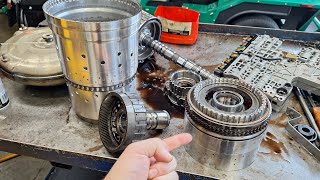
The 2020-2023 Aviator uses a 10-speed (10R60 or 10R80) automatic transmission that has a documented history of shifting issues across many Ford and Lincoln models. 🎬 Watch: Ford tech explains common 10-speed transmission issues. For this specific vehicle, code P0756 is rarely an isolated solenoid failure. It is most often a symptom of a larger, known problem within the transmission's main control (valve body) assembly or the CDF clutch drum, as outlined in a series of Technical Service Bulletins (TSBs) issued by the manufacturer. The TSBs confirm the cause can be sticking valves in the valve body or axial movement of the CDF clutch cylinder sleeve causing hydraulic leaks.
Diagnostic Flowchart
Tap your situation to follow the diagnostic path that matches what you're seeing on this vehicle.
Symptoms You May Notice
- Harsh or delayed shifts, sometimes described as a 'clunk' or 'slam' into gear. [TSB 22-2428, 4]
- Delayed transmission engagement from Park to Drive or Reverse. [TSB 25-2302, 2]
- Transmission slipping or getting stuck in one gear.
- Illuminated Malfunction Indicator Lamp (MIL) or Check Engine Light. [TSB 24-2252]
- Vehicle enters 'limp mode' with limited gears available.
- Reduced fuel economy.
- RPMs flare between shifts.
- Replacing only the 'B' shift solenoid without addressing the underlying valve body issue.
- Assuming the transmission needs a complete rebuild before investigating the known valve body problem.
- Performing a PCM/TCM software flash or adaptive learning reset as a permanent fix. While this is part of the diagnostic process, it will not fix a mechanical failure like a sticking valve or failed CDF drum.
Most Likely Causes
- Sticking Valves in Main Control (Valve Body) 🔴 High Probability This is a widely documented issue for the 10R family of transmissions in these vehicles, as acknowledged in multiple TSBs (e.g., TSB 20-2403, TSB 22-2428). Debris or design issues can cause the valves to stick in their bores, leading to hydraulic pressure loss.
How to confirm: A technician will follow the diagnostic procedures outlined in the relevant TSB, which may involve a specific 'Transmission Accelerated Main Control Break In' routine using a Ford/Lincoln diagnostic tool (FDRS). If the routine fails to resolve the issue, the valve body is deemed faulty.
Typical fix: Replacement of the entire main control valve body assembly is the most common and effective repair. After replacement, the new solenoid strategy ID must be programmed into the TCM.
Est. part cost: $800-$1500 - Low or Contaminated Transmission Fluid 🟡 Medium Probability → Shop Transmission Assembly While not specific to this platform, low or dirty fluid is a common cause of solenoid performance issues in any automatic transmission. It can cause hydraulic pressure loss or clog solenoid passages.
How to confirm: Check the transmission fluid level and condition. Note that this transmission does not have a traditional dipstick and must be checked by a technician via a fill plug with the vehicle at a specific temperature.
Typical fix: Perform a transmission fluid flush and fill with the correct specification fluid (Motorcraft MERCON ULV). Replace the transmission filter. However, this is unlikely to fix the code if a mechanical issue is present.
Est. part cost: $150-$400 - Failed Shift Solenoid 'B' ⚪ Low Probability → Shop Transmission Valve Body While the code directly names the solenoid, on this platform it is less common for a single solenoid to fail electrically than it is for the entire valve body to have a mechanical/hydraulic issue.
How to confirm: A technician can test the solenoid's resistance and function. The shift solenoids in a 10R80 are direct-acting and do not have fluid passing through them. The PCM commands them with current to mechanically move a valve. A resistance test can be performed, but even if the solenoid is electrically sound, the code can be set by a hydraulic issue preventing the commanded action.
Typical fix: Replace the individual solenoid. However, since the valve body must be removed, it is often more practical and recommended to replace the entire assembly.
Est. part cost: $50-$150
Rare But Worth Checking
- CDF Clutch Cylinder Sleeve Failure: → Shop Automatic Transmission Coast Clutch Hub TSB 22-2428 mentions that axial movement of the CDF clutch cylinder sleeve can be a cause. This is a major internal failure causing a hydraulic leak that starves the clutches of fluid. The fix requires a full transmission teardown to install an updated drum (Part #JL3Z-7H351-B) which has a machined lip to prevent the sleeve from moving. Repair costs can range from $3,500 to over $6,000.
- Damaged Valve Body to Oil Pump Seal: → Shop Transmission Valve Body A Reddit thread by a transmission technician highlights that if recent transmission work was performed, a damaged, dislodged, or missing seal between the valve body and the oil pump can cause codes P0756 and P0766, leading to a no-move condition. This is a common mistake during reassembly.
- Wiring or Connector Issues: Damage to the wiring harness leading to the transmission or corrosion at the main connector can interrupt the signal to the solenoid.
- Powertrain Control Module (PCM/TCM) Failure: This is extremely rare and should only be considered after all other possibilities, including all relevant TSBs, have been exhausted.
Diagnosis Steps
- Verify the code with a professional OBD-II scanner.
- Check for all related Technical Service Bulletins (TSBs) for your vehicle's VIN. This is the most critical step for this specific issue. Key TSBs include 22-2428, 24-2252, and 25-2302. [TSB 22-2428, TSB 24-2252, TSB 25-2302]
- Have a technician check the transmission fluid level and condition. This requires the vehicle to be on a lift and at a specific temperature.
- Follow the diagnostic path outlined in the relevant TSB. This often starts with a PCM/TCM reprogram and running the 'Transmission Accelerated Main Control Break In' routine up to three times with a Ford diagnostic tool (FDRS).
- If software routines do not fix the issue, the TSBs typically direct the technician to overhaul or replace the main control valve body.
- When the transmission pan is removed, inspect it for excessive metal debris. Significant debris may indicate a more severe failure (like the CDF drum) requiring a transmission rebuild or replacement.
- If TSBs and fluid checks are inconclusive, test the solenoid circuit wiring for continuity and proper voltage. This can be done at the PCM C175T connector.
- If all else fails, suspect the valve body assembly as the primary cause, or the CDF clutch drum if symptoms are severe.
Parts You'll Likely Need
- Transmission Main Control Valve Body Assembly
(OEM #JL1Z-7A100-B)— This is the most common failure point for code P0756 on this vehicle, as documented by multiple manufacturer TSBs. Sticking valves within the assembly cause the hydraulic control fault.
Trusted brands: Motorcraft
OEM price range: $800-$1500
Aftermarket price range: $400-$700 (Remanufactured) - CDF Clutch Cylinder Assembly
(OEM #JL3Z-7H351-B)— This is the updated part required if the more severe internal CDF drum failure is diagnosed. This failure also causes P0756 and requires a full transmission teardown.
Trusted brands: Motorcraft
OEM price range: $150-$250
Related Codes That Often Appear With This One
- P0751 — This code is for Shift Solenoid 'A' performance. The TSBs for the Aviator almost always list P0756 with a group of other solenoid and gear ratio codes, indicating a systemic issue within the valve body, not just one solenoid. [TSB 25-2302, TSB 22-2428]
- P0729, P0731-P0735 — These are incorrect gear ratio codes. Their presence alongside P0756 strongly suggests a significant hydraulic or mechanical failure within the transmission, such as a faulty valve body or CDF drum issue. [TSB 22-2428, 4]
- P2700-P2705 — These codes relate to the timing of clutch applications. They are frequently cited in the same TSBs and point to a hydraulic control problem within the valve body. [TSB 24-2252]
Technical Service Bulletins (TSBs) & Recalls
- TSB 25-2302: Addresses delayed engagement, harsh/delayed shifts, and a long list of DTCs including P0756.
- TSB 22-2428: A key bulletin that identifies the CDF clutch cylinder sleeve movement as a potential cause for hydraulic leaks and various shift-related DTCs.
- TSB 24-2252: Covers harsh/delayed engagements and shifts accompanied by numerous DTCs, including P0756.
- TSB 20-2403: Mentions sticking valves in the powertrain control module (PCM) as a cause for a wide range of DTCs, including P0756.
Platform-Specific Known Issues
- The 10-speed automatic transmission (10R60/10R80) in the 2020-2023 Aviator is subject to numerous TSBs for harsh shifting, delayed engagement, and setting multiple trouble codes, including P0756.
- The primary cause is often identified as sticking valves within the main control valve body, necessitating its replacement.
- A less common but more severe potential cause is a failure of the CDF clutch drum sleeve, which requires a complete transmission overhaul to repair with an updated part. This repair can cost upwards of $5,000-$8,000 at a dealership.
Scan Tool Commands That Help
- Ford Diagnostic & Repair System (FDRS): Programmable Module Installation (PMI) — This function is required after replacing the main control valve body or the entire transmission to program the new component to the vehicle.
- Ford Diagnostic & Repair System (FDRS): Transmission Accelerated Main Control Break In — This is a key diagnostic step outlined in TSBs for shift quality issues. It runs the transmission through a specific procedure to attempt to clear sticking valves. If the issue persists after running the routine, it points towards a mechanical failure requiring parts replacement.
- Ford Diagnostic & Repair System (FDRS): Clear Transmission Adaptive Tables — This should be performed after any major transmission repair, such as a valve body or CDF drum replacement. It erases the transmission's learned shift patterns, allowing it to adapt to the new components. It is not a fix on its own for a mechanical fault.
Wiring & Ground Locations
- C175T — This is one of the main connectors at the Powertrain Control Module (PCM).. This connector contains the circuits for the transmission shift solenoids. For example, on some Ford applications, Shift Solenoid D (SSD) is on Pin 10 and Shift Solenoid E (SSE) is on Pin 11. Testing for voltage and continuity at these pins can help diagnose wiring issues between the PCM and the transmission without having to access the transmission connector directly. Note: Pinouts can vary by year and model, so a vehicle-specific wiring diagram is essential.
- Main Valve Body Connector — Inside the transmission, connecting the vehicle harness to the valve body assembly.. This is the master connection for all solenoids. During valve body removal, a red lock tab must be released and the connector unplugged. It is a common point of failure if not seated correctly during reassembly.
Real Owner Repair Stories
- Reddit user in r/f150 (2018 Ford F-150 EcoBoost, 145k miles) — Crazy shift problems, including floating between gears then slamming into another. At one point, it tried to shift into first gear at 80 mph.
❌ Tried (didn't work) Transmission relearn procedure., Replacement of the main control valve body.
✅ What actually fixed it The ultimate cause was the CDF drum sleeve having moved, as described in TSB 22-2428. The user diagnosed this themselves after the valve body replacement failed to fix the issue. The final fix was replacing the CDF drum with the updated part.
OEM Part Supersession History
Unknown, pre-update part→JL3Z-7H351-B— The original CDF clutch cylinder sleeve was prone to 'walking' or moving axially, which would uncover hydraulic passages and cause pressure loss. The updated part has a machined lip to physically prevent the sleeve from moving.
Heads up: Vehicles built before mid-2022 with the 10R80 transmission likely have the original, failure-prone CDF drum. Any rebuild addressing related codes should use the updated part number.L1MZ-14290-AAM, M1MZ-14290-R→M1MZ-14290-S— Supersession for the engine compartment wiring harness for the hybrid model.
Heads up: This applies to the hybrid Aviator Grand Touring model's front engine compartment wiring harness.
Model Year Variations Within This Range
- 2020-mid-2022: Vehicles built on or before August 15, 2022, are more likely to have the original-design CDF clutch drum, which is prone to the sleeve migration failure that can cause P0756 and other shifting issues.
- Late 2022-2023: Vehicles built after this period, particularly after December 2022, are more likely to have the updated CDF drum from the factory, which features a machined lip to prevent sleeve movement. While not immune to other valve body issues, the CDF drum failure is less probable.
Helpful Videos


We Have This Part in Stock


The information in this article is provided for general reference and educational purposes only. Vehicle specifications, procedures, and part compatibility can vary by production date, trim level, and region. Always consult your vehicle's factory service manual and verify part numbers before purchasing or performing repairs. Safety-critical components such as airbags, seat belts, and braking systems should be installed by a qualified professional.
- Lincoln AVIATOR:
- 🧭 Diagnostic Flowchart
- 🎬 Helpful Videos
- 🛍️ Shop This Part
- What's Unique About the 2020-2023 Lincoln AVIATOR
- Symptoms You May Notice
- Most Likely Causes
- Rare But Worth Checking
- Diagnosis Steps
- Parts You'll Likely Need
- Related Codes That Often Appear With This One
- Technical Service Bulletins (TSBs) & Recalls
- Platform-Specific Known Issues
- Scan Tool Commands That Help
- Wiring & Ground Locations
- Real Owner Repair Stories
- OEM Part Supersession History
- Model Year Variations Within This Range
- 🎟️ Get 5% Off