

P0756 on 2018-2023 Lincoln Navigator: Shift Solenoid 'B' Performance and Fixes
On a 2018-2023 Lincoln Navigator, code P0756 almost always points to an internal issue with the 10R80 10-speed transmission, typically a faulty main control valve body. This is a known issue covered by multiple manufacturer TSBs. Expect a professional repair costing between $1,200 and $2,500 for a valve body replacement. If the failure has caused additional internal damage, such as to the CDF drum, a full transmission replacement could cost between $5,000 and $8,000.
- P0756 on a 2018-2023 Navigator is a serious transmission code indicating a problem with Shift Solenoid 'B'.
- The most common cause is not just the solenoid but the entire main control valve body assembly, a known issue on the 10R80 transmission.
- Check for TSBs first, as Ford has issued multiple service bulletins for this exact problem.
- This is not a simple DIY fix. It requires professional diagnosis and repair, which can be costly.
- Always use the specified Motorcraft MERCON ULV transmission fluid for any service.
What's Unique About the 2018-2023 Lincoln NAVIGATOR
The 2018-2023 Lincoln Navigator uses the Ford 10R80 10-speed automatic transmission, which was co-developed with GM. This specific transmission has a documented history of shift quality issues across many Ford and Lincoln platforms, leading to numerous Technical Service Bulletins (TSBs). Code P0756 is frequently part of a pattern of faults that often trace back to a failing main control valve body assembly or a failed CDF (Clutch D/F) drum, rather than just a single, isolated solenoid. This makes diagnosis more complex than on other vehicles where a single solenoid might be the simple fix.
Diagnostic Flowchart
Tap your situation to follow the diagnostic path that matches what you're seeing on this vehicle.
Symptoms You May Notice
- Harsh or delayed gear shifts.
- Harsh or delayed engagement into Drive or Reverse.
- Transmission slipping between gears.
- Vehicle entering "limp mode" (stuck in a single gear).
- Illuminated Malfunction Indicator Lamp (Check Engine Light).
- Inability to shift into or out of a specific gear.
- Transmission overheating.
- Complete loss of forward and/or reverse gears.
- Vehicle will not shift out of Park.
- Replacing only a single solenoid when the entire valve body is failing or contaminated with debris.
- Assuming a complete transmission rebuild is needed without first properly diagnosing the valve body and its electronics.
- Overlooking a damaged or dislodged valve body-to-pump seal after a recent repair, leading to a no-move condition.
Most Likely Causes
- Faulty Main Control Valve Body Assembly 🔴 High Probability → Shop Transmission Valve Body This is a widely documented issue on the 10R80 transmission. Multiple TSBs (e.g., TSB 23-2250) group P0756 with other codes that are often resolved by replacing the entire valve body, which contains all the solenoids. Warping of the aluminum valve body or internal sticking of the valves are common failure points.
How to confirm: A technician will use an advanced scan tool to monitor solenoid command and response data. If the solenoid is commanded but does not respond and wiring is intact, the valve body is the likely culprit. 🎬 See a mechanic explain the four most common 10R80 failures. The new valve body comes with a 13-digit solenoid strategy ID that must be programmed into the vehicle's computer.
Typical fix: Replacement of the entire main control valve body assembly with an updated part. The transmission software (TCM/PCM) must be reprogrammed afterward with the new solenoid body strategy using a tool like Ford's IDS or FDRS.
Est. part cost: $500-$1200 - Low or Contaminated Transmission Fluid 🟡 Medium Probability → Shop Transmission Assembly While not specific to this platform, the complexity of the 10R80 makes it sensitive to fluid level and condition. Debris from normal wear or other failing components (like the CDF drum) can contaminate the fluid and clog solenoid passages or stick valves in the valve body.
How to confirm: Check the transmission fluid level and condition. The 10R80 transmission does not have a traditional dipstick; the level must be checked via a plug on the transmission case when the vehicle is at a specific temperature, typically between 206°F-215°F (96°C-101°C). Fluid should be clean and red (Motorcraft ULV), not dark, burnt-smelling, or gritty.
Typical fix: Perform a transmission fluid and filter change using the correct Motorcraft MERCON ULV fluid. This is often a good first step before more expensive repairs.
Est. part cost: $150-$300 - Failed Shift Solenoid 'B' 🟡 Medium Probability → Shop Transmission Valve Body While the code directly points to this solenoid, it's often a symptom of a larger valve body issue or fluid contamination. Debris in the fluid can cause the solenoid's mechanical pin to stick. Due to the significant labor to access the solenoids, replacing the entire valve body assembly is often the more reliable and cost-effective repair in the long run.
How to confirm: After dropping the transmission pan, a technician can test the solenoid's electrical resistance with a multimeter. The expected value for all 10R80 shift solenoids is 5.0-5.4 ohms at 68°F (20°C). It can also be commanded on and off with a scan tool to check for an audible click.
Typical fix: Replace the individual shift solenoid. However, due to the labor involved and the high rate of valve body failure, replacing the entire assembly is often recommended.
Est. part cost: $50-$150 - Damaged Valve Body to Oil Pump Seal ⚪ Low Probability → Shop Transmission Valve Body This is a known issue, particularly after a previous transmission repair where the seal may have been dislodged, crushed, or damaged during reassembly of the valve body. It is more likely to happen when the valve body is installed with the transmission in the vehicle (upside down).
How to confirm: Visual inspection after removing the valve body. Symptoms are often severe, including a complete loss of forward and reverse gears and inability to shift out of park.
Typical fix: Properly install a new seal and reinstall the valve body. A technician noted this seal does not typically fail naturally but is a common mistake during repairs.
Est. part cost: $20-$50
Rare But Worth Checking
- Wiring or Connector Issue: Corrosion or damage to the transmission's internal or external wiring harness can interrupt the signal to the solenoid, mimicking a component failure. This should be checked before replacing hard parts. A bent pin on the main transmission connector (C175T) can also cause this issue.
- Faulty Transmission Control Module (TCM): → Shop Transmission Assembly In very rare cases, the control module itself can fail, sending incorrect signals or failing to command the solenoid. This is usually diagnosed only after all other possibilities have been eliminated.
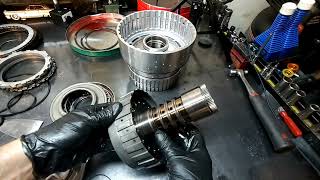
- Failed CDF Clutch Drum Assembly: → Shop Transmission Assembly A known weak point in some 10R80 transmissions is the bushing for the 'CDF' clutch drum, which can walk out of position, damage a seal, and cause pressure loss. This can lead to a variety of shift codes, including P0756, and often requires a full transmission rebuild or replacement. Ford updated the part in vehicles built after mid-2022 to include a machined lip to prevent the bushing from moving. 🎬 Watch: Detailed look at the common CDF clutch drum failure.
Diagnosis Steps
- Check for any Technical Service Bulletins (TSBs) related to the vehicle's VIN. TSB 23-2250 is a key document for these symptoms and outlines a diagnostic path starting with software routines.
- Use a professional-grade scan tool (like Ford's IDS/FDRS) to confirm P0756 and check for any other related transmission codes.
- Check the transmission fluid level and condition. This requires a specific procedure as there is no dipstick. The fluid temperature must be between 206°F and 215°F (96°C-101°C) for an accurate reading.
- Inspect the transmission's external wiring harness and the main connector (C175T) for any visible damage, corrosion, or loose connections.
- With a capable scan tool, perform the 'PCM - Transmission Accelerated Main Control Break In' routine as specified in TSB 23-2250. This can sometimes clear issues related to sticky valves.
- If the issue persists, the next step is to drop the transmission pan for a visual inspection of the fluid, filter, and valve body. Note that on some vehicles, this can be difficult due to exhaust and cooler line routing.
- Test the resistance of Shift Solenoid 'B' with a multimeter. It should be between 5.0 and 5.4 ohms at 68°F (20°C). Check the pin for Shift Solenoid 'B' (VT-OG wire) at the main transmission connector C175T, pin 37.
- If the solenoid and wiring test good, the issue is likely a hydraulic blockage or mechanical failure within the valve body, warranting its replacement.
- If a no-move condition exists along with P0756 and P0766, carefully inspect the valve body to oil pump seal for damage or improper installation.
Parts You'll Likely Need
- Automatic Transmission Main Control Valve Body
(OEM #JL3Z-7A100-B)— This is the most common fix for P0756 and related codes on the 10R80 transmission, as documented in multiple TSBs. The assembly includes all new solenoids and an updated design. Note: Part number may be superseded; HL3Z-7A100-B is also cited for 10R80 applications, and JL3Z-7A100-D is a later revision. Always verify with VIN.
Trusted brands: Motorcraft
OEM price range: $600-$1200
Aftermarket price range: $500-$900 - Automatic Transmission Fluid
(OEM #Motorcraft MERCON ULV (XT-12-QULV))— Required when replacing the valve body or servicing the transmission. The 10R80 has very specific fluid requirements. Using the wrong fluid can cause damage. A valve body replacement can require up to 11 quarts.
Trusted brands: Motorcraft
OEM price range: $8-$12 per quart - Automatic Transmission Filter
(OEM #JL3Z-7A098-A)— Should always be replaced when the transmission pan is removed for service. A clogged filter can cause pressure issues that mimic other faults.
Trusted brands: Motorcraft
OEM price range: $30-$50
Aftermarket price range: $20-$40
Related Codes That Often Appear With This One
- P0751, P0752, P0757, P0761, P0762, P0766, P0767, P2700-P2705, P0729-P0735 — These codes are all related to other shift solenoids and gear ratio errors within the 10R80 transmission. The provided NHTSA TSBs (e.g., TSB 23-2250) list them together, indicating a common root cause, usually the main control valve body or a related software issue.
- P0766 — This code for Shift Solenoid 'D' Stuck Off is often seen with P0756. A Reddit thread by a transmission technician notes that when these two codes appear together with a no-move condition, the cause is almost always a damaged main control valve body to oil pump seal.
Technical Service Bulletins (TSBs) & Recalls
- TSB 24-2176: Addresses harsh/delayed engagement and shifts with a long list of DTCs including P0756.
- TSB 23-2250: Supersedes earlier TSBs (like 22-2428) and provides an updated service procedure for harsh shifts and related DTCs, mentioning software, valve body, and CDF clutch drum sleeve issues as possible causes.
- TSB 22-2428: A widely discussed TSB that addresses harsh/delayed shifts. For many owners, a PCM/TCM reprogram under this TSB resolved shifting complaints without replacing hardware.
Platform-Specific Known Issues
- Multiple Technical Service Bulletins have been issued for the 10R80 transmission in these vehicles for harsh or delayed shifts and engagement. TSB 23-2250 (which supersedes 22-2428 and others) lists P0756 as a potential DTC related to this condition. The TSB outlines a procedure that may involve a PCM/TCM reflash, valve body replacement, or addressing a known issue with the CDF clutch cylinder sleeve.
- A Reddit user with an F-150 reported that TSB 22-2428, which involves a PCM reprogram, fixed their harsh shifting into 3rd gear, noting the repair took the dealer two days but resulted in much smoother performance.
Mechanic-Grade Diagnostic Values
- Shift Solenoid Resistance — expected: 5.0 - 5.4 Ω at 68°F (20°C). Failure: A reading outside this range indicates a faulty solenoid coil.
- Vacuum Test on Valve Body Bores — expected: Typically above 18-20 in-Hg, depending on the specific valve/bore being tested.. Failure: A low reading indicates wear in the valve body bore, causing a hydraulic leak that solenoids cannot overcome.
Scan Tool Commands That Help
- Ford IDS/FDRS: PCM – Transmission Accelerated Main Control Break In — As per TSB 23-2250, this routine should be run up to 3 times after clearing DTCs. It attempts to cycle specific clutches to free up sticking valves in the main control. If this and a subsequent drive cycle don't fix the issue, mechanical repair (valve body overhaul/replacement) is required.
- Ford IDS/FDRS: Transmission Strategy Download — This is a mandatory step after replacing the main control valve body. The new valve body has a 13-digit solenoid body strategy number on a tag that must be entered into the PCM/TCM. Failure to perform this procedure will result in harsh shifting, drivability concerns, and potentially damage the new valve body.
- Ford IDS/FDRS or FORScan: Clear Transmission Adaptive Tables — This should be performed after any transmission repair, including valve body replacement, to force the TCM to relearn the transmission's characteristics and shift points. The vehicle may shift firmly for several days during the relearning process.
Wiring & Ground Locations
- C175T — This is the main 50-pin electrical connector at the transmission case.. This connector is the main interface between the vehicle's wiring harness and the transmission's internal components, including all solenoids. Pin 37, with a Violet-Orange (VT-OG) wire, is the control circuit for Shift Solenoid 'B'. A continuity or voltage test can be performed at this pin to check the wiring harness integrity.
Real Owner Repair Stories
- YouTube user 'EJ's Guitars & Music' (2018 Ford F-150 with 10R80) — Harsh shifting and solenoid-related trouble codes.
❌ Tried (didn't work) The video focuses directly on the repair, not on prior failed attempts.
✅ What actually fixed it Replacement of the entire main control valve body assembly. The video documents the process, including the difficulty of removing the plastic pan and the need to transfer a specific seal to the new part. - YouTube user 'That T-Top Guy' (Ford Mustang with 10R80) — Skipping gears (fourth to sixth) and suspected contamination in the valve body after a transmission rebuild.
❌ Tried (didn't work) A complete transmission rebuild (clutches, etc.) was performed, but the original valve body was reused, which did not solve the shifting problems.
✅ What actually fixed it Replacement of the main control valve body. The user notes that valve bodies were on national backorder, indicating the high frequency of this failure.
OEM Part Supersession History
HL3Z-7A100-B→JL3Z-7A100-B— Part revision and update, likely to address valve sticking and other performance issues.JL3Z-7A100-B→JL3Z-7A100-D— Continued part revision and improvement.
Heads up: The parts are generally interchangeable, but it is critical to use the 13-digit solenoid strategy tag from the NEW part for programming, not the old one. Failure to program the correct strategy will cause severe shifting issues.
Model Year Variations Within This Range
- 2018 to mid-2022: Vehicles in this range are more susceptible to the CDF clutch drum bushing 'walking' out of place, causing internal hydraulic leaks and various shift codes, including P0756.
- Mid-2022 and newer: Ford updated the CDF clutch drum design to include a machined lip that physically prevents the bushing from moving. This significantly reduces the likelihood of this specific failure mode on later models.
Helpful Videos


We Have This Part in Stock


The information in this article is provided for general reference and educational purposes only. Vehicle specifications, procedures, and part compatibility can vary by production date, trim level, and region. Always consult your vehicle's factory service manual and verify part numbers before purchasing or performing repairs. Safety-critical components such as airbags, seat belts, and braking systems should be installed by a qualified professional.
- Lincoln NAVIGATOR:
- 🧭 Diagnostic Flowchart
- 🎬 Helpful Videos
- 🛍️ Shop This Part
- What's Unique About the 2018-2023 Lincoln NAVIGATOR
- Symptoms You May Notice
- Most Likely Causes
- Rare But Worth Checking
- Diagnosis Steps
- Parts You'll Likely Need
- Related Codes That Often Appear With This One
- Technical Service Bulletins (TSBs) & Recalls
- Platform-Specific Known Issues
- Mechanic-Grade Diagnostic Values
- Scan Tool Commands That Help
- Wiring & Ground Locations
- Real Owner Repair Stories
- OEM Part Supersession History
- Model Year Variations Within This Range
- 🎟️ Get 5% Off