

P0757 on 2011-2014 Honda CR-V: Shift Solenoid 'B' Stuck On Causes and Fixes
On a 2011-2014 Honda CR-V, code P0757 most often points to low or dirty transmission fluid, or a failed Shift Solenoid 'B'. Start by checking the fluid and ensuring only Honda DW-1 ATF is used. If the fluid is clean and full, the solenoid itself is the next likely culprit, costing around $60-$120 for the OEM part.
- P0757 on a 2011-2014 Honda CR-V means Shift Solenoid 'B' is stuck on, causing shifting problems.
- The first and most important diagnostic step is to check the transmission fluid level and condition; only use Honda DW-1 ATF.
- If fluid service doesn't fix the issue, the Shift Solenoid 'B' assembly (Part #28250-R90-003) is the most likely component to have failed.
- This issue is specific to the 5-speed automatic transmission and does not apply to 2015 or newer CR-V models with a CVT.
What's Unique About the 2011-2014 Honda CR-V
Honda 5-speed automatic transmissions from this era are notoriously sensitive to the type and condition of the aumatic transmission fluid (ATF). Many solenoid-related issues, including P0757, on the CR-V are often traced back to using non-genuine Honda ATF or extending fluid change intervals. Contaminated, incorrect, or degraded fluid can cause the fine mechanical parts of the solenoid to stick or clog the internal passages.
Generation note: The 2011-2014 range covers the end of the 3rd Gen (2011) and the first half of the 4th Gen (2012-2014). Both use a 5-speed automatic transmission with a K24Z7 engine where this fault can occur. The diagnostic principles are the same for both. Note: 2015-2016 CR-Vs use a CVT and this code is not applicable in the same way.
Symptoms You May Notice
- Harsh, jerky, or delayed gear shifts.
- Transmission gets stuck in a single gear (limp mode).
- Flashing 'D' (Drive) indicator light on the instrument cluster.
- Vehicle feels sluggish or has poor acceleration.
- Increased fuel consumption.
- Transmission slipping (engine RPMs rise without an increase in speed).
- Replacing the entire transmission when only a fluid change or a single solenoid was needed.
- Replacing the solenoid without first checking the fluid quality, leading to the new solenoid failing prematurely due to the same contamination.
- Assuming the solenoid is bad when the actual fault is a corroded pin in the main transmission harness connector.
Most Likely Causes
- Low, Dirty, or Incorrect Transmission Fluid 🔴 High Probability → Shop Transmission Assembly Honda transmissions are highly sensitive to fluid quality and type. Using anything other than genuine Honda ATF DW-1 can cause deposit buildup and operational issues with solenoids.
How to confirm: Check the transmission fluid dipstick for level and color. The fluid should be red/pink and clear, not brown, black, or containing debris. Smell for a burnt odor.
Typical fix: Perform at least one, and preferably three, transmission fluid drain-and-fills using only genuine Honda ATF DW-1 to ensure most of the old fluid is replaced.
Est. part cost: $40-$120 for fluid - Faulty Shift Solenoid 'B' 🟡 Medium Probability → Shop Transmission Valve Body The solenoid can fail mechanically from internal wear or debris, or fail electrically from a short or open in the coil.
How to confirm: After confirming fluid is good, a mechanic can use a diagnostic tool (like the Honda HDS) to command the solenoid on and off while listening for an audible 'click'. No click suggests a failed solenoid. Resistance can also be checked with a multimeter and should be within manufacturer specs (typically 12-25 ohms, but see specific values below).
Typical fix: Replace the faulty Shift Solenoid 'B'. This involves draining the transmission fluid and removing a cover or the valve body to access the solenoid pack.
Est. part cost: $60-$120 - Wiring or Connector Issue ⚪ Low Probability Wiring to the transmission is exposed to heat and road debris, which can lead to corrosion on the connector pins or breaks in the harness over time.
How to confirm: Visually inspect the wiring harness and connector going to the transmission and the specific solenoid for any signs of corrosion, breaks, or loose pins. A continuity test from the TCM to the solenoid can confirm an intact circuit.
Typical fix: Repair the damaged section of the wiring harness or clean/replace the corroded connector.
Est. part cost: $5-$50
Rare But Worth Checking
- Clogged Transmission Filter or Internal Blockage: → Shop Transmission Assembly If the transmission fluid is found to be full of metal shavings or other debris, it indicates a larger internal failure. The debris can clog the integrated filter and hydraulic passages, causing the solenoid to malfunction. In this case, simply replacing the solenoid will not fix the root problem and a transmission rebuild or replacement may be necessary.
- Faulty Transmission Control Module (TCM) or Powertrain Control Module (PCM): → Shop Transmission Assembly This is a very rare cause. The computer itself can fail, sending a constant voltage to the solenoid. This should only be considered after all other possibilities (fluid, solenoid, wiring) have been definitively ruled out by professional testing.
Diagnosis Steps
- Check the level and condition of the automatic transmission fluid (ATF). Ensure the engine is warm and the vehicle is on level ground.
- If the fluid is low, top it off with genuine Honda ATF DW-1 and check for leaks. If it is dark, burnt, or contains debris, perform a drain-and-fill (or multiple).
- Scan the system for any other related trouble codes, such as P0700 or gear ratio codes. Clear the P0757 code.
- Test drive the vehicle to see if the code returns.
- If the code returns, test the solenoid. A professional scan tool like the Honda Diagnostic System (HDS) can command the solenoid to activate; a clicking sound indicates it is mechanically working.
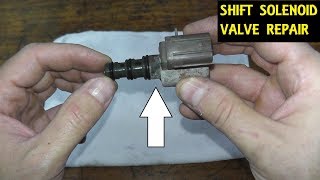
- If a scan tool is unavailable, you can test the solenoid's resistance. Disconnect the transmission connector and use a multimeter on the pins for Shift Solenoid B. A typical reading is 12-25 ohms. An open (OL) or short (near 0 ohms) indicates a failed solenoid. 🎬 Watch: How to test and replace your shift solenoid valves.
- While accessing the solenoid or its connector, inspect the wiring and connector pins for any visible damage, corrosion, or loose connections.
- If the solenoid and wiring are good, the issue may be a blockage in the valve body or a more complex internal transmission problem requiring professional diagnosis.
Parts You'll Likely Need
- Shift Solenoid 'B'
(OEM #28250-R90-003)— This is the component directly identified by the code as being stuck on. It is a common failure point after fluid issues are ruled out. This part number often corresponds to a linear solenoid assembly which may include more than one solenoid.
Trusted brands: Honda (OEM)
OEM price range: $60-$120
Aftermarket price range: $40-$80 - Honda Genuine DW-1 Automatic Transmission Fluid
(OEM #08200-9008)— Low, old, or incorrect fluid is the leading cause of this code. Using the correct OEM fluid is critical for Honda transmissions.
Trusted brands: Honda (OEM)
OEM price range: $10-$15 per quart
Related Codes That Often Appear With This One
- P0700 — P0700 is a generic Transmission Control System Malfunction code. It often appears alongside more specific transmission codes like P0757 to indicate that the TCM has stored a fault and has requested the main check engine light to be turned on.
- P0756 — This code is for 'Shift Solenoid B Stuck Off'. It's the opposite fault for the same component and can be caused by similar issues like bad fluid, a failed solenoid, or wiring problems.
- P0732, P0733, P0734 — These codes indicate 'Incorrect Gear Ratio' for gears 2, 3, and 4, respectively. They can be triggered as a direct result of the P0757 fault, as the stuck solenoid prevents the transmission from achieving the correct gear state.
Technical Service Bulletins (TSBs) & Recalls
- TSB 15-086: Addresses a surge, vibration, or judder felt during light acceleration on 2012-14 CR-Vs. The fix involves a software update and replacing the ATF. While not directly for P0757, it highlights the transmission's sensitivity to software and fluid condition.
- TSB 09-010: Pertains to a loud engine rattle at cold start-up on various Hondas including the 2012-2013 CR-V, caused by a defective VTC actuator. This is a common engine issue on this platform, but is unrelated to the transmission code P0757.
Platform-Specific Known Issues
- Real-World Repair Story: An owner of a 2012 CR-V on crvownersclub.com with a flashing 'D' light and P0757 code first performed three consecutive drain-and-fills with Honda DW-1 ATF. While this improved shift quality, the code returned intermittently. The ultimate fix was replacing the Shift Solenoid B assembly (part #28250-R90-003). The owner noted that after replacement, the transmission shifted perfectly and the code did not return, confirming the solenoid was the mechanical point of failure despite the fluid being serviced.
Mechanic-Grade Diagnostic Values
- Shift Solenoid 'B' Resistance — expected: 13.8 - 17.1 Ohms. Failure: A reading of 0 Ohms (short), infinite/OL (open), or a value outside the specified range indicates a failed solenoid coil.
- Shift Solenoid 'B' Bench Test — expected: An audible 'click' should be heard when 12V is applied directly to the solenoid's power and ground terminals.. Failure: No click indicates the solenoid is mechanically stuck or seized.
Scan Tool Commands That Help
- Honda Diagnostic System (HDS): Shift Solenoid Valve (A, B, C, D, or E) Test — This function is found in the 'Miscellaneous Test Menu' and allows a technician to command a specific solenoid to activate. It is used to verify if the solenoid is responding to electrical commands by listening for an audible click from the transmission, confirming the circuit and mechanical plunger are functional without disassembly.
Wiring & Ground Locations
- G101 — Located on the left rear of the engine, often on or near the thermostat housing.. This is a primary ground point for the PCM/TCM and various engine/transmission sensors and actuators. Corrosion or a loose connection at G101 can cause erratic voltage and unpredictable behavior from electronically controlled components, including shift solenoids, leading to intermittent or persistent fault codes even if the solenoid itself is good.
- Shift Solenoid B Connector Pin — Terminal No. 2 on the shift solenoid assembly connector. The wire is typically Orange (ORN).. This is the specific pin to test for resistance to ground when diagnosing the solenoid coil directly at the component.
Real Owner Repair Stories
- YouTube user 'TT Autogarages' (Vehicle exhibiting P0757 and limp mode) — Vehicle would not accelerate past 30-40 mph, stuck in gear.
✅ What actually fixed it The user decided to drain the very dirty, black transmission fluid before replacing the solenoid. After refilling with the correct amount of new ATF, a test drive confirmed the shifting issue was resolved and the code did not return. This highlights that a simple fluid service can sometimes be the complete fix.
OEM Part Supersession History
28250-R90-003→N/A— No supersession found. This part number remains current for the specified vehicle range.
Heads up: The OEM part 28250-R90-003 is often described as 'Solenoid Assembly A, Linear' by Honda, which can be confusing as it contains Shift Solenoid 'B'. Ensure you are ordering this assembly for a P0757 code, not a different, single solenoid.
Model Year Variations Within This Range
- 2011-2014 vs 2015-2016: The 2011-2014 models use a conventional 5-speed automatic transmission to which this P0757 code and diagnosis applies. The 2015-2016 CR-V switched to a Continuously Variable Transmission (CVT), which uses different components and logic; this diagnostic information is not applicable to the CVT models.
Diagnostic Flowchart
Other Known Issues on This Vehicle
Issues unrelated to this code that are worth knowing about as an owner of this generation:
- VTC Actuator Rattle on Cold Start 🟠 Medium — Very common. A loud, grinding rattle for ~2 seconds upon starting the engine after it has sat for several hours. Caused by a worn locking pin in the VTC actuator. (Ref: Honda TSB 09-010.)
- Vibration/Judder Under Light Acceleration 🟡 Low — Common complaint. A surge or vibration is felt when driving at low speeds with light throttle. Often related to torque converter lock-up behavior. (Ref: Honda TSB 15-086 suggests a PCM software update and an ATF drain-and-fill to correct the issue.)
- Excessive Oil Consumption 🟠 Medium — A known issue on some 2011 models with the K24Z engine, where sticking piston rings can lead to high oil consumption. Less prevalent on 2012-2014 models but still possible. (Ref: Honda issued a warranty extension for 2010-2011 CR-V models for this issue (TSB 12-089).)
- Starter Motor Failure 🟠 Medium — Some owners report premature failure of the starter motor, resulting in a no-start condition. This is less common than the VTC rattle but a documented failure. (Ref: While recalls existed for starter relay switches on other Honda models, no specific recall covers the CR-V starter motor itself, making it a repair cost for the owner.)
- Brake-Shift Interlock Failure in Cold 🔴 High — Affects 2012-2013 models. The gear selector can be moved out of Park without pressing the brake pedal in sub-freezing temperatures, creating a rollaway risk. (Ref: NHTSA Recall 13V-143.)
Used vs. New Parts: Buying Guide for This Vehicle
When a used part is the smart pick: Using a salvaged solenoid is a high-risk, low-reward scenario. Given the relatively low cost of a new OEM part and the critical role it plays, a used part is generally not recommended. It should only be considered if a new part is unavailable and the vehicle would otherwise be scrapped.
Donor-vehicle mileage cap: roughly under 80000 miles for the part to have meaningful remaining life.
What to inspect on the donor part:
- The donor vehicle should have no record of transmission issues.
- Upon removal, the solenoid's inlet screen must be perfectly clean with no signs of metallic debris or sludge.
- The fluid from the donor transmission should be pink/red, not brown or burnt-smelling.
OEM-only on this vehicle (don't cheap out):
- Shift Solenoid Assembly
- Automatic Transmission Fluid (ATF)
Aftermarket brands forum-validated for this vehicle:
- Keihin (often the unbranded OEM supplier)
Brands owners have reported issues with on this vehicle:
- Dorman (Some user reports indicate premature failure, e.g., within 6 months, for Honda VTEC solenoids, which share similar technology and sensitivity)
Real Owner Stories
Aggregated from forums and TSBs cited above. Mileages and costs reflect what owners reported in those sources.
2012 Honda CR-V
Symptoms: A flashing 'D' (Drive) indicator light on the dashboard and a stored P0757 trouble code.
What fixed it: The owner first performed three consecutive transmission fluid drain-and-fills with Honda DW-1 ATF, which improved shifting but did not permanently fix the code. The ultimate solution was replacing the entire Shift Solenoid B assembly (part #28250-R90-003).
Source hint: A thread on the Honda CR-V Owners Club forum titled 'P0757 code - Shift Solenoid B stuck on'
Related OBD-II Codes
Frequently Asked Questions
What is the exact transmission fluid I should use for my 2011-2016 CR-V to address code P0757?
My 2012 CR-V has a vibration during light acceleration along with the P0757 code. Could this be related to TSB 15-086?
I hear a loud engine rattle when starting my 2013 CR-V cold. Is this connected to my P0757 transmission code?
What is the part number for the Shift Solenoid B assembly on a 2012 CR-V?
My mechanic is testing Shift Solenoid B on my CR-V. What resistance reading is considered normal?
My 2012 CR-V can be shifted out of Park without pressing the brake pedal in the winter. Is there a recall for this?
Helpful Videos
We Have This Part in Stock




The information in this article is provided for general reference and educational purposes only. Vehicle specifications, procedures, and part compatibility can vary by production date, trim level, and region. Always consult your vehicle's factory service manual and verify part numbers before purchasing or performing repairs. Safety-critical components such as airbags, seat belts, and braking systems should be installed by a qualified professional.
- Honda CR-V:
- 🧭 Diagnostic Flowchart
- 🎬 Helpful Videos
- 🛍️ Shop This Part
- What's Unique About the 2011-2014 Honda CR-V
- Symptoms You May Notice
- Most Likely Causes
- Rare But Worth Checking
- Diagnosis Steps
- Parts You'll Likely Need
- Related Codes That Often Appear With This One
- Technical Service Bulletins (TSBs) & Recalls
- Platform-Specific Known Issues
- Mechanic-Grade Diagnostic Values
- Scan Tool Commands That Help
- Wiring & Ground Locations
- Real Owner Repair Stories
- OEM Part Supersession History
- Model Year Variations Within This Range
- Other Known Issues on This Vehicle
- Used vs. New Parts: Buying Guide for This Vehicle
- Real Owner Stories
- 2012 Honda CR-V
- Related OBD-II Codes
- Frequently Asked Questions
- 🎟️ Get 5% Off