

P0758 on 2012-2015 Kia Rio: Shift Solenoid 'B' Circuit Fault Causes and Fixes
On a 2012-2015 Kia Rio, code P0758 almost always indicates a failed Shift Solenoid 'B'. This is a known issue confirmed by Kia's Technical Service Bulletin (TSB) TSBTRA051R1. The fix is to replace the individual solenoid (OEM Part #46313-3B030) inside the transmission, not the entire unit. Expect the part to cost between $30 and $110.
- P0758 on a 2012-2015 Kia Rio is an electrical fault code for Shift Solenoid 'B'.
- The most common cause by far is a failed solenoid, which is a known issue acknowledged by Kia in a service bulletin (TSBTRA051R1).
- Do not replace the entire transmission. The fix is to replace the single faulty solenoid inside the transmission valve body.
- Symptoms are serious and include the transmission getting stuck in gear ('limp mode'), making the car unsafe for normal driving.
- This repair requires dropping the transmission pan and is best handled by a professional mechanic.
What's Unique About the 2012-2015 Kia RIO
The 2012-2015 Kia Rio, which uses the A6GF1 6-speed automatic transmission, is known to be susceptible to this specific solenoid failure. The issue is common enough across both Kia and Hyundai platforms (like the Elantra, Accent, and Soul) that Kia issued a Technical Service Bulletin (TSBTRA051R1). This bulletin is significant because it explicitly advises technicians to replace the individual faulty solenoid rather than the much more expensive complete transaxle assembly, saving owners a considerable amount of money.
Diagnostic Flowchart
Tap your situation to follow the diagnostic path that matches what you're seeing on this vehicle.
Symptoms You May Notice
- Check Engine Light is on.
- Transmission gets stuck in one gear (often 3rd gear, known as 'limp mode').
- Harsh, jerky, or delayed shifting, sometimes described as a 'clunk'.
- Failure to shift into or out of certain gears, particularly involving the 2-3 shift.
- Transmission slipping, where engine RPMs increase without a corresponding increase in speed.
- Decreased fuel efficiency.
- Restarting the car may temporarily resolve the issue, but it will return once the transmission attempts to shift past 3rd gear.
- Replacing the entire transmission. The provided TSB from Kia specifically advises against this, as the problem is almost always an individual solenoid.
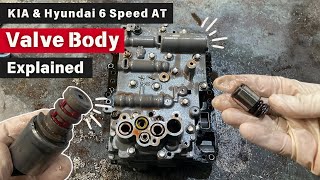
- Replacing the wrong solenoid. The A6GF1 transmission has multiple solenoids that look similar; it is crucial to identify and replace the correct one (Shift Solenoid 'B' / 2-6 Brake Solenoid). A video guide shows it as the third solenoid in the row on the valve body. 🎬 See a detailed breakdown of the A6GF1 valve body.
Most Likely Causes
- Failed Shift Solenoid 'B' 🔴 High Probability → Shop Transmission Valve Body This is a well-documented failure for the A6GF1 transmission, as acknowledged by Kia's TSB TSBTRA051R1. The internal coil windings of the solenoid can fail, creating an open or short circuit.
How to confirm: A technician can test the solenoid's internal resistance with a multimeter. The expected resistance for this type of solenoid is approximately 5.1-5.4 ohms. A reading of infinity (open) or near zero (short) confirms a bad solenoid. This test can often be performed externally at the main transmission connector before removing the pan.
Typical fix: Replace the faulty shift solenoid. It is often recommended to replace the internal wiring harness at the same time as a preventative measure.
Est. part cost: $30-$110 - Damaged Wiring or Connectors 🟡 Medium Probability The internal transmission wiring harness is constantly submerged in hot fluid, which can cause the insulation to become brittle and crack over time, leading to shorts or open circuits.
How to confirm: Visually inspect the external transmission wiring harness and the main connector for any signs of corrosion, chafing, or bent pins. A technician can perform a continuity test on the control wire (often on pin 11 of the main transmission connector) to the valve body. A visual inspection of the internal harness is necessary if the pan is removed.
Typical fix: Repair the damaged section of external wiring or replace the entire internal transmission wiring harness (P/N 46307-3B650).
Est. part cost: $10-$50 for external repair, $70-$120 for internal harness. - Low or Contaminated Transmission Fluid ⚪ Low Probability → Shop Transmission Assembly
How to confirm: Check the transmission fluid level and condition. While this is less likely to cause a specific electrical code, very low or dirty fluid can cause erratic solenoid operation and shifting problems.
Typical fix: Perform a transmission fluid drain and fill, or a full fluid exchange if the fluid is very dirty, using Kia-specified SP-IV fluid.
Est. part cost: $75-$200 - Faulty Transmission Control Module (TCM) ⚪ Low Probability → Shop Transmission Assembly
How to confirm: This is diagnosed by exclusion. If the solenoid, wiring, and fluid are all confirmed to be good, the TCM may be at fault. There are documented cases where the internal power driver ICs on the TCM circuit board fail, which requires advanced board-level diagnosis or module replacement. This is more likely if multiple solenoid codes (e.g., P0758 and P0763) are present simultaneously.
Typical fix: Replace and reprogram the Transmission Control Module or send it for specialized board-level repair.
Est. part cost: $400-$1200
Diagnosis Steps
- Scan the vehicle's computer for all stored trouble codes and review freeze-frame data to see the conditions under which the code was set.
- Check the transmission fluid level and condition. The Kia Rio does not have a traditional dipstick, so this must be done via the fill and level check plugs on the transmission case. Ensure the correct SP-IV fluid is used.
- Visually inspect the external transmission wiring harness and connectors for any obvious signs of damage, corrosion, or loose connections.
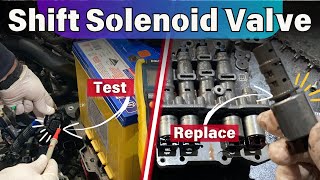
- Perform an external resistance test. Using a multimeter, test the resistance of the Shift Solenoid 'B' circuit at the main transmission connector. For the A6GF1, this is often between the power supply pin and the control pin for solenoid 'B' (pin 11). A reading outside the 5.1-5.4 ohm range suggests a problem with the solenoid or wiring.
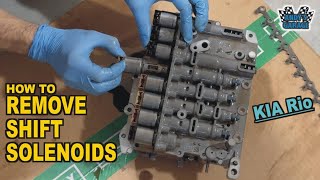
- If the external test fails or is inconclusive, drain the transmission fluid and remove the transmission oil pan to access the valve body. 🎬 Watch this step-by-step guide to removing the solenoids.
- Locate Shift Solenoid 'B' (2-6 Brake Solenoid) on the valve body. It is typically the third solenoid in the row.
- Disconnect the solenoid and measure its resistance directly with a multimeter. Compare the reading to the manufacturer's specification (5.1-5.4 ohms). If the resistance is out of specification, the solenoid is faulty and must be replaced.
- While the pan is off, carefully inspect the internal wiring harness for brittle, cracked, or bare wires. Perform a continuity test from the solenoid's connector back to the main transmission plug to rule out a wiring fault.
- If the solenoid and wiring harness are confirmed to be good, the problem is likely in the TCM, which requires more advanced diagnostics.
Parts You'll Likely Need
- Shift Solenoid 'B' (2-6 Brake)
(OEM #46313-3B030 (supersedes 46313-3B020))— This specific solenoid is the most common failure point for code P0758 on this vehicle, as confirmed by Kia's own service bulletin and numerous owner accounts.
Trusted brands: Hyundai/Kia (OEM)
OEM price range: $60-$110
Aftermarket price range: $30-$70 - Internal Transmission Wiring Harness
(OEM #46307-3B650)— Often fails along with or instead of the solenoid due to heat and fluid exposure. It is highly recommended to inspect it and consider replacing it preventatively when a solenoid is replaced.
Trusted brands: Hyundai/Kia (OEM)
OEM price range: $70-$120
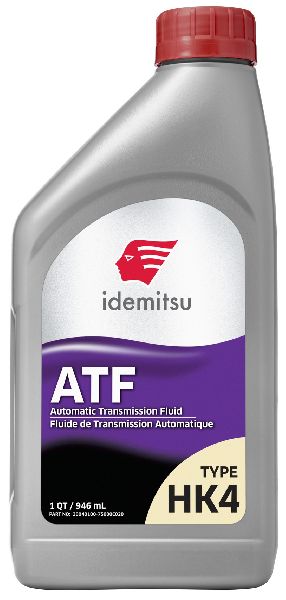
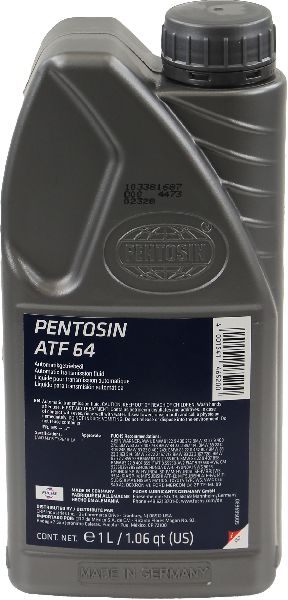
Aftermarket price range: $50-$90 - Automatic Transmission Fluid — The transmission fluid must be drained to access the solenoids and will need to be replaced with fluid that meets Kia's SP-IV specification.
Trusted brands: Kia SP-IV, Idemitsu TLS-LV, Valvoline MaxLife ATF
OEM price range: $18-$25 per quart
Aftermarket price range: $8-$15 per quart - Transmission Oil Pan Gasket — The pan gasket should be replaced whenever the transmission pan is removed to prevent leaks.
Trusted brands: Hyundai/Kia (OEM), Fel-Pro, Beck/Arnley
OEM price range: $20-$40
Aftermarket price range: $10-$25
Related Codes That Often Appear With This One
- P0700 — P0700 is a general code that means the Transmission Control Module (TCM) has detected a fault. It acts as a 'check engine light' for the transmission and will almost always accompany a specific transmission code like P0758.
- P0763 — This code indicates an electrical fault with Shift Solenoid 'C'. If multiple solenoid codes appear together, it can point to a larger electrical issue like a failing internal wiring harness or a problem with the TCM's internal driver circuits.
Technical Service Bulletins (TSBs) & Recalls
- TSBTRA051R1: Provides information on replacing various shift solenoids, including the one related to P0758, on 6-speed automatic transaxles. It advises against replacing the entire transaxle for this code and applies to a wide range of Hyundai and Kia vehicles.
Platform-Specific Known Issues
- Kia issued Technical Service Bulletin #TSBTRA051R1 regarding this code on 6-speed automatic transaxles. The bulletin advises replacing the specific shift solenoids if codes like P0758 are present, and explicitly states not to replace the entire transaxle.
Mechanic-Grade Diagnostic Values
- Shift Solenoid 'B' (2-6 Brake) Internal Resistance — expected: 5.1 - 5.4 Ohms. Failure: A reading of infinity (open circuit) or near-zero (short circuit).
- Voltage at Solenoid 'B' Control Circuit — expected: ~12V (Battery Voltage) when commanded ON by the TCM. Failure: No voltage or significantly low voltage when the solenoid should be active, indicating a wiring or TCM driver issue.
Scan Tool Commands That Help
- Kia GDS (Global Diagnostic System): Actuation Test for Shift Solenoid 'B' (2-6 Brake) — This function allows a technician to manually command the solenoid on and off with the ignition on (engine off). It is used to verify if the solenoid clicks, confirming it is not mechanically seized and that the control circuit from the TCM is functional. This can isolate a faulty solenoid from a wiring or TCM problem without removing the transmission pan.
- Kia GDS (Global Diagnostic System): Resetting Auto Transmission Adaptive Values — After replacing a solenoid or the valve body, this function should be used to clear the learned shift adaptations from the TCM. This ensures the transmission relearns the behavior of the new components for optimal shift quality.
Wiring & Ground Locations
- Main Transmission Connector (External) — Located on the top or side of the transmission case where the main vehicle harness connects.. This connector is the primary external test point for the transmission's electrical components. It allows for testing solenoid resistance and continuity without removing the oil pan.
- Pin 11 (Solenoid 'B' Control) — At the main transmission connector.. This is the specific pin for the control line from the TCM to Shift Solenoid 'B'. A continuity test can be performed from this pin to the solenoid's connector on the valve body to check the integrity of the internal wiring harness.
- Pin 5 (Solenoid Power Supply 1) — At the main transmission connector.. This pin provides the power supply for Shift Solenoid 'B'. Checking for ~12V at this pin (with ignition on) is a crucial step in diagnosing a power delivery issue to the solenoid group.
Real Owner Repair Stories
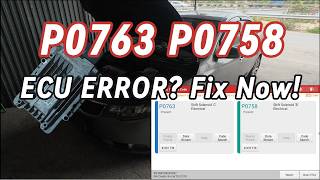
- YouTube Channel 'TCU/ECU Repair Guide' (on a Kia Forte with a similar A6 family transmission) (Kia Forte with A6MF1 transmission) — Transmission jerking, fault codes P0758 (Solenoid B) and P0763 (Solenoid C) were both present.
❌ Tried (didn't work) Initial diagnosis pointed towards replacing the solenoids or the internal wiring harness.
✅ What actually fixed it The actual fault was on the Transmission Control Unit (TCU/ECU) circuit board. The specific power driver integrated circuits (ICs) that control solenoids B and C had failed. Replacing the ICs on the board resolved both fault codes and restored normal operation. This is a key diagnosis when multiple solenoid electrical faults appear simultaneously.
OEM Part Supersession History
46313-3B020→46313-3B030— Standard part revision by the manufacturer for improved reliability or manufacturing process changes.
Heads up: The parts are interchangeable; 46313-3B030 is the correct service replacement for the original part.
Model Year Variations Within This Range
- 2012-2015: The A6GF1 transmission used in the Kia Rio within this range did not have significant internal changes that would alter the diagnosis or primary cause of a P0758 code. The failure of Shift Solenoid 'B' is common across the entire generation.
Helpful Videos

We Have This Part in Stock




The information in this article is provided for general reference and educational purposes only. Vehicle specifications, procedures, and part compatibility can vary by production date, trim level, and region. Always consult your vehicle's factory service manual and verify part numbers before purchasing or performing repairs. Safety-critical components such as airbags, seat belts, and braking systems should be installed by a qualified professional.
- Kia RIO:
- 🧭 Diagnostic Flowchart
- 🎬 Helpful Videos
- 🛍️ Shop This Part
- What's Unique About the 2012-2015 Kia RIO
- Symptoms You May Notice
- Most Likely Causes
- Diagnosis Steps
- Parts You'll Likely Need
- Related Codes That Often Appear With This One
- Technical Service Bulletins (TSBs) & Recalls
- Platform-Specific Known Issues
- Mechanic-Grade Diagnostic Values
- Scan Tool Commands That Help
- Wiring & Ground Locations
- Real Owner Repair Stories
- OEM Part Supersession History
- Model Year Variations Within This Range
- 🎟️ Get 5% Off