

P0761 on 2006-2010 Chevrolet Silverado: Shift Solenoid 'C' Causes and Fixes
P0761 on a 2006-2010 Silverado indicates a problem with Shift Solenoid 'C'. The most common fix is replacing the solenoid inside the transmission oil pan, along with the fluid and filter. On trucks with the 6-speed 6L80 transmission, this code often points to a more complex failure of the entire control module (TEHCM), which is a known weak point.
- P0761 means Shift Solenoid 'C' has failed or is stuck off.
- Always check transmission fluid level and condition first, as low or dirty fluid is a primary cause.
- The repair depends on your transmission: 4-speed (4L60-E) models likely need a new individual solenoid, while 6-speed (6L80) models may need a new, programmed control module (TEHCM).
- Do not continue to drive with this issue, as it can lead to severe and expensive internal transmission damage.
What's Unique About the 2006-2010 Chevrolet SILVERADO
The 2006-2010 Silverado spans two common transmissions. The 2006 GMT800 models typically use the 4-speed 4L60-E, where P0761 points to a failure of the individual 3-2 Shift Solenoid ('C'). The 2007-2010 GMT900 models introduced the 6-speed 6L80 transmission, where the solenoids are integrated into the Transmission Electro-Hydraulic Control Module (TEHCM). On these 6-speed models, P0761 is frequently a sign of a more complex and expensive TEHCM failure, a unit known for issues due to its location inside the hot transmission. This requires programming upon replacement.
Diagnostic Flowchart
Tap your situation to follow the diagnostic path that matches what you're seeing on this vehicle.
Generation note: The 2006 model year is the last of the GMT800 generation (often called 'Classic'), primarily using the 4-speed 4L60-E transmission. The 2007-2010 model years are the beginning of the GMT900 generation, which introduced the 6-speed 6L80 transmission alongside the 4-speed on some models. The diagnosis and repair differ significantly between the 4L60-E (individual solenoid) and the 6L80 (integrated TEHCM). It is critical to identify which transmission your truck has before ordering parts.
Symptoms You May Notice
- Check Engine Light is on
- Transmission stuck in one gear (limp mode), often 2nd or 3rd gear
- Harsh, erratic, or delayed shifting
- Failure to shift into certain gears
- Sluggish acceleration from a stop
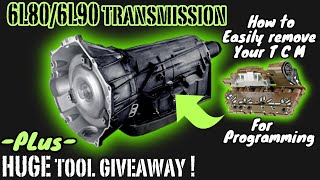
- Increased fuel consumption 🎬 Watch: A breakdown of what the P0761 code means for your truck.
- Transmission may feel like it's slipping
- Transmission warning light on the dashboard
- Replacing only the solenoid on a 6L80 transmission when the fault lies within the integrated TEHCM.
- Condemning the entire transmission for a rebuild when the issue is a simple external wiring problem or a single failed solenoid (on a 4L60-E).
- Replacing the TEHCM when the root cause is a disintegrating torque converter that has filled the system with debris. The new TEHCM will soon fail as well.
Most Likely Causes
- Low or Dirty Transmission Fluid 🔴 High Probability → Shop Transmission Assembly High mileage, towing, or infrequent service can lead to fluid breakdown and contamination, which can clog solenoid passages. GM TSB #PIP4379K specifically notes that low fluid level after a service or from a leak can cause a loss of pump prime and trigger this code.
How to confirm: Check the transmission fluid level and condition per the owner's manual. The fluid should be reddish and clear, not dark brown, black, or smell burnt. Metal shavings in the fluid indicate severe internal damage.
Typical fix: Perform a transmission fluid and filter change. If the fluid is heavily contaminated, a full flush may be considered, though this can sometimes cause issues on high-mileage transmissions.
Est. part cost: $50-$120 - Failed Shift Solenoid 'C' 🔴 High Probability → Shop Transmission Valve Body On 4L60-E transmissions, the individual solenoids are a common failure point due to age and heat cycles. The coil inside the solenoid can fail electrically. This solenoid is specifically the 3-2 Shift Solenoid.
How to confirm: After dropping the transmission pan, the solenoid's resistance can be tested with a multimeter. For a post-1996 4L60-E, it should be between 20-40 ohms. An out-of-spec reading confirms failure.
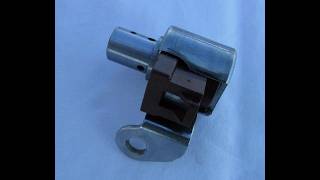
Typical fix: Replace the faulty shift solenoid. It is located inside the transmission and accessible after removing the oil pan and filter. 🎬 See this walkthrough on replacing all 4L60E shift solenoids.
Est. part cost: $30-$80 - Failed TEHCM (Transmission Electro-Hydraulic Control Module) 🟡 Medium Probability → Shop Transmission Valve Body This is specific to models with the 6L80 6-speed transmission. The solenoids are integrated into this module, which sits inside the transmission pan submerged in hot fluid, making it a known failure point due to heat degradation.
How to confirm: Diagnosis requires an advanced scan tool to command the solenoid and monitor its response. If the command is sent but the solenoid doesn't react (and wiring is good), the TEHCM is likely faulty. Codes like U0101 (Lost Communication with TCM) appearing alongside P0761 strongly point to TEHCM failure.
Typical fix: Replace the entire TEHCM assembly, which is located inside the transmission. The new module must be programmed to the vehicle's VIN. Some companies sell pre-programmed TEHCMs.
Est. part cost: $320-$650 - Wiring or Connector Issues ⚪ Low Probability The external transmission harness connector can become contaminated with oil or moisture, and the internal harness (inside the pan) can become brittle from heat and fluid exposure.
How to confirm: Inspect the main transmission connector for corrosion, fluid intrusion, or damaged pins. Check for continuity on the solenoid's circuit from the TCM to the transmission connector.
Typical fix: Repair the damaged section of wiring or clean/replace the affected connector. If the internal harness is faulty, it must be replaced.
Est. part cost: $20-$200
Rare But Worth Checking
- Faulty Transmission Control Module (TCM): → Shop Transmission Assembly While possible, the TCM itself is less likely to fail than the solenoids or wiring. This should be considered only after all other possibilities have been exhausted. On 6L80 models, the TCM is part of the TEHCM, so it is not a separate component.
- Blocked Internal Hydraulic Passages: Debris from worn clutches or a failing torque converter can clog the small passages in the valve body, preventing proper fluid flow to the solenoid. This usually indicates a more severe internal transmission problem requiring a rebuild.
- Failing Torque Converter: → Shop Automatic Transmission Torque Converter This is a known issue on 6L80 transmissions. The torque converter clutch lining can disintegrate, sending metallic debris throughout the transmission, which clogs the filter, valve body, and solenoids, leading to codes like P0761.
Diagnosis Steps
- Check the transmission fluid level and condition. Top off or change if necessary. Low or burnt fluid is a primary cause.
- Use an OBD-II scanner to check for other related transmission codes. Multiple solenoid codes (P0751, P0756) or communication codes (U0101) point towards a systemic issue like a failing TEHCM.
- Inspect the main wiring harness connector at the transmission for any signs of damage, corrosion, or fluid contamination.
- If the fluid and external wiring are good, the next step is to drop the transmission oil pan.
- Visually inspect the fluid in the pan for excessive metal shavings. A large amount of debris points to a major mechanical failure, possibly from the torque converter.
- For 4L60-E (4-speed): Locate and test the resistance of Shift Solenoid 'C' (the 3-2 shift solenoid) with a multimeter. A reading outside of 20-40 ohms indicates failure.
- For 6L80 (6-speed): The solenoids are part of the TEHCM. An advanced scan tool is needed to command the solenoid. If it fails to respond, and wiring is confirmed good, the TEHCM is the likely cause.
- If a solenoid or TEHCM is replaced, also replace the transmission filter and pan gasket.
Parts You'll Likely Need
- Shift Solenoid 'C' (3-2 Shift Solenoid)
(OEM #24212327)— This is the direct component indicated by the code for 4L60-E transmissions and is a common failure item. Note that the 1-2 and 2-3 shift solenoids (A & B) may use a different part number (e.g., 24230298).
Trusted brands: ACDelco, Bosch
OEM price range: $50-$90
Aftermarket price range: $30-$60 - Transmission Electro-Hydraulic Control Module (TEHCM)
(OEM #Varies by VIN, e.g., 24256861)— For 6L80 6-speed transmissions, the solenoids are integrated into this module, which is a common failure point causing P0761. Must be programmed to the vehicle's VIN.
Trusted brands: ACDelco (Genuine GM), Sonnax (Aftermarket upgrade)
OEM price range: $400-$650
Aftermarket price range: $320-$550
Related Codes That Often Appear With This One
- P0700 — This is a general transmission fault code. It indicates that the TCM has detected a problem and has requested the main engine computer to turn on the Check Engine Light. It will almost always be present with P0761.
- P0751, P0756, P0776 — These are codes for other shift solenoids ('A', 'B', 'E'). When multiple solenoid codes appear together, it strongly suggests a systemic problem like low fluid, a power supply issue to the transmission, or a failing TEHCM, rather than multiple individual solenoids failing at once. This is consistent with TSB #PIP4379K.
- U0101 — This code means 'Lost Communication with TCM'. On a 6L80-equipped truck, seeing this with P0761 is a very strong indicator that the entire TEHCM has failed and needs replacement.
Technical Service Bulletins (TSBs) & Recalls
- PIP4379K / PIP4379M / PIP4379N: A series of related GM bulletins that list P0761 among many other codes that can be caused by low transmission fluid level, especially in cold weather or after a fluid service, leading to a loss of pump prime.
- 09-07-30-004J: For 6L80 transmissions, this TSB discusses how a cracked 1-2-3-4 / 3-5-R clutch wave plate can cause slips and harsh shifts, which could potentially trigger solenoid performance codes as a secondary symptom.
- PIP5100A: Mentions that debris, sometimes from aftermarket spin-on filters, can clog valve body orifices and cause solenoid performance codes like P0761.
Platform-Specific Known Issues
- 4L60-E 3-2 Solenoid Failure: On the 4-speed 4L60-E, the P0761 code specifically relates to the 3-2 shift solenoid. It's an individual component that can be replaced after dropping the pan. Its failure is a straightforward electrical or mechanical issue within the solenoid itself.
- 6L80 TEHCM Failure and Torque Converter Debris: → Shop Automatic Transmission Torque Converter On the 6-speed 6L80, P0761 is a very common symptom of two larger, well-known problems: TEHCM failure due to heat soak, and torque converter clutch failure. The failing converter sheds debris that contaminates the entire hydraulic system, often leading to the TEHCM setting solenoid performance codes. Mechanics often recommend inspecting for excessive debris before replacing the TEHCM, as a contaminated system can cause the new module to fail prematurely.
Mechanic-Grade Diagnostic Values
- 4L60-E Shift Solenoid 'C' (3-2) Resistance — expected: 20-40 Ohms for 1996 and later models.. Failure: A reading of 0 ohms (short) or infinite/OL (open) indicates a failed solenoid. Note that some service data may incorrectly list older 9-14 Ohm specs, causing confusion.
- 6L80 TEHCM On/Off Solenoid Resistance (Bench Test) — expected: 20-40 Ohms. Failure: Resistance outside this range indicates a failed solenoid within the TEHCM, requiring module replacement.
- 6L80 TEHCM PWM Solenoid Resistance (Bench Test) — expected: 3-8 Ohms. Failure: Resistance outside this range points to a failure within the TEHCM assembly.
- Solenoid Power Supply Voltage — expected: 11.8 - 12.5 V at the solenoid connector with key on.. Failure: Low or no voltage points to a wiring or power supply issue upstream of the transmission, such as the ignition switch.
Scan Tool Commands That Help
- GM Tech2 / GDS2: Solenoid Test / Actuator Test — Used to command a specific solenoid on and off while the vehicle is stationary to verify its electrical function and listen for a click. This helps isolate a faulty solenoid from a wiring or TCM driver issue.
- GM Tech2 with Kent-Moore DT-47825 Test Kit: TEHCM Solenoid Air Test — For 6L80 transmissions, this specialized kit includes a test plate that bolts to the TEHCM on the bench. It allows a technician to use the Tech2 to individually fire each solenoid and check for proper air pressure response, definitively diagnosing internal TEHCM faults.
- GM Tech2 / GDS2: Reset Transmission Adapts / Fast Learn — This must be performed after replacing a TEHCM or making significant transmission repairs. It clears the learned shift parameters and forces the TCM to relearn shift timing and pressures, which is critical for preventing harsh shifts with new components.
Wiring & Ground Locations
- PCM Ground — On the top rear of the engine block/cylinder head, driver's side. It is a small wire in a large loom and is notoriously difficult to access.. This is the main ground for the Powertrain Control Module. A poor connection here can cause erratic sensor readings and incorrect commands to the transmission, potentially triggering false solenoid codes.
- Firewall Ground Straps — On the firewall, typically one grounding the engine block to the body.. Ensures the engine and body have a common ground potential. A broken strap can cause current to find alternate paths, leading to electrical noise and unpredictable module behavior.
- Frame Ground — On the driver's side frame rail, near the front tire. The main battery negative cable often connects here.. This is a primary chassis ground point. Corrosion here can affect the entire vehicle's electrical system, including the power supplied to the transmission and its control modules.
- Transmission Case Connector — The main round electrical connector on the side of the transmission case (passenger side on 4L60-E).. This is the single point of connection for all internal electronics. It's prone to fluid intrusion from a failed internal harness seal, which contaminates pins and causes short circuits or open circuits for the solenoids.
Real Owner Repair Stories
- Reddit user in r/ChevyTrucks (2004 Sierra with 4L60-E) — Hard shift into second, then limp mode. Immediate codes on startup for P0740, P2761, and P0785 (TCC and 3-2 Solenoid).
❌ Tried (didn't work) Checked solenoid resistances from the PCM connector., Replaced the 3-2 shift solenoid after finding a confusing resistance reading (23 ohms) that didn't match one service manual's spec (9-14 ohms), but the new part measured the same.
✅ What actually fixed it The ignition switch was faulty. Although the instrument cluster worked and voltage was present at the fuse, the switch was not reliably supplying power to the transmission solenoids, causing the circuit codes. - LS1Tech forum member (Vehicle with a recently rebuilt 6L80 transmission) — Persistent shifting problems after a rebuild.
❌ Tried (didn't work) Complete transmission rebuild.
✅ What actually fixed it A transmission expert diagnosed a probable hairline crack in the 3-5-Reverse apply piston. This is a mechanical part that was visually inspected during the rebuild but the tiny crack was missed. Such cracks prevent the clutch from applying correctly, mimicking a solenoid or hydraulic control issue.
"I Checked Everything" — The Actual Cause
- In a documented case involving multiple solenoid circuit codes on a 4L60-E, all wiring continuity and resistance checks from the PCM to the transmission were normal. The root cause was a failing ignition switch that was not providing stable power to the transmission's ignition-fed circuits, even though other vehicle electronics seemed to work correctly.
When the Usual Fixes Don't Work
- While P0761 directly points to Shift Solenoid 'C', a significant number of real-world cases, especially when multiple solenoid codes appear at once, are resolved by fixing the power supply to the transmission. A failing ignition switch on a GMT800/900 platform can starve the solenoids of voltage and trigger circuit codes, despite the fault not being in the transmission itself. Therefore, if multiple solenoid codes appear instantly at key-on, testing the ignition power circuit to the transmission should be a primary diagnostic step before dropping the pan.
OEM Part Supersession History
e.g., 24241350 / 24252114 (2006-2009)→e.g., 24256861 / 24256863 (2010-2013)— Updates to address common failure points. Later TEHCMs for the 6L80 featured improved solenoids and updated pressure manifold gaskets.
Heads up: TEHCMs for the 6L80 are NOT interchangeable between year groups (e.g., 2010-2013 vs 2014+). The internal logic and calibrations are different and will cause immediate limp mode if the wrong module is installed.
Model Year Variations Within This Range
- 2006 (4L60-E equipped): The 3-2 Shift Solenoid ('C') for post-1996 4L60-E transmissions should have a resistance of 20-40 Ohms. Service data sometimes incorrectly references the pre-1996 spec of 9-14 Ohms, leading to misdiagnosis when a perfectly good solenoid is tested.
- 2007-2010 (6L80 equipped): The TEHCM part numbers changed several times. A module for a 2010-2013 truck (e.g., PN 24256861) is not compatible with a later 2014+ model. VIN-specific programming is always required, but using a TEHCM from the wrong year group will fail regardless.
Helpful Videos

We Have This Part in Stock


The information in this article is provided for general reference and educational purposes only. Vehicle specifications, procedures, and part compatibility can vary by production date, trim level, and region. Always consult your vehicle's factory service manual and verify part numbers before purchasing or performing repairs. Safety-critical components such as airbags, seat belts, and braking systems should be installed by a qualified professional.
- Chevrolet SILVERADO:
- 🧭 Diagnostic Flowchart
- 🎬 Helpful Videos
- 🛍️ Shop This Part
- What's Unique About the 2006-2010 Chevrolet SILVERADO
- Symptoms You May Notice
- Most Likely Causes
- Rare But Worth Checking
- Diagnosis Steps
- Parts You'll Likely Need
- Related Codes That Often Appear With This One
- Technical Service Bulletins (TSBs) & Recalls
- Platform-Specific Known Issues
- Mechanic-Grade Diagnostic Values
- Scan Tool Commands That Help
- Wiring & Ground Locations
- Real Owner Repair Stories
- "I Checked Everything" — The Actual Cause
- When the Usual Fixes Don't Work
- OEM Part Supersession History
- Model Year Variations Within This Range
- 🎟️ Get 5% Off