

P0761 on 2011-2015 Chevrolet Silverado: Shift Solenoid 'C' Causes & Fixes
P0761 indicates Shift Solenoid 'C' is stuck off. On these Silverado models with the 6L80 transmission, this is often caused by debris from a failing torque converter clogging the valve body. A simple solenoid replacement may not be a permanent fix; the root cause is often internal contamination from a failing torque converter, requiring a more comprehensive repair.
- P0761 on a 2011-2015 Silverado is a serious code that can leave you stranded and should be addressed immediately.
- The most common cause is not just a bad solenoid, but contamination within the transmission's valve body, often from a failing torque converter.
- Always check for metallic debris in the transmission pan when servicing this code. The presence of debris indicates a more extensive repair is needed.
- Simply replacing the solenoid without addressing the contamination will likely result in the problem returning.
- This is not a beginner-friendly DIY repair. Professional service is strongly recommended due to the complexity of internal transmission work.
What's Unique About the 2011-2015 Chevrolet SILVERADO
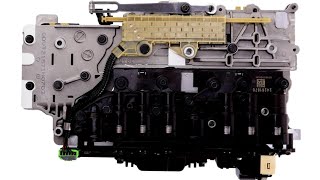
The 2011-2015 Silverado, typically equipped with the 6L80 6-speed automatic transmission, has a well-documented vulnerability that makes P0761 more than just a simple solenoid failure. A common point of failure is the Torque Converter Clutch (TCC), which can wear out and shed metallic debris into the transmission fluid. This contaminated fluid then circulates and clogs the small, intricate passages within the valve body and the solenoids themselves, causing them to stick or fail. The solenoids are integrated into a single unit called the Transmission Electro-Hydraulic Control Module (TEHCM), which also houses the TCM. As a result, simply replacing an individual solenoid is not feasible; the entire TEHCM often requires replacement, and failure to address the source of the debris (the torque converter) will lead to a repeat failure.
Diagnostic Flowchart
Tap your situation to follow the diagnostic path that matches what you're seeing on this vehicle.
Generation note: This year range covers the end of the second generation (GMT900, 2011-2013) and the start of the third generation (K2XX, 2014-2015). Both generations primarily used the 6L80 automatic transmission, making the causes and fixes for P0761 highly consistent across this entire period.
🎬 Watch: Understanding the common failure points of the 6L80E transmission.Symptoms You May Notice
- Check Engine Light is on
- Vehicle will not move in forward or reverse.
- Delayed or no engagement into reverse.
- Harsh, erratic, or delayed shifting.
- Transmission gets stuck in a single gear (limp mode), often 3rd gear.
- Sluggish acceleration and loss of power.
- Transmission slipping between gears.
- Increased fuel consumption.
- Replacing only the shift solenoid without checking for debris in the pan or valve body. If contamination from the torque converter is the root cause, the new solenoid will likely fail again in a short time.
- Performing only a fluid and filter change when significant metallic debris is present. This does not remove the source of the contamination (e.g., a failing torque converter) or clear blockages deep within the valve body.
Most Likely Causes
- Contaminated Valve Body / Stuck Valve 🔴 High Probability → Shop Transmission Valve Body The 6L80 transmission's torque converter clutch is a known wear item that sheds debris, which clogs the valve body. TSBs #PIP5100 and #PIP5100A directly call out inspecting valve body orifices for debris or blockage. Forum users often describe this debris as a 'fine, grey metallic paste' in the bottom of the transmission pan.
How to confirm: Drop the transmission pan and inspect for excessive metallic debris (a fine gray paste is bad news). The valve body must be removed for a thorough inspection of its channels and valves. Sonnax makes popular valve body upgrade kits (Zip Kits) to address wear-related issues.
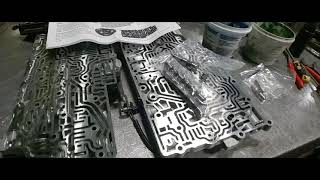
Typical fix: Remove, disassemble, and professionally clean the valve body. 🎬 See how to disassemble and clean your 6L80 valve body. Replace the valve body separator plate. If the torque converter is the source of debris, it must also be replaced to prevent a recurrence.
Est. part cost: $200-$800 - Failed Shift Solenoid 'C' / TEHCM Failure 🔴 High Probability → Shop Transmission Valve Body On the 6L80, all solenoids are integrated into the Transmission Electro-Hydraulic Control Module (TEHCM), which is submerged in hot fluid and subject to constant vibration and heat cycles, leading to failure.
How to confirm: After dropping the pan, test the solenoid's resistance with a multimeter (pressure control solenoids should be 3-8 Ohms). An advanced scan tool can also command the solenoid on/off to check its function. However, since it's part of the TEHCM, a fault often necessitates replacing the entire unit.
Typical fix: Replace the entire TEHCM assembly. The new module must be programmed with the vehicle's VIN. The OEM part number for the TEHCM assembly is often cited as 24256523 for Gen 1 6L80s.
Est. part cost: $300-$550 - Low or Dirty Transmission Fluid 🟡 Medium Probability → Shop Transmission Assembly Fluid is the hydraulic medium; if it's low, pressure is lost. If it's old, broken down, or contaminated with debris, it can't protect against wear and directly causes solenoid and valve body issues. Only DEXRON-VI fluid should be used.
How to confirm: Check the transmission fluid level and condition via the dipstick. Fluid should be reddish and clear, not dark, burnt-smelling, or low.
Typical fix: Perform a transmission fluid and filter change using Dexron VI fluid. If significant debris is found, this is only a first step and will not solve the underlying mechanical issue.
Est. part cost: $80-$150 - Damaged Internal Wiring Harness ⚪ Low Probability The wiring harness inside the transmission pan can become brittle from constant heat cycles, leading to cracked insulation or broken wires. The main external connector (X1/J1 16-pin) can also corrode.
How to confirm: Visually inspect the wiring harness leading to the TEHCM for any signs of damage, brittleness, or loose connections once the pan is removed. Check the main external connector for corrosion.
Typical fix: Replace the internal transmission wiring harness or repair the external connector.
Est. part cost: $100-$200
Rare But Worth Checking
- Faulty Transmission Control Module (TCM): → Shop Transmission Assembly While less common, the TCM (often integrated into the valve body on these models as a TEHCM) can fail internally, causing it to incorrectly report a solenoid issue. This is usually diagnosed after all other causes are ruled out. Since the TCM and solenoids are one unit (TEHCM) on the 6L80, the fix is the same: replace the entire module.
Diagnosis Steps
- Check the transmission fluid level and condition. If the fluid is dark, burnt, or contains metallic particles ('glitter'), suspect severe internal wear.
- Scan the TCM for all stored trouble codes. Note if other solenoid (P0751, P0756) or TCC (P0741) codes are present, as this points towards a systemic issue.
- Using a bi-directional scan tool, command Shift Solenoid 'C' on and off to check for an audible click and to monitor its status.
- Drop the transmission oil pan and inspect for metal shavings or other debris. A fine, gray, metallic paste is a classic sign of torque converter failure in these transmissions.
- Inspect the internal wiring harness and the main external 16-pin connector for any signs of damage or corrosion.
- Test the resistance of Shift Solenoid 'C' at the TEHCM connector. Pressure control solenoids should measure between 3-8 ohms.
- If the solenoid and wiring are good, the next step is to inspect the valve body orifices for blockages, as recommended by TSB #PIP5100.
- Inspect the valve body separator plate for damage and check balls for wear. Upgraded plates and 'imidized' plastic check balls from brands like Sonnax are common repair parts.
Parts You'll Likely Need
- Transmission Electro-Hydraulic Control Module (TEHCM)
(OEM #24256523 (Gen 1))— This assembly contains the TCM and all shift solenoids, including the faulty Shift Solenoid 'C'. It is the most common point of failure for this code on a 6L80. A replacement requires VIN programming.
Trusted brands: ACDelco, Sonnax (Remanufactured)
OEM price range: $400-$550
Aftermarket price range: $300-$450 - Transmission Valve Body Separator Plate
(OEM #24245720 (Updated 8-ball design))— The original plate can be damaged by debris or develop leaks between channels. TSBs point to inspecting its orifices for blockage. Upgraded versions are available to improve durability.
Trusted brands: ACDelco, Sonnax
OEM price range: $60-$120
Aftermarket price range: $50-$100 - Torque Converter — If significant debris is found in the pan, the torque converter is the likely source and must be replaced to prevent a repeat failure of the new parts.
Trusted brands: ACDelco, Transtar, Monster Transmission
OEM price range: $400-$700
Aftermarket price range: $250-$500
Related Codes That Often Appear With This One
- P0700 — This is a general transmission fault code that simply means the TCM has stored a trouble code. It almost always accompanies specific codes like P0761.
- P0751, P0756, P0776 — These are codes for other shift solenoids (A, B, and E). When multiple solenoid codes appear together, it strongly suggests a systemic problem like widespread contamination, low fluid pressure, or a failing TEHCM, as mentioned in TSB #PIP4379K.
- P0741 — This code indicates a Torque Converter Clutch (TCC) performance issue. Seeing this with P0761 is a major clue that the TCC is failing and is the source of the debris causing the solenoid problem.
Technical Service Bulletins (TSBs) & Recalls
- PIP4379K: Lists P0761 among a large group of codes that can result from various internal transmission faults causing engagement issues.
- PIP5100 / PIP5100A: Specifically instructs technicians to inspect the valve body separator plate orifices for debris/blockage when vehicles won't move and set codes including P0761.
Platform-Specific Known Issues
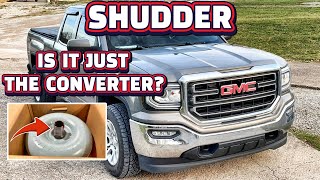
- Owner Experience: The Slippery Slope from Shudder to Solenoid Code: A common repair story found across forums begins with a subtle shudder at highway speeds, which is an early sign of the torque converter clutch failing. Owners who ignore this symptom often report that months later, the truck will suddenly refuse to shift, shift very harshly, or get stuck in 3rd gear, at which point the P0761 code appears. A technician then drops the pan to find it coated in a grey, metallic paste. The repair escalates from a simple solenoid issue to a full replacement of the TEHCM, torque converter, and a thorough valve body cleaning or replacement to prevent the new parts from failing immediately. This narrative underscores the importance of addressing the root cause (the torque converter) and not just the symptom (the solenoid code).
Mechanic-Grade Diagnostic Values
- Shift Solenoid (On/Off type) resistance — expected: 20 - 40 Ohms. Failure: Reading outside this range indicates a failed solenoid coil.
- Clutch Pressure Control (CPC) Solenoid (PWM type) resistance — expected: 3 - 8 Ohms. Failure: Reading outside this range indicates a failed solenoid coil.
- Shift Solenoid (On/Off type) current draw at 12V — expected: 0.3 - 0.7 Amps. Failure: Incorrect amperage suggests a failing solenoid.
- Clutch Pressure Control (CPC) Solenoid (PWM type) current draw at 12V — expected: 1.5 - 4.0 Amps. Failure: Incorrect amperage suggests a failing solenoid. This test should be performed quickly to avoid damage.
- TEHCM Pressure Switch resistance (un-pressed) — expected: OL (Open Line / infinite resistance). Failure: Any continuity reading when the switch is not pressed indicates a shorted switch.
- TEHCM Pressure Switch resistance (pressed) — expected: ~10 Ohms. Failure: A reading of OL or significantly different resistance indicates a failed switch.
Scan Tool Commands That Help
- GDS2 / Tech2: Solenoid Valve State / Transmission Control Solenoid Valve State — To command individual solenoids on and off while monitoring their commanded and actual states to verify electrical function.
- GDS2 / Tech2: Transmission Fluid Pressure (TFP) Switch Status — To monitor the status of the internal pressure switches (1, 3, 4, 5) to see if the hydraulic circuit is responding correctly to solenoid commands.
- GDS2 / Tech2: Service Fast Learn Adapts — This procedure must be performed after replacing the TEHCM or valve body to allow the TCM to learn the hydraulic characteristics and clutch fill volumes of the new components.
- GM SPS/SPS2 (Service Programming System) with J2534 device: Replace and Reprogram ECU — This is required when installing a new TEHCM. The function flashes the module with the correct VIN and the latest factory calibration file. The vehicle will not operate until this is done.
Wiring & Ground Locations
- X1/J1 Connector — The main 16-pin electrical connector on the passenger side of the transmission case.. This is the sole electrical interface to the internal TEHCM. Corrosion on pins or an improperly seated connector can cause loss of communication or power to the solenoids, mimicking an internal failure. It is a common issue for this connector to not be fully seated after service.
- G110 — On the right rear of the engine's cylinder head.. This is a shared ground point for multiple modules, including the ECM and TCM. A loose or corroded connection here can cause erratic behavior and communication codes between modules.
- G103 — On the left front of the engine block, often part of the main negative battery cable harness.. This is a primary engine-to-chassis ground. A poor connection can cause a voltage drop across the entire control system, leading to unpredictable electronic faults.
Real Owner Repair Stories
- Reddit user in r/LexusGX (similar transmission design principles) (Lexus GX with similar solenoid codes (P0761/P2714)) — Limp mode, no shifting past 3rd gear, Check Engine Light.
❌ Tried (didn't work) Replacing input and output speed sensors (fix lasted 1,500 miles).
✅ What actually fixed it The user concluded that the root cause was not a catastrophic transmission failure but rather wear within the valve body. They proceeded to pull the valve body and install a Sonnax Zip Kit to address wear-related hydraulic leaks, believing this to be the proper fix over a full transmission replacement. This aligns with the common 6L80 diagnosis where internal valve body wear, not just the solenoid, is the problem.
"I Checked Everything" — The Actual Cause
- A common pattern is when a technician tests the Shift Solenoid 'C' electrically (resistance, voltage) and finds it passes, yet the code returns. The actual cause is often not electrical but hydraulic. Debris from the torque converter can create intermittent blockages in the valve body passages that feed the solenoid, or cause the valves themselves to stick. The solenoid is trying to work, but the fluid pressure cannot be correctly routed, leading the TCM to flag a performance fault.
When the Usual Fixes Don't Work
- While the most common fix involves replacing the TEHCM and/or torque converter, some owners have reported resolving the issue through less intensive means. In cases where the code appears only on cold starts, some have found temporary workarounds by manually shifting through the gears for the first few minutes of driving. This suggests the issue can be related to hydraulic pressure building in a worn valve body, rather than a hard electronic failure. In one documented case, a user with recurring codes opted to install a Sonnax Zip Kit to repair the valve body bores instead of replacing the entire transmission, believing the root cause was hydraulic leakage from wear, not a failed solenoid.
OEM Part Supersession History
24239408, 24241875, 24245437, 24242052→24245720— Updated design for the 6L80 valve body separator plate to improve durability and address potential cross-leaks.
Heads up: The updated plate is generally backward compatible, but it's critical to ensure all other valve body components (like check balls) are correct for the application.24256861 / 24256863 (Gen 1 TEHCM)→24274046 / 24285393 (Gen 2 TEHCM)— The Gen 2 TEHCM features improved solenoids, updated pressure manifold gaskets, and integrated calibration changes for better thermal tolerance and reliability.
Heads up: TEHCMs are NOT interchangeable between generations. Installing a Gen 2 TEHCM in an earlier truck (or vice-versa) will result in immediate communication errors and limp mode. The correct part must be selected by VIN.
Model Year Variations Within This Range
- 2011-2013 (GMT900): These models use the 'Gen 1' 6L80 TEHCM (e.g., P/N 24256861). This earlier design was more prone to failures of the internal pressure switches, which are laminated onto the module.
- 2014-2015 (K2XX): These models use the 'Gen 2' 6L80 TEHCM (e.g., P/N 24274046). This version featured improved solenoids and logic. The TEHCMs are not backward compatible with earlier models due to different internal circuitry and programming structures.
Helpful Videos

We Have This Part in Stock


The information in this article is provided for general reference and educational purposes only. Vehicle specifications, procedures, and part compatibility can vary by production date, trim level, and region. Always consult your vehicle's factory service manual and verify part numbers before purchasing or performing repairs. Safety-critical components such as airbags, seat belts, and braking systems should be installed by a qualified professional.
- Chevrolet SILVERADO:
- 🧭 Diagnostic Flowchart
- 🎬 Helpful Videos
- 🛍️ Shop This Part
- What's Unique About the 2011-2015 Chevrolet SILVERADO
- Symptoms You May Notice
- Most Likely Causes
- Rare But Worth Checking
- Diagnosis Steps
- Parts You'll Likely Need
- Related Codes That Often Appear With This One
- Technical Service Bulletins (TSBs) & Recalls
- Platform-Specific Known Issues
- Mechanic-Grade Diagnostic Values
- Scan Tool Commands That Help
- Wiring & Ground Locations
- Real Owner Repair Stories
- "I Checked Everything" — The Actual Cause
- When the Usual Fixes Don't Work
- OEM Part Supersession History
- Model Year Variations Within This Range
- 🎟️ Get 5% Off