

P0761 on 2009-2010 Chevrolet Silverado 2500: Shift Solenoid 'C' Causes and Fixes
On a 2009-2010 Silverado 2500 with the 6L80 or 6L90 transmission, P0761 almost always indicates a failure of the Transmission Electro-Hydraulic Control Module (TEHCM), which integrates the shift solenoids and TCM. After ruling out low or dirty fluid, the most common and reliable fix is replacing the entire TEHCM unit inside the transmission. This repair requires professional-level tools and VIN-specific programming, with costs typically ranging from $800 to $1,500.
- P0761 on a 2009-2010 Silverado 2500 indicates a problem with Shift Solenoid 'C', which is part of the main control module (TEHCM) inside the transmission.
- Always check the transmission fluid level and condition first, as low or burnt fluid is a common and simple-to-fix cause.
- The most likely component failure is the entire TEHCM, not just a single solenoid. This part is expensive and requires professional installation and programming.
- Do not continue to drive with this issue. The transmission can enter a 'limp mode', and you risk causing severe, costly damage to internal components.
- If multiple solenoid codes are present (e.g., P0751, P0756), a failure of the TEHCM or a major wiring issue is almost certain.
What's Unique About the 2009-2010 Chevrolet SILVERADO 2500
The 2009-2010 Silverado 2500 is typically equipped with a 6-speed 6L80 or 6L90 automatic transmission. On these models, the individual shift solenoids are not designed to be serviced separately. Instead, they are integrated into a single, complex assembly called the Transmission Electro-Hydraulic Control Module (TEHCM), which also houses the Transmission Control Module (TCM). This integrated design means a fault with a single solenoid driver circuit or the solenoid itself requires the replacement of the entire TEHCM. Furthermore, a replacement TEHCM must be programmed with the vehicle's specific VIN using specialized software, making it a job for a professional shop or dealer.
Diagnostic Flowchart
Tap your situation to follow the diagnostic path that matches what you're seeing on this vehicle.
Symptoms You May Notice
- Harsh, erratic, or delayed shifts.
- Transmission gets stuck in one gear (limp mode).
- Check Engine Light or Transmission Warning Light is on.
- Failure to shift into or out of certain gears.
- Delayed engagement when shifting from Park to Drive or Reverse.
- Torque converter shudder, which feels like driving over rumble strips at highway speeds.
- Increased fuel consumption due to inefficient shifting.
- Burning smell from the transmission fluid, indicating overheating.
- Replacing only a single shift solenoid. On this platform, the solenoids are part of the TEHCM and are not typically replaced individually.
- Assuming the Transmission Control Module (TCM) is a separate, external part. On the 6L80/6L90, it is integrated into the TEHCM inside the transmission pan.
- Replacing the TEHCM without addressing the root cause. If a failing torque converter filled the fluid with debris, the new TEHCM may fail prematurely if the system isn't thoroughly flushed and the converter replaced.
Most Likely Causes
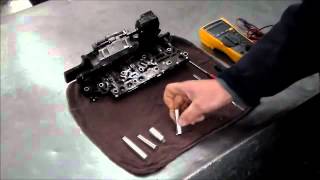
- Faulty Transmission Electro-Hydraulic Control Module (TEHCM) 🔴 High Probability → Shop Transmission Assembly The integrated design of the TEHCM on 6L80/6L90 transmissions is a well-documented failure point. The internal circuitry for the solenoid drivers or the solenoid coils themselves can fail, triggering this code. 🎬 See how to rebuild the TEHCM pressure switches yourself. Heat and vibration are primary contributors to failure.
How to confirm: After confirming fluid is good and wiring is intact, a professional scan tool is needed to command the solenoid and monitor its response. A persistent fault with Solenoid 'C' despite clean fluid and good wiring points directly to an internal TEHCM failure.
Typical fix: Replace the entire TEHCM assembly located inside the transmission oil pan. The new module must be programmed to the vehicle's VIN using GM's Service Programming System (SPS).
Est. part cost: $400-$700 - Low or Dirty Transmission Fluid 🔴 High Probability → Shop Transmission Assembly These heavy-duty trucks are often used for towing and hauling, which increases transmission temperature and accelerates fluid breakdown. Burnt or contaminated fluid can clog the small passages in the TEHCM and valve body, preventing solenoids from operating correctly.
How to confirm: Check the transmission fluid level and condition. The fluid should be reddish and clear, not dark brown, black, or smell burnt. The presence of fine metallic shavings (glitter) in the fluid often points to a failing torque converter or other internal mechanical wear.
Typical fix: Perform a transmission fluid and filter change using the correct fluid (ACDelco DEXRON-VI). If significant debris is found, the pan should be dropped for inspection.
Est. part cost: $75-$150 - Wiring or Connector Issues 🟡 Medium Probability The main transmission wiring harness connector is susceptible to moisture intrusion, and the harness itself is exposed to engine and exhaust heat, which can lead to brittle wires or chafing over time.
How to confirm: Visually inspect the wiring harness for damage. Unplug the main transmission connector and check for corrosion, bent pins, or fluid intrusion. A multimeter can be used to check for continuity and shorts in the wiring between the main connector and the TEHCM's internal harness.
Typical fix: Repair the damaged section of wiring or clean/replace the main transmission connector. Ensure a secure connection.
Est. part cost: $20-$100
Rare But Worth Checking
- Internal Mechanical Failure: If significant metal shavings are found in the transmission pan, it indicates a more serious problem like clutch pack failure or torque converter disintegration. In this case, simply replacing the TEHCM will not solve the problem and a full transmission rebuild or replacement is necessary.
- Cracked Stator Support Shaft or Damaged Valve Body: → Shop Transmission Valve Body The stator support shaft inside the transmission can develop cracks, leading to hydraulic pressure loss that can trigger solenoid performance codes. Similarly, wear or scoring in the valve body bores can cause pressure leaks. These are major internal failures requiring a transmission teardown to diagnose and repair.
Diagnosis Steps
- Check the transmission fluid level and condition. Ensure the level is correct per the manufacturer's procedure (checked hot). If low, top off and check for leaks. If dirty or burnt, a fluid and filter change is the first step.
- Connect a professional OBD-II scanner capable of communicating with the TCM. Read all codes and note if P0761 appears with other solenoid or pressure-related codes.
- Use the scanner to monitor live data. Observe the commanded state vs. the actual state of Shift Solenoid C while driving.
- Perform an actuator test with the scan tool to command Solenoid C on and off while the vehicle is stationary. A lack of response or an audible click from the transmission pan can help isolate the issue.
- If the solenoid does not respond, inspect the main transmission wiring harness and the large round connector for any damage, corrosion, or loose connections.
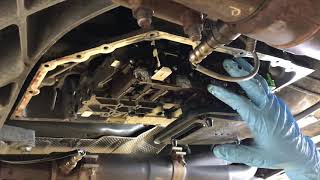
- If the external wiring is intact, the next step is to drop the transmission pan to access the TEHCM. 🎬 Watch: Step-by-step guide to removing the valve body and TEHCM.
- Visually inspect the fluid in the pan for excessive metal debris or clutch material, which would indicate a major mechanical failure requiring a rebuild.
- If no major mechanical damage is found and external wiring is good, the TEHCM is the most likely culprit and should be replaced and programmed.
Parts You'll Likely Need
- Transmission Electro-Hydraulic Control Module (TEHCM)
(OEM #ACDelco 24256861 (Verify by VIN, part numbers are frequently superseded))— This is the most common point of failure for P0761 on this platform, as it contains the integrated shift solenoids and TCM.
Trusted brands: ACDelco (OEM), Sonnax (Remanufactured)
OEM price range: $400-$700
Aftermarket price range: $320-$600 - Automatic Transmission Fluid and Filter Kit — Required whenever the transmission pan is dropped to replace the TEHCM. Clean fluid (DEXRON-VI) and a new filter are essential for the new part to function correctly.
Trusted brands: ACDelco
OEM price range: $100-$180
Aftermarket price range: $75-$120
Related Codes That Often Appear With This One
- P0700 — This is a generic transmission fault code that simply means the TCM has detected a problem and requested the Check Engine Light to be turned on. It will almost always be present with P0761.
- P0751, P0756, P0776, etc. — As noted in TSB PIP4379N, seeing multiple shift solenoid codes together (for solenoids 'A', 'B', 'E', etc.) with P0761 strongly suggests a systemic failure, such as a faulty TEHCM, low fluid pressure, or a wiring harness issue, rather than multiple individual solenoids failing at once.
- P0894 — This code for 'Transmission Component Slipping' can be triggered as a direct result of the incorrect gear engagement caused by the P0761 fault.
Technical Service Bulletins (TSBs) & Recalls
- PIP4379N: Addresses conditions like delayed or no Drive/Reverse engagement and lists a large number of DTCs including P0761. It points technicians to check for low fluid level or loss of pump prime as a potential cause before replacing hard parts.
Platform-Specific Known Issues
- The GM Technical Service Bulletin PIP4379N lists P0761 among a wide range of other transmission codes that can result from a common root cause, such as a faulty TEHCM, low fluid level, or loss of transmission pump prime, especially in cold weather. The presence of multiple solenoid codes makes this more likely.
- A failing torque converter is a common issue on 6L80/6L90 transmissions and is often the root cause of fluid contamination that leads to TEHCM failure. If debris is found, the torque converter should be replaced and the cooler lines flushed to prevent repeat failure.
Mechanic-Grade Diagnostic Values
- On/Off Shift Solenoid Resistance (SS1, SS2) — expected: 20 - 40 Ohms. Failure: A reading outside of this range indicates a failed solenoid coil within the TEHCM.
- PWM Pressure Control Solenoid Resistance — expected: 3 - 8 Ohms. Failure: A reading outside of this range indicates a failed solenoid coil. P0761 relates to a pressure control solenoid.
- On/Off Shift Solenoid Amperage Draw — expected: 0.3 - 0.7 Amps at 12V. Failure: Incorrect amperage draw signifies a faulty solenoid within the TEHCM.
- PWM Solenoid Amperage Draw — expected: 1.5 - 4.0 Amps at 12V. Failure: Incorrect amperage draw signifies a faulty solenoid within the TEHCM.
- Transmission Line Pressure at Idle (in gear) — expected: 45 - 80 PSI. Failure: Significantly lower pressure can indicate a weak pump, internal leaks, or low fluid level, which can trigger performance codes.
- Transmission Line Pressure at Wide Open Throttle (WOT) — expected: Up to 300 PSI. Failure: Failure to build sufficient pressure under load points to a hydraulic integrity issue (pump, valve body, internal seals).
Scan Tool Commands That Help
- GM Tech 2 / GDS2: Solenoid Test / Output Control — After confirming fluid level and external wiring are good, this function allows a technician to command Shift Solenoid 'C' on and off while the vehicle is stationary. This can be used with a special test plate (Kent-Moore DT-47825) and shop air to hydraulically verify solenoid function on the bench.
- GM Tech 2 / GDS2: Solenoid Cleaning Process — This is an automated procedure that cycles all solenoids to dislodge small amounts of debris. It can be attempted before condemning the TEHCM. If the P0761 code returns shortly after, a hard part failure is likely.
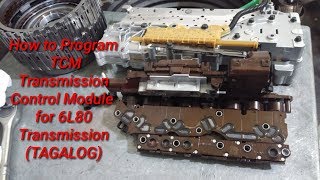
- GM SPS (Service Programming System) / Techline Connect: TEHCM Programming — This is mandatory after installing a new TEHCM. The module must be programmed with the vehicle's VIN and the latest GM calibration using a J2534 pass-through device for the transmission to function.
- GM Tech 2 / GDS2: Fast Learn / Reset Transmission Adapts — This procedure must be performed immediately after a new TEHCM is programmed. It resets all learned shift pressure values, allowing the new module to adapt to the specific transmission for smooth shifting.
Wiring & Ground Locations
- Main Transmission Case Connector — The large, round, 16-pin connector on the passenger side of the transmission case.. This is the sole electrical interface between the vehicle's main wiring harness and the internal TEHCM. It is a common point for moisture intrusion, corrosion, and pin damage, which can interrupt signals to any of the solenoids, causing codes like P0761. The internal harness from this connector to the solenoids is part of the TEHCM assembly itself.
When the Usual Fixes Don't Work
- While a faulty TEHCM is the most common cause, simply replacing it is not always the final fix. In a significant number of cases, the root cause of the P0761 code is a failing torque converter clutch (TCC). The TCC sheds metallic debris into the transmission fluid, which then contaminates and clogs the small passages and solenoid screens within the TEHCM. If a technician replaces the TEHCM but fails to diagnose the failing torque converter, the new TEHCM will quickly become contaminated and fail, causing the P0761 code to return. A thorough diagnosis must include inspecting the fluid and pan for excessive metallic debris. If found, the torque converter must be replaced and the transmission cooler and lines must be flushed to prevent a repeat failure.
OEM Part Supersession History
24256861→19435614, which was then superseded by 19434978— Part consolidation and updates to internal components and logic.
Heads up: TEHCMs are specific to year ranges. A 2010 TEHCM (24256861) is not compatible with a 2014+ vehicle, which uses a different part number and logic. Mismatching TEHCMs will cause immediate limp mode and programming failures. Always verify the correct part number by VIN.
Model Year Variations Within This Range
- 2009 vs. 2010: The TEHCM used in 2009 models was an earlier design known for more frequent pressure switch failures. The TEHCM for the 2010 model year (part of the 2010-2013 group, e.g., PN 24256861) featured improved solenoids and an updated pressure manifold gasket, making it a more reliable design than the one found in 2009 trucks.
Helpful Videos
We Have This Part in Stock

The information in this article is provided for general reference and educational purposes only. Vehicle specifications, procedures, and part compatibility can vary by production date, trim level, and region. Always consult your vehicle's factory service manual and verify part numbers before purchasing or performing repairs. Safety-critical components such as airbags, seat belts, and braking systems should be installed by a qualified professional.
- Chevrolet SILVERADO 2500:
- 🧭 Diagnostic Flowchart
- 🎬 Helpful Videos
- 🛍️ Shop This Part
- What's Unique About the 2009-2010 Chevrolet SILVERADO 2500
- Symptoms You May Notice
- Most Likely Causes
- Rare But Worth Checking
- Diagnosis Steps
- Parts You'll Likely Need
- Related Codes That Often Appear With This One
- Technical Service Bulletins (TSBs) & Recalls
- Platform-Specific Known Issues
- Mechanic-Grade Diagnostic Values
- Scan Tool Commands That Help
- Wiring & Ground Locations
- When the Usual Fixes Don't Work
- OEM Part Supersession History
- Model Year Variations Within This Range
- 🎟️ Get 5% Off