

P0761 on 2020-2023 Ford Explorer: Shift Solenoid 'C' Performance and Fixes
On a 2020-2023 Ford Explorer with the 10R60 transmission, code P0761 almost always indicates a complex internal transmission problem, not just a single bad solenoid. The most common cause is sticking valves within the main control valve body, a known issue covered by multiple Ford Technical Service Bulletins (TSBs). The official fix typically requires professional replacement of the entire valve body assembly, with costs ranging from $2,000 to $4,500.
- P0761 on a 2020-2023 Explorer is a strong indicator of a known issue with the transmission's main control valve body.
- Always check for the multiple Ford TSBs related to this issue before starting a repair; they provide the correct diagnostic path.
- The most common and manufacturer-recommended fix is replacing the entire valve body assembly, not just a single solenoid.
- This is not a typical DIY repair. It requires specialized knowledge, tools, and software for post-repair programming.
- Always check the transmission fluid level and condition first, as low or dirty fluid can cause similar symptoms.
What's Unique About the 2020-2023 Ford EXPLORER
The 2020-2023 Explorer uses Ford's 10-speed 10R60 automatic transmission, a variant of the widely used 10R80. This transmission family is known for several key issues, but for this code, the primary culprit is the main control valve body. Ford has issued numerous Technical Service Bulletins (TSBs) acknowledging that sticking valves inside this component can cause harsh shifting, delayed engagement, and a host of diagnostic trouble codes, including P0761. TSB 22-2428 specifically identifies 🎬 Watch: A breakdown of Ford's harsh shifting TSB and fixes. "sticking valves in the main control valve body" and "axial movement of the CDF clutch cylinder sleeve" as potential causes for these symptoms and codes. This means the problem is often not just a single bad solenoid, but a more complex, well-documented issue with the entire valve body assembly or related internal hydraulic components.
Diagnostic Flowchart
Tap your situation to follow the diagnostic path that matches what you're seeing on this vehicle.
Symptoms You May Notice
- Harsh or abrupt shifts, particularly between 1-3, 3-4, and 4-5 gears.
- Delayed shifting or a long pause when engaging Drive or Reverse.
- Transmission gets stuck in one gear or enters 'limp mode', often with a wrench light.
- Illuminated Check Engine Light or Malfunction Indicator Lamp (MIL).
- Vehicle may feel like it's slipping, hesitating, or losing power during acceleration.
- Loud clunking or banging sounds during shifting, especially when slowing down.
- Intermittent symptoms that are worse when the transmission is cold and may improve after 10-15 minutes of driving.
- Replacing only the 'C' shift solenoid without addressing the underlying valve body issue. On this platform, the problem is often the sticking valves within the housing, so a single new solenoid may not solve the problem.
- Assuming the transmission needs a full rebuild immediately. For the specific symptoms linked to P0761, the TSB-guided repair is often just the valve body, which is significantly less expensive than a full rebuild.
Most Likely Causes
- Sticking Valves in the Main Control (Valve Body) 🔴 High Probability This is the most widely documented failure for the 10R60/10R80 transmission, explicitly called out in multiple Ford TSBs (e.g., TSB 22-2428, TSB 20-2403). Fine metallic debris from normal wear can contaminate the fluid and cause the precision valves to stick.
How to confirm: A technician will reference the TSBs and may perform a 'PCM - Transmission Accelerated Main Control Break In' procedure with a Ford diagnostic tool (FDRS). If symptoms persist after the procedure and a fluid flush, valve body replacement is the indicated repair.
Typical fix: Replacement of the entire main control valve body assembly, followed by a transmission fluid refill and performing the PCM/TCM adaptive learning strategy reset.
Est. part cost: $800-$1500 - Low or Contaminated Transmission Fluid 🟡 Medium Probability → Shop Transmission Assembly The 10-speed transmissions are very sensitive to fluid level and condition. Dark or burnt fluid indicates excessive wear or heat, which can lead to sticking valves and other issues.
How to confirm: Check the transmission fluid level and condition. This requires a specific procedure as there is no traditional dipstick. The fluid should be bright red (Motorcraft ULV is dyed red) and not smell burnt.
Typical fix: Perform a transmission fluid drain-and-fill or a complete fluid exchange using only Motorcraft MERCON ULV fluid. Replace the transmission filter. This may resolve minor issues but often won't fix a mechanically stuck valve.
Est. part cost: $150-$400 - Failed Shift Solenoid 'C' ⚪ Low Probability → Shop Transmission Valve Body While possible, the widespread TSBs indicate the entire valve body assembly is the more common failure point rather than an individual solenoid. The code often points to a hydraulic control problem caused by a stuck valve, not an electrical failure of the solenoid itself.
How to confirm: A technician can test the solenoid's electrical resistance with a multimeter or command it on and off with an advanced scan tool to check for an electrical fault. However, this won't detect a mechanical or hydraulic issue within the valve body.
Typical fix: Replace the individual shift solenoid. This is often seen as a misdiagnosis, as the problem frequently returns if the underlying valve body issue isn't addressed.
Est. part cost: $50-$150 - Wiring or Connector Issue ⚪ Low Probability
How to confirm: Visually inspect the transmission wiring harness for damage, especially where it might rub against the chassis or exhaust. A technician would check for continuity and proper voltage at the connector for shift solenoid 'C'.
Typical fix: Repair the damaged section of wiring or replace the connector.
Est. part cost: $20-$200
Rare But Worth Checking
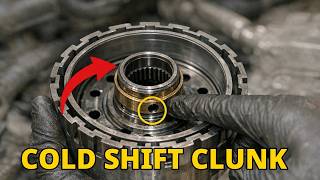
- CDF Clutch Drum Failure: → Shop Transmission Clutch Pressure Plate In earlier 10R80 transmissions, a bushing in the CDF (Clutch 'D'/'F') drum could 'walk out' of position, damaging a seal and causing a loss of hydraulic pressure. While the symptoms (erratic shifting, loss of gears) are similar, this is a more intensive mechanical repair. TSB 22-2428 also mentions "axial movement of the CDF clutch cylinder sleeve" as a possible cause alongside the valve body. Ford has since released an updated CDF drum part. 🎬 Watch: Understanding the CDF bushing failure and the updated fix.
- Faulty Powertrain or Transmission Control Module (PCM/TCM): → Shop Transmission Assembly This is extremely rare. The control module should only be considered after all other possibilities, including the valve body and wiring, have been ruled out. A faulty module often presents with multiple, unrelated codes or a complete loss of communication.
Diagnosis Steps
- Verify the transmission fluid level and condition. Ensure it is full and the fluid is clean and bright red. This is a critical first step.
- Use an OBD-II scanner to check for any other accompanying transmission codes. Note if they match the extensive list in Ford's TSBs for the 10R60/10R80.
- Consult Ford Technical Service Bulletins (TSBs) for the 2020-2023 Explorer, specifically TSB 22-2428, which supersedes many previous versions.
- With a professional scan tool (like Ford's FDRS), a technician should check for PCM/TCM software updates.
- If available for the vehicle's software, perform the 'PCM - Transmission Accelerated Main Control Break In' routine as described in TSBs. This procedure rapidly cycles the solenoids to try and un-stick them.
- If symptoms persist, the next step is to drop the transmission pan for a visual inspection of the fluid, filter, and for excessive metal debris.
- Following the guidance of the TSBs, the most probable repair is the replacement of the main control valve body assembly.
- After replacement, the transmission must be refilled with Motorcraft MERCON ULV fluid, and the TCM's adaptive learning tables must be cleared and relearned. This is a critical step for proper shift quality.
Parts You'll Likely Need
- Transmission Main Control Valve Body Assembly
(OEM #LB5Z-7A100-B (verify by VIN))— This is the component identified in multiple Ford TSBs as the primary cause of shifting issues and related codes like P0761 due to internal sticking valves. Part number may vary; VIN verification is essential.
Trusted brands: Motorcraft
OEM price range: $900-$1500
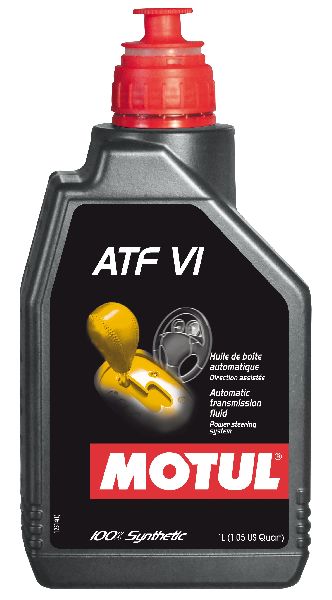
Aftermarket price range: $700-$1200 - Motorcraft MERCON ULV Automatic Transmission Fluid
(OEM #XT-12-QULV)— This is the specific, required fluid for the 10R60/10R80 transmission. Using any other fluid type can cause damage or shifting problems.
Trusted brands: Motorcraft
OEM price range: $15-$25 per quart - Transmission Filter Kit
(OEM #FT215 (verify by VIN))— The filter should always be replaced whenever the transmission pan is removed for service to ensure the new valve body receives clean fluid.
Trusted brands: Motorcraft
OEM price range: $40-$70
Aftermarket price range: $25-$50
Related Codes That Often Appear With This One
- P0751, P0756, P0766, P2700-P2705 — These are all codes for other shift solenoids and clutch components within the same 10-speed transmission. The Ford TSBs list them together because a single root cause—the sticking main control valve body or a related hydraulic issue—can trigger any combination of these codes.
Technical Service Bulletins (TSBs) & Recalls
- TSB 22-2428: The most comprehensive and recent TSB, superseding several older ones. It covers 2020-2023 Explorers and lists P0761. It identifies sticking valves and potential CDF clutch sleeve movement as causes.
- TSB 20-2403: An earlier TSB that specifically mentions harsh shifts and codes like P0761 may be due to sticking valves in the main control valve body.
- TSB 24-2252 / TSB 24-2254 / TSB 24-2176: Other related TSBs that reiterate the same list of DTCs and symptoms across the 10-speed transmission family.
- TSB 20-2354: Specific to the Aviator Hybrid, but addresses similar low-speed hesitation and harsh shifting, pointing to PCM software fixes.
Platform-Specific Known Issues
- Multiple Technical Service Bulletins (TS
Mechanic-Grade Diagnostic Values
- Shift Solenoid Resistance — expected: 12-28 Ohms. Failure: A reading outside of this range, particularly an open (infinite resistance) or short (near zero) circuit.
- Shift Solenoid Current (General 10R family) — expected: Directly proportional; zero current equals zero pressure, max current (~850 mA) equals max pressure.. Failure: The TCM commanding current but a scan tool showing no change in solenoid state or hydraulic pressure.
Scan Tool Commands That Help
- Ford FDRS (Ford Diagnosis and Repair System): PCM – Transmission Accelerated Main Control Break In — This is a primary diagnostic step outlined in TSBs. It rapidly cycles the solenoids to dislodge small amounts of debris that may be causing them to stick. It should be performed before deciding to replace the valve body.
- Ford FDRS or FORScan: Clear Transmission Adaptive Tables — This function must be performed after replacing the main control valve body. It erases the learned shift parameters from the old, faulty unit, allowing the TCM to relearn with the new hardware. Failure to do this will result in continued poor shift quality.
- Ford FDRS: Transmission Strategy Download — When replacing the main control valve body, the new part comes with a 13-digit solenoid body strategy number. This command is used to write the new strategy to the TCM to ensure software compatibility.
Wiring & Ground Locations
- C168A — The main transmission electrical connector, located on the passenger side of the transmission case. It is a large, round, multi-pin connector.. This is the primary interface between the vehicle's wiring harness and all electronic components within the transmission, including all shift solenoids. A visual inspection for corrosion, damage, or loose pins is a valid diagnostic step.
- AWD Module Ground — Under the driver's seat, beneath the carpet. The module is grounded by its mounting nuts to the vehicle body.. While not directly for the transmission, a known issue on 2020-2021 Explorers is a poor ground at the AWD module due to paint on the mounting studs. This can cause a flood of communication errors on the CAN bus, which could potentially manifest with various powertrain-related symptoms and codes. If multiple, seemingly unrelated communication codes are present with P0761, checking this ground is worthwhile.
Real Owner Repair Stories
- Explorer ST Forum (2021 Ford Explorer ST) — Hard shift from 1st to 2nd gear and harsh downshifting when decelerating. The owner described it as a 'jolt'.
❌ Tried (didn't work) Initial diagnosis and waiting for the transmission's adaptive learning to adjust.
✅ What actually fixed it The dealer referenced a TSB (likely TSB 20-2403 or a successor) and performed the 'PCM - Transmission Accelerated Main Control Break In' routine. When this did not fully resolve the issue, they proceeded with replacing the main control valve body, which corrected the condition.
OEM Part Supersession History
L1MZ-7A100-B (10R60), L1MZ-7A100-A (10R80)→LB5Z-7A100-B (or later, verify by VIN)— The main control valve bodies for the 10R family have undergone several revisions to address the issue of sticking valves. Newer part numbers contain design updates to the valves or their internal coatings to be more resistant to contamination and stiction.
Heads up: When replacing the valve body, the new unit will have a 13-digit solenoid strategy number that must be programmed into the TCM using a tool like FDRS. Entering the wrong number or failing to perform this step can result in a P163E code and continued shift problems.
Model Year Variations Within This Range
- 2020: TSB 20-2337 specifically addresses a harsh 7-6 downshift on Explorers with the 10R60 transmission built on or before May 19, 2020. The fix for this specific issue was a more involved internal repair related to a snap ring in the front support assembly, not just a valve body replacement.
Helpful Videos


We Have This Part in Stock


The information in this article is provided for general reference and educational purposes only. Vehicle specifications, procedures, and part compatibility can vary by production date, trim level, and region. Always consult your vehicle's factory service manual and verify part numbers before purchasing or performing repairs. Safety-critical components such as airbags, seat belts, and braking systems should be installed by a qualified professional.
- Ford EXPLORER:
- 🧭 Diagnostic Flowchart
- 🎬 Helpful Videos
- 🛍️ Shop This Part
- What's Unique About the 2020-2023 Ford EXPLORER
- Symptoms You May Notice
- Most Likely Causes
- Rare But Worth Checking
- Diagnosis Steps
- Parts You'll Likely Need
- Related Codes That Often Appear With This One
- Technical Service Bulletins (TSBs) & Recalls
- Platform-Specific Known Issues
- Mechanic-Grade Diagnostic Values
- Scan Tool Commands That Help
- Wiring & Ground Locations
- Real Owner Repair Stories
- OEM Part Supersession History
- Model Year Variations Within This Range
- 🎟️ Get 5% Off