

P0761 on 2018-2023 Ford Mustang: Shift Solenoid 'C' Performance and Fixes
This code indicates a 'Shift Solenoid C Performance/Stuck Off' issue in the 10R80 10-speed automatic transmission. The most common cause is not the solenoid itself, but a faulty main control valve body, a well-documented issue covered by multiple Ford Technical Service Bulletins (TSBs). Expect a professional repair involving valve body replacement, and in some cases, inspection of the CDF clutch drum.
- P0761 on a 2018-2023 Mustang almost always points to a known issue with the 10R80 10-speed transmission.
- The most likely cause is a faulty main control valve body, not just the individual solenoid mentioned in the code definition.
- Check for multiple Ford TSBs related to this issue; your vehicle may be covered under a specific repair protocol.
- This is a complex, professional-level repair. Do not attempt a DIY fix unless you have advanced transmission repair experience.
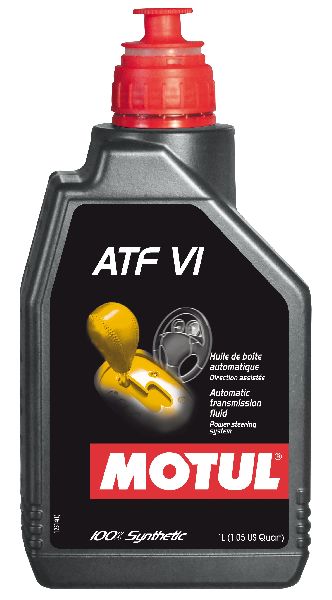
- Always use the specified Motorcraft MERCON ULV fluid for any service on this transmission.
What's Unique About the 2018-2023 Ford MUSTANG
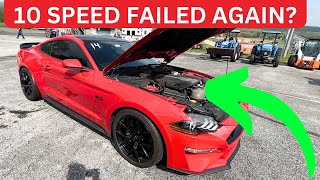
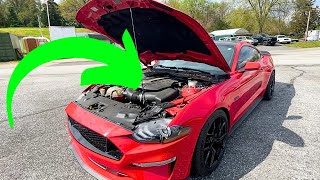
The 2018-2023 Mustang uses the Ford-GM 10R80 10-speed automatic transmission, which is known for shifting irregularities. Ford has issued numerous Technical Service Bulletins (TSBs) for this transmission that list P0761 among a wide array of codes related to harsh or delayed shifting. 🎬 Watch: A breakdown of Ford's harsh shifting TSBs. [TSB 24-2176, TSB 26-2046, TSB 22-2428, TSB 25-2018, TSB 24-2254] These TSBs indicate the problem is often systemic, pointing to two primary culprits: the main control valve body and/or axial movement of the CDF clutch cylinder sleeve, which causes internal hydraulic leaks. This means an isolated solenoid failure is rare; the issue is typically deeper within the transmission's control and hydraulic systems.
Diagnostic Flowchart
Tap your situation to follow the diagnostic path that matches what you're seeing on this vehicle.
Symptoms You May Notice
- Harsh or delayed shifts between gears, especially the 3-4, 4-5, or during downshifts. [23, TSB 24-2176, TSB 26-2046]
- Delayed or violent engagement when shifting from Park to Drive or Reverse. [TSB 25-2018, 28]
- Illuminated Malfunction Indicator Lamp (MIL) or Check Engine Light. [TSB 22-2428]
- Transmission may enter 'limp mode', getting stuck in one gear.
- A feeling of slipping, flaring, or surging during acceleration between shifts.
- Clunking or groaning noises when changing gears or under light throttle.
- Failure to engage a specific gear, while other gears work normally.
- Replacing only the 'C' shift solenoid without addressing the underlying valve body issue. This often results in the code returning.
- Performing a fluid flush and fill expecting it to solve a persistent P0761 code. While good for maintenance, it cannot fix a faulty valve body or a mechanical leak from the CDF drum.
- Ignoring the issue as 'normal' for the 10R80. While some shifting can be quirky, a persistent DTC indicates a real fault that requires repair.
Most Likely Causes
- Faulty Main Control Valve Body 🔴 High Probability → Shop Transmission Valve Body The 10R80 transmission is known for issues like valve body cross-leaks, sticking valves, and internal wear that cause hydraulic pressure loss. Multiple TSBs (e.g., TSB 22-2428, TSB 23-2123) explicitly state that the fix for P0761 and related codes is often to overhaul or replace the main control valve body.
How to confirm: A technician will use a high-level scan tool to monitor solenoid commands vs. actual states and perform hydraulic pressure tests as outlined in Ford's TSBs. The TSB repair procedure itself is diagnostic; if reprogramming doesn't work, the valve body is the next step.
Typical fix: Replacement of the entire main control valve body assembly with an updated part. After installation, the technician must perform a 'Solenoid Body Strategy Data Download' to program the new solenoids' calibration data to the TCM.
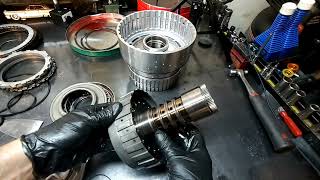
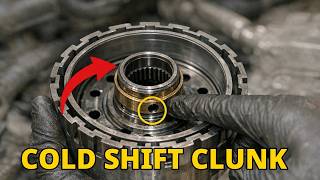
Est. part cost: $700-$1500 - Internal CDF Clutch Drum Failure 🟡 Medium Probability → Shop Transmission Clutch Pressure Plate A widely documented failure point is the sleeve within the CDF (Clutch 'D'/'F') drum, which can move axially (slide out of position), exposing hydraulic passages and causing severe pressure leaks. TSBs like 24-2176 and 22-2428 directly name this as a potential cause for P0761 alongside the valve body. Ford has since released updated drums with a machined lip to prevent the sleeve from moving. 🎬 Watch: See how the CDF drum fails internally.
How to confirm: This is a major internal repair requiring transmission disassembly. Diagnosis is often made when valve body replacement fails to fix the issue or if symptoms are severe. Metal shavings beyond the normal fine powder on the pan magnet can indicate hard part contact from this failure.
Typical fix: Partial transmission overhaul to replace the CDF clutch cylinder assembly. This is a labor-intensive job.
Est. part cost: $400-$800 for the drum assembly, plus seals and gaskets. - Low or Contaminated Transmission Fluid ⚪ Low Probability → Shop Transmission Assembly While not specific to this platform, the 10R80 is extremely sensitive to fluid type and level. Using anything other than Motorcraft MERCON ULV can cause shifting problems and damage.
How to confirm: Check the transmission fluid level and condition. The procedure requires the vehicle to be at operating temperature and checked via a small dipstick near the catalytic converter, which is difficult for DIY. The fluid should be reddish and not smell burnt.
Typical fix: Perform a transmission fluid drain and fill using only Motorcraft ULV fluid. If the fluid is heavily contaminated, a full flush may be recommended by a professional, but this is unlikely to fix an existing P0761 code.
Est. part cost: $150-$300 - Failed Shift Solenoid 'C' ⚪ Low Probability → Shop Transmission Valve Body While the code directly names the solenoid, it's more often a symptom of a larger valve body or hydraulic pressure problem in the 10R80. The solenoids are part of the valve body assembly, and TSBs recommend replacing the entire unit, not just one solenoid.
How to confirm: A technician can command the solenoid on and off with a diagnostic scan tool to check its response. The solenoid's electrical resistance can also be tested with a multimeter, but this doesn't test for mechanical sticking.
Typical fix: Replacement of the individual shift solenoid is possible but not recommended. The standard, and more reliable, repair is a complete valve body replacement.
Est. part cost: $50-$150
Rare But Worth Checking
- Transmission Adaptive Learning Tables: → Shop Transmission Assembly In some cases of harsh shifting without DTCs, or in the early stages, the issue can be related to the adaptive learning strategy. Resetting these tables with a tool like FORScan can sometimes temporarily improve shift quality. However, if a hard fault like P0761 is present, this will not fix it.
- Wiring Harness or Connector Issues: Damage to the wiring between the TCM and the transmission, particularly the main connector at the transmission case, can interrupt the signal to the solenoid. This is less common than internal hydraulic issues but should be inspected for corrosion or damage.
- Faulty Transmission Control Module (TCM): → Shop Transmission Assembly In very rare cases, the TCM driver circuit for the solenoid can fail. This is typically diagnosed only after all other possibilities, including the valve body and internal mechanics, have been eliminated.
Diagnosis Steps
- Check and verify the transmission fluid level and condition. Ensure it is clean, full, and of the correct type (Motorcraft MERCON ULV).
- Use a professional OBD-II scanner to check for any other accompanying transmission codes. Note the entire list of codes present, as they are critical for diagnosis per Ford TSBs.
- Review the symptoms and check against the numerous Ford TSBs (e.g., TSB 24-2176, TSB 22-2428). The TSBs provide a specific diagnostic flow chart.
- As per TSBs, the first step may be to reprogram the PCM/TCM and perform an adaptive learning drive cycle. If symptoms persist, proceed to mechanical inspection.
- With an advanced scan tool, monitor live data for solenoid commands (SSA-F), gear ratio, and transmission line pressure while driving.
- Inspect the transmission wiring harness and connectors for any visible damage, corrosion, or loose connections.
- If symptoms and codes align with TSBs, the next step is typically replacement of the main control valve body. If that fails or symptoms are severe, inspection of the CDF clutch drum is required.
Parts You'll Likely Need
- Transmission Main Control Valve Body Assembly
(OEM #JL3Z-7A100-C (replaces JL3Z-7A100-A, JL3Z-7A100-B))— This is the most frequent root cause of P0761 and related shifting issues on the 10R80 transmission, as documented in multiple Ford TSBs. The replacement part is a complete assembly with all solenoids.
Trusted brands: Motorcraft
OEM price range: $800-$1500
Aftermarket price range: $700-$1200 - Motorcraft MERCON ULV Automatic Transmission Fluid
(OEM #XT-12-QULV)— This is the only specified fluid for the 10R80 transmission. A valve body replacement requires draining and refilling approximately 10-11 quarts.
Trusted brands: Motorcraft
OEM price range: $15-$25 per quart - Transmission Filter
(OEM #FT215)— A new filter should always be installed when the transmission pan is removed for service on the valve body.
Trusted brands: Motorcraft
OEM price range: $30-$50
Aftermarket price range: $20-$40 - CDF Clutch Drum Assembly (Updated)
(OEM #JL3Z-7H351-B)— If the valve body replacement does not resolve the issue, the next most likely cause is a failure of the CDF drum due to a shifted internal sleeve. This is the updated part number designed to prevent this failure.
Trusted brands: Ford
OEM price range: $400-$800
Related Codes That Often Appear With This One
- P0751, P0756, P2700-P2708, etc. — Ford TSBs group P0761 with a large family of other shift solenoid, clutch, and gear ratio codes. [TSB 24-2176, TSB 26-2046, TSB 22-2428, TSB 25-2018, TSB 24-2254] Their appearance together strongly points to a common cause, like the main control valve body or CDF drum, rather than multiple individual component failures.
Technical Service Bulletins (TSBs) & Recalls
- TSB 24-2176: Supersedes earlier versions, lists P0761 for harsh/delayed shifts on 2021-2023 models and points to the valve body or CDF clutch cylinder sleeve as potential causes.
- TSB 22-2428: A widely referenced bulletin for 2017-2023 vehicles that details the diagnostic procedure for a long list of codes including P0761, often leading to valve body or CDF drum repair.
- TSB 23-2123: Specifically addresses harsh/delayed shifts on 2017-2023 models and instructs technicians to either reprogram the PCM/TCM or overhaul the main control valve body.
- TSB 24-2046 / TSB 26-2046: Earlier bulletins, now superseded, that also grouped P0761 with shift quality complaints and pointed towards valve body and software issues.
Platform-Specific Known Issues
- Multiple Technical Service Bulletins (TSBs): Ford has released a series of superseded TSBs for the 10R80 addressing harsh/delayed shifts and engagement, which list P0761 as a potential DTC. These include TSB 24-2176, TSB 22-2428, and TSB 23-2123.
- Dual Common Failure Points: The TSBs identify two primary causes for these issues: sticking valves in the main control valve body, or axial movement of the CDF clutch cylinder sleeve causing hydraulic leaks. The prescribed fix depends on diagnostic findings and may involve valve body replacement or a more intensive transmission teardown to replace the CDF drum.
- Adaptive Learning Reset: Any major repair, including valve body replacement or PCM reprogramming, requires the transmission's adaptive learning tables to be cleared. The vehicle may exhibit firm or unusual shifting for several days afterward as the computer relearns the transmission's parameters.
Mechanic-Grade Diagnostic Values
- Shift Solenoid (A-F) Resistance — expected: ~5.0 - 5.4 Ohms. Failure: A reading of 0 Ohms (short) or infinite resistance (open circuit).
- Line Pressure at Idle — expected: 72-75 PSI. Failure: Significantly lower pressure can indicate internal leaks from sources like the CDF drum or valve body.
Hidden / Shadow Codes Worth Checking
- Mode $06 Data (e.g., TID $51, $53): While not a hidden code, Mode $06 provides raw test data from the PCM's non-continuous monitors before a DTC is set. For transmissions, it can show test failures or marginal passes for solenoid performance that point to an emerging issue. For Ford, TID $51 or $53 is often related to misfire counts, but similar test IDs exist for transmission components. (see via An advanced scan tool with Mode $06 capability is required. The specific Test ID (TID) and Component ID (CID) for shift solenoids must be referenced from Ford's service information for the specific vehicle year.)
Scan Tool Commands That Help
- Ford IDS/FDRS or FORScan: Solenoid Body Strategy Data Download — This is a mandatory procedure after replacing the main control valve body. The scan tool downloads the calibration file for the specific solenoids in the new valve body to the TCM. Failure to do this will result in poor shifting and may set other DTCs.
- Ford IDS/FDRS or FORScan: Clear Transmission Adaptive Tables — This procedure should be performed after any major transmission repair, including valve body or CDF drum replacement. It erases the learned shift patterns, forcing the TCM to start a new learning process with the new components.
- Ford IDS/FDRS or FORScan: Adaptive Learning Drive Cycle — After clearing the adaptive tables, a specific drive cycle must be performed to allow the TCM to learn the clutch fill times and shift points. This involves a sequence of light-throttle accelerations through all gears and specific shifting patterns.
Wiring & Ground Locations
- G104 — On the left front (driver's side) fender apron, often located behind or near the battery.. This is a primary ground point for the PCM and the Data Link Connector (DLC). A poor connection here can cause a wide range of erratic electronic issues, including faulty sensor readings and incorrect commands from the PCM/TCM.
- Engine to Frame Ground Strap — Typically runs from the engine block (often near a motor mount) to the vehicle's frame/chassis on the driver's side.. This is a critical ground path for the entire powertrain. If this strap is corroded or broken, the electrical system may seek alternative ground paths, leading to unpredictable behavior in modules like the PCM/TCM.
- G201 — Service information suggests it is on the left-hand side kick panel, but some sources state it is on the passenger side kick panel, directly below or near the PCM.. This ground is specifically mentioned as a ground for the PCM. A fault at this location could directly impact the PCM/TCM's operation and its ability to control the transmission solenoids.
Real Owner Repair Stories
- Reddit user in r/f150 (2018 Ford F-150 with 80k miles) — Delayed engagement from Park to Drive/Reverse (2-3 seconds), followed by very hard shifts into 3rd gear, feeling like being rear-ended.
❌ Tried (didn't work) Initially, the dealer replaced the CDF drum, which fixed the engagement delay. However, the hard shifting into 3rd gear appeared 900km later.
✅ What actually fixed it The dealer then replaced the entire valve body assembly. The hard shifting persisted for a short time during the adaptive learning phase but then resolved. - Mustang6G.com forum user (2018 Mustang GT (mileage not specified)) — Car would not move, threw codes, and had to be towed.
❌ Tried (didn't work) The dealer first tried to clean and inspect the original valve body, but the issue remained.
✅ What actually fixed it The dealer replaced the main control valve body assembly under warranty, which resolved the problem. The user noted the transmission was in an 'adaptive learning' phase afterward. - Reddit user in r/f150 (2018 F-150) — P0761 and P2702 codes present.
❌ Tried (didn't work) The owner replaced the CDF drum with the updated part after finding the common sleeve failure. They also inspected the valve body, solenoids, and valves, and performed an air check, all of which seemed fine. The codes and symptoms persisted.
✅ What actually fixed it This story is an example of an unresolved case where common fixes failed. Another technician suggested the cause could be worn splines in the main drum where the F-clutch engages or damaged Teflon seals on the shaft that goes into the CDF drum, which can be damaged when the CDF bushing moves. This highlights that even after the two most common fixes, deeper internal mechanical wear can be the root cause.
OEM Part Supersession History
HL3Z-7H351-A, JL3Z-7H351-A→JL3Z-7H351-B— The original CDF clutch drum assembly was prone to the internal bushing/sleeve walking out of position, causing a major hydraulic leak. The updated JL3Z-7H351-B part features a redesigned drum with a machined lip or wall that physically prevents the sleeve from migrating.JL3Z-7A100-A, JL3Z-7A100-B→JL3Z-7A100-C— Revisions to the main control valve body assembly to address issues with sticking valves, cross-leaks, and solenoid performance.
Heads up: When replacing, it is critical to use the part number appropriate for the vehicle's VIN and to perform the Solenoid Body Strategy Data Download to ensure the TCM has the correct calibration for the new part.
Model Year Variations Within This Range
- 2018 - Mid-2022: Vehicles produced before approximately August-December 2022 are highly susceptible to the original CDF drum failure where the sleeve can move. Models produced after this date are more likely to have the updated drum (part JL3Z-7H351-B) from the factory, reducing the probability of this specific failure, though not eliminating other 10R80 issues.
- 2017-2020 vs 2021+: Technicians have noted that the software and shift strategies differ between earlier and later models. Earlier models are reportedly more aggressive with gear skipping for fuel economy, while 2021 and newer models tend to have more consistent sequential shifting logic.
Helpful Videos



We Have This Part in Stock


The information in this article is provided for general reference and educational purposes only. Vehicle specifications, procedures, and part compatibility can vary by production date, trim level, and region. Always consult your vehicle's factory service manual and verify part numbers before purchasing or performing repairs. Safety-critical components such as airbags, seat belts, and braking systems should be installed by a qualified professional.
- Ford MUSTANG:
- 🧭 Diagnostic Flowchart
- 🎬 Helpful Videos
- 🛍️ Shop This Part
- What's Unique About the 2018-2023 Ford MUSTANG
- Symptoms You May Notice
- Most Likely Causes
- Rare But Worth Checking
- Diagnosis Steps
- Parts You'll Likely Need
- Related Codes That Often Appear With This One
- Technical Service Bulletins (TSBs) & Recalls
- Platform-Specific Known Issues
- Mechanic-Grade Diagnostic Values
- Hidden / Shadow Codes Worth Checking
- Scan Tool Commands That Help
- Wiring & Ground Locations
- Real Owner Repair Stories
- OEM Part Supersession History
- Model Year Variations Within This Range
- 🎟️ Get 5% Off