

P0761 on 2001-2005 GMC Sierra: Shift Solenoid 'C' Causes and Fixes
On a 2001-2005 GMC Sierra, code P0761 indicates that Shift Solenoid 'C' is stuck off. For the common 4L60-E transmission, this code points to a problem with the 2-3 Shift Solenoid ('B'). This is most often caused by low or dirty transmission fluid, or a failed shift solenoid inside the transmission pan. Start by checking the fluid; if it's healthy, the solenoid itself is the next likely culprit.
- P0761 means Shift Solenoid 'C' is stuck off, which will cause serious shifting problems.
- Always check the transmission fluid level and condition first; low or dirty fluid is a very common cause.
- The most likely failed part is the shift solenoid itself, which is located inside the transmission oil pan and is replaceable as an individual component on these models.
- This is not a beginner-friendly DIY repair. It requires draining fluid and removing the transmission pan, and is best left to someone with mechanical experience.
- Do not immediately assume the TCM is bad; it is the least likely cause for this specific code.
What's Unique About the 2001-2005 Gmc SIERRA
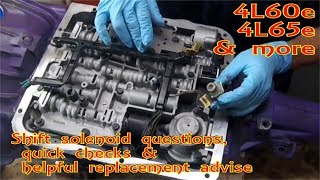
The 2001-2005 GMC Sierra (GMT800 platform) primarily used the 4L60-E or the heavy-duty 4L80-E automatic transmission. A critical distinction for the very common 4L60-E is that it does *not* have a designated 'Shift Solenoid C'. It has a 1-2 Solenoid (A) and a 2-3 Solenoid (B). A generic P0761 code on these trucks almost always points to a performance fault in the 2-3 Shift Solenoid ('B') circuit. Unlike later models that integrate solenoids into a complex control module (TEHCM), the solenoids in these transmissions are individual components that can be replaced separately after removing the transmission pan.
Diagnostic Flowchart
Tap your situation to follow the diagnostic path that matches what you're seeing on this vehicle.
Symptoms You May Notice
- Check Engine Light is on
- Transmission stuck in one gear (limp mode), often 2nd or 3rd gear
- Harsh, erratic, or delayed shifting, especially the 2-3 shift.
- Failure to engage Drive or Reverse.
- Transmission slipping or loss of power during acceleration.
- Increased fuel consumption.
- Replacing the Transmission Control Module (TCM) first. The TCM is rarely the cause of a single solenoid performance code; the issue is almost always hydraulic or a component-level electrical fault within the transmission.
Most Likely Causes
- Low or Dirty Transmission Fluid 🔴 High Probability → Shop Transmission Assembly Over time, fluid breaks down and becomes contaminated with clutch material and metal shavings. This debris can clog the fine passages in the valve body or cause solenoids to stick.
How to confirm: Check the transmission fluid level and condition using the dipstick. The fluid should be at the correct level, bright red (if using older DEXRON-III) or dark red (if using modern DEXRON-VI), and free of debris or a burnt smell.
Typical fix: Perform a transmission fluid and filter change using the correct fluid type, DEXRON-VI, which is fully backward compatible. This is the best first step before replacing parts.
Est. part cost: $50-$100 - Failed 2-3 Shift Solenoid (Interpreted as 'C') 🔴 High Probability → Shop Transmission Valve Body Solenoids are electro-mechanical parts submerged in hot fluid that can fail electrically (coil burns out) or mechanically (valve sticks) over many miles and heat cycles.
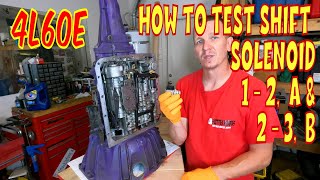
How to confirm: After dropping the transmission pan, test the solenoid's resistance with a multimeter. It should be within the manufacturer's specification, which is typically 20-40 ohms for a 4L60-E shift solenoid. A capable scan tool can also be used to command the solenoid on and off to listen for a click.
Typical fix: Replace the faulty 2-3 shift solenoid (Solenoid 'B'). The 1-2 and 2-3 solenoids are identical and often replaced as a pair.
Est. part cost: $40-$90 - Internal Wiring or Connector Issue 🟡 Medium Probability The main transmission connector on the outside of the case is exposed to the elements, and the internal harness is constantly bathed in hot fluid. Both can become brittle, corroded, or damaged, causing an intermittent open or short in the solenoid circuit. Fluid can also leak through the main pass-through connector, contaminating the pins.
How to confirm: Inspect the external connector for corrosion or pushed-out pins. Check for continuity on the solenoid's circuit from the main connector to the solenoid itself. Visually inspect the internal harness for brittle or broken wires once the pan is removed.
Typical fix: Repair the damaged section of wiring or replace the internal transmission wiring harness, which often includes the pass-through connector.
Est. part cost: $50-$150 - Transmission Valve Body Issue ⚪ Low Probability → Shop Transmission Valve Body Debris from normal wear can clog small passages or cause valves to stick. A known issue on high-mileage 4L60-E transmissions is wear in the valve body bores, which can cause hydraulic leaks that prevent solenoids from actuating properly, even if the solenoid itself is good.
How to confirm: This is diagnosed after confirming the fluid and solenoid are good. It requires removing and disassembling the valve body for inspection of check balls and valve bores, which is a complex task.
Typical fix: The valve body may need to be professionally cleaned. In cases of excessive wear, aftermarket kits (e.g., from Sonnax) can be used to ream bores and install oversized valves or O-ringed end plugs to restore hydraulic integrity. In severe cases, the valve body is replaced.
Est. part cost: $250-$600
Rare But Worth Checking
- Faulty Transmission Control Module (TCM): → Shop Transmission Assembly A TCM failure is rare and should only be considered after all other possibilities (fluid, solenoid, wiring, valve body) have been thoroughly ruled out. A failing TCM usually sets multiple, often erratic codes, not just a single solenoid code.
Diagnosis Steps
- Check the transmission fluid level and condition. If it is low, dark, or smells burnt, address this first.
- Use an OBD-II scanner to confirm P0761 and check for any other transmission-related codes.
- With a capable scan tool, command the 2-3 Shift Solenoid on and off while listening for an audible click from the transmission pan.
- Inspect the main transmission wiring harness connector for damage, corrosion, or fluid intrusion.
- Drain the transmission fluid and remove the pan. Inspect the pan magnet for excessive metal debris. A metallic paste indicates a serious mechanical failure that a solenoid replacement will not fix.
- Locate the 2-3 Shift Solenoid ('B') on the valve body. Disconnect it and test its resistance with a multimeter.
- Compare the reading to the manufacturer's specification. For the 4L60-E, this should be between 20 and 40 ohms. A reading of 21-22 ohms is common for a good solenoid.
- If the solenoid tests good, inspect its wiring harness inside the pan for breaks or damage.
- If the solenoid and wiring are good, the issue may be in the valve body or, rarely, the TCM.
Parts You'll Likely Need
- Transmission Shift Solenoid (1-2 or 2-3)
(OEM #ACDelco 24230298)— This solenoid (used for both 'A' and 'B' positions in the 4L60-E) is the component directly implicated by the code and is a common failure point.
Trusted brands: ACDelco, Bosch, Rostra
OEM price range: $60-$110
Aftermarket price range: $30-$70 - Transmission Filter and Pan Gasket Kit
(OEM #ACDelco 24208576 (for 4L60-E shallow pan))— This is required for any repair that involves dropping the transmission pan. It's essential to replace the filter and gasket at the same time.
Trusted brands: ACDelco, Wix, ATP
OEM price range: $30-$50
Aftermarket price range: $15-$30 - Automatic Transmission Fluid (DEXRON-VI)
(OEM #ACDelco 10-9395 (DEXRON-VI))— The transmission must be refilled with fresh, correct-specification fluid after the repair. DEXRON-VI is the current GM specification and is fully backward-compatible with older DEXRON-III fluids.
Trusted brands: ACDelco DEXRON, Valvoline MaxLife, Castrol Transmax
OEM price range: $8-$12 per quart
Aftermarket price range: $6-$10 per quart
Related Codes That Often Appear With This One
- P0751 — This is a code for Shift Solenoid 'A'. Seeing multiple solenoid codes together can point to a widespread electrical or hydraulic issue, like bad fluid, a failing internal harness, or a TCM problem.
- P0756 — This is a code for Shift Solenoid 'B'. Like P0751, its presence alongside P0761 suggests a problem affecting more than just one solenoid.
- P0894 — This code means 'Transmission Component Slipping'. It can be a direct result of the P0761 fault, as the inability to command a gear correctly can cause clutches to slip.
- P0700 — This is a general Transmission Control System Malfunction code. It often appears with more specific codes like P0761 to indicate a fault has been registered by the transmission controller.
Technical Service Bulletins (TSBs) & Recalls
- PIP4379K: Mentions P0761 as one of several DTCs that can be set when experiencing issues like no reverse engagement or a range inhibit. It points towards potential hydraulic circuit issues or a cracked internal filter.
Platform-Specific Known Issues
- Per GM Technical Service Bulletin #PIP4379K, code P0761 is part of a group of DTCs that can be set due to various internal hydraulic issues, sometimes manifesting as a 'no reverse' condition or a range inhibit after a fluid change or long period of storage. The TSB advises checking fluid level carefully and inspecting the internal filter for cracks before replacing hard parts.
Mechanic-Grade Diagnostic Values
- 1-2 ('A') and 2-3 ('B') Shift Solenoid Resistance — expected: 20 to 40 ohms at 68°F (20°C). Readings in the low 20s (e.g., 21.5 ohms) are very common for a healthy solenoid.. Failure: A reading significantly outside the 20-40 ohm range, or an open/infinite resistance, indicates a failed solenoid coil.
- Pressure Control (EPC) Solenoid Resistance — expected: 3.5 to 8.0 ohms at 68°F (20°C).. Failure: A reading outside this range indicates a fault in the EPC solenoid, which can cause widespread shifting issues that might be misdiagnosed as a single shift solenoid problem.
- Voltage at Transmission Connector Pin E (Ignition Power) — expected: 11.8 - 12.5 V with Key On, Engine Off.. Failure: Low or no voltage indicates a problem with the power supply to the transmission solenoids, likely a fuse or wiring issue upstream of the transmission.
Scan Tool Commands That Help
- GM Tech 2: Solenoid Actuator Test / Functional Test — This is a key diagnostic step to use before dropping the transmission pan. The Tech 2 can command individual solenoids (like the 2-3 shift solenoid) on and off. The mechanic should listen for an audible 'click' from the transmission pan, which confirms the solenoid's coil and internal wiring are functional. No click points strongly to a failed solenoid or wiring harness issue.
Wiring & Ground Locations
- Main Transmission Connector (20-pin) — On the passenger side of the transmission case, where the main vehicle harness connects.. This is the primary point for all electrical testing without dropping the pan. Pin E (Pink wire) is the 12V ignition power feed for the shift solenoids. Pin B (Light Green wire) is the ground-side control wire from the PCM for the 2-3 Shift Solenoid ('B'). Testing for power at Pin E and continuity/control at Pin B can isolate a wiring issue from a solenoid failure.
- G103 - Engine Block Ground — On the right rear of the engine block.. A poor engine-to-chassis ground can create floating voltages and erratic behavior in all electronically controlled components, including the PCM and transmission solenoids. While not a direct cause, a corroded G103 can lead to intermittent and difficult-to-diagnose transmission codes.
- Firewall Ground Straps — Braided ground straps connecting the rear of the cylinder heads to the vehicle's firewall.. These are critical grounds for the entire powertrain control system. On GMT800 trucks, these straps are known to fray or corrode, leading to a host of electrical gremlins, including erratic transmission behavior and seemingly random codes.
Real Owner Repair Stories
- YouTube Channel 'Scotties Hobbies' (GM Truck/SUV with 4L60-E (specific vehicle not named, but transmission is the focus)) — Transmission was not shifting out of second gear.
❌ Tried (didn't work) Initial assumption was a failed shift solenoid.
✅ What actually fixed it The shift solenoids tested good (21.7 ohms). The root cause was found to be worn 3-4 clutch packs, which failed due to a leaking check ball in the accumulator assembly on the side of the valve body. This highlights a mechanical/hydraulic failure causing symptoms that mimic an electrical solenoid fault.
When the Usual Fixes Don't Work
- While a failed 2-3 shift solenoid is a very common cause for P0761, it is critical for technicians to understand that this code can also be triggered by purely hydraulic issues that have no electrical component. A documented repair case showed that after confirming the solenoids were electrically sound (testing within the 20-40 ohm specification), the true fault was found to be worn 3-4 clutch packs. The clutch failure itself was a secondary result of a leaking check ball in the accumulator housing. This demonstrates that the PCM can misinterpret a hydraulic pressure loss (caused by a leak or worn clutches) as a failure of the solenoid to actuate, leading to a misdiagnosis if the technician only replaces the solenoid without further inspection.
OEM Part Supersession History
10478131, 24236521→ACDelco 24230298— Part consolidation and design updates over the long production run of the 4L60-E family.
Heads up: The ACDelco 24230298 is a direct replacement for both the 1-2 ('A') and 2-3 ('B') shift solenoids on most 4L60-E transmissions from 1993 and up, making it a universal service part for this application.
Model Year Variations Within This Range
- 1998-2005: Starting in 1998, the 4L60-E switched to a two-piece case with a bolt-on bellhousing, replacing the earlier one-piece case design. This doesn't affect the P0761 diagnosis directly but is a key identifier for transmission interchange.
- 2000-2005: Beginning in 2000, 4L60-E transmissions paired with V8 engines received a deeper bellhousing and a longer 300mm input shaft to accommodate a larger, more robust torque converter. This change is important for sourcing a correct replacement transmission but does not alter the internal solenoids or P0761 diagnosis.
- 2001-2005 (with 6.0L Engine): Some trucks, particularly Denali models or those with the 6.0L V8, were equipped with the heavier-duty 4L65-E transmission. While externally identical to the 4L60-E, it features stronger internals like five-pinion planetaries. However, it uses the same shift solenoids (ACDelco 24230298) and diagnostic procedures for P0761.
Helpful Videos

We Have This Part in Stock


The information in this article is provided for general reference and educational purposes only. Vehicle specifications, procedures, and part compatibility can vary by production date, trim level, and region. Always consult your vehicle's factory service manual and verify part numbers before purchasing or performing repairs. Safety-critical components such as airbags, seat belts, and braking systems should be installed by a qualified professional.
- Gmc SIERRA:
- 🧭 Diagnostic Flowchart
- 🎬 Helpful Videos
- 🛍️ Shop This Part
- What's Unique About the 2001-2005 Gmc SIERRA
- Symptoms You May Notice
- Most Likely Causes
- Rare But Worth Checking
- Diagnosis Steps
- Parts You'll Likely Need
- Related Codes That Often Appear With This One
- Technical Service Bulletins (TSBs) & Recalls
- Platform-Specific Known Issues
- Mechanic-Grade Diagnostic Values
- Scan Tool Commands That Help
- Wiring & Ground Locations
- Real Owner Repair Stories
- When the Usual Fixes Don't Work
- OEM Part Supersession History
- Model Year Variations Within This Range
- 🎟️ Get 5% Off