

P0761 on 2013-2016 GMC Sierra Denali: Shift Solenoid 'C' Performance Fixes
On a 2013-2016 GMC Sierra Denali, code P0761 usually points to a problem with Shift Solenoid 'C' or debris inside the transmission valve body. The most common fix is replacing the entire solenoid pack (known as the TEHCM) and cleaning the valve body. This is a job for a professional, as it requires dropping the transmission pan, handling delicate components, and programming the new module to the vehicle's VIN.
- P0761 on a 2013-2016 Sierra Denali is a serious transmission code indicating a problem with Shift Solenoid 'C'.
- Do not drive the vehicle, as it may get stuck in gear or stop moving entirely.
- The most common causes are a failed solenoid or debris clogging the transmission's valve body, an issue specifically highlighted in GM service bulletins. [Bulletin #PIP5100A]
- This is not a DIY-friendly repair. It requires internal transmission work and should be handled by a qualified mechanic.
- Ensure only OEM-spec parts are used, especially transmission filters, to avoid introducing debris that can cause this fault. [Bulletin #PIP5100A]
What's Unique About the 2013-2016 Gmc SIERRA DENALI
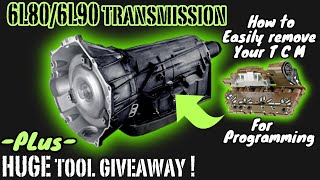
This issue spans two generations of the Sierra Denali: the end of the GMT900 platform (2013) and the start of the K2XX platform (2014-2016). Both commonly use the 6L80 or 6L90 automatic transmission, which integrates the TCM and solenoids into a single unit called the TEHCM (Transmission Electro-Hydraulic Control Module). This design makes it sensitive to fluid quality and internal debris. Manufacturer technical service bulletins specifically mention that debris, sometimes from aftermarket spin-on filters, can clog passages in the valve body, leading directly to this code. [Bulletin #PIP5100A] A failed TEHCM is a very common cause for this code on this platform and requires special programming tools to replace.
Diagnostic Flowchart
Tap your situation to follow the diagnostic path that matches what you're seeing on this vehicle.
Generation note: The 2013 model year is the last of the second-generation (GMT900) Sierra, while 2014-2016 models are the third generation (K2XX). Both generations in the Denali trim often used the 6L80/6L90 transmission, and the causes for P0761 are largely consistent across these years. The primary repair, involving the TEHCM and valve body, is similar for both. One notable difference is that 2014 and newer models have a transmission thermostat that keeps fluid temperatures higher, which some believe contributes to earlier torque converter and fluid-related failures.
Symptoms You May Notice
- Delayed or harsh shifting, particularly the 2-3, 3-4, or 4-5 shifts.
- Transmission stuck in one gear (limp mode), often 2nd or 3rd.
- Vehicle will not move in forward or reverse. [Bulletin #PIP5100A, Bulletin #PIP5100]
- No engagement when shifting into reverse. [Bulletin #PIP4379M]
- Check Engine Light is on.
- Transmission warning light may be illuminated.
- Increased fuel consumption.
- Transmission overheating.
- Replacing only a single shift solenoid. On the 6L80/6L90, solenoids are part of the non-serviceable TEHCM assembly and cannot be replaced individually.
- Replacing the TEHCM without inspecting the valve body for debris. If contamination is the root cause, the new TEHCM can quickly fail or the problem will persist.
- Assuming the entire transmission needs to be rebuilt. While possible, the TEHCM and valve body are far more common failure points for this specific code.
Most Likely Causes
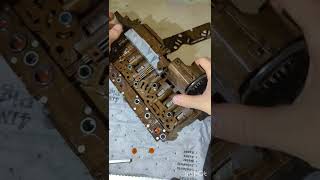
- Failed Shift Solenoid Pack (TEHCM) 🔴 High Probability → Shop Transmission Valve Body The TEHCM, which combines the TCM and all shift solenoids, is a known failure point. Internal pressure switches can crack or delaminate, or the circuit board 🎬 See how to reseal and repair failed TEHCM pressure switches. can fail from heat and contaminated fluid, often triggering multiple solenoid codes at once.
How to confirm: A technician can use a high-end scan tool to perform an actuator test on Solenoid 'C'. However, if multiple solenoid or pressure switch codes (like P0872, P0877, P0989) are present with P0761, it strongly points to a failed TEHCM assembly.
Typical fix: Replace the entire TEHCM assembly. This part must be programmed to the vehicle's VIN after installation.
Est. part cost: $300-$600 - Debris in Transmission Valve Body 🔴 High Probability → Shop Transmission Valve Body Multiple GM Technical Service Bulletins (TSBs) point directly to debris blocking orifices in the valve body separator plate. One TSB specifically calls out debris from aftermarket spin-on filters as a cause. [Bulletin #PIP5100A] Normal wear can also release clutch material or fine metal shavings that clog passages.
How to confirm: A technician must drop the transmission pan and visually inspect the valve body and separator plate for blockages or debris. The fluid may contain visible metal particles or have a burnt smell.
Typical fix: Clean the valve body and its passages. The separator plate may need to be replaced if it's damaged or cannot be cleaned effectively. This is typically done at the same time as TEHCM replacement.
Est. part cost: $50-$150 - Low or Dirty Transmission Fluid 🟡 Medium Probability → Shop Transmission Assembly The 6L80/6L90 is sensitive to fluid level and condition. Low fluid can cause pressure issues and overheating, while dirty fluid contains abrasive particles that jam solenoids and clog passages.
How to confirm: Check the transmission fluid level and condition. The fluid should be at the correct level, red in color, and not smell burnt. This procedure must be done with the vehicle level and the transmission at a specific operating temperature.
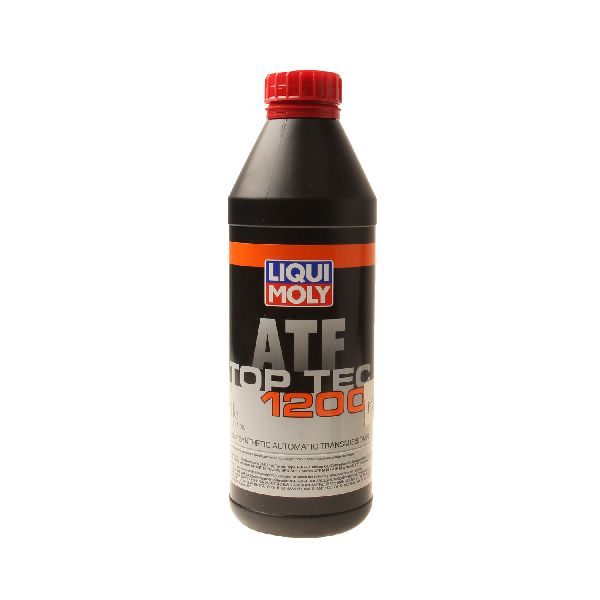
Typical fix: Perform a transmission fluid and filter change using only DEXRON-VI fluid. If the fluid is very dirty or contains metal shavings, a more significant internal problem is likely.
Est. part cost: $100-$250 - Wiring or Connector Issue ⚪ Low Probability The main transmission wiring harness connector can become contaminated with fluid if the internal pass-through seal fails. The external harness is also exposed to road debris and corrosion.
How to confirm: Visually inspect the main wiring harness connector at the transmission for damage, corrosion, or loose pins. Check for any signs of fluid intrusion.
Typical fix: Repair the damaged section of the harness or clean/replace the connector. If fluid is found in the connector, the internal harness/pass-through seal needs replacement.
Est. part cost: $20-$100
Rare But Worth Checking
- Faulty Transmission Control Module (TCM): → Shop Transmission Assembly This is a rare cause. On these trucks, the TCM is integrated with the valve body solenoids as a single unit (the TEHCM). A TCM-specific failure is possible but presents as a TEHCM failure, requiring replacement of the entire unit. It should only be considered after all other possibilities have been ruled out.
Diagnosis Steps
- Check the transmission fluid level and condition. This must be done at operating temperature (around 167°F - 185°F) with the engine running and the vehicle level. If it's low, top it off. If it's dark, burnt, or contains debris, a fluid and filter change is a starting point, but further diagnosis is needed.
- Use a professional OBD-II scanner to check for other transmission-related codes. Note any codes that appear alongside P0761, as multiple solenoid codes strongly suggest a TEHCM failure.
- Inspect the transmission's external wiring harness and the main round connector for any visible damage, corrosion, or fluid intrusion.
- If the fluid and wiring are okay, the next step is to drop the transmission pan to access the internal components.
- Visually inspect the valve body and separator plate for sludge or debris, paying close attention to the orifices mentioned in GM TSBs. [Bulletin #PIP5100A]
- Given the integrated design, testing an individual solenoid's resistance is not practical while installed. Diagnosis shifts to inspecting for contamination and assessing the health of the TEHCM via scan tool data.
- If debris is found or the TEHCM is suspected, the standard repair is to replace the TEHCM assembly and the valve body separator plate, and thoroughly clean all valve body passages.
- After repairs, install a new filter and pan gasket. Fill with new ACDelco DEXRON-VI fluid.
- CRITICAL: Program the new TEHCM to the vehicle's VIN using a J2534 pass-thru device and GM's Service Programming System (SPS).
- Perform a transmission service fast learn adaptation procedure with the scan tool, then conduct a road test to ensure the shifting issue is resolved.
Parts You'll Likely Need
- Transmission Solenoid Pack (TEHCM)
(OEM #24256861 (Verify by VIN, multiple versions exist))— This is the most likely failed component, containing both the TCM and all shift solenoids. It is a non-serviceable unit. Part number varies by year and specific model, so VIN verification is mandatory.
Trusted brands: ACDelco (GM Genuine), Sonnax (Remanufactured)
OEM price range: $450-$650
Aftermarket price range: $300-$500 - Transmission Filter and Pan Gasket Kit
(OEM #24236933 (Filter Kit, verify by VIN))— This must be replaced anytime the transmission pan is removed for service.
Related Codes That Often Appear With This One
- P0751 — This code is for Shift Solenoid 'A' Performance. It often appears with P0761 because the underlying cause, like a failing TEHCM, dirty fluid, or debris in the valve body, affects multiple solenoids. [Bulletin #PIE0371A, 32]
- P0756 — This code is for Shift Solenoid 'B' Performance. Like P0751, it's frequently seen with P0761 due to shared hydraulic circuits and common failure modes like a faulty TEHCM or contamination. [Bulletin #PIE0371A, 32]
- P0700 — This is a general Transmission Control System Malfunction code. It is set by the Engine Control Module (ECM) to signal that the Transmission Control Module (TCM/TEHCM) has stored a fault, such as P0761.
Technical Service Bulletins (TSBs) & Recalls
- PIE0371A: Investigates Check Engine Lights, delayed shifts, or being stuck in gear with DTCs including P0761.
- PIP4379M: Addresses no reverse engagement or range inhibit with a list of DTCs including P0761.
- PIP5100A: Points to blockage in the valve body separator plate from aftermarket spin-on filters as a cause for no-move conditions and a list of DTCs including P0761.
Platform-Specific Known Issues
- A known issue documented in TSB #PIP5100A is that aftermarket spin-on transmission filters can break down and release debris that clogs the valve body separator plate orifices, causing codes like P0761 and no-move conditions. [Bulletin #PIP5100A]
- TSB #PIE0371A also acknowledges conditions of delayed shifts or being stuck in gear associated with P0761 on these vehicles. [Bulletin #PIE0371A]
- Owner forums frequently discuss the failure of the integrated TEHCM module as the root cause for P0761 and related codes, often after experiencing harsh shifting or limp mode. The requirement for professional programming is a common point of frustration for DIY-ers.
Mechanic-Grade Diagnostic Values
- Shift Solenoid (On/Off type) resistance — expected: 20-40 Ohms. Failure: A reading outside this range indicates a failed solenoid, requiring TEHCM replacement.
- Pressure Control Solenoid (PWM type) resistance — expected: 3-8 Ohms. Failure: A reading outside this range indicates a failed solenoid, requiring TEHCM replacement.
- Shift Solenoid (On/Off type) current draw — expected: 0.3-0.7 Amps at 12V. Failure: Incorrect amperage suggests a failed solenoid.
- Pressure Control Solenoid (PWM type) current draw — expected: 1.5-4.0 Amps at 12V. Failure: Incorrect amperage suggests a failed solenoid. This test should be performed quickly to avoid damage.
- Line Pressure at Idle (in gear) — expected: Approximately 45-80 PSI. Failure: Significantly lower pressure can indicate pump wear, valve body issues, or major leaks.
- TEHCM Solenoid Supply Voltage — expected: 8.3-9.3 Volts. Failure: Incorrect voltage from the TCM section of the TEHCM can cause erratic solenoid operation.
Scan Tool Commands That Help
- GDS2 (GM Diagnostic Software): Transmission Adaptive Values Learn (also called Service Fast Learn) — This is a mandatory procedure after replacing the TEHCM or valve body. It performs a stationary learn of clutch fill volumes and pressures to ensure proper shift quality. Failure to perform this will result in poor shifting.
- GDS2 (or other high-end scanner): Solenoid Test / Output Controls — Used to command a specific solenoid (e.g., Shift Solenoid 'C') on and off while monitoring system response. This helps isolate whether the fault is with the solenoid itself or the control circuit.
- GDS2: Solenoid Automated Cleaning Process — If a solenoid performance code is present, this function cycles all solenoids to attempt to flush out minor debris before condemning the TEHCM.
Wiring & Ground Locations
- G218 — Under the driver's side dashboard, behind the kick panel, near the floor.. This is a major body ground point for multiple modules. While not directly for the TCM, a poor connection at G218 is known to cause a wide range of bizarre electrical issues on the K2XX platform, which could potentially manifest as communication errors or erratic module behavior. Checking this ground is a wise step when diagnosing any electrical fault on these trucks.
- TEHCM Main Connector — The 16-pin round connector on the passenger side of the transmission case.. This is the sole electrical interface for the entire TEHCM. All power, ground, and data communication for the TCM and solenoids pass through this connector. It should be inspected for corrosion, pushed-back pins, or fluid intrusion from a failed internal pass-through seal.
OEM Part Supersession History
24256861→Varies; multiple revisions exist.— Ongoing updates to address reliability issues with internal components like pressure switches and electronics.
Heads up: A used TEHCM cannot be reprogrammed to a different vehicle. The VIN is hardcoded. A new or remanufactured TEHCM must be purchased and programmed to the specific vehicle's VIN using GM's Service Programming System (SPS).
Model Year Variations Within This Range
- 2014-2016: The K2XX platform trucks (2014+) with the 6L80 incorporate a transmission fluid thermostat designed to bring the fluid to a higher operating temperature (around 195°F) more quickly for fuel economy reasons. Some in the community believe this sustained higher heat contributes to premature breakdown of the fluid, torque converter clutch failure, and TEHCM issues compared to the earlier GMT900 (2013) models which run cooler.
Helpful Videos
We Have This Part in Stock


The information in this article is provided for general reference and educational purposes only. Vehicle specifications, procedures, and part compatibility can vary by production date, trim level, and region. Always consult your vehicle's factory service manual and verify part numbers before purchasing or performing repairs. Safety-critical components such as airbags, seat belts, and braking systems should be installed by a qualified professional.
- Gmc SIERRA DENALI:
- 🧭 Diagnostic Flowchart
- 🎬 Helpful Videos
- 🛍️ Shop This Part
- What's Unique About the 2013-2016 Gmc SIERRA DENALI
- Symptoms You May Notice
- Most Likely Causes
- Rare But Worth Checking
- Diagnosis Steps
- Parts You'll Likely Need
- Related Codes That Often Appear With This One
- Technical Service Bulletins (TSBs) & Recalls
- Platform-Specific Known Issues
- Mechanic-Grade Diagnostic Values
- Scan Tool Commands That Help
- Wiring & Ground Locations
- OEM Part Supersession History
- Model Year Variations Within This Range
- 🎟️ Get 5% Off