

P0761 on 2020-2023 Lincoln Aviator: Shift Solenoid 'C' Performance and Fixes
On a 2020-2023 Lincoln Aviator, code P0761 almost always points to a known issue with the 10R80 transmission's main control valve body. Symptoms include harsh or delayed shifts. The fix typically requires replacing the entire valve body assembly, a professional repair costing between $1,200 and $2,500. This is often caused by debris from a failing CDF drum bushing, another common 10R80 issue.
- P0761 on a 2020-2023 Aviator is a serious code that points to a known problem with the transmission's main control valve body.
- Do not ignore symptoms like harsh shifting or delayed engagement, as continued driving can lead to a full transmission failure.
- The most reliable repair is to replace the entire main control (valve body) assembly, not just the individual solenoid.
- This is not a DIY-friendly repair. Seek a qualified technician or transmission specialist for diagnosis and repair.
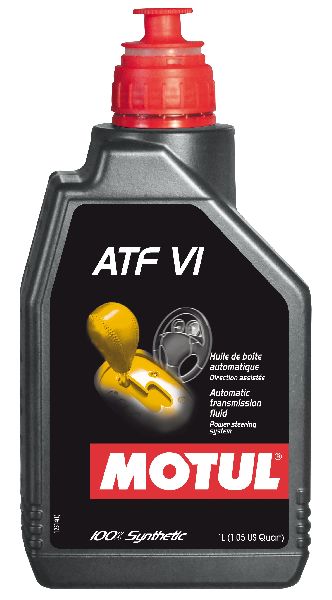
- Ensure the correct Motorcraft MERCON ULV transmission fluid is used, as this transmission is sensitive to fluid type.
What's Unique About the 2020-2023 Lincoln AVIATOR
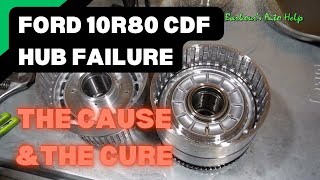
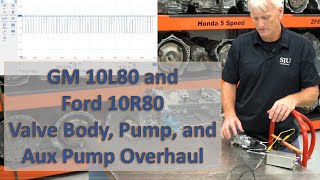
The 2020-2023 Lincoln Aviator uses the Ford 10R80 10-speed automatic transmission, which is known for having issues related to its main control valve body. Sticking valves within this assembly are a common failure point that can trigger P0761. A frequent underlying cause is the failure of the CDF clutch drum bushing. 🎬 Watch: See how the CDF hub fails and the permanent fix. This bushing can wear and 'walk' out of position, shedding metallic debris that contaminates the transmission fluid. This debris then circulates to the valve body, causing the precise-tolerance valves to stick and fail, leading to the P0761 code. Ford has issued multiple Technical Service Bulletins (TSBs) acknowledging this failure pattern, often recommending the replacement of the entire main control assembly.
Diagnostic Flowchart
Tap your situation to follow the diagnostic path that matches what you're seeing on this vehicle.
Symptoms You May Notice
- Harsh or abrupt shifting, sometimes described as a 'slam' or 'buck'.
- Delayed gear engagement. [TSB 25-2302, TSB 22-2428, TSB 24-2252]
- Check Engine Light / Malfunction Indicator Lamp (MIL) is on. [TSB 25-2302, TSB 22-2428, TSB 24-2252]
- Vehicle may enter 'limp mode,' limiting available gears and vehicle speed.
- Transmission may seem to slip or hesitate during acceleration.
- A noticeable 'clunk' or 'bang' noise when shifting or starting the engine.
- Replacing only the 'C' shift solenoid when the actual fault lies within the passages or other valves of the main control assembly (valve body).
- Performing a fluid flush and fill without addressing the source of fluid contamination, such as the failing CDF drum bushing.
- Assuming a major internal transmission failure (like clutches or gears) before properly diagnosing the hydraulic control system (fluid, solenoids, and valve body).
Most Likely Causes
- Faulty Transmission Main Control (Valve Body) 🔴 High Probability → Shop Transmission Assembly This is a widely documented issue on the 10R80 transmission. TSB 20-2403 directly cites "sticking valve(s)" as the cause for P0761. Often, the valves stick due to contamination from a failing CDF drum bushing, another known weak point of this transmission.
How to confirm: A technician will use an advanced scan tool to monitor solenoid commands versus the actual gear state and transmission line pressures. The diagnostic path is heavily guided by Ford's TSBs (like TSB 22-2428), which often point directly to a valve body or CDF drum issue based on the collection of symptoms and codes.
Typical fix: Replacement of the entire transmission main control assembly (valve body with solenoids). In some cases, an overhaul of the existing valve body may be performed.
Est. part cost: $800-$1500 - Low or Dirty Transmission Fluid 🟡 Medium Probability → Shop Transmission Assembly While not a design flaw, the 10R80 is very sensitive to fluid level and condition. Fluid can become dirty/contaminated with metallic debris from the failing CDF drum bushing, which then causes the valve body issue.
How to confirm: Check the transmission fluid level and condition. The fluid should be at the correct level, red in color, and not smell burnt. The presence of excessive metallic particles is a strong indicator of internal component failure, likely the CDF drum bushing. This transmission requires MERCON ULV fluid.
Typical fix: Perform a transmission fluid and filter change. However, if the fluid is heavily contaminated, this is only a temporary measure as the source of the contamination (e.g., the failing bushing) has not been addressed.
Est. part cost: $150-$300 - Failed Shift Solenoid 'C' ⚪ Low Probability → Shop Transmission Valve Body While the solenoid itself can fail electrically, it is much more common for the issue to be hydraulic (sticking valve) or due to contamination within the valve body it's housed in. Replacing a single solenoid is often an incomplete repair that fails to address the root cause.
How to confirm: Using a multimeter to check the solenoid's resistance or an advanced scan tool to perform an actuator test. However, even if the solenoid tests bad, it may be a symptom of a larger valve body or contamination issue.
Typical fix: Replace the individual shift solenoid. Due to the known issues, replacing the entire valve body assembly is the more reliable and recommended repair.
Est. part cost: $50-$150
Rare But Worth Checking
- Internal CDF Clutch Drum Failure: → Shop Transmission Clutch Pressure Plate A bushing in the Clutch E / CDF (Clutch Drum F) assembly is known to walk out of place, causing a hydraulic leak and shedding metal debris into the transmission. While not a 'rare' issue for the 10R80 overall, it's listed here because the P0761 code is a *symptom* of the debris this failure creates, rather than a direct code for the drum itself. The ultimate fix may require replacing this drum, which is a major transmission overhaul. The updated part number is JL3Z-7H351-B.
- Wiring Harness or Connector Issue: Damage to the transmission wiring harness, either external or internal, can interrupt the signal to the solenoid. This is less common than internal transmission faults but should be checked before condemning expensive components.
- Powertrain Control Module (PCM) or Transmission Control Module (TCM) Failure: → Shop Transmission Assembly A failure of the control module's driver circuit for solenoid 'C' can mimic a solenoid or valve body problem. This is rare and should be considered only after all other possibilities have been exhausted.
Diagnosis Steps
- Check and verify the transmission fluid level and condition. Ensure the correct MERCON ULV fluid is being used. Look for signs of excessive metal shavings.
- Use a professional scan tool to check for any other transmission-related DTCs. Note any codes that appear alongside P0761, as the combination of codes is key to diagnosis per TSBs.
- Consult Ford's Technical Service Bulletins (especially TSB 20-2403 and TSB 22-2428) which provide a specific diagnostic flowchart for these symptoms and codes.
- Inspect the transmission housing and wiring harness connector for any signs of damage, corrosion, or fluid leaks.
- Using the scan tool, monitor the commanded state of Shift Solenoid 'C' and compare it to the actual gear state and transmission line pressure data.
- If the diagnostic path in the TSBs confirms an internal issue, the next step is to drop the transmission pan for internal inspection.
- Inspect the valve body for debris and sticking valves. Given the high probability of a valve body issue, the TSB-recommended procedure is often to replace the main control assembly.
Parts You'll Likely Need
- Transmission Main Control Assembly (Valve Body)
(OEM #L1MZ-7A100-C)— This is the most common point of failure for P0761 on the 10R80 transmission due to sticking internal valves, as documented in multiple TSBs. This is a revised part from Ford, suggesting an update to address the issue.
Trusted brands: Motorcraft
OEM price range: $800-$1500
Aftermarket price range: $600-$1200 - Automatic Transmission Fluid
(OEM #Motorcraft XT-12-QULV (MERCON ULV))— The system must be refilled with fresh, clean fluid after replacing the valve body. Using the exact specified fluid is critical for 10R80 performance.
Trusted brands: Motorcraft MERCON ULV
OEM price range: $10-$15 per quart
Aftermarket price range: $8-$12 per quart - Transmission Pan Gasket
(OEM #ML3Z-7A191-A)— The gasket should be replaced anytime the transmission pan is removed to ensure a proper seal.
Trusted brands: Motorcraft, Fel-Pro
OEM price range: $30-$50
Aftermarket price range: $20-$40
Related Codes That Often Appear With This One
- P0751, P0756, P0766 — These are codes for other shift solenoids ('A', 'B', 'D'). When multiple solenoid codes appear together, it strongly suggests a systemic problem like a faulty valve body or widespread fluid contamination, rather than multiple individual solenoid failures.
- P0729-P0736 — These codes indicate incorrect gear ratios. They often accompany solenoid codes because if a solenoid fails to engage a clutch, the PCM will detect that the resulting gear ratio is not what was expected.
- P2700-P2705 — These codes relate to clutch apply time and performance. They are frequently seen with P0761 as they all point to a malfunction in the hydraulic control circuits managed by the valve body.
Technical Service Bulletins (TSBs) & Recalls
- TSB 25-2302
- TSB 22-2428
- TSB 24-2252
- TSB 20-2403
- TSB 24-2176
Platform-Specific Known Issues
- The 10R80 transmission in the 2020-2023 Aviator is subject to multiple TSBs (TSB 25-2302, TSB 22-2428, TSB 24-2252, TSB 20-2403, TSB 24-2176) that list P0761 as part of a group of codes caused by internal valve body and/or CDF drum issues.
Hidden / Shadow Codes Worth Checking
- P163E: Transmission Control Module - Transmission Strategy Not Programmed. This code can appear after replacing the main control valve body. (see via This DTC may be stored in the PCM or TCM if the post-repair programming procedure is performed incorrectly. Specifically, it can be triggered by entering the 12-digit solenoid body identification number when the procedure calls for only the 13-digit solenoid body strategy number.)
Scan Tool Commands That Help
- Ford IDS/FDRS (or equivalent high-level scan tool): PCM – Transmission Strategy Download — This is a mandatory procedure after replacing the main control (valve body) or the entire transmission. It programs the TCM with the specific calibration data for the individual solenoids in the new assembly. The technician must input the 13-digit solenoid strategy number found on a tag on the new part.
- Ford IDS/FDRS (or equivalent high-level scan tool): Clear Transmission Adaptive Tables — This function must be performed after any major transmission repair, such as replacing the valve body or CDF drum, or after performing the strategy download. It erases the learned shift parameters to allow the TCM to start fresh with the new components.
- Ford IDS/FDRS (or equivalent high-level scan tool): Adaptive Learning Drive Cycle — After clearing the adaptive tables, this specific, multi-step road test procedure must be performed. It allows the TCM to relearn shift pressures and timing for smooth operation. Failure to complete this can result in continued harsh or erratic shifting. The procedure involves a series of light-throttle accelerations through the gears to 55 mph, followed by gentle braking to a stop, and specific shifts between Neutral, Reverse, and Drive.
Wiring & Ground Locations
- Main Cabin Fuse Box — Located under the dashboard on the passenger's side, behind a plastic cover. Access may require moving the carpet and removing a service panel.. This panel contains fuses and relays for many interior and electronic systems, including those that communicate with the powertrain and transmission control modules.
- Engine Compartment Fuse Box (Battery Junction Box) — Located in the engine bay on the right side (passenger side), near the auxiliary battery and over the wheel well.. This box contains high-power fuses and relays for critical powertrain components, including power feeds to the PCM/TCM which controls the transmission solenoids.
Real Owner Repair Stories
- Reddit user on r/f150 (2018 Ford F-150 EcoBoost with 10R80 transmission, 145k miles) — User reported 'crazy shift problems,' including floating between gears and then slamming into another.
❌ Tried (didn't work) A transmission 'relearn' procedure., Replacing the main control valve body.
✅ What actually fixed it The user found TSB 22-2428, which helped diagnose the root cause. The final fix was replacing the internal CDF clutch drum, which had failed and was causing the valve body to malfunction. This confirms that the valve body can be a symptom of the deeper CDF drum issue.
"I Checked Everything" — The Actual Cause
- The diagnostic equivalent for this code is when a valve body replacement does not fix the issue. As seen in a real-world repair story, a new valve body failed to resolve severe shifting problems because the root cause was not the valve body itself, but rather a failing internal CDF drum that was likely contaminating the new part or causing system-wide hydraulic pressure issues.
OEM Part Supersession History
Unknown (original design)→JL3Z-7H351-B— The original CDF clutch drum design was prone to failure because a bushing could 'walk' or slide out of position, uncovering an oil passage and causing a hydraulic leak. The updated design (JL3Z-7H351-B) incorporates a physical 'dam' or wall into the drum's casting, which prevents the bushing from migrating and thus prevents the failure.
Model Year Variations Within This Range
- Pre-2024: According to a high-performance transmission builder, 10R80 units built before the 2024 model year are more susceptible to failures of the CDF drum bushing and the stock reaction shell. This suggests that later model years may have received factory-level improvements to address these common failure points, though this is not an official manufacturer statement.
Helpful Videos
We Have This Part in Stock


The information in this article is provided for general reference and educational purposes only. Vehicle specifications, procedures, and part compatibility can vary by production date, trim level, and region. Always consult your vehicle's factory service manual and verify part numbers before purchasing or performing repairs. Safety-critical components such as airbags, seat belts, and braking systems should be installed by a qualified professional.
- Lincoln AVIATOR:
- 🧭 Diagnostic Flowchart
- 🎬 Helpful Videos
- 🛍️ Shop This Part
- What's Unique About the 2020-2023 Lincoln AVIATOR
- Symptoms You May Notice
- Most Likely Causes
- Rare But Worth Checking
- Diagnosis Steps
- Parts You'll Likely Need
- Related Codes That Often Appear With This One
- Technical Service Bulletins (TSBs) & Recalls
- Platform-Specific Known Issues
- Hidden / Shadow Codes Worth Checking
- Scan Tool Commands That Help
- Wiring & Ground Locations
- Real Owner Repair Stories
- "I Checked Everything" — The Actual Cause
- OEM Part Supersession History
- Model Year Variations Within This Range
- 🎟️ Get 5% Off