

P0762 on 2019-2023 Ford Ranger: Shift Solenoid 'C' Stuck On Causes and Fixes
P0762 on a 2019-2023 Ford Ranger indicates the 'C' shift solenoid is stuck on. This is a serious internal transmission issue, often caused by a faulty valve body or a known mechanical failure with the CDF clutch drum. Expect a professional repair costing $1,200-$2,500 for a valve body replacement or significantly more for a full transmission rebuild if the CDF drum has failed. This is a common issue across many Ford vehicles using the 10R80 transmission.
- P0762 on your Ranger is a serious code indicating an internal transmission fault, not a simple sensor issue.
- The most common fixes are an expensive replacement of the main valve body or a full transmission rebuild to address a failed CDF drum.
- This is not a DIY-friendly repair. Professional diagnosis with specialized tools is required.
- Do not continue to drive with these symptoms, as you risk catastrophic transmission failure.
- Ensure any repair uses the correct Motorcraft MERCON ULV transmission fluid to prevent future problems.
What's Unique About the 2019-2023 Ford RANGER
The 2019-2023 Ford Ranger is equipped with the 10-speed 10R80 automatic transmission. While generally robust, this transmission has a well-documented weakness in the CDF (Clutch 'F' / Direct) drum assembly. The internal bushing in this drum can "walk" or slide out of position, uncovering oil passages and causing a massive internal hydraulic leak. This failure sends metallic debris throughout the transmission, which frequently contaminates the main valve body, causing solenoids to stick and triggering codes like P0762. Therefore, this code on a Ranger is often a symptom of this deeper mechanical issue, rather than just a simple failed solenoid. Ford has since released an updated CDF drum with a machined lip to prevent the bushing from moving.
🎬 Watch: See a teardown of the failed CDF drum bushing.Diagnostic Flowchart
Tap your situation to follow the diagnostic path that matches what you're seeing on this vehicle.
Symptoms You May Notice
- Harsh, jerky, or delayed shifts, particularly the 1-3 or 3-5 upshift.
- Delayed engagement when shifting from Park into Drive.
- Transmission getting stuck in one gear (limp mode).
- Illuminated Malfunction Indicator Lamp (Check Engine Light).
- Slipping during acceleration or a feeling of the transmission 'flaring' between shifts.
- Unusual whining or clunking sounds from the transmission.
- Delayed or missed shifts, especially when the transmission fluid is cold.
- Replacing only a single shift solenoid. The solenoids are integrated into the valve body, and the issue is often debris or a cross-leak affecting the whole assembly. Replacing the entire valve body is the standard, more reliable repair.
- Performing only a fluid flush. If significant mechanical wear or a CDF drum failure has occurred, a simple fluid change will not solve the problem and the symptoms will quickly return. In some owner experiences, a flush on a transmission with pre-existing issues appeared to accelerate the failure.
Most Likely Causes
- Faulty Main Control Valve Body 🔴 High Probability → Shop Transmission Valve Body Debris from normal wear or other failing components (like the CDF drum) can contaminate the valve body, causing valves and solenoids to stick. Ford has issued multiple TSBs, most notably TSB 23-2123, pointing to a valve body overhaul as a primary fix for a wide range of solenoid and shifting codes.
How to confirm: A technician will use a high-end scan tool to command the solenoid and check its response. If it fails the test, the pan is dropped to inspect the valve body and look for debris. TSB 23-2123 notes that a normal amount of fine metal flakes on the pan magnet is expected.
Typical fix: Overhaul or complete replacement of the main control valve body assembly, followed by a transmission adaptive learning drive cycle procedure as outlined in the TSB.
Est. part cost: $700-$1500 - Internal Failure of the CDF Clutch Drum 🟡 Medium Probability → Shop Transmission Clutch Pressure Plate This is a widely recognized failure point on the 10R80 transmission across multiple Ford platforms. The internal bushing can move, exposing hydraulic passages, causing a major pressure leak, and contaminating the system with debris, which then leads to valve body and solenoid faults.
How to confirm: A large amount of metallic debris or 'glitter' found in the transmission pan during a valve body inspection is a strong indicator of this failure. The failure of the bushing can sometimes be seen with the drum still in the transmission.
Typical fix: Complete transmission removal and overhaul to replace the CDF drum with an updated part (Part No. JL3Z-7H351-B), along with replacing any other damaged components like clutches, seals, and often the valve body and torque converter.
Est. part cost: $200-$400 for the drum and associated parts, but labor is extensive. - Low or Contaminated Transmission Fluid ⚪ Low Probability → Shop Transmission Assembly While low fluid is a general cause for any transmission, on this platform, contaminated fluid is more often a *symptom* of a larger problem like the CDF drum failure rather than the root cause itself. The 10R80 is also sensitive to fluid level, with some owners reporting shifting issues when the fluid is even slightly low from the factory.
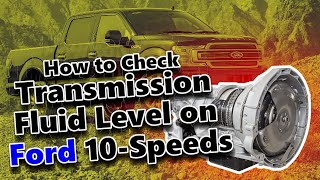
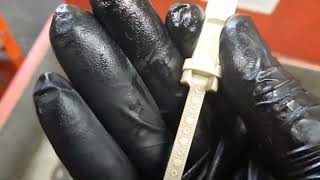
How to confirm: Check the transmission fluid level and condition. The fluid should be red and clear, not brown, black, or smelling burnt. Note: The 10R80 does not have a traditional dipstick; the level must be checked via a plug on the transmission case while the transmission is at a specific temperature (typically 194-215°F or 90-102°C).
Typical fix: If the fluid is just low, top it off with the correct Motorcraft MERCON ULV fluid and check for leaks. If it's contaminated, a fluid and filter change is necessary, but you must investigate the source of the contamination.
Est. part cost: $150-$250 for fluid and filter.
Rare But Worth Checking
- Wiring Harness Issue: While less common than internal mechanical faults for a 'stuck on' code, damage to the transmission wiring harness or corrosion at the main connector can cause a short to power or ground, resulting in erratic solenoid behavior.
- Faulty Transmission Control Module (TCM): → Shop Transmission Assembly A failure in the TCM's driver circuit could theoretically hold a solenoid 'on'. This is very rare and should only be considered after all mechanical and wiring possibilities have been exhausted.
Diagnosis Steps
- Verify the code with a professional OBD-II scanner that can read transmission-specific data.
- Check for any Technical Service Bulletins (TSBs) related to transmission issues for your vehicle's VIN. TSBs 23-2123, 23-2250, and others are highly relevant for shift quality issues and solenoid codes.
- Check the transmission fluid level and condition. This requires raising the vehicle and accessing the check plug while the transmission is at a specific temperature (typically 194-215°F or 90-102°C).
- Use a bi-directional scan tool to command Shift Solenoid 'C' on and off, monitoring its status to confirm it is stuck.
- Drop the transmission oil pan and inspect for abnormal amounts of metal shavings or clutch material. Fine gray sludge or 'glitter' is a bad sign indicating internal mechanical wear, likely from the CDF drum. TSB 23-2123 notes that a small amount of fine metal flakes is normal.
- If minimal debris is found, the most likely cause is the main control valve body. Proceed with overhauling or replacing it per TSB 23-2123.
- If significant debris is found, a full transmission teardown is necessary to inspect for and replace the failed CDF clutch drum and any other resulting damage.
- After any repair, the transmission fluid must be refilled to the correct level with Motorcraft MERCON ULV fluid, and the TCM's adaptive learning tables must be reset. The vehicle will then need to undergo an adaptive learning drive cycle, which may involve firmer than normal shifts for several days.
Parts You'll Likely Need
- Main Control Valve Body Assembly
(OEM #JL3Z-7A100-C (replaces JL3Z-7A100-A))— This is the most common repair prescribed by Ford's TSBs for these symptoms. It contains all the shift solenoids and is often contaminated by debris or has internal wear.
Trusted brands: Motorcraft
OEM price range: $720-$1500
Aftermarket price range: $600-$1200 - CDF Clutch Drum
(OEM #JL3Z-7H351-B (updated design))— If the root cause is the known bushing failure, this part must be replaced with the updated version that has a machined lip to prevent the bushing from moving.
Trusted brands: Motorcraft
OEM price range: $200-$400
Aftermarket price range: $150-$300 - Automatic Transmission Fluid (MERCON ULV)
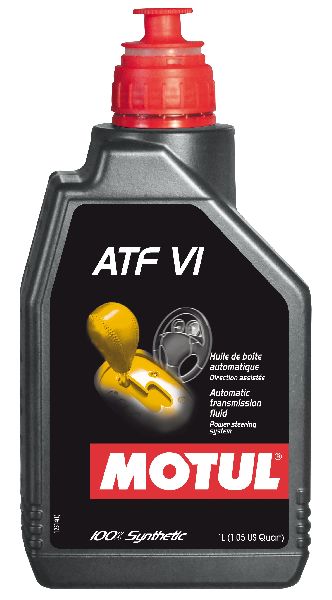
(OEM #XT-12-QULV)— The 10R80 transmission requires this specific Ultra-Low Viscosity fluid. Using any other type can cause damage.
Trusted brands: Motorcraft
OEM price range: $12-$20 per quart
Related Codes That Often Appear With This One
- P0751, P0756, P0761, P0766, etc. — These are all codes for other shift solenoids ('A', 'B', 'D', 'E'). When multiple solenoid codes appear together, it strongly points to a systemic issue like a faulty valve body, major hydraulic leak, or widespread contamination, rather than multiple individual solenoid failures. Ford TSBs for this issue list all these codes together.
- P0729, P0731, P0732, etc. — These are gear ratio error codes. They indicate the transmission is not in the gear the TCM expects it to be. A stuck solenoid directly causes this by preventing the correct clutches from applying, leading to these codes.
- P2702 — This code indicates a malfunction with a transmission friction element ('C'). It often appears alongside solenoid codes when there is a hydraulic or mechanical failure preventing a clutch from applying correctly.
Technical Service Bulletins (TSBs) & Recalls
- TSB 23-2123: Supersedes previous versions. Addresses harsh/delayed shifts and solenoid DTCs (including P0762) for 2019-2023 Rangers. The primary fix is to overhaul the main control valve body and perform an adaptive learning drive cycle.
- TSB 23-2250: Supersedes TSB 22-2428. Specifically mentions that harsh/delayed shifts and various DTCs may be due to axial movement of the CDF clutch cylinder sleeve causing hydraulic leaks.
- TSB 24-2046, 25-2134, 25-2024: Recent TSBs that continue to bundle numerous solenoid and gear ratio DTCs, including P0762, under the same umbrella of shift quality complaints, pointing to a common root cause addressed by valve body service. [Provided in prompt]
Platform-Specific Known Issues
- The 10R80 transmission in the 2019-2023 Ranger is known for potential issues with the main valve body and the CDF clutch drum, leading to a host of shift quality problems and solenoid codes, as acknowledged in multiple Ford TSBs.
- Owner forums like Ranger5G.com contain numerous threads from owners experiencing harsh shifting, delayed shifts, and eventual transmission failure requiring valve body or full transmission replacement.
- A class-action lawsuit has been filed against Ford concerning the 10R80 transmission, citing issues like harsh shifting, lunging, and premature component wear.
Mechanic-Grade Diagnostic Values
- Shift Solenoid 'C' Resistance — expected: 5.0 - 5.4 Ohms at 20°C (68°F).. Failure: A reading outside this range indicates a faulty solenoid coil. This test should be performed on all solenoids as they share the same specification.
- Shift Solenoid 'C' Voltage (Live Data) — expected: Voltage/current should only be applied when commanded by the TCM. The command is directly proportional: zero current equals zero pressure.. Failure: Observing a constant 12V or steady PWM signal on the Solenoid 'C' circuit when it is commanded 'off' indicates a 'stuck on' condition, which could be caused by a short to power in the wiring or a faulty TCM driver.
Scan Tool Commands That Help
- Ford IDS, FORScan, high-end bidirectional scanners (Autel/Snap-on): Solenoid State / On-Off Test — This is a primary bidirectional test to functionally check if the TCM can command the solenoid and if the solenoid responds. A technician can monitor the solenoid's commanded state vs. its actual electrical state (voltage/current) to confirm if it's electrically stuck.
- Ford IDS, FORScan: Clear Transmission Adaptive Tables / Reset All Adaptations — This procedure is mandatory after replacing the valve body or rebuilding the transmission. It erases the TCM's learned values that compensated for old/worn components. Failure to perform this reset will result in poor shift quality and may prevent the transmission from shifting correctly with the new parts.
- Ford IDS: Adaptive Learning Drive Cycle — After clearing the adaptive tables, the transmission must re-learn shift pressures and timing. This is a specific, multi-step driving procedure outlined in Ford's service information (TSBs) that involves a series of light-throttle accelerations and decelerations to allow the TCM to calibrate the new components.
Wiring & Ground Locations
- Transmission Case Connector Pin A11 — The main 26-pin electrical connector on the side of the 10R80 transmission case.. Pin A11, with a Blue-Green (BU-GN) wire, is the shared power supply (TSPC) for shift solenoids A, B, C, D, E, and F. A fault on this circuit could affect multiple solenoids. The solenoids are individually ground-controlled by the TCM.
- Driver's Side Kick Panel Ground — Behind the plastic kick panel to the left of the driver's feet.. A known factory ground point is located here, used for accessories like the OEM trailer brake controller. While not the primary TCM ground, ensuring all chassis and body grounds are clean and secure is a critical step in diagnosing any electronic fault, as poor grounding can cause erratic module behavior.
Real Owner Repair Stories
- Reddit user in r/f150 (2018 Ford F-150 EcoBoost with 145,000 miles (same 10R80 transmission)) — Crazy shift problems, including floating between gears and then slamming into the next gear.
❌ Tried (didn't work) Transmission relearn procedure., Replacement of the main control valve body.
✅ What actually fixed it The root cause was identified as the common CDF clutch drum failure. The user found the relevant Technical Service Bulletin (TSB) which confirmed their symptoms pointed to this internal mechanical failure, requiring a transmission rebuild to replace the drum.
"I Checked Everything" — The Actual Cause
- A common misdiagnostic path for P0762 is when the solenoid itself passes electrical tests (resistance check, voltage check). A technician may find the solenoid's coil resistance is within the 5.0-5.4 ohm spec, and the wiring shows no shorts or opens. However, the code persists because the problem is mechanical, not electrical. Debris from a failing CDF clutch drum can physically jam the solenoid's internal plunger or the valve it actuates within the valve body. Alternatively, a massive internal hydraulic leak from the displaced CDF drum bushing can starve the circuit of the pressure needed to operate, causing solenoid and gear ratio codes even if the solenoid itself is functioning perfectly.
OEM Part Supersession History
JL3Z-7A100-A→JL3Z-7A100-C— Updated part from Ford. Revisions are common to address performance issues, material changes, or manufacturing process improvements.
Heads up: JL3Z-7A100-C is the correct and current replacement for the earlier -A version and should be used for repairs.Unknown (pre-update design)→JL3Z-7H351-B— The original CDF clutch drum design allowed an internal bushing to slide out of place, uncovering oil passages and causing a major hydraulic leak. The updated JL3Z-7H351-B part features a machined lip or 'dam' that physically prevents the bushing from migrating.
Heads up: When replacing a failed CDF drum, only the updated part number JL3Z-7H351-B should be used to permanently correct the design flaw.
Model Year Variations Within This Range
- 2019 - Mid-2022: Vehicles built before approximately August 16, 2022, were likely assembled with the original CDF clutch drum design that is prone to bushing failure. Vehicles built after this date are more likely to have the updated drum from the factory, reducing the probability of this specific failure being the root cause.
- 2019-2023: Ford has released numerous software and firmware updates for the Transmission Control Module (TCM) over the years to improve shift quality and address complaints. A vehicle that has never been updated may exhibit harsher shifting characteristics than a fully updated vehicle, even without a hard fault like P0762.
Helpful Videos
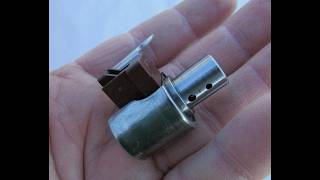
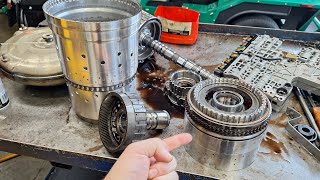
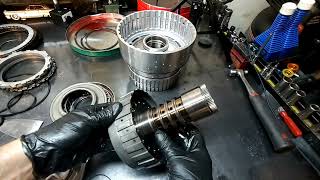

We Have This Part in Stock


The information in this article is provided for general reference and educational purposes only. Vehicle specifications, procedures, and part compatibility can vary by production date, trim level, and region. Always consult your vehicle's factory service manual and verify part numbers before purchasing or performing repairs. Safety-critical components such as airbags, seat belts, and braking systems should be installed by a qualified professional.
- Ford RANGER:
- 🧭 Diagnostic Flowchart
- 🎬 Helpful Videos
- 🛍️ Shop This Part
- What's Unique About the 2019-2023 Ford RANGER
- Symptoms You May Notice
- Most Likely Causes
- Rare But Worth Checking
- Diagnosis Steps
- Parts You'll Likely Need
- Related Codes That Often Appear With This One
- Technical Service Bulletins (TSBs) & Recalls
- Platform-Specific Known Issues
- Mechanic-Grade Diagnostic Values
- Scan Tool Commands That Help
- Wiring & Ground Locations
- Real Owner Repair Stories
- "I Checked Everything" — The Actual Cause
- OEM Part Supersession History
- Model Year Variations Within This Range
- 🎟️ Get 5% Off