

P0762 on 2011-2017 Honda Accord: Shift Solenoid 'C' Stuck On Causes and Fixes
On a 2011-2017 Honda Accord, P0762 means Shift Solenoid 'C' is stuck on. The most common cause is low or dirty transmission fluid. If the fluid is fine, the shift solenoid itself has likely failed. A fluid change is cheap, while a solenoid replacement costs around $150-$300 for the part.
- P0762 means Shift Solenoid 'C' is stuck on, which will cause serious shifting problems.
- Always check the transmission fluid level and condition first. Low, old, or dirty fluid is the most common cause and the cheapest fix.
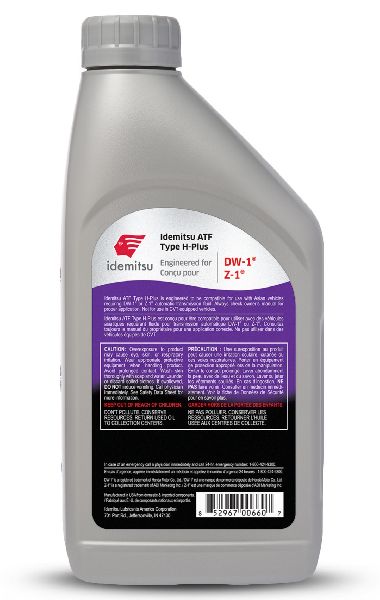
- It is critical to use only Honda Genuine DW-1 automatic transmission fluid.
- If the fluid is clean and full, the Shift Solenoid 'C' itself has likely failed and needs to be replaced.
- Do not drive the vehicle extensively with this code, as it can lead to costly internal transmission damage.
What's Unique About the 2011-2017 Honda Accord
The 2011-2017 Honda Accord spans two generations (8th and 9th), which use different automatic transmissions. The 2011-2012 models typically have a 5-speed automatic, while the 2013-2017 V6 models use a 6-speed automatic. The 4-cylinder models from 2013-2017 were equipped with a Continuously Variable Transmission (CVT), which does not use shift solenoids in the same way and is less likely to set this specific code. For the models with traditional automatic transmissions (5-speed and 6-speed), the shift solenoids are often located externally on the transmission case, making them more accessible for diagnosis and replacement than on many other vehicles.
Generation note: This range covers the end of the 8th generation (2011-2012) and the full 9th generation (2013-2017). The 8th gen and 9th gen V6 models use conventional 5-speed and 6-speed automatic transmissions where this code is applicable. The 9th generation 4-cylinder models use a CVT, which operates differently and is less likely to experience this specific fault.
Symptoms You May Notice
- Harsh, jerky, or delayed shifts
- Transmission getting stuck in one gear
- Check Engine Light or Malfunction Indicator Lamp (MIL) is on
- Blinking gear position indicator ('D' light) on the dashboard
- Increased fuel consumption
- Vehicle enters 'limp mode' with restricted functionality
- Transmission slipping
- Replacing the solenoid without first checking the transmission fluid level and condition. Dirty fluid is a very common cause and a much cheaper fix.
- Replacing the solenoid when the actual fault is a short-to-power in the wiring harness that is keeping the new solenoid energized.
Most Likely Causes
- Low, Dirty, or Incorrect Transmission Fluid 🔴 High Probability → Shop Transmission Assembly Over time, fluid degrades and becomes contaminated with clutch material and metal shavings. This debris can physically jam the small passages within the solenoid, causing it to stick. Low fluid levels can also cause pressure drops that affect solenoid operation.
How to confirm: Check the transmission fluid level and condition with the engine off and warmed up. The fluid should be bright red and clear, not brown, black, or smell burnt. Draining the fluid through a strainer can reveal metal debris, which indicates more serious internal wear.
Typical fix: Perform a transmission fluid drain and fill. It is critical to use only Honda Genuine DW-1 Automatic Transmission Fluid to avoid further issues. A 3x drain-and-fill is often recommended to replace a majority of the old fluid.
Est. part cost: $40-$80 for fluid - Faulty Shift Solenoid 'C' 🟡 Medium Probability → Shop Transmission Valve Body The solenoid can fail electrically (internal short in the coil) or mechanically (plunger gets physically stuck due to debris or wear). Heat-induced insulation breakdown is a common electrical failure mode.
How to confirm: After confirming the fluid is good, the solenoid itself should be tested. A mechanic can command the solenoid on and off with a scan tool. It can also be removed and bench-tested for resistance with a multimeter and for mechanical action by applying 12V power. A clicking sound should be heard.
Typical fix: Replace the faulty shift solenoid 'C' and its gasket. On these models, it is typically located on the exterior of the transmission case, sometimes under the starter.
Est. part cost: $70-$300 - Damaged Wiring or Connectors ⚪ Low Probability
How to confirm: Visually inspect the wiring harness leading to the shift solenoid for any signs of fraying, corrosion, or damage. Use a multimeter to check for a short-to-power in the circuit that could be keeping the solenoid energized.
Typical fix: Repair or replace the damaged section of the wiring harness.
Est. part cost: $20-$100
Rare But Worth Checking
- Faulty Transmission Control Module (TCM) or Powertrain Control Module (PCM): → Shop Engine Control Module (ECM) This is very rare. A faulty driver circuit in the module could continuously send voltage to the solenoid. This should only be considered after all other possibilities (fluid, solenoid, wiring) have been exhaustively ruled out. This failure often presents with multiple solenoid codes, not just P0762.
- Internal Transmission Failure: → Shop Transmission Assembly A failing component like a clutch pack, torque converter, or transmission pump can release excessive debris into the fluid, clogging the valve body and causing solenoids to stick. This is a worst-case scenario indicated by large amounts of metal in the fluid and is often accompanied by other transmission codes.
Diagnosis Steps
- Check the transmission fluid level and condition. Ensure the fluid is at the correct level, is bright red, and does not smell burnt.
- Scan for other transmission-related trouble codes. The presence of other solenoid codes could point to a fluid problem rather than a single failed part.
- Inspect the wiring and connector at Shift Solenoid 'C' for any visible damage, corrosion, or loose connections.
- Using a professional scan tool, command the solenoid on and off to check its response.
- If the solenoid does not respond to commands, test the circuit for proper voltage and ground using a multimeter.
- If the circuit is good, remove the solenoid and test its internal resistance with a multimeter. Compare the reading to the manufacturer's specification.
- Bench test the solenoid by applying 12V power and ground to see if it clicks. A sluggish or silent solenoid is faulty.
- If the fluid, wiring, and solenoid are all good, the issue may be a blockage in the valve body or a rare failure of the TCM.
Parts You'll Likely Need
- Shift Solenoid 'C'
(OEM #28500-RT4-003)— This is the component directly identified by the fault code. It can fail electrically or mechanically, causing it to remain stuck on.
Trusted brands: Honda (OEM), WVE, Rostra, Beck/Arnley
OEM price range: $150-$300
Aftermarket price range: $70-$150 - Honda Genuine DW-1 Automatic Transmission Fluid
(OEM #08200-9008)— Low or contaminated fluid is the leading cause of this code. Using the correct OEM fluid is critical for Honda transmissions.
Trusted brands: Honda (OEM)
OEM price range: $10-$15 per quart
Aftermarket price range: N/A - Shift Solenoid Gasket — The gasket seals the solenoid to the transmission case and should always be replaced when the solenoid is serviced. It often includes a small filter screen that can become clogged.
Trusted brands: Honda (OEM)
OEM price range: $10-$25
Aftermarket price range: $5-$15
Related Codes That Often Appear With This One
- P0700 — This is a generic code that indicates the Transmission Control Module (TCM) has stored a fault. It acts as a master light and will almost always appear with a more specific code like P0762.
- P0752, P0757, P0767 — These are 'Stuck On' codes for shift solenoids 'A', 'B', and 'D'. Seeing multiple solenoid codes together strongly suggests a widespread problem like contaminated transmission fluid, a clogged valve body, or a faulty TCM affecting the entire system.
- P0761, P0763 — These codes are also specific to Shift Solenoid 'C'. P0761 indicates it's 'Stuck Off' and P0763 indicates an 'Electrical' fault. Seeing one of these points directly to the solenoid or its circuit.
Platform-Specific Known Issues
- For V6 models, the 6-speed automatic transmission fluid can degrade quickly, sometimes causing a 'transmission judder' even without codes. Frequent fluid changes (every 30,000 miles) are a common preventative measure among owners.
Mechanic-Grade Diagnostic Values
- Shift Solenoid 'C' Coil Resistance — expected: 12 - 25 Ohms. Failure: A reading of 0 Ohms indicates a short, while an infinite (O.L.) reading indicates an open circuit. A reading outside the 12-25 Ohm range suggests a faulty solenoid.
- Shift Solenoid 'C' Circuit Voltage (Live Data) — expected: Should show 0V when commanded OFF and ~12V (or a PWM signal) when commanded ON.. Failure: A constant 12V reading even when the TCM commands the solenoid OFF indicates a short-to-power in the wiring harness or a faulty TCM driver.
Scan Tool Commands That Help
- Honda Diagnostic System (HDS): Shift Solenoid Valve Test (A, B, C, etc.) — This is a bidirectional control used to command the specific solenoid on and off while the engine is running. The technician should listen for an audible 'click' from the solenoid each time it's commanded. A lack of a click indicates a failed solenoid or a circuit issue, prompting a manual resistance test.
Wiring & Ground Locations
- G1 — Main battery ground cable connection point on the transmission housing.. A poor ground at this primary location can cause erratic electrical behavior for all transmission components, including shift solenoids. Voltage drops or high resistance here can lead to incorrect solenoid operation and trigger various fault codes.
- G101 — Main engine harness ground, typically located on the driver's side of the upper intake manifold.. This is a critical ground for the PCM/TCM. Corrosion or a loose connection at G101 can cause a wide range of issues, including faulty solenoid command signals from the control module.
- Shift Solenoid 'C' Connector — On the exterior of the transmission case. For 5-speed models, it is often the bottom solenoid with a brown connector, sometimes located under the starter. For 6-speed V6 models, it is part of a larger solenoid block assembly.. This is the direct connection point for testing. Technicians will disconnect this to measure resistance across the solenoid's pins and check for voltage/ground from the harness side.
Real Owner Repair Stories
- Autodana.eu Case Study (2015 Honda Accord) — Erratic shifting behavior and a P0762 code.
❌ Tried (didn't work) Initial diagnosis focused on the solenoid itself.
✅ What actually fixed it A diagnostic scan showed the solenoid was not receiving correct voltage. A closer inspection revealed a damaged wiring harness. Replacing both the harness and the solenoid resolved the issue.
OEM Part Supersession History
28400-P6H-003, 28400-P6H-013→28500-RT4-003— Improved internal sealing materials and coil durability.
Heads up: The part 28500-RT4-003 is listed as the direct replacement for the older P6H series solenoids used in many previous generation 5-speed Honda transmissions. While the vehicle range is 2011-2017, this part number is relevant for the 2011-2012 5-speed models.
Model Year Variations Within This Range
- 2011-2012 (5-Speed Automatic): Uses individual, externally-mounted shift solenoids. Shift Solenoid 'C' is typically a single component that can be replaced individually.
- 2013-2017 (V6 6-Speed Automatic): Uses a large, single solenoid block assembly (sometimes called a secondary valve body) that contains multiple solenoids, including Shift Solenoid 'C'. If Solenoid 'C' fails within this block, the entire assembly often needs to be replaced, which is a more expensive part.
Diagnostic Flowchart
Other Known Issues on This Vehicle
Issues unrelated to this code that are worth knowing about as an owner of this generation:
- V6 Variable Cylinder Management (VCM) Issues 🔴 High — Common across all V6 models in this range. Can lead to fouled spark plugs, excessive oil consumption, and engine vibrations over time. (Ref: A class-action lawsuit was filed for 2008-2013 models for these issues.)
- Grinding or Spinning Starter Motor 🟠 Medium — Affects 2013-2016 V6 models with automatic transmissions. Onset is often around 50,000 miles. (Ref: Honda TSB 16-002)
- Excessive Oil Consumption 🟠 Medium — More prevalent in 4-cylinder engines but also a known side effect of VCM issues in the V6.
- Premature Brake Wear 🟡 Low — Owners report replacing pads and rotors more frequently than expected, sometimes under 30,000 miles.
- Transmission Judder/Shudder (V6 Models) 🟠 Medium → Shop Transmission Assembly — Common on V6 models with the 6-speed automatic. Often caused by degraded transmission fluid.
Used vs. New Parts: Buying Guide for This Vehicle
When a used part is the smart pick: For the individual, externally-mounted solenoids on the 2011-2012 5-speed models, a used OEM solenoid from a low-mileage donor vehicle can be a cost-effective option. For the 2013-2017 V6 models with the integrated solenoid pack, buying used is riskier due to the complexity of the part and the difficulty in verifying its condition.
Donor-vehicle mileage cap: roughly under 80000 miles for the part to have meaningful remaining life.
What to inspect on the donor part:
- Verify the donor vehicle was not in a major front-end collision that could have damaged the transmission.
- Inspect the electrical connector pins for any signs of corrosion, bending, or damage.
- If possible, check the maintenance history of the donor vehicle for regular transmission fluid changes.
- Look for a seller that offers a short warranty or return period to allow for testing.
OEM-only on this vehicle (don't cheap out):
- Transmission Control Module (TCM) - Used modules often require specific programming to the vehicle's VIN, which can be difficult outside of a dealership. New or professionally remanufactured units are highly recommended.
Aftermarket brands forum-validated for this vehicle:
- Beck/Arnley
- Rostra
- WVE (Wells Vehicle Electronics)
Brands owners have reported issues with on this vehicle:
- Unbranded, no-name solenoids from online marketplaces can have high failure rates and may not meet OEM specifications for resistance and flow, leading to a quick return of the trouble code.
Real Owner Stories
Aggregated from forums and TSBs cited above. Mileages and costs reflect what owners reported in those sources.
2004 Acura TL 5AT (Platform Mate)
Symptoms: The owner encountered a P0762 code and identified the need to locate Shift Solenoid valve C.
What fixed it: Replacement of the bottom solenoid located under the starter.
Source hint: AcuraZine - '2004 Tl 5AT Shift Solenoid valve c' (https://acurazine.com/forums/3g-tl-problems-fixes-114/2004-tl-5at-shift-solenoid-valve-c-984021/)
Honda Accord (General)
Symptoms: The vehicle triggered a P0762 code, but the owner found that the solenoid itself was not the root failure.
What fixed it: The issue was determined to be internal transmission damage, which can trigger solenoid codes even if the solenoid is functional.
Source hint: Honda-Tech - 'SHIFT SOLENOID PROBLEMS' (https://honda-tech.com/forums/honda-accord-1990-2002-2/shift-solenoid-problems-1284729/)
Related OBD-II Codes
Frequently Asked Questions
I have a V6 Accord with a 6-speed transmission and I'm feeling a judder. Is this related to P0762?
What specific transmission fluid should I use for my 2011-2017 Honda Accord to fix solenoid issues?
Where is Shift Solenoid 'C' located on my Accord?
My 2014 V6 Accord has a grinding starter; could this be related to my transmission code?
Can I use a used solenoid from a salvage yard for my 2015 Accord V6?
Is there a risk that my VCM system is causing these transmission symptoms?
Helpful Videos

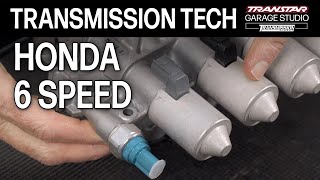
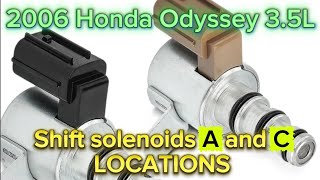
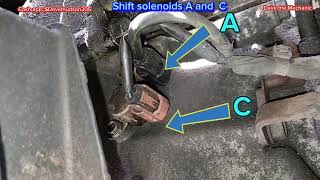
We Have This Part in Stock

The information in this article is provided for general reference and educational purposes only. Vehicle specifications, procedures, and part compatibility can vary by production date, trim level, and region. Always consult your vehicle's factory service manual and verify part numbers before purchasing or performing repairs. Safety-critical components such as airbags, seat belts, and braking systems should be installed by a qualified professional.
- Honda Accord:
- 🧭 Diagnostic Flowchart
- 🎬 Helpful Videos
- 🛍️ Shop This Part
- What's Unique About the 2011-2017 Honda Accord
- Symptoms You May Notice
- Most Likely Causes
- Rare But Worth Checking
- Diagnosis Steps
- Parts You'll Likely Need
- Related Codes That Often Appear With This One
- Platform-Specific Known Issues
- Mechanic-Grade Diagnostic Values
- Scan Tool Commands That Help
- Wiring & Ground Locations
- Real Owner Repair Stories
- OEM Part Supersession History
- Model Year Variations Within This Range
- Other Known Issues on This Vehicle
- Used vs. New Parts: Buying Guide for This Vehicle
- Real Owner Stories
- 2004 Acura TL 5AT (Platform Mate)
- Honda Accord (General)
- Related OBD-II Codes
- Frequently Asked Questions
- 🎟️ Get 5% Off