

P0762 on 2020-2023 Lincoln Aviator: Shift Solenoid 'C' Stuck On Causes and Fixes
On a 2020-2023 Lincoln Aviator, code P0762 almost always indicates a significant internal transmission problem, not just a single bad solenoid. The most likely causes are a faulty main control valve body or a failed CDF clutch drum, both of which are expensive, professional-level repairs costing between $2,000 and $7,500+. Ignoring the issue can lead to catastrophic transmission failure.
- P0762 on a 2020-2023 Aviator is a serious code that points to a significant internal transmission problem.
- Do not simply replace Shift Solenoid 'C'; it is almost certainly not the root cause.
- The most likely culprits are a faulty main control valve body or a failed CDF clutch drum, as documented in multiple Lincoln/Ford TSBs.
- This is not a DIY repair. It requires professional diagnosis at a dealership or qualified transmission shop.
- Repair is expensive, often ranging from $2,000 for a valve body to over $7,000 for a transmission rebuild if the CDF drum has failed.
What's Unique About the 2020-2023 Lincoln AVIATOR
For the 2020-2023 Lincoln Aviator, which uses the 10R60 10-speed automatic transmission, P0762 is rarely an isolated solenoid failure. Ford/Lincoln has issued numerous Technical Service Bulletins (TSBs) acknowledging that this code is a common symptom of two larger, well-documented issues: sticking valves within the main control valve body, or a more severe mechanical failure of the CDF clutch drum. TSB 23-2250 explicitly states that harsh shifts and this group of codes can be due to "sticking valves in the main control valve body and/or axial movement of the CDF clutch cylinder (7H351) sleeve". A sleeve within the CDF drum can move out of position, causing a major internal hydraulic leak that triggers a cascade of shifting problems and related trouble codes. Therefore, a proper diagnosis on this vehicle must look beyond the single solenoid to these known systemic faults.
Diagnostic Flowchart
Tap your situation to follow the diagnostic path that matches what you're seeing on this vehicle.
Symptoms You May Notice
- Harsh or delayed gear shifts, sometimes described as a 'bump' or 'jerk' from the rear of the vehicle.
- Illuminated Malfunction Indicator Lamp (MIL) or Check Engine Light.
- Transmission gets stuck in a single gear (limp mode).
- Delayed or harsh engagement when shifting from Park to Drive or Reverse.
- Feeling of the transmission slipping during acceleration.
- Unusual whining or clunking noises from the transmission.
- Violent shifts between specific gears, such as 1st and 3rd, especially under light acceleration.
- Replacing only the Shift Solenoid 'C'. On this platform, the solenoid itself is rarely the root cause and is part of the valve body assembly. The code is a symptom of a larger hydraulic or mechanical failure within the transmission.
Most Likely Causes
- Main Control Valve Body Failure 🔴 High Probability → Shop Transmission Valve Body The 10R60/10R80 series transmissions are known to have issues with valves sticking inside the main control body, as documented in multiple Ford TSBs like 23-2250. Debris from normal wear or from a failing CDF drum can contaminate the valve body, causing solenoids and valves to stick.
How to confirm: A technician will use a diagnostic scan tool to check for related codes and may perform a specific valve body cleaning or break-in procedure outlined in TSBs. If this fails, or if significant debris is found in the pan, the valve body is condemned.
Typical fix: Replacement of the entire main control valve body assembly, followed by a software update and adaptive learning procedure. The solenoids are integrated into the valve body and are not typically replaced individually.
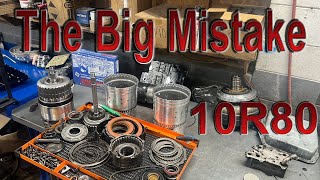
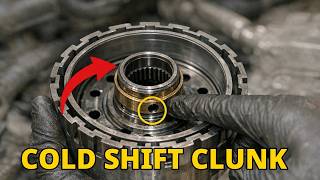
Est. part cost: $700-$1500 - CDF Clutch Drum Failure 🔴 High Probability → Shop Transmission Clutch Pressure Plate A known design issue where a sleeve within the CDF clutch cylinder can move axially, uncovering oil passages and causing a severe internal hydraulic leak. This is a primary point of failure for the 10R60/10R80 transmission family, and Ford has released updated parts to address it. 🎬 Watch: How the updated CDF bushing fixes harsh shifts.
How to confirm: This is often a diagnosis of exclusion after a valve body replacement fails to solve the issue. Finding excessive metallic debris or 'glitter' in the transmission fluid pan is a strong indicator of this internal mechanical failure. A full transmission teardown is the only way to be 100% certain.
Typical fix: Requires removal and complete teardown of the transmission to replace the CDF clutch drum with an updated part. This is effectively a partial or full transmission rebuild. Due to the labor involved, this is a very expensive repair.
Est. part cost: $200-$600 for the drum, but labor is the primary cost. - Low or Contaminated Transmission Fluid ⚪ Low Probability → Shop Transmission Assembly This is more often a symptom than a root cause. The fluid becomes contaminated with clutch material and metallic debris from the failing CDF drum or other components, which then causes issues in the valve body. The transmission has no dipstick, so checking the fluid is not a simple user task.
How to confirm: Check the transmission fluid level and condition via the check plug on the transmission case. This must be done at a specific operating temperature (typically 194-215°F). The fluid should be red and clear (Motorcraft MERCON ULV), not dark, burnt-smelling, or full of debris.
Typical fix: A fluid and filter change may temporarily alleviate symptoms but will not fix the underlying mechanical cause. If the fluid is heavily contaminated, the transmission likely has internal damage requiring a valve body replacement or a full rebuild.
Est. part cost: $150-$300 for fluid and filter
Rare But Worth Checking
- Faulty PCM/TCM Software:
Diagnosis Steps
- Verify the code P0762 and check for any other transmission-related DTCs using a professional scan tool like Ford's FDRS.
- Check the transmission fluid level and condition. This requires raising the vehicle and checking the fluid at a specific temperature (194-215°F). Look for a burnt smell or the presence of metallic particles ('glitter') in the fluid.
- Consult TSBs 25-2302, 24-2176, 24-2252, and especially 23-2250. The first step recommended by Ford is often a PCM/TCM software update and performing the adaptive learning drive cycle.
- If symptoms persist, a technician will diagnose the main control valve body. TSB 23-2250 provides a procedure that may include a valve body cleaning/break-in procedure. If this fails, the valve body must be replaced.
- If the valve body is ruled out or if there is significant debris in the fluid, the diagnosis points to internal mechanical failure, requiring transmission removal to inspect the CDF clutch drum and other components.
Parts You'll Likely Need
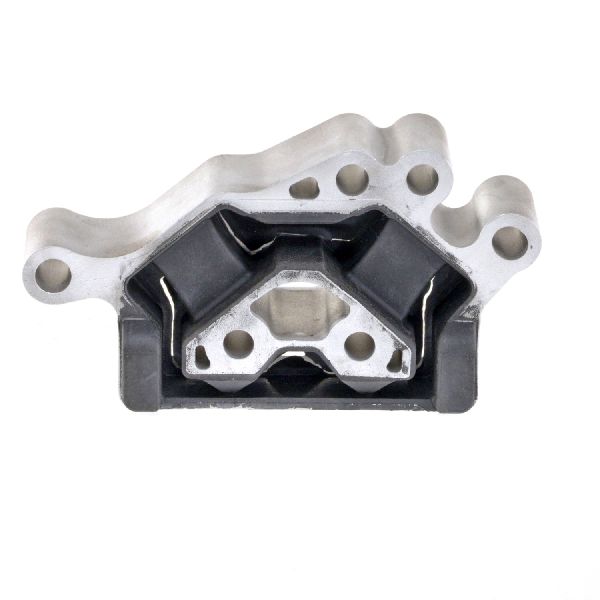
- Main Control Valve Body
(OEM #JL3Z-7A100-C (supersedes JL3Z-7A100-A))— This is one of the two most common root causes. Sticking valves in the original unit cause widespread hydraulic issues. Replacement with a new or updated unit is the standard repair.
Trusted brands: Motorcraft
OEM price range: $700-$1500 - CDF Clutch Cylinder
(OEM #L1MZ-7H351-B (supersedes earlier versions))— The other primary cause of failure. The internal sleeve moves, causing a hydraulic leak that triggers P0762 and other codes. Requires a full transmission teardown to replace.
Trusted brands: Motorcraft
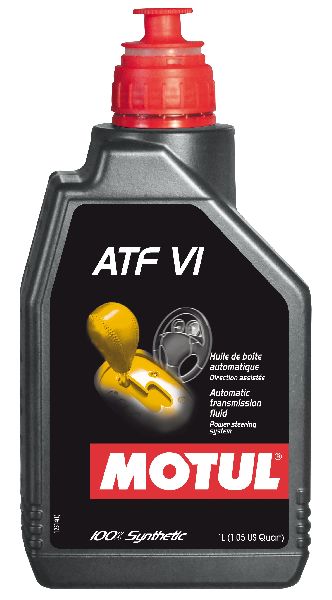
OEM price range: $200-$600 - Motorcraft MERCON ULV Automatic Transmission Fluid
(OEM #XT-12-QULV)— This is the only specified fluid for the 10R60 transmission. A valve body replacement or rebuild will require a significant fluid replacement (approx. 11 quarts).
Trusted brands: Motorcraft
OEM price range: $12-$20 per quart
Related Codes That Often Appear With This One
- P0751, P0756, P0761, P0766, P0771, P2700-P2708, P0729-P0736 — These codes are all related to other shift solenoids and gear ratio errors. The TSBs for the Aviator (such as 23-2250 and 25-2302) list P0762 as part of this large group of codes, indicating a systemic failure (like a valve body or CDF drum) affecting multiple hydraulic circuits, not just one solenoid.
Technical Service Bulletins (TSBs) & Recalls
- TSB 25-2302
- TSB 24-2176
- TSB 24-2252
- TSB 22-2428
- TSB 23-2250
Platform-Specific Known Issues
- The 10R60 transmission in these Aviators is subject to multiple Technical Service Bulletins (TSBs) for harsh shifting and setting codes like P0762. The primary documented mechanical fault is the 'axial movement of the CDF clutch cylinder sleeve causing hydraulic circuit leaks'.
- Owners on Reddit forums for r/lincolnmotorco describe experiencing harsh bumps when shifting, particularly from Park to Drive or during deceleration, which dealerships sometimes initially dismiss as 'normal'. In several documented cases, these symptoms eventually led to a full transmission replacement under warranty.
Mechanic-Grade Diagnostic Values
- Shift Solenoid Coil Resistance — expected: 5.0 - 5.4 Ohms at 68°F (20°C). Failure: A reading outside this range (open or shorted) indicates a faulty solenoid coil. This test is performed on the solenoid directly, which is part of the valve body assembly.
Hidden / Shadow Codes Worth Checking
- P163E: Transmission Control Module - Solenoid Body ID Not Programmed Or Incompatible. This code can be set after a valve body replacement if the 13-digit solenoid strategy number from the new part is not correctly programmed into the TCM. (see via Ford's IDS/FDRS or an advanced aftermarket scan tool like FORScan.)
Scan Tool Commands That Help
- Ford IDS/FDRS: Solenoid Strategy Programming / Transmission Characterization — This is a mandatory procedure after replacing the main control valve body or the entire transmission. It requires entering the 13-digit strategy number found on the new valve body to ensure the TCM uses the correct calibration for the new solenoids.
- Ford IDS/FDRS: Transmission Accelerated Main Control Break-In Routine — Mentioned in TSBs as a diagnostic step. This function cycles the solenoids and valves to attempt to clear debris or un-stick a valve as a potential alternative to immediate valve body replacement.
- FORScan: Clear Transmission Adaptive Tables & Stop Use of Transmission Adaptive — This is a user-initiated procedure to reset the transmission's learned shift behavior. Some owners use this to temporarily improve shift quality issues, though it does not fix an underlying mechanical or hydraulic fault.
Wiring & Ground Locations
- Main Transmission Case Connector — On the exterior of the 10R60 transmission case, typically on the driver's side. It connects the internal transmission harness (and all its solenoids) to the main vehicle harness.. This is the single point of failure for all electrical signals to the transmission. Corrosion, moisture intrusion, or damaged pins/wires at this connector can directly cause a solenoid circuit fault like P0762.
- Engine Compartment Fuse Box - Fuse 26 — In the under-hood fuse box.. This 15A fuse provides power to the Transmission Control Module (TCM). While a blown fuse would likely cause more codes and a no-start or no-shift condition, checking it is a basic preliminary step.
Real Owner Repair Stories
- Reddit user on r/f150 (Ford F-150 with 10R80 (31,000 miles)) — Harsh shifting and other symptoms that led to a P0762-related diagnosis.
❌ Tried (didn't work) Getting multiple dealerships to acknowledge the problem; many initially denied there was an issue.
✅ What actually fixed it The dealership finally performed the CDF drum fix. The owner had high hopes this would permanently resolve the issue, confirming that this is a real-world repair for these symptoms. - Reddit user on r/Mustang (2018 Ford Mustang GT with 10R80) — Rough, clunky, lurching shifts in gears 1-5, particularly in Sport mode.
❌ Tried (didn't work) Going to the dealer, who wanted to charge ~$200 for diagnostics and another ~$200 for a potential PCM fix based on a TSB.
✅ What actually fixed it The owner used a FORScan OBD adapter and software to perform two service functions: 'Clear Transmission Adaptive Tables' followed by 'Stop Use of Transmission Adaptive'. They reported a 'night and day' difference in shift smoothness.
OEM Part Supersession History
HL3Z-7H351-A, JL3Z-7H351-A→JL3Z-7H351-B (and potentially L1MZ-7H351-B for Lincoln platforms)— The original CDF clutch drum design allowed an internal bushing/sleeve to 'walk' or move axially. This movement would uncover hydraulic ports, causing a major internal leak, erratic shifting, and numerous DTCs including P0762. The updated part has a machined lip that physically prevents the sleeve from moving, providing a permanent mechanical fix to the design flaw.JL3Z-7A100-A→JL3Z-7A100-C— The main control valve bodies were updated to address issues with internal spool valves sticking, which caused a wide range of solenoid and gear ratio codes. The solenoids are integrated and not serviced separately.
Heads up: When replacing the valve body, the 13-digit solenoid strategy number from the new part must be programmed into the TCM using Ford's diagnostic software. Failure to do so can result in poor shifting and may set code P163E.
Model Year Variations Within This Range
- 2020 - Mid-2022: Vehicles built in this range are more likely to have the original CDF clutch drum design that is prone to the internal sleeve failure. A TSB related to the Ford Ranger suggests vehicles built on or after August 16, 2022, received the updated drum from the factory, reducing the likelihood of this specific failure.
Helpful Videos
We Have This Part in Stock


The information in this article is provided for general reference and educational purposes only. Vehicle specifications, procedures, and part compatibility can vary by production date, trim level, and region. Always consult your vehicle's factory service manual and verify part numbers before purchasing or performing repairs. Safety-critical components such as airbags, seat belts, and braking systems should be installed by a qualified professional.
- Lincoln AVIATOR:
- 🧭 Diagnostic Flowchart
- 🎬 Helpful Videos
- 🛍️ Shop This Part
- What's Unique About the 2020-2023 Lincoln AVIATOR
- Symptoms You May Notice
- Most Likely Causes
- Rare But Worth Checking
- Diagnosis Steps
- Parts You'll Likely Need
- Related Codes That Often Appear With This One
- Technical Service Bulletins (TSBs) & Recalls
- Platform-Specific Known Issues
- Mechanic-Grade Diagnostic Values
- Hidden / Shadow Codes Worth Checking
- Scan Tool Commands That Help
- Wiring & Ground Locations
- Real Owner Repair Stories
- OEM Part Supersession History
- Model Year Variations Within This Range
- 🎟️ Get 5% Off