

P0762 on 2018-2023 Lincoln Navigator: Shift Solenoid 'D' Stuck On Causes and Fixes
P0762 on a 2018-2023 Lincoln Navigator almost always indicates a significant internal issue with the 10R80 transmission, not just a single bad solenoid. The most common fixes are replacing the entire main control valve body or addressing a failed CDF clutch drum, both costly repairs ($1,500-$7,500). Multiple Ford TSBs confirm these systemic issues, often requiring a transmission rebuild or replacement in severe cases.
- P0762 on a 2018-2023 Navigator is a serious code that points to an internal transmission problem, not a simple sensor fix.
- The most common repair is replacing the entire main control valve body, which is an expensive, professional-level job.
- This code can also be a symptom of a failing CDF clutch drum, which sheds debris that clogs the valve body. Check for excessive metal in the transmission pan to diagnose this.
- Do not ignore this code. Continued driving will likely lead to complete transmission failure, a much more expensive outcome.
- Always use the specified Motorcraft MERCON ULV fluid when servicing this transmission.
What's Unique About the 2018-2023 Lincoln NAVIGATOR
The 2018-2023 Navigator uses the Ford-GM 10-speed 10R80 automatic transmission, a joint venture between the two companies. While P0762 points to a specific solenoid, this transmission is known for issues where the root cause is not the solenoid itself, but a failure of the main valve body assembly or contamination from other internal parts. Multiple Technical Service Bulletins (TSBs) from Ford, such as TSB 24-2254, confirm that this code is often a symptom of a larger problem. The most common underlying causes are a faulty valve body or a failing CDF clutch drum, which has a design flaw where an internal sleeve can move, causing hydraulic leaks and shedding debris that contaminates the valve body and causes solenoids to stick.
Diagnostic Flowchart
Tap your situation to follow the diagnostic path that matches what you're seeing on this vehicle.
Symptoms You May Notice
- Harsh or abrupt shifts between gears. [Bulletin #TSB 26-2046, Bulletin #TSB 25-2023]
- Delayed engagement when shifting from Park to Drive or Reverse. [Bulletin #TSB 26-2046, Bulletin #TSB 25-2023, 13]
- Transmission getting stuck in one gear (limp mode).
- Slipping or flaring RPM during shifts, especially the 3-4 or 4-5 shift.
- Illuminated Malfunction Indicator Lamp (MIL) or wrench light on the dashboard. [Bulletin #TSB 24-2176]
- Shuddering at low speeds or under light load, sometimes feeling like driving over rumble strips.
- A loud thud or bang from the transmission during acceleration, sometimes accompanied by temporary warning lights.
- Replacing only a single shift solenoid. On the 10R80, the solenoids are integrated into the valve body and are not typically serviced individually. The issue is also often with the valve body itself or contamination, not just one solenoid.
- Performing a transmission fluid flush without addressing the source of contamination. If the CDF drum or other components are failing, a flush is a temporary fix at best, as new debris will quickly contaminate the fresh fluid and cause the problem to return.
Most Likely Causes
- Faulty Main Control Valve Body 🔴 High Probability → Shop Transmission Valve Body The 10R80 transmission's valve body is a known failure point. Internal valves can stick or the integrated solenoids can fail due to contamination or wear, leading to pressure control issues. TSBs often point to this as a primary cause alongside the CDF drum.
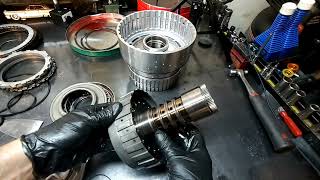
How to confirm: A technician will use a high-end scan tool to monitor solenoid commands vs. actual states and perform pressure tests. 🎬 Watch: A professional walkthrough of the 10R80 diagnostic process. Dropping the transmission pan to check for debris is also a key step. An absence of significant clutch material points towards the valve body as the likely culprit.
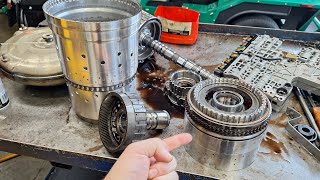
Typical fix: Complete replacement of the main control valve body assembly (which includes all solenoids), followed by a fluid fill, solenoid strategy programming, 🎬 See how to replace the valve body yourself. and adaptive learning procedure.
Est. part cost: $800 - $1500 - Internal Transmission Failure (CDF Clutch Drum) 🔴 High Probability → Shop Transmission Assembly The CDF (Clutch D/F) drum in the 10R80 is a major weak point. A sleeve inside the drum can move axially (slide out of position), uncovering fluid passages and causing a hydraulic leak. This leads to shifting problems and can shed clutch material or metal debris into the fluid. This debris then contaminates the valve body, causing solenoids like 'D' to stick.
How to confirm: Requires dropping the transmission pan and inspecting for excessive metallic or clutch material. TSB 24-2254 outlines a specific hydraulic/vacuum test procedure to confirm the leak at the CDF drum. Significant debris confirms a hard part failure requiring a teardown.
Typical fix: Requires a complete transmission rebuild or replacement. The updated CDF drum has a machined lip to prevent the sleeve from moving, providing a permanent fix. 🎬 Watch: See exactly how the CDF drum bushing fails internally. Simply replacing the valve body without addressing a failed CDF drum will result in a repeat failure.
Est. part cost: $3000 - $7000 for a rebuilt/new transmission - Contaminated or Low Transmission Fluid ⚪ Low Probability → Shop Transmission Assembly This is almost always a symptom of one of the above failures, not the root cause. Low fluid can cause pressure issues, and contaminated fluid (from the CDF drum or other clutch failures) is a direct cause of sticking solenoids and valve body malfunction.
How to confirm: Check the transmission fluid level and condition. The fluid should be clean and red (Motorcraft ULV is dyed red); dark, burnt-smelling fluid with particles in it indicates a serious internal problem.
Typical fix: A fluid and filter change. However, this is a temporary measure at best and will not fix the code if the valve body is already damaged or if there is an internal failure causing the contamination.
Est. part cost: $150 - $300
Rare But Worth Checking
- Wiring Harness Issue: Damage to the wiring between the TCM and the transmission's internal leadframe connector can cause a short or open circuit, mimicking a solenoid failure. This is worth checking before condemning expensive internal parts.
- Faulty Powertrain/Transmission Control Module (PCM/TCM): → Shop Transmission Assembly It is extremely rare for the control module itself to fail in a way that causes this specific code. All other possibilities, especially the valve body and CDF drum, should be exhausted before considering a PCM/TCM replacement.
Diagnosis Steps
- Verify the transmission fluid level and condition. Ensure it is at the correct level and does not appear burnt or contaminated with debris.
- Use an advanced OBD-II scanner (like Ford's FDRS) to read all codes from the PCM and TCM. Document all present codes.
- Monitor live data from the TCM, specifically the commanded state and actual feedback for Shift Solenoid 'D' and other related solenoids.
- Follow the diagnostic procedure outlined in the latest TSB (e.g., TSB 24-2254). This may involve software checks and specific hydraulic/vacuum tests on the transmission ports to check for leaks at the CDF clutch cylinder.
- Inspect the transmission's main electrical connector and wiring harness for any signs of damage, corrosion, or loose connections.
- Drop the transmission oil pan and inspect the fluid and pan magnet for metal shavings or clutch material. A small amount of fine grey material is normal, but large flakes, chunks, or excessive sludge indicates internal failure.
- If debris is minimal and wiring is intact, and hydraulic tests pass, the primary suspect is the main control valve body.
- If significant debris is found or the hydraulic tests fail, a full transmission teardown and inspection is necessary to find the source, with the CDF drum being the primary suspect.
Parts You'll Likely Need
- Transmission Main Control Valve Body
(OEM #JL1Z-7A100-A)— This is one of the two most common causes of solenoid-related codes on the 10R80 transmission. It contains all the solenoids and control valves. A core charge often applies to this part.
Trusted brands: Motorcraft
OEM price range: $900 - $1500 (plus a refundable core charge of ~$200)
Aftermarket price range: $700 - $1200 - 10R80 Transmission Assembly — Required if diagnosis reveals significant internal damage, such as a failed CDF clutch drum or planetary gear set, which has contaminated the system. A Ford dealer can provide a remanufactured unit with updated parts.
Trusted brands: Motorcraft, Certified Rebuilders
OEM price range: $5000 - $7000 (remanufactured)
Aftermarket price range: $3500 - $5500 (rebuilt) - Motorcraft MERCON ULV Automatic Transmission Fluid
(OEM #XT-12-QULV)— This specific ultra-low viscosity fluid is required for any service on the 10R80 transmission. Using the wrong fluid can cause damage and shifting issues.
Trusted brands: Motorcraft
OEM price range: $8 - $12 per quart
Related Codes That Often Appear With This One
- P0751, P0756, P0761, P0766, P2700-P2708 — These are all transmission-related codes for other shift solenoids and clutch packs. The presence of multiple codes strongly suggests a systemic failure, such as the main valve body or widespread contamination from the CDF drum, rather than an isolated solenoid issue. TSB 24-2176 and 24-2254 list dozens of codes that can be triggered by the same root causes.
Technical Service Bulletins (TSBs) & Recalls
- TSB 24-2176: Addresses harsh/delayed shifts and numerous DTCs including P0762, citing potential causes as PCM/TCM software, sticking valves in the main control valve body, and/or axial movement of the CDF clutch cylinder sleeve.
- TSB 24-2254: Supersedes TSB 24-2176 and others. Focuses heavily on the CDF clutch cylinder sleeve movement causing hydraulic leaks as the primary cause for a long list of DTCs, including P0762. It provides a specific procedure for verifying the leak.
- TSB 23-2250: An earlier TSB, also superseded, that grouped many DTCs including P0762 and pointed towards either valve body or CDF drum issues, indicating a long-standing known problem.
- TSB 22-2428: A superseded TSB that was one of the first to widely address the harsh shifting and solenoid codes, which is now incorporated into the newer bulletins.
Platform-Specific Known Issues
- Multiple TSBs (including TSB 24-2176, TSB 24-2254, and others) have been issued by Ford for the 10R80 transmission concerning harsh/delayed shifts and a host of trouble codes, including P0762. These bulletins often point to either a faulty main control valve body or, more significantly, a failing CDF clutch cylinder sleeve as the root cause. TSB 24-2254, which supersedes previous versions, specifically details
Mechanic-Grade Diagnostic Values
- Shift Solenoid (A-F) Resistance — expected: 5.0 - 5.4 Ohms at 68°F (20°C). Failure: A reading outside this range indicates a faulty solenoid coil.
Scan Tool Commands That Help
- Ford IDS/FDRS, FORScan: PCM – Transmission Strategy Download — This is required after replacing the main control valve body or the entire transmission. The 13-digit solenoid body strategy number from the new part must be programmed into the PCM/TCM for proper operation. Failure to do so will result in poor shifting and potential damage.
- Ford IDS/FDRS, FORScan: Clear Transmission Adaptive Tables / Reset KAM — This should be performed after any transmission repair, including valve body or fluid replacement. It erases the learned values the TCM uses to compensate for wear.
- Ford IDS/FDRS, FORScan: Adaptive Learning Drive Cycle — This is a specific, multi-step driving procedure that must be performed after clearing the adaptive tables to allow the TCM to relearn the transmission's characteristics. Skipping this can lead to prolonged erratic shifting.
Wiring & Ground Locations
- C175T — This is the middle connector at the Powertrain Control Module (PCM), typically located on the firewall.. Pin 10 on the C175T connector is the control circuit for Shift Solenoid 'D' (SSD). The wire color is Brown/White. A technician can perform continuity and voltage tests at this pin to diagnose issues in the wiring harness between the PCM and the transmission.
Real Owner Repair Stories
- Reddit user on r/f150 (Unknown year Ford F-150 with 10R80) — Delayed shifting from Park to Drive/Reverse and between D and R, taking 2-3 seconds to engage.
❌ Tried (didn't work) A previous reflash and parts swap per a TSB for harsh shifting did not prevent this new issue.
✅ What actually fixed it The user reported that replacing the CDF drum ultimately fixed the engagement delay issues. - Ford F150 Forum user (2018 Ford F-150 5.0L with 10R80, 29k miles) — Erratic shifting, hard first shift of the day. No check engine light was on.
❌ Tried (didn't work) Initial TSB for erratic shifting was performed.
✅ What actually fixed it A technician diagnosed a bad solenoid and replaced the entire valve body assembly ('valve plate'). After the replacement and adaptive learn period, the shifting issues were resolved.
OEM Part Supersession History
Unknown (pre-2022 CDF Drum)→Updated CDF Drum (e.g., part of a rebuild kit or new transmission)— The original CDF drum design allowed an internal sleeve to slide out of position, uncovering fluid passages and causing hydraulic leaks and shift problems.
Heads up: The updated part is a direct fix. Ford implemented a machined lip on the inner half of the new drum to physically prevent the sleeve from moving, providing a long-term solution. Vehicles built on or after August 16, 2022, should have the updated drum from the factory.
Model Year Variations Within This Range
- 2018-2022 (before August 16, 2022): Vehicles built before August 16, 2022, are more susceptible to the CDF clutch drum failure due to the original sleeve design. While valve body issues can occur on any year, the CDF drum is a known weak point on earlier models in this range. Later models (late 2022 and 2023) received an updated drum from the factory with a machined lip to prevent the sleeve from walking out.
Helpful Videos

We Have This Part in Stock


The information in this article is provided for general reference and educational purposes only. Vehicle specifications, procedures, and part compatibility can vary by production date, trim level, and region. Always consult your vehicle's factory service manual and verify part numbers before purchasing or performing repairs. Safety-critical components such as airbags, seat belts, and braking systems should be installed by a qualified professional.
- Lincoln NAVIGATOR:
- 🧭 Diagnostic Flowchart
- 🎬 Helpful Videos
- 🛍️ Shop This Part
- What's Unique About the 2018-2023 Lincoln NAVIGATOR
- Symptoms You May Notice
- Most Likely Causes
- Rare But Worth Checking
- Diagnosis Steps
- Parts You'll Likely Need
- Related Codes That Often Appear With This One
- Technical Service Bulletins (TSBs) & Recalls
- Platform-Specific Known Issues
- Mechanic-Grade Diagnostic Values
- Scan Tool Commands That Help
- Wiring & Ground Locations
- Real Owner Repair Stories
- OEM Part Supersession History
- Model Year Variations Within This Range
- 🎟️ Get 5% Off