

P0766 on 2018-2023 Lincoln Navigator 10R80: Causes for Shift Solenoid 'D' Code
On a 2018-2023 Lincoln Navigator, code P0766 almost always indicates a major internal transmission failure, not just a bad solenoid. The most likely causes are a faulty main control valve body or a failed CDF clutch drum, requiring professional repair costing between $2,500 and $7,000. This is a widely documented issue across many Ford vehicles with the 10R80 transmission.
- P0766 on a 2018-2023 Navigator is a critical code that requires you to stop driving immediately to prevent catastrophic transmission damage.
- The cause is almost never the inexpensive solenoid itself, but rather a major internal failure like the CDF clutch drum or the main valve body.
- This is not a DIY repair. It requires a professional transmission shop familiar with the known issues of the Ford 10R80 transmission.
- When speaking with a service advisor, mention the known TSBs (e.g., 24-2254) to ensure they are aware of the specific, documented failure modes.
- Expect a costly repair, likely involving either a valve body replacement or a full transmission rebuild.
What's Unique About the 2018-2023 Lincoln Navigator
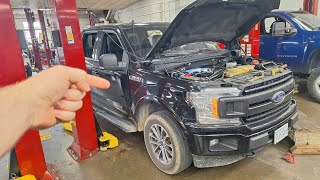
🎬 Watch: A Ford technician explains common 10-speed transmission issues.For the 10R80 10-speed transmission in the Lincoln Navigator and its platform mates like the F-150 and Expedition, P0766 is rarely a simple electrical or solenoid fault. This code is a well-documented symptom of a larger, known mechanical issue within the transmission. Ford/Lincoln has released multiple Technical Service Bulletins (TSBs) acknowledging that the root cause is often a major hydraulic leak from a failed CDF clutch drum or sticking valves in the main control body, making this a much more serious and expensive repair than on other vehicles where it might just be a solenoid.
Symptoms You May Notice
- Harsh, erratic, or delayed shifts, particularly noted by owners during 1-3 or 3-5 upshifts.
- Vehicle entering 'limp mode' with limited gear availability.
- Loud clunking or banging sounds during shifting, sometimes described as feeling like being rear-ended.
- Failure to engage gears, including Reverse or any forward gear, sometimes after coming to a stop.
- Illuminated Check Engine Light or Transmission Warning Lamp.
- Hesitation or slipping when accelerating from a stop.
- Replacing only the 'D' shift solenoid. The solenoid itself is almost never the root cause of P0766 on the 10R80 transmission; the problem is hydraulic or mechanical, causing the solenoid to report a fault.
Most Likely Causes
- Internal CDF Clutch Drum Failure 🔴 High Probability → Shop Transmission Clutch Pressure Plate A widely documented design flaw in the 10R80 transmission where a bushing/sleeve in the CDF (Clutch D-F) drum assembly moves out of its bore ('walks out'), uncovering fluid passages and causing a massive internal hydraulic leak. This pressure loss starves the clutches of fluid, preventing them and their associated solenoids from functioning correctly. TSB 24-2254 specifically identifies this 'axial movement of the CDF clutch cylinder sleeve' as the cause.
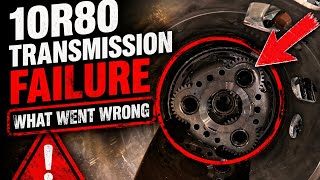
How to confirm: A technician must perform specific hydraulic pressure tests as outlined in Ford's TSBs (like TSB 24-2254). The presence of multiple solenoid or gear ratio codes (P0751, P0756, P2702, etc.) strongly points to this failure. Visual confirmation requires transmission disassembly. 🎬 See a 10R80 teardown to understand these internal failures.
Typical fix: The transmission must be removed and rebuilt with an updated CDF drum assembly. The revised part (JL3Z-7H351-B) supersedes the original (HL3Z-7H351-A) and is designed to prevent the bushing from moving. In many cases, dealers opt for a full transmission replacement with a remanufactured unit.
Est. part cost: $800-$2500 - Faulty Main Control Valve Body 🔴 High Probability → Shop Transmission Valve Body This is another well-documented failure point on the 10R80, identified in TSB 23-2250. Valves within the assembly can stick due to debris or wear, or the body itself can develop internal cracks or cross-leaks, leading to incorrect hydraulic pressures and erratic solenoid operation.
How to confirm: Diagnosis requires a high-level scan tool to monitor solenoid commands versus the actual gear state and transmission slip data. A technician may follow the diagnostic path in TSB 23-2250, which may lead to valve body replacement if specific DTCs are present and a software update does not resolve the issue.
Typical fix: Replacement of the entire main control valve body assembly. This is a complex job that also requires specific software relearn procedures after installation. Some shops may use upgraded aftermarket valve bodies from brands like SunCoast.
Est. part cost: $700-$1500 - Low or Contaminated Transmission Fluid ⚪ Low Probability → Shop Transmission Assembly The 10R80 requires a specific fluid, Mercon ULV. Using the wrong fluid can cause shifting problems. However, this is rarely the root cause of P0766 unless a significant leak has occurred.
How to confirm: Check the transmission fluid level and condition. The procedure is complex as there is no traditional dipstick. The fluid should be at the correct level, red in color, and not smell burnt. Burnt fluid indicates internal clutch damage, likely from the CDF drum failure. The correct operating temperature for a fluid level check is 206-215°F (96-101°C).
Typical fix: Perform a transmission fluid drain and fill or a full fluid exchange with the correct Mercon ULV fluid. This is unlikely to fix P0766 if it's caused by the common mechanical failures.
Est. part cost: $150-$400
Rare But Worth Checking
- Damaged Main Control to Oil Pump Seal: This failure almost exclusively occurs after a recent transmission repair where the valve body was removed and the seal was crushed, dislodged, or forgotten during reinstallation. It is a common workmanship error that causes a major pressure leak.
Diagnosis Steps
- Verify the code with a professional OBD-II scanner capable of reading Ford-specific transmission data.
- Check for any Technical Service Bulletins (TSBs) related to P0766 for your vehicle's VIN. Key TSBs include 24-2254 and 23-2250, which provide detailed diagnostic flowcharts.
- Check the transmission fluid level and condition. Burnt-smelling or dark fluid indicates internal damage and points towards a mechanical failure like the CDF drum.
- Follow the diagnostic procedure in TSB 23-2250. This may start with a PCM/TCM software update and adaptive learning drive cycle.
- If symptoms persist, the TSB may direct the technician to perform hydraulic pressure tests using specialized equipment (Pressure Vacuum Transducer Kit) to isolate the leak to the CDF drum circuit.
- If a hydraulic leak is confirmed, the diagnosis is CDF drum failure, requiring transmission removal and overhaul.
- If no significant leak is found but solenoid performance codes are present, the diagnosis points toward a faulty main control valve body, which should be replaced.
- Based on test results, prepare for either valve body replacement or a full transmission rebuild to address the CDF drum.
Parts You'll Likely Need
- Main Control Valve Body Assembly
(OEM #HL3Z-7A100-B)— This is a primary point of failure due to sticking valves and internal leaks, causing numerous shift codes including P0766, as outlined in TSB 23-2250.
Trusted brands: Motorcraft, SunCoast (Performance/Upgraded)
OEM price range: $700-$1500
Aftermarket price range: $600-$1800 - CDF Drum/Cylinder Assembly (Updated)
(OEM #JL3Z-7H351-B)— The original drum (p/n HL3Z-7H351-A) has a design flaw causing a hydraulic leak that triggers P0766. This updated part has a revised design to prevent the failure and is the definitive fix.
Trusted brands: Motorcraft
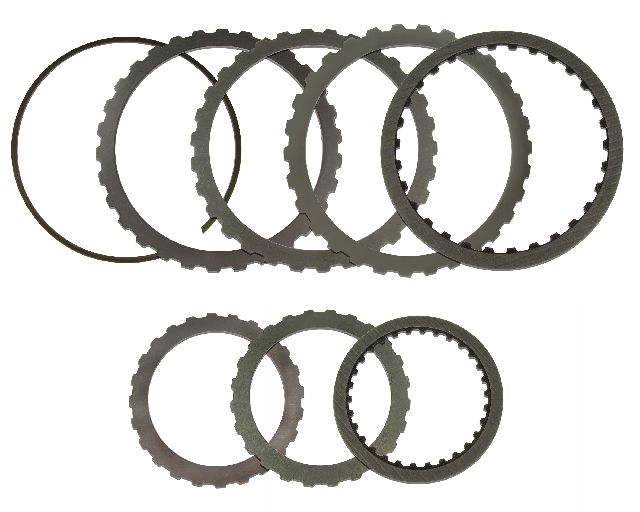
OEM price range: $200-$400 - Transmission Overhaul Kit — If the CDF drum has failed, a full rebuild is necessary, which requires a complete set of seals, gaskets, and clutches.
Trusted brands: Motorcraft
OEM price range: $500-$900
Aftermarket price range: $400-$700
Related Codes That Often Appear With This One
- P0751 — Shift Solenoid 'A' Performance/Stuck Off. When multiple solenoid codes appear together, it strongly indicates a widespread hydraulic issue, such as a faulty valve body or CDF drum failure, rather than multiple individual solenoid failures.
- P0756 — Shift Solenoid 'B' Performance/Stuck Off. Like P0751, this code appearing with P0766 points to a common underlying mechanical or hydraulic problem affecting multiple circuits.
- P2702 — Transmission Clutch 'C' Apply Time Range/Performance. This code is also directly linked in TSBs to the CDF drum failure, as the 'C' clutch is one of the clutches affected by the hydraulic leak.
Technical Service Bulletins (TSBs) & Recalls
- TSB 24-2254: Supersedes earlier TSBs for some vehicles. Identifies a hydraulic leak from an 'axially moved' CDF clutch cylinder
Platform-Specific Known Issues
- The 10R80 transmission is known for a design flaw in the CDF clutch drum where a bushing can 'walk out' of place, causing a major hydraulic leak and triggering various solenoid performance codes like P0766. This is explicitly detailed in Ford TSB 24-2254.
- Sticking valves in the main control valve body are another common, well-documented issue leading to similar symptoms and codes, as addressed in TSB 23-2250.
- A Reddit user with a 2021 model reported their transmission was replaced at 58k miles under warranty, with the dealer receipt showing a cost of around $10,000, highlighting the severity and expense of these failures.
Mechanic-Grade Diagnostic Values
- Shift Solenoid (A-F) Coil Resistance — expected: 5.0 - 5.4 Ohms at 68°F (20°C). Failure: A reading outside this range, or an open/infinite reading, indicates a faulty solenoid coil. However, this test rarely identifies the root cause for P0766 on the 10R80, which is usually hydraulic.
- Transmission Fluid Temperature (TFT) for Diagnostics — expected: 206°F - 215°F (96°C - 101°C). Failure: Fluid level and pressure checks must be performed within this specific temperature range for accuracy. Readings outside this range can lead to misdiagnosis.
Scan Tool Commands That Help
- Ford IDS / FORScan: PCM/TCM > Transmission Characterization Update — This function is mandatory after replacing the main control valve body or the entire transmission. It requires inputting the 13-digit Solenoid Body Strategy number found on the new part's tag to ensure the TCM uses the correct calibration for the new solenoids.
- Ford IDS / FORScan: TCM > Clear Transmission Adaptive Tables — Used to reset the transmission's learned shift patterns. This is a required first step before performing the Adaptive Learning Drive Cycle after a repair. Some users report temporarily disabling adaptive learning entirely using FORScan to achieve more consistent shifting, though this is not a factory-recommended procedure.
- Ford IDS: Datalogger > Solenoid State & Output State Control — A technician uses this to command a specific solenoid (e.g., Solenoid D) on and off while monitoring its feedback state to determine if the command is being executed. If the command is sent but the state doesn't change, it points to a hydraulic or mechanical issue, assuming wiring is intact.
Wiring & Ground Locations
- Solenoid Body ID / Strategy Tag — A sticker on the driver's side of the transmission case. The 13-digit strategy is also etched directly onto the valve body casting itself.. This tag contains the 12-digit Solenoid Body ID and the critical 13-digit Solenoid Body Strategy. The strategy number MUST be programmed into the TCM/PCM after a valve body or transmission replacement to prevent shift quality issues and potential fault codes.
Real Owner Repair Stories
- Reddit user on r/f150 (2019 Ford F-150 Lariat 2.7L (10R80 Transmission)) — Delayed engagement (2-3 seconds) when shifting from Park to Drive or Reverse, and between Drive and Reverse.
❌ Tried (didn't work) A previous software reflash and parts swap per an earlier TSB for harsh shifting did not prevent this new problem.
✅ What actually fixed it The delayed engagement was resolved by replacing the CDF drum. However, this fix introduced a new problem of very hard shifts into 3rd gear. The hard shifting was then subsequently fixed by replacing the main valve body assembly. This highlights how both components can fail or be interrelated.
OEM Part Supersession History
HL3Z-7H351-A→JL3Z-7H351-A, then JL3Z-7H351-B— The original CDF drum design allowed an internal bushing to 'walk' out of its bore. The updated JL3Z-7H351-B part features a machined lip that acts as a hard stop, physically preventing the bushing from moving and causing the hydraulic leak.
Heads up: The older part numbers should be avoided in all repairs. Only the latest revision (JL3Z-7H351-B or newer) should be used to permanently fix the issue.
Model Year Variations Within This Range
- 2018 - Mid-2022: Vehicles built on or before August 15, 2022, were likely assembled with the original, failure-prone CDF clutch drum. Vehicles built on or after August 16, 2022, are expected to have the updated CDF drum (JL3Z-7H351-B) from the factory, significantly reducing the probability of this specific failure. However, supply chain variations mean the vehicle's build date is not a perfect guarantee; visual confirmation of the transmission tag or a VIN check by a dealer is more reliable.
Diagnostic Flowchart
Other Known Issues on This Vehicle
Issues unrelated to this code that are worth knowing about as an owner of this generation:
- 3.5L EcoBoost Cam Phaser Rattle on Cold Start 🔴 High — Very common on vehicles built before late 2019. Noise typically appears on cold starts after sitting for 6+ hours. (Ref: Customer Satisfaction Program 21N03, TSB 23-2143.)
- Adaptive Air Suspension Failure 🟠 Medium — Common failure point as the vehicle ages. Leaks in air bags/lines or compressor failure can cause the vehicle to sag and ride harshly.
- SYNC Infotainment System Glitches/Freezing 🟡 Low — Frequently reported by owners. Symptoms include the main screen freezing, going black, or rebooting randomly. Often a software issue, but can be a hardware (APIM module) failure.
- Seat Belt Pretensioner Inadvertent Deployment 🔴 High — Subject of a recall (20V682). The pretensioner can deploy unexpectedly, locking the seatbelt. (Ref: NHTSA Recall 20V682000)
- Power Running Board Failure 🟡 Low — A common complaint where the running boards get stuck, often due to motor failure or rust on the bracketry.
Used vs. New Parts: Buying Guide for This Vehicle
When a used part is the smart pick: For this specific P0766 issue on the 10R80, buying a complete used transmission is extremely risky and generally not recommended. The high failure rate of the original CDF drum and valve bodies means a used unit from a 2018-2022 donor vehicle is likely to have or develop the same problem. A used part only makes sense if its full service history is known and it has already been rebuilt with the updated CDF drum and a new valve body.
Donor-vehicle mileage cap: roughly under 30000 miles for the part to have meaningful remaining life.
What to inspect on the donor part:
- Verify the donor vehicle's build date is after August 2022 to increase the chance of getting updated factory parts.
- Ask for service records showing a transmission overhaul or replacement with the updated CDF drum (part JL3Z-7H351-B).
- Inspect the transmission fluid from the donor unit. If it's dark, burnt, or contains metallic particles, reject the part immediately as it indicates severe internal wear.
OEM-only on this vehicle (don't cheap out):
- CDF Clutch Drum: While aftermarket solutions like the Sonnax drum saver kit exist, the most proven fix is the updated OEM Ford part (JL3Z-7H351-B). Given the labor involved, using the guaranteed OEM fix is the wisest choice.
Aftermarket brands forum-validated for this vehicle:
- SunCoast Performance: Offers upgraded valve bodies and complete rebuilt transmissions that address the factory weak points, such as by increasing line pressure and improving clutch apply rates. These are popular in the performance community but may result in firmer shifts than stock.
- Sonnax: Produces a 'CDF Drum Saver Kit' (129910-01K) designed to be installed on an original drum to prevent the bushing from walking out, which can be an option for professional rebuilders.
Brands owners have reported issues with on this vehicle:
- Unbranded or generic valve bodies and solenoids from online marketplaces should be avoided. The 10R80 is highly sensitive to calibration, and a proper repair requires either a new Motorcraft part with a programmable strategy number or a high-quality unit from a reputable transmission-focused company like SunCoast.
Real Owner Stories
Aggregated from forums and TSBs cited above. Mileages and costs reflect what owners reported in those sources.
2021 Lincoln Navigator — 58000 miles
Symptoms: Owner reported a transmission failure that required a full replacement.
What fixed it: The entire transmission was replaced under the CPO warranty.
Cost: $10000-$10000
Source hint: Reddit r/LincolnNavigator - 'What are the common problems...'
Related OBD-II Codes
Frequently Asked Questions
My 2019 Lincoln Navigator is shifting harshly between 1st and 3rd gear. Does a TSB exist for this?
What is the 'CDF drum failure' I've read about on my Lincoln Navigator's 10R80 transmission?
Is it necessary to replace the entire transmission for a P0766 code?
Should I try a simple transmission fluid change to fix the P0766 code?
My mechanic is rebuilding my transmission to fix the CDF drum. Is there an updated part they should use?
Are other Ford vehicles affected by this same 10R80 transmission issue?
Helpful Videos
We Have This Part in Stock

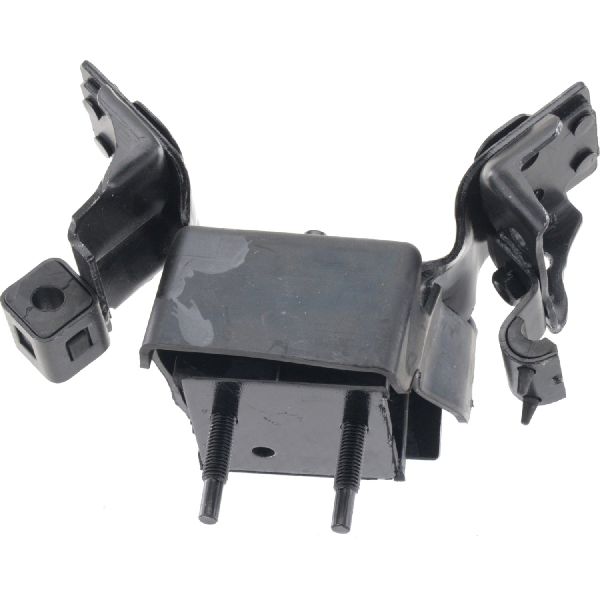

The information in this article is provided for general reference and educational purposes only. Vehicle specifications, procedures, and part compatibility can vary by production date, trim level, and region. Always consult your vehicle's factory service manual and verify part numbers before purchasing or performing repairs. Safety-critical components such as airbags, seat belts, and braking systems should be installed by a qualified professional.
- Lincoln Navigator:
- 🧭 Diagnostic Flowchart
- 🎬 Helpful Videos
- 🛍️ Shop This Part
- What's Unique About the 2018-2023 Lincoln Navigator
- Symptoms You May Notice
- Most Likely Causes
- Rare But Worth Checking
- Diagnosis Steps
- Parts You'll Likely Need
- Related Codes That Often Appear With This One
- Technical Service Bulletins (TSBs) & Recalls
- Platform-Specific Known Issues
- Mechanic-Grade Diagnostic Values
- Scan Tool Commands That Help
- Wiring & Ground Locations
- Real Owner Repair Stories
- OEM Part Supersession History
- Model Year Variations Within This Range
- Other Known Issues on This Vehicle
- Used vs. New Parts: Buying Guide for This Vehicle
- Real Owner Stories
- 2021 Lincoln Navigator — 58000 miles
- Related OBD-II Codes
- Frequently Asked Questions
- 🎟️ Get 5% Off