

OBD-II Code P0767: Shift Solenoid 'D' Stuck On
The Ultimate 2026 Guide to What P0767 Means, Why It Triggers, and How to Fix It
- Code P0767 indicates Shift Solenoid 'D' is mechanically or electrically stuck open, forcing the transmission into a single-gear 'limp mode'.
- Stop driving immediately; operating with P0767 generates extreme internal heat that turns a $300 solenoid fix into a $5,000+ transmission rebuild.
- Check your transmission fluid level and color first, as low or burnt fluid is the leading cause of sticking solenoids.
- For 2017+ Ford 10-speed vehicles, skip the individual solenoid replacement; P0767 almost always requires a complete $1,500+ valve body assembly replacement per factory TSBs.
What Does P0767 Mean?
Your Powertrain Control Module (PCM) detects Shift Solenoid 'D' is stuck in the 'on' (open) position. This solenoid acts as an electronic gate controlling transmission fluid pressure. When stuck open, it floods a hydraulic circuit at the wrong time, disrupting gear shifts and triggering limp mode.
Technical definition: The SAE definition is 'Shift Solenoid D Stuck On'. The control module detects the solenoid's electrical circuit remains energized (voltage present) after receiving an 'off' command, verified by monitoring the resulting gear ratio or circuit voltage.
Can I Drive With P0767?
No — Do Not Drive. Stop driving immediately. Operating a vehicle with code P0767 destroys internal transmission clutches and valve bodies due to extreme overheating and incorrect hydraulic pressure. You risk turning a $300 solenoid replacement into a $5,000 full transmission rebuild. The vehicle will likely lock into a single gear ('limp mode') or fail to move entirely, leaving you stranded.
Common Causes
- Low, Dirty, or Contaminated Transmission Fluid (Very Common) — Transmission fluid low on level or contaminated with clutch material clogs the solenoid's internal passages, causing it to physically stick. Old, degraded fluid also loses its hydraulic properties, leading to malfunction.
- Faulty Transmission Valve Body (Common) — The valve body is the hydraulic brain of the transmission. Sticking valves, warped surfaces, or clogged passages route pressure incorrectly, manifesting as a stuck solenoid code. On modern Ford 10-speed vehicles, this is the primary cause.
- Faulty Shift Solenoid 'D' (Common) — The solenoid fails mechanically or electrically. An internal short circuit keeps it energized, or a broken spring jams the plunger in the 'on' position.
- Wiring or Connector Short-to-Voltage (Common) — A short-to-voltage in the wiring harness powers the solenoid constantly, keeping it on regardless of TCM commands. Corroded or fluid-contaminated connectors create this persistent electrical fault.
- Internal Hydraulic Passage Blockage (Less Common) — Sludge and debris accumulate and block the intricate hydraulic passages within the transmission case, leading to pressure issues that trigger the code.
- Faulty Transmission Control Module (TCM) (Less Common) — An internal TCM failure, such as a shorted output driver transistor, continuously sends an erroneous 'on' signal to the solenoid.
- Internal Mechanical Transmission Failure (Rare) — A failing clutch pack, faulty transmission pump, or damaged CDF clutch drum causes widespread incorrect hydraulic pressures, triggering P0767 as a symptom of catastrophic failure.
Symptoms
- Transmission Stuck in Gear (Limp Mode) — The transmission enters a fail-safe mode, locking into a single gear (often 2nd or 3rd) to prevent further internal damage.
- Harsh, Delayed, or Erratic Shifting — The vehicle slams into gear, hesitates, or shifts unpredictably because the 'D' solenoid disrupts the hydraulic sequence.
- Engine Stalls When Coming to a Stop — The transmission fails to downshift or disengage a clutch properly, stalling the engine as it tries to drive the wheels while stopped.
- Check Engine Light On (also visible on scanner) — The PCM illuminates the Malfunction Indicator Lamp (MIL). 🎬 Watch: 11 common symptoms of a failing shift solenoid. A flashing transmission warning light is also common.
- Transmission Slipping or Overheating (also visible on scanner) — Engine RPMs flare up without a corresponding increase in speed. This generates excessive friction, causing the transmission to overheat.
- Vehicle Won't Move or No Reverse — The hydraulic error prevents the transmission from engaging any forward gear, or it loses Reverse entirely (a hallmark symptom on newer Ford 8F35 transmissions).
Diagnostic Flowchart
Tap your situation to follow the diagnostic path that matches what you're seeing on this code.
Common Fixes & Costs
- Transmission Fluid and Filter Change — Parts: $50-$120, Labor: $100-$250, ~1 hr book time (Intermediate)
- Replace Transmission Valve Body
— Parts: $400-$1300, Labor: $400-$1200, ~4 hr book time
(Professional)
Ford F-150/Explorer (10R80): OEM JL3Z-7A100-C (Alt: Transtar Remanufactured)
Dodge/Chrysler (62TE): OEM 68376696AA (Solenoid Pack) (Alt: Dorman 609-040) - Replace Shift Solenoid 'D'
— Parts: $30-$150, Labor: $200-$500, ~2.5 hr book time
(Advanced)
GM/Chevrolet (6L80/8L90): OEM 24256523 (Alt: ACDelco)
Honda Accord/Odyssey (V6): OEM 28260-R90-004 (Alt: Beck/Arnley) - Repair Wiring or Connectors — Parts: $10-$60, Labor: $125-$300, ~1.5 hr book time (Intermediate)
- TCM Software Update or Replacement — Parts: $0-$800, Labor: $120-$300, ~1.5 hr book time (Professional)
- Complete Transmission Rebuild or Replacement — Parts: $2500-$5000, Labor: $800-$1500, ~10 hr book time (Professional)
Used vs. New Parts: Buying Guide
When a used part is worth it: For simple solenoid replacements on older vehicles (over 150k miles), a tested used solenoid from a reputable salvage yard is budget-friendly. For components with known design flaws like the Ford 10R80 valve body, buying used guarantees repeat failure.
Donor-vehicle mileage cap: roughly under 80000 miles for the part to have meaningful remaining life.
Donor quality checklist:
- Verify the donor vehicle was not scrapped for transmission failure.
- Match the part number exactly.
- Demand a 30-90 day warranty.
Decision logic:
- If The known common fix is a valve body with inherent design flaws (e.g., Ford 10R80) → Buy a new or remanufactured OEM part.
- If The part is a simple solenoid on a vehicle >150K miles and budget is the primary concern → A tested used part is a reasonable risk.
- If The part is a complex electronic component like a solenoid pack or TCM → Favor new or professionally remanufactured parts with a warranty.
Warranty tradeoff: Used parts offer a 30-90 day warranty. Aftermarket new parts come with a 1-3 year warranty. A remanufactured valve body carries a 3-year/unlimited mileage warranty, offering the best long-term value.
Worst-case if a used part fails: $500-$1500 if a used part fails, requiring repeat labor and a new part.
What Happens If You Wait — Timeline
- 0-1 month: Code P0767 sets. The driver notices occasional harsh shifts or hesitation. Internal stress on the associated clutch pack begins. (MPG impact: 0-5%% · Added cost: $0)
- 1-3 months: Shifting becomes consistently erratic. The transmission enters 'limp mode' intermittently. Increased friction overheats the fluid, causing it to darken. (MPG impact: 5-15%% · Added cost: $50-$200)
- 3-6 months: Sustained overheating damages seals and warps the valve body. Clutch material contaminates other solenoids. The original problem now requires a valve body or clutch pack replacement. (MPG impact: 15-25%% · Added cost: $1,500 - $3,000)
- 6+ months: Catastrophic failure. Debris-filled fluid destroys the torque converter and transmission pump. The vehicle fails to engage any gear, requiring a complete rebuild. (MPG impact: 25%+% · Added cost: $4,000 - $8,000+)
Cost of Not Fixing It
- Immediate (0-1 Month): Significant drivability issues including harsh shifting, limp mode, and a drop in fuel economy. Increased stress on clutch packs begins. (Added cost: Negligible, beyond increased fuel costs.)
- Short-Term (1-6 Months): Excessive heat leads to fluid breakdown. This accelerates wear on clutch packs and warps the valve body, turning a solenoid issue into a major repair. (Added cost: $1,500 - $3,000)
- Long-Term (6+ Months): Catastrophic transmission failure. Contaminated fluid destroys the torque converter and pump, necessitating a complete transmission rebuild. (Added cost: $3,500 - $8,000+)
Diagnosis Steps
- Check Fluid Level and Condition
Verify the fluid is at the correct level according to the manufacturer's procedure. Bright red is good; brown/black, burnt-smelling, or fluid with metallic particles indicates severe internal damage.
Tools: Rag, Transmission Dipstick (if equipped) or Level Plug (Beginner) - Check for Technical Service Bulletins (TSBs)
Check for TSBs related to P0767 for your specific vehicle. Manufacturers release bulletins for known issues, saving diagnostic time by pointing directly to common failures like faulty Ford valve bodies.
Tools: Online TSB Database, Repair Manual Subscription (Beginner) - Scan for Codes and Review Live Data
Use an advanced scanner to confirm P0767 is active. Monitor the commanded state of Shift Solenoid 'D' versus its actual state while driving to see if the TCM is requesting the shift.
Tools: Advanced OBD-II Scanner (Beginner) - Inspect External Wiring and Connectors
Visually inspect the main transmission wiring harness and connector at the case. Look for chafing, melting, corrosion, or loose connections causing a short circuit.
Tools: Flashlight, Mirror (Intermediate) - Test the Solenoid Circuit for Short-to-Voltage
Disconnect the transmission harness connector at the TCM. Check for voltage on the power feed wire for solenoid 'D' with the key on, engine off. Voltage present indicates a short-to-power in the harness.
Tools: Multimeter, Vehicle-Specific Wiring Diagram (Advanced) - Test Shift Solenoid Resistance (Cold)
Remove the transmission oil pan. Disconnect the solenoid and measure internal resistance. Compare to specs (e.g., Ford 10R80: 5.0-5.4 Ohms; GM 6L80 on/off: 20-40 Ohms; Honda: 12-25 Ohms). Zero or infinite ohms indicates failure.
Tools: Socket Set, Drain Pan, Multimeter, Gasket Scraper, Torque Wrench (Advanced) - Inspect the Valve Body
With the pan off, inspect the valve body for scoring, metal shavings, or sludge buildup. Debris in the 'D' solenoid bore causes valves to stick.
Tools: Flashlight, Torque Wrench (Advanced) - Dynamic Solenoid Resistance Test (Hot Check)
If resistance is normal cold, carefully heat the solenoid with a heat gun to 175-225°F and re-check. A significant change confirms a thermal failure.
Tools: Multimeter, Heat Gun, Infrared Thermometer (Professional) - Solenoid Waveform Analysis (Oscilloscope)
Back-probe the command wire at the TCM to observe the voltage and duty cycle pattern. A clean square wave proves the TCM and wiring are good, pointing definitively to a mechanical or hydraulic issue.
Tools: Oscilloscope, Back-Probe Pins (Professional)
When This Code Triggers (Freeze-Frame Conditions)
- Engine Coolant Temp: 185-210°F (85-99°C) (Sets when the vehicle is fully warmed up and running for several minutes.)
- Engine RPM: 1500-2800 RPM (Triggers during steady-state cruising or light acceleration.)
- Vehicle Speed: 35-55 mph (56-88 km/h) (Occurs at cruising speeds right before or after a commanded shift involving solenoid 'D'.)
- Commanded Gear vs. Actual Gear: Commanded: 4th, Actual: 3rd (The PCM commands a gear requiring solenoid 'D' to turn 'off', but speed sensors report a gear ratio indicating it remains 'on'.)
Related Codes
- P0700 — A generic code confirming the TCM has detected a fault and requested the Check Engine Light. Focus diagnostics on P0767.
- P0766 — Means 'Shift Solenoid D Stuck Off'. Seeing both P0766 and P0767 intermittently points to a mechanically binding solenoid or erratic electrical connection.
- P0768 — Indicates an electrical fault in the circuit, such as a broken wire or direct short to ground, rather than a mechanical sticking issue.
- P2703 — Means the clutch pack associated with solenoid 'D' takes too long to engage. This confirms the stuck solenoid is causing functional mechanical impact.
Climate & Environmental Factors
- Extreme Cold: Fluid thickens, increasing hydraulic resistance. This strains solenoids and causes sluggish operation until the transmission reaches operating temperature.
- Extreme Heat: High temperatures accelerate fluid breakdown. Degraded fluid loses lubricating properties and forms sludge, the primary cause of sticking solenoids.
- High Humidity / Coastal Regions: Salty air accelerates corrosion on external connectors and wiring, increasing the risk of electrical shorts.
How to Talk to a Mechanic About This Code
Say this: "I have a P0767 code, 'Shift Solenoid D Stuck On,' and I'm experiencing harsh shifting. I'd like to schedule a diagnostic that starts with checking the fluid condition, looking for any TSBs, and testing the solenoid circuit before recommending major parts."
This signals you are an informed customer. It directs the mechanic to follow a logical diagnostic process, preventing them from immediately jumping to a full transmission rebuild.
Avoid saying:
- 'My transmission is acting weird.'
- 'Just fix whatever is wrong with it.'
- 'My check engine light is on, can you just look at it?'
Questions to ask before authorizing the repair:
- What was the condition and level of the transmission fluid? Did you see metal shavings in the pan?
- Did you test the solenoid's resistance, and what was the reading compared to the spec?
- Is there a Technical Service Bulletin for this code on my specific vehicle?
- If a valve body replacement is needed, does the new part require a computer 'relearn' procedure, and is that included in your quote?
Where to Take It: Dealer vs Independent vs Chain
- Dealer:
Best for: Vehicles under powertrain warranty., Known manufacturer-specific failures covered by TSBs (e.g., Ford 10R80 valve body)., Repairs requiring proprietary software for programming or relearn procedures.
Downsides: Highest labor rates, often 1.5-2x more than independent shops., Defaults to replacing a whole transmission when a smaller repair suffices. (Typical cost: +50% vs. baseline) - Chain Shop:
AVOID for any repair work. The risk of incorrect diagnosis is extremely high.
Best for: Only for a basic diagnostic code scan.
Downsides: Technicians lack specialized expertise for internal transmission diagnostics., High risk of misdiagnosis and being sold unnecessary flushes., Outsources major transmission work to a third party and adds a markup. (Typical cost: -10% vs. baseline)
When to Walk Away From the Repair
If the total estimated repair cost exceeds 50% of your car's current private-party market value, seriously consider selling or trading it in.
- Car worth $4000, fix is $600: Fix it. The repair is a small fraction of the car's value.
- Car worth $25000, fix is $2800: Fix it. This is a significant but manageable repair well below the 50% threshold.
- Car worth $3500, fix is $4000: Walk away. The repair costs more than the car is worth.
What Scan Tool You Need for This Code
Minimum: A scanner that reads manufacturer-specific transmission codes and displays live transmission data (TCM commands, fluid temp, gear status).
A cheap $20 code reader only shows the P0767 code. It cannot show if the computer is commanding the solenoid on/off or the fluid temperature, leaving you guessing at the cause.
Budget: BlueDriver Pro Scan Tool (~$100) — Connects via Bluetooth. Reads enhanced transmission codes and provides live data graphing to see TCM commands.
Mid-range: Foxwell NT510 Elite / Autel MaxiCheck MX808 (~$150-350) — Offers bidirectional control. Allows you to manually command the 'D' solenoid on and off to test its electrical circuit and listen for the physical click.
Professional: Autel MaxiCOM MK808BT / MK900BT (~$500-800) — Full bidirectional control and the ability to perform 'Solenoid Valve Characterization' and 'Transmission Adaptive Learn' procedures required after a valve body replacement.
Rent vs buy: Renting a scanner from an auto parts store is insufficient, as loaner tools are basic code readers. Proper diagnosis requires viewing live data and bidirectional control, making a purchase necessary.
How to Clear the Code After You Fix It
- Use an OBD-II scan tool to clear all Diagnostic Trouble Codes (DTCs).
- Perform a transmission adaptive values learn procedure if specified by the manufacturer.
- Complete a full drive cycle to allow the vehicle's readiness monitors to become 'Ready'.
Drive cycle (~30 minutes): Cold start (sit for 8+ hours). Idle for 3 minutes with A/C on. Accelerate to 55 mph and hold for 10 minutes. Drive in stop-and-go city conditions for 10 minutes. Cool down completely.
Readiness monitors affected: Comprehensive Component Monitor (CCM), Catalyst Monitor, EVAP System Monitor, O2 Sensor Monitor
Before emissions retest: drive at least 100 miles to fully set monitors.
Watch out for:
- Clearing the code without fixing the mechanical problem guarantees it will return quickly.
- Failing to perform the transmission relearn procedure after a valve body replacement results in continued harsh shifting.
- Not driving long enough to set readiness monitors results in a failed emissions test.
Will This Fail Emissions / State Inspection?
Yes — this code typically fails an OBD-II emissions inspection.
- California: An active P0767 code is an automatic failure. All readiness monitors must be 'Ready' before a test can be passed after repair.
- New York: Any powertrain fault code that illuminates the MIL results in an immediate failure.
- Texas: An active P0767 code is an automatic failure. After repair, Texas allows one non-continuous monitor to be 'Not Ready' and still pass.
Most Commonly Affected Vehicles
- Ford Explorer, F-150, Mustang, Ranger (2017-2023) — Vehicles with the 10R80 transmission. P0767 indicates a faulty main control valve body or failed CDF clutch drum sleeve. The standard repair is a complete valve body replacement per Ford TSBs.
- Ford Maverick, Bronco Sport, Escape (2023-2025) — On 8F35 transmissions, P0767 combined with 'No Reverse' points to an internal Selectable One Way Clutch (SOWC) failure requiring transmission removal.
- Chevrolet / GMC Silverado, Sierra, Tahoe, Suburban (2015-2019) — Models with 6L80 and 8L90 transmissions log P0767 due to debris in the valve body. A software update and adaptive learn procedure often resolve intermittent issues.
- Honda Odyssey, Accord V6, Pilot (2011-2017) — Known for direct solenoid failures. Swapping the 'D' solenoid with an adjacent identical solenoid confirms the fault if the code follows the part.
- Toyota Camry, Sienna, RAV4 (2004-2012) — Commonly caused by a direct solenoid failure or an internally damaged wiring harness within the transmission.
- Dodge / Chrysler Grand Caravan, Town & Country (2008-2020) — The 62TE transmissions are infamous for solenoid pack failures. The repair requires replacing the entire solenoid pack assembly.
- Subaru Impreza, Crosstrek, Outback (2012-2017) — On TR580 CVTs, the equivalent code is P2764. Dealers recommend full valve body replacement, but independent shops can replace just the failed lock-up solenoid.
Manufacturer-Specific Notes
- Ford: On 10R80 and 8F35 transmissions, P0767 is a symptom of a larger mechanical issue (valve body or SOWC), not a simple solenoid failure. Always check TSBs first.
- Honda: Technicians use a 'swap test'. Swapping the suspected bad 'D' solenoid with a known good one confirms the fault if the trouble code changes to match the new location.
- Subaru: Dealerships quote full valve body replacements for solenoid codes. However, the aftermarket sells individual solenoids, saving significant money.
- GM / Chevrolet: After any valve body repair, you must perform 'Solenoid Valve Characterization Reprogramming' and 'Transmission Adaptive Values Learn' with a factory scan tool to prevent harsh shifting.
Real Owner Stories
2018 Ford F-150 with 10R80 at 75K miles
Owner experienced harsh shifting, clunking, and the truck getting stuck in 5th gear with P0767 active.
What they tried:
- A fluid and filter change provided no improvement.
- An independent shop replaced only the 'D' solenoid, but the problem persisted.
Outcome: The root cause was a known issue with the 10R80 valve body. A Ford dealership replaced the entire main control valve body assembly for $2,800, resolving all shifting issues.
Lesson: On modern Ford 10-speeds, P0767 is rarely an isolated solenoid failure. Valve body replacement is the standard, correct fix.
2011 Honda Odyssey at 130K miles
Check Engine Light illuminated with P0767. The owner noticed occasional harsh downshifts.
What they tried:
- The mechanic swapped the 'D' shift solenoid with the identical 'C' shift solenoid.
- After the swap, the code changed to P0762 (Shift Solenoid 'C' Stuck On).
Outcome: The 'swap test' confirmed the solenoid itself was faulty. The owner purchased a new OEM solenoid for $90 and paid 1.5 hours of labor. The code did not return.
Lesson: For many Honda models, a simple solenoid swap is a powerful diagnostic tool that prevents unnecessary transmission teardowns.
2024 Ford Maverick with 8F35 at 15K miles
Brand new truck lost the ability to go into Reverse, triggering P0767.
What they tried:
- The owner checked online forums and found this was a known issue.
Outcome: The dealer referenced TSB 26-2058, identifying a failure of the internal Selectable One-Way Clutch (SOWC). The repair required transmission removal and was covered under warranty.
Lesson: If P0767 appears on a newer Ford with a 'No Reverse' symptom, check for TSBs immediately. It is a known mechanical defect requiring dealer intervention.
How to Prevent This Code From Triggering
- Regular Transmission Fluid and Filter Changes (Every 30,000 to 60,000 miles.) — Clean fluid maintains correct hydraulic properties. Old fluid leads to sludge buildup, the primary cause of sticking solenoids and valve body components.
- Use ONLY the Manufacturer-Specified Fluid Type (Every time fluid is added or changed.) — Using the wrong fluid causes foaming, overheating, and premature clutch wear, leading to debris that clogs solenoids.
- Install an Auxiliary Transmission Cooler (One-time installation for vehicles under heavy load.) — Heat is the #1 killer of automatic transmissions. An auxiliary cooler keeps fluid temperatures stable, extending component life.
- Check Fluid Level Regularly (Monthly, and before long trips.) — Low fluid causes the pump to suck in air, leading to low hydraulic pressure, slipping, and overheating.
Frequently Asked Questions
What does 'Shift Solenoid D Stuck On' actually mean?
It means a computer-controlled valve in your transmission is mechanically or electrically stuck open. This disrupts the precise flow of hydraulic fluid needed to shift gears correctly. The result is harsh shifting, getting stuck in gear, and potential transmission damage.
What is the most common misdiagnosis for code P0767?
The most common mistake is replacing the shift solenoid without checking the transmission fluid condition first. The second biggest error is ignoring manufacturer TSBs. On modern Fords, replacing a single solenoid fails because the root cause is the entire valve body.
How much will it cost to fix P0767?
A simple fluid change costs $150-$350, while a single solenoid replacement runs $250-$600. If the cause is a faulty valve body, expect to pay $1,500-$3,000. A full transmission rebuild exceeds $5,000.
Can a transmission flush fix a P0767 code?
If the problem is caused by dirty fluid or minor debris, a fluid flush sometimes dislodges it and solves the issue. However, if the solenoid has failed electrically or the valve body is warped, a flush is a waste of money. It provides only a temporary fix at best.
Can I replace just one shift solenoid?
Yes, on many vehicles you can replace a single solenoid. However, on models like Dodge vans with the 62TE, they are sold as a complete 'solenoid pack'. For high-mileage vehicles, replacing all solenoids as a set prevents future failures.
What gear is Shift Solenoid 'D' responsible for?
This depends entirely on your specific transmission design. Solenoids work in combination to achieve different gears; 'D' might control 3rd and 4th gear, or it might control the torque converter clutch. Consult your manufacturer's service manual for the exact solenoid application chart.
What does the ':00' mean in a code like P0767:00?
The two digits after the main code are the Failure Type Code (FTC) used in modern CAN bus systems. A ':00' FTC is a general designation meaning 'Component Fault' without further specifics. Other FTCs indicate specific issues like a short to ground or short to power.
Can I fix P0767 myself?
Checking the fluid level is a simple DIY task. However, replacing a solenoid requires removing the transmission pan, handling messy fluid, and using specific torque wrenches. Due to the high risk of causing internal damage, leave repairs beyond a fluid check to a transmission specialist.
Key Takeaways
- Code P0767 indicates Shift Solenoid 'D' is mechanically or electrically stuck open, forcing the transmission into a single-gear 'limp mode'.
- Stop driving immediately; operating with P0767 generates extreme internal heat that turns a $300 solenoid fix into a $5,000+ transmission rebuild.
- Check your transmission fluid level and color first, as low or burnt fluid is the leading cause of sticking solenoids.
- For 2017+ Ford 10-speed vehicles, skip the individual solenoid replacement; P0767 almost always requires a complete $1,500+ valve body assembly replacement per factory TSBs.
Helpful Videos



Shop the Parts Behind P0767
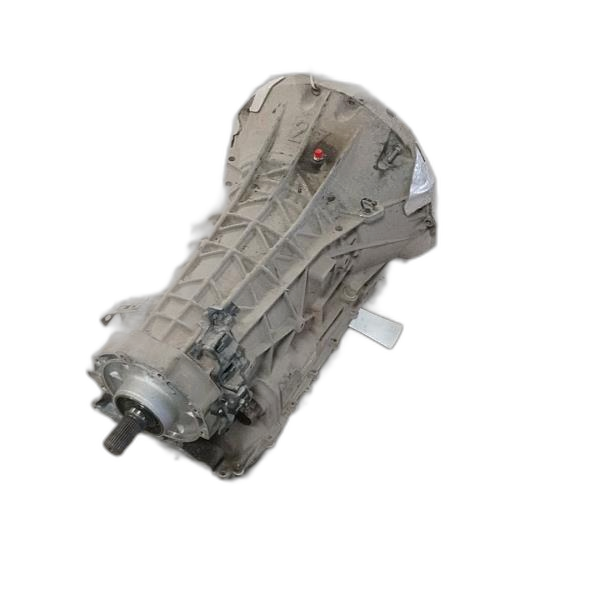
Below are the parts most often responsible for code P0767, ranked by how frequently each one is the actual culprit (per the diagnosis above). Tap any to see what we have for your vehicle.




The information in this article is provided for general reference and educational purposes only. Vehicle specifications, procedures, and part compatibility can vary by production date, trim level, and region. Always consult your vehicle's factory service manual and verify part numbers before purchasing or performing repairs. Safety-critical components such as airbags, seat belts, and braking systems should be installed by a qualified professional.
- 🧭 Diagnostic Flowchart
- 🎬 Helpful Videos
- 🛍️ Shop This Part
- What Does P0767 Mean?
- Can I Drive With P0767?
- Common Causes
- Symptoms
- Common Fixes & Costs
- Used vs. New Parts: Buying Guide
- What Happens If You Wait — Timeline
- Cost of Not Fixing It
- Diagnosis Steps
- When This Code Triggers (Freeze-Frame Conditions)
- Related Codes
- Climate & Environmental Factors
- How to Talk to a Mechanic About This Code
- Where to Take It: Dealer vs Independent vs Chain
- When to Walk Away From the Repair
- What Scan Tool You Need for This Code
- How to Clear the Code After You Fix It
- Will This Fail Emissions / State Inspection?
- Most Commonly Affected Vehicles
- Manufacturer-Specific Notes
- Real Owner Stories
- 2018 Ford F-150 with 10R80 at 75K miles
- 2011 Honda Odyssey at 130K miles
- 2024 Ford Maverick with 8F35 at 15K miles
- How to Prevent This Code From Triggering
- Frequently Asked Questions
- What does 'Shift Solenoid D Stuck On' actually mean?
- What is the most common misdiagnosis for code P0767?
- How much will it cost to fix P0767?
- Can a transmission flush fix a P0767 code?
- Can I replace just one shift solenoid?
- What gear is Shift Solenoid 'D' responsible for?
- What does the ':00' mean in a code like P0767:00?
- Can I fix P0767 myself?
- Key Takeaways
- 🎟️ Get 5% Off