

P0767 on 2020-2023 Ford Explorer: Shift Solenoid 'D' Stuck On Causes & Fixes
On a 2020-2023 Explorer, code P0767 almost always indicates a known, widespread issue with the 10-speed automatic transmission's main control valve body. Ford has issued multiple Technical Service Bulletins (TSBs) for this problem. The fix is a complex valve body replacement, a non-DIY job costing approximately $1,400-$2,500.
- P0767 on a 2020-2023 Explorer is a serious transmission code that points to a known issue, not a random failure.
- The problem is almost certainly with the transmission's main control valve body, as documented in multiple Ford Technical Service Bulletins.
- Do not make the mistake of replacing just the single 'D' solenoid; the entire valve body assembly usually needs to be replaced for a permanent fix.
- This is a complex and expensive repair that should only be performed by a qualified professional or dealership.
- Driving with this condition can lead to further transmission damage and leave you stranded.
What's Unique About the 2020-2023 Ford EXPLORER
The 2020-2023 Ford Explorer uses the 10R60/10R80 10-speed automatic transmission, which is known for having issues with its main control (valve body) and the CDF clutch drum. Ford has released an extensive list of TSBs (including TSB 22-2428 and TSB 24-2252) that group P0767 with many other shifting codes. This indicates a systemic design or manufacturing issue, such as sticking valves in the valve body or hydraulic leaks from a shifting CDF clutch drum sleeve, rather than random, isolated solenoid failures. The problem is so common that the repair is often a full valve body replacement, not just a single solenoid.
Diagnostic Flowchart
Tap your situation to follow the diagnostic path that matches what you're seeing on this vehicle.
Symptoms You May Notice
- Harsh or delayed shifts between gears.
- Delayed or harsh engagement when shifting from Park to Drive or Reverse.
- Illuminated Malfunction Indicator Lamp (Check Engine Light).
- Transmission may get stuck in one gear (limp mode).
- Vehicle feels like it's hunting for gears or shifting erratically.
- Transmission slipping between gears.
- Engine may stall when coming to a stop.
- Transmission overheating.
- Replacing only the 'D' shift solenoid. Because the issue is often systemic to the entire valve body assembly or a separate CDF drum leak, replacing a single solenoid is unlikely to provide a lasting solution and the problem will likely return.
Most Likely Causes
- Faulty Transmission Main Control Valve Body 🔴 High Probability → Shop Transmission Valve Body As documented in numerous Ford TSBs (TSB 22-2428, TSB 24-2252, etc.), the valve body in the 10R60/10R80 transmission is a very common failure point, prone to sticking solenoids and internal hydraulic cross-leaks due to warping or wear.
How to confirm: Diagnosis requires an advanced scan tool to check for a cluster of transmission codes listed in the TSBs. A technician will follow the diagnostic path outlined in the relevant TSB, which often supersedes individual component tests and points toward valve body replacement.
Typical fix: Complete replacement of the main control valve body assembly with an updated part. The TCM will also need to go through a re-learning procedure or break-in routine after installation.
Est. part cost: $800-$1500 - Low or Contaminated Transmission Fluid 🟡 Medium Probability → Shop Transmission Assembly Some 10R60 transmissions were reportedly underfilled from the factory, leading to hard shifts and performance issues.
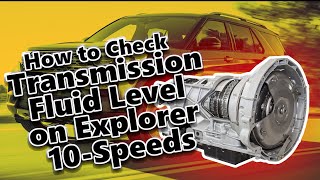
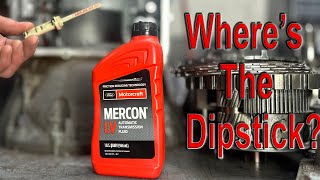
How to confirm: Check the transmission fluid level and condition. This must be done by a professional, as these transmissions do not have a traditional dipstick and require a specific service procedure. 🎬 Watch: How to check 10-speed transmission fluid levels correctly. The correct fluid is Motorcraft MERCON ULV (Ultra-Low Viscosity). Burnt or dark fluid indicates internal damage.
Typical fix: Perform a transmission fluid and filter change using the correct Motorcraft ULV fluid. This may not be a permanent fix if the valve body or other internal components are already damaged.
Est. part cost: $150-$300 - Faulty Transmission Control Module (TCM) or Software ⚪ Low Probability → Shop Transmission Assembly Some TSBs, like TSB 23-2176 for delayed reverse engagement 🎬 Watch: Diagnostic steps for Ford Explorer delayed reverse issues., are addressed with a PCM/TCM software update. This indicates that software can be a contributing factor to shift quality issues.
How to confirm: A Ford dealer or qualified shop must check for available software updates for the PCM/TCM using the Ford Diagnosis and Repair System (FDRS) after ruling out all hardware faults.
Typical fix: Reprogramming the PCM/TCM with the latest software. In rare cases, the TCM itself may need replacement.
Est. part cost: $100-$1000
Rare But Worth Checking
- Internal Transmission Wiring Harness Damage: → Shop Transmission Assembly The wiring inside the transmission can become damaged from heat or chafing, causing shorts or open circuits to the solenoids. This is less common than a valve body failure but is a possibility.
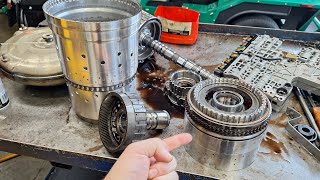
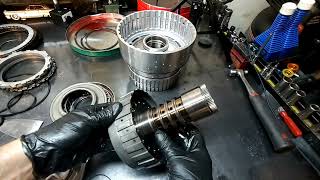
- CDF Clutch Drum Failure: → Shop Transmission Clutch Pressure Plate Another known major issue with the 10RXX transmissions is a failure of the 'CDF' clutch drum bushing/sleeve. The sleeve can move out of position, causing a significant hydraulic leak that triggers a wide range of shift codes, including P0767. TSBs 24-2252 and 25-2302 specifically address this failure and provide a procedure to test for it.
Diagnosis Steps
- Scan the vehicle's computer for all stored trouble codes. Note if P0767 is present with other transmission codes listed in Ford's TSBs.
- Check for applicable TSBs (e.g., TSB 22-2428, TSB 24-2252) based on the vehicle's VIN and build date.
- Have a professional check the transmission fluid level and condition. This is a critical step that requires a specific lift and service procedure. The fluid should be red and not smell burnt.
- If fluid level and condition are good, the next step is to follow the diagnostic path outlined in the relevant TSB. This may involve software updates, adaptive learning resets, or hydraulic pressure testing to check for leaks at the CDF drum.
- An advanced scan tool can be used to command solenoids on and off to check for response, but the TSBs often supersede this step by recommending a direct replacement of the valve body or CDF drum based on the cluster of codes and symptoms.
- After repair, the transmission's adaptive learning strategy must be reset and a specific drive cycle must be performed to ensure proper shifting.
Parts You'll Likely Need
- Transmission Main Control Valve Body Assembly
(OEM #JL3Z-7A100-B (Note: Part number is VIN-dependent, always verify with a dealer))— This is the component that houses the shift solenoids and is the primary failure point for this code on this vehicle, as identified by Ford's own service bulletins. It is typically replaced as a complete assembly.
Trusted brands: Motorcraft
OEM price range: $800-$1500
Aftermarket price range: $600-$1200
Related Codes That Often Appear With This One
- P0751, P0756, P0761, P2700-P2708, etc. — Ford groups all of these codes together in their Technical Service Bulletins (like TSB 22-2428 and TSB 24-2252) because a single faulty component, like the main control valve body or the CDF clutch drum, can cause any combination of these shift solenoid and clutch performance codes.
Technical Service Bulletins (TSBs) & Recalls
- TSB 22-2428
- TSB 24-2252
- TSB 24-2254
- TSB 23-2176
- TSB 24-2176
- TSB 25-2302
Platform-Specific Known Issues
- The 10-speed (10R60/10R80) automatic transmission in the 2020-2023 Explorer is widely documented to have issues with harsh shifting, delayed engagement, and erratic behavior. This is directly linked to failures within the main control valve body and/or the CDF clutch drum assembly. Ford has released numerous TSBs to address these symptoms, including TSB 22-2428, TSB 23-2176, and TSB 24-2252, all of which list P0767 as a potential code. The official repair procedure typically involves either replacing the entire valve body assembly or performing major internal transmission work to replace the CDF drum.
Scan Tool Commands That Help
- Ford Diagnostic & Repair System (FDRS) or equivalent: Clear Transmission Adaptive Tables — This function is required after replacing the valve body or making other major transmission repairs to erase the old learned shifting parameters.
- Ford Diagnostic & Repair System (FDRS) or equivalent: PCM - Transmission Accelerated Main Control Break In — Mentioned in TSB 21-2046, this is a specific service routine to address harsh or delayed shifts, potentially caused by sticking valves in a new or existing main control body. It is performed with the vehicle on a lift.
- Ford Diagnostic & Repair System (FDRS) or FORScan: Transmission Characterization Update — When a new main control valve body is installed, the 13-digit solenoid strategy number from the new part must be programmed into the PCM/TCM. This ensures the controller uses the correct calibration for the new solenoids.
Wiring & Ground Locations
- C168A — Main external case connector on the transmission.. This is the primary electrical interface for all solenoids and sensors within the transmission. A visual inspection for corrosion or damage and a pinout test for continuity to the TCM can rule out external wiring issues. A wiring diagram identifies this connector.
- G102 — Located on the right-hand side of the engine compartment.. This is a major ground point in the engine bay. While not directly for the transmission solenoids, a poor ground here can cause a variety of electrical issues in the powertrain system. It's a potential, though less likely, area to check for corrosion or looseness if other electrical tests are inconclusive.
Real Owner Repair Stories
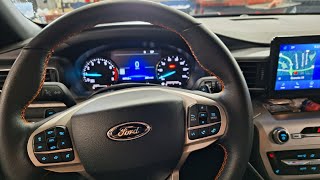
- YouTube Video - 'Why You're Explorer Transmission is Underperforming' (Ford Explorer ST (10R60)) — Hard shifts, particularly a 2-3 and 1-2 shift at wide-open throttle.
✅ What actually fixed it The owner found the transmission was underfilled with fluid from the factory. Adding approximately one quart of Motorcraft ULV transmission fluid resolved the harsh shifting problems. - Reddit user Col_Clucks in r/f150 (2019 Ford F-150 (10R80)) — CDF drum failure requiring transmission replacement.
❌ Tried (didn't work) Initially had an error 'TRID data don't match' when trying to program the new transmission with FORScan after selecting 'full assembly' replacement.
✅ What actually fixed it The user successfully programmed the replacement transmission using FORScan by selecting the 'Transmission Characterization Update' function, choosing 'update by solenoid strategy number', and inputting the 13-digit number from the new transmission. The key was to follow the procedure for a main control/valve body replacement, even though the entire transmission was swapped.
OEM Part Supersession History
JL3Z-7A100-B→JL3Z-7A100-D— Part revision or update by the manufacturer, likely to address some of the known performance or durability issues.
Heads up: The new part number JL3Z-7A100-D replaces the older -B version. When installing a new valve body, the new solenoid strategy ID must be programmed into the vehicle's computer.HL3Z-7A100-A→HL3Z-7A100-B— Part revision or update. These part numbers are often associated with F-150 and Mustang but share the same 10R80 architecture.
Heads up: These parts are for the 10R80 transmission and confirm a history of revisions to the valve body assembly.
Model Year Variations Within This Range
- 2022 models built on or before 9-Aug-2022: TSB 22-2411 identifies an issue specific to this build range where a harsh 7-6 downshift on the 10R60 transmission may be caused by a dislodged snap ring for the A clutch piston. The fix is a major internal repair involving replacement of the front support assembly and A clutch components.
Helpful Videos
We Have This Part in Stock


The information in this article is provided for general reference and educational purposes only. Vehicle specifications, procedures, and part compatibility can vary by production date, trim level, and region. Always consult your vehicle's factory service manual and verify part numbers before purchasing or performing repairs. Safety-critical components such as airbags, seat belts, and braking systems should be installed by a qualified professional.
- Ford EXPLORER:
- 🧭 Diagnostic Flowchart
- 🎬 Helpful Videos
- 🛍️ Shop This Part
- What's Unique About the 2020-2023 Ford EXPLORER
- Symptoms You May Notice
- Most Likely Causes
- Rare But Worth Checking
- Diagnosis Steps
- Parts You'll Likely Need
- Related Codes That Often Appear With This One
- Technical Service Bulletins (TSBs) & Recalls
- Platform-Specific Known Issues
- Scan Tool Commands That Help
- Wiring & Ground Locations
- Real Owner Repair Stories
- OEM Part Supersession History
- Model Year Variations Within This Range
- 🎟️ Get 5% Off