

P0767 on 2020-2023 Lincoln Aviator: Shift Solenoid 'D' Stuck On Causes and Fixes
On a 2020-2023 Lincoln Aviator, code P0767 is a serious transmission issue, almost always indicating a problem with the main control valve body, not just a single solenoid. This is a known issue with the 10R80 transmission, documented in multiple TSBs like 22-2428 and 24-2176. The repair involves replacing the entire valve body assembly and can cost $1,500-$3,500+.
- P0767 on a 2020-2023 Aviator indicates the 'D' shift solenoid is stuck on, but the problem is rarely just the solenoid itself.
- This code is a strong indicator of a known fault with the 10R80 transmission's main control valve body, as documented in multiple manufacturer TSBs.
- Do not ignore this code. Continued driving can cause severe, and much more expensive, damage to the transmission.
- The correct repair almost always involves replacing the entire valve body assembly, a complex job that should be left to a professional technician familiar with this transmission.
What's Unique About the 2020-2023 Lincoln AVIATOR
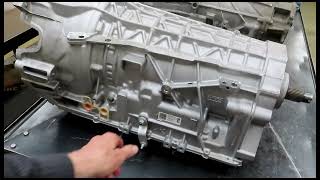
The 2020-2023 Lincoln Aviator uses a 10-speed (10R80) automatic transmission that is known for shifting problems. While P0767 points to a specific solenoid, the issue on this platform is frequently a more complex failure within the entire main control valve body or a related internal component. Ford/Lincoln has issued numerous Technical Service Bulletins (TSBs) 🎬 Watch: A breakdown of Ford's harsh shifting TSB and fixes. that group P0767 with dozens of other codes. These TSBs identify the root causes as sticking valves within the main control or axial movement of the CDF clutch cylinder sleeve causing hydraulic leaks, making a simple solenoid swap an unlikely fix.
Diagnostic Flowchart
Tap your situation to follow the diagnostic path that matches what you're seeing on this vehicle.
Symptoms You May Notice
- Harsh, erratic, or delayed shifting, sometimes described as a clunk or jerk.
- Check Engine Light is on.
- Vehicle gets stuck in one gear (limp mode).
- A noticeable delay or harsh slam when shifting from Park into Drive or Reverse.
- RPMs flare up briefly between shifts (e.g., on the 3-4 shift).
- Transmission may feel like it's slipping or hesitating.
- Loss of power during acceleration.
- In rare, severe cases, a loud thud from the transmission under acceleration.
- Replacing only the 'D' shift solenoid without addressing the underlying valve body problem. Given the known issues with the 10R80 transmission, this often results in the code returning.
- Performing a transmission fluid flush without diagnosing the root cause. If the valve body or CDF drum has failed, new fluid will not solve the mechanical or hydraulic issue.
Most Likely Causes
- Faulty Main Control Valve Body 🔴 High Probability → Shop Transmission Valve Body This is a well-documented issue on the 10R80 transmission. Multiple TSBs (including TSB 22-2428 and TSB 24-2176) point to sticking valves or internal hydraulic leaks in the valve body as the root cause for a wide range of solenoid-related DTCs. Debris or design flaws can cause spool valves to bind, leading to incorrect gear actuation.
How to confirm: A technician will use an advanced scan tool to monitor solenoid commands and hydraulic pressures. The presence of multiple solenoid or gear ratio codes (P0751, P0756, P0729, etc.) alongside P0767 strongly suggests a valve body failure as described in the TSBs.
Typical fix: Replacement of the entire main control valve body assembly with an updated part.
Est. part cost: $750-$1300 - Low or Contaminated Transmission Fluid 🟡 Medium Probability → Shop Transmission Assembly
How to confirm: Check the transmission fluid level and condition. The fluid should be at the correct level, red in color, and not smell burnt or contain excessive metallic debris ('glitter'). This transmission does not have a traditional dipstick and must be checked via a plug on the transmission case.
Typical fix: Perform a transmission fluid and filter change using the correct fluid (Motorcraft MERCON® ULV). If the fluid is very dirty or burnt, it often indicates a larger internal problem, and a simple fluid change is unlikely to be a permanent fix.
Est. part cost: $100-$250 - Failed Shift Solenoid 'D' ⚪ Low Probability → Shop Transmission Valve Body On the 10R80 platform, an individual solenoid failure is much less common than a systemic valve body issue. The solenoids are replaced as part of the valve body assembly.
How to confirm: After dropping the transmission pan, a technician can test the solenoid's electrical resistance with a multimeter. However, even if the solenoid tests good electrically, it can be mechanically stuck, which is why the TSBs point towards replacing the whole valve body assembly.
Typical fix: Replace the individual shift solenoid. However, this is often an ineffective repair if the root cause is the valve body, and the code will likely return.
Est. part cost: $50-$150 - Wiring or Connector Issues ⚪ Low Probability
How to confirm: Visually inspect the transmission's external wiring harness and connector for damage. Internal harness issues require removing the transmission pan for inspection. A shorted wire could theoretically keep the solenoid energized.
Typical fix: Repair or replace the damaged section of the wiring harness or the connector.
Est. part cost: $20-$300
Rare But Worth Checking
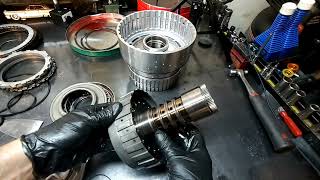
- Internal Mechanical Failure (e.g., CDF Clutch Drum): A widely documented weakness in the 10R80 is the CDF (Clutch D/F) drum. A sleeve inside the drum can slide out of position, uncovering hydraulic passages and causing a major pressure leak. This can trigger a variety of DTCs, including P0767. TSBs 22-2428 and 24-2176 specifically mention this 'axial movement of the CDF clutch cylinder sleeve' as a potential cause requiring internal transmission repair. Ford has released updated drum designs to prevent this.
- Faulty Powertrain Control Module (PCM) or Transmission Control Module (TCM): → Shop Transmission Assembly A control module failure, such as a shorted output driver, is rare but possible. This should only be considered after all other possibilities, especially the valve body and CDF drum, have been definitively ruled out by following the TSB diagnostic procedures.
Diagnosis Steps
- Check the transmission fluid level and condition. Note that this requires accessing a check plug, as there is no dipstick.
- Use an OBD-II scanner to check for P0767 and any other accompanying transmission codes. A cluster of codes is highly significant.
- Consult the latest version of TSBs 22-2428, 24-2176, or newer superseding bulletins for the official diagnostic flowchart.
- Inspect the external transmission wiring harness and connectors for any visible damage, corrosion, or loose connections.
- Using an advanced scan tool (like Ford's FDRS), monitor solenoid commands, gear state, and hydraulic pressure PIDs to confirm the fault.
- If multiple solenoid or gear ratio codes are present, the TSBs will likely direct the technician to test and replace the main control valve body.
- If the TSB diagnostic path points to the CDF drum, hydraulic circuit leakage tests may be required, which is an advanced, invasive procedure.
- If the valve body and internal components are confirmed to be good, the final step is to diagnose the Transmission Control Module (TCM/PCM).
Parts You'll Likely Need
- Transmission Main Control Valve Body Assembly
(OEM #JL3Z-7A100-B (supersedes HL3Z-7A100-B and HL3Z-7A100-A))— This is the most common cause of P0767 and related codes on the 10R80 transmission, as documented in multiple TSBs. The assembly includes all new solenoids.
Trusted brands: Motorcraft
OEM price range: $800-$1300
Aftermarket price range: $600-$1000 - Automatic Transmission Fluid
(OEM #Motorcraft MERCON ULV (XT-12-QULV))— Fluid must be replaced anytime the transmission pan is removed for service. Using the exact specified fluid is critical for 10R80 performance.
Trusted brands: Motorcraft
OEM price range: $10-$15 per quart
Aftermarket price range: $8-$12 per quart - Transmission Filter and Pan Gasket — These should always be replaced when servicing the valve body or solenoids.
Trusted brands: Motorcraft
OEM price range: $50-$100
Aftermarket price range: $30-$70
Related Codes That Often Appear With This One
- P0766 — This code is for 'Shift Solenoid D Performance/Stuck Off', indicating an erratic problem with the same solenoid, which can be caused by the same underlying valve body or hydraulic issues.
- P0751, P0756, P0761, etc. — Codes for other shift solenoids (A, B, C, etc.) often appear with P0767. This is a strong indicator of a systemic problem like a faulty valve body or a major hydraulic leak, rather than a single bad solenoid. The TSBs list dozens of these codes together.
- P0729, P0731, P0732, etc. — These are gear ratio error codes. They indicate the transmission is not in the gear the computer expects it to be, which is a direct consequence of a solenoid being stuck on or a major hydraulic leak preventing proper clutch engagement.
Technical Service Bulletins (TSBs) & Recalls
- TSB 25-2302: Addresses delayed shifts and numerous DTCs, including P0767, on 2023 models.
- TSB 24-2176: Supersedes earlier TSBs and details causes including the valve body and CDF clutch sleeve for 2020-2023 models.
- TSB 24-2252: Covers harsh/delayed shifts and DTCs like P0767 for 2023 models.
- TSB 22-2428: An earlier, widely referenced TSB covering harsh shifts and a long list of DTCs including P0767, pointing to the valve body and CDF drum sleeve.
Platform-Specific Known Issues
- The 10R80 10-speed automatic transmission used in the 2020-2023 Aviator is the subject of numerous Technical Service Bulletins (TSBs) for harsh shifting, delayed shifts, and a wide array of diagnostic trouble codes, including P0767.
- TSB 24-2176 explicitly states that these issues may be due to 'sticking valves in the main control valve body and/or axial movement of the CDF clutch cylinder sleeve'.
- Class-action lawsuits have been filed concerning the performance and reliability of the 10R80 transmission in various Ford and Lincoln models, citing harsh shif
Mechanic-Grade Diagnostic Values
- Transmission Fluid Temperature for Level Check — expected: 96°C - 101°C (206°F - 215°F). Failure: An incorrect fluid level, whether checked at the wrong temperature or not, can cause shifting issues and DTCs. This specific range is required for an accurate reading.
- Shift Solenoid (CIDAS) Operation Principle — expected: Directly proportional; zero current from TCM results in zero hydraulic pressure, maximum current results in maximum pressure.. Failure: This is a design principle, not a single value. A 'Stuck On' code implies the solenoid is mechanically stuck or is receiving voltage when it shouldn't be (wiring short or TCM fault).
Scan Tool Commands That Help
- Ford IDS/FDRS: Solenoid Body Strategy Data Download — This is mandatory when a new main control valve body is installed. The technician must enter the 13-digit characterization ID number etched on the new valve body into the PCM/TCM to ensure correct solenoid operation.
- Ford IDS/FDRS: Reset KAM (Keep Alive Memory) / Clear Adaptive Tables — This must be performed after replacing the valve body or transmission to clear the old learned shift parameters. It is followed by a specific adaptive learning drive cycle to allow the TCM to learn the characteristics of the new components.
- Ford IDS/FDRS: Update PCM/TCM Calibration — Per TSB 24-2176, the root cause can sometimes be software-related. Before replacing major components, a technician should always check if a newer calibration is available to address known shift quality issues.
Wiring & Ground Locations
- Internal Connector C177, Pin 11 — Inside the transmission, at the main control valve body.. This is the specific control wire for Shift Solenoid 'D'. It is a Brown/White wire. A short to power on this wire between the TCM and the solenoid would cause a P0767 'Stuck On' code.
- Under-Hood Fuse Box, Fuse 26 — In the fuse box located in the engine compartment.. This 15A Micro2 fuse supplies power to the Transmission Control Module (TCM). While a fuse issue is unlikely to cause a single 'stuck on' code, checking for a solid power supply is a fundamental diagnostic step.
OEM Part Supersession History
Unknown (pre-update design)→JL3Z-7H351-B— The original CDF clutch cylinder (drum) was prone to having its internal sleeve slide out of position, causing hydraulic leaks. The updated part has a machined lip on the inner half of the drum that physically prevents the sleeve from moving, providing a permanent fix.
Model Year Variations Within This Range
- 2020-2022: Per TSB 22-2428, vehicles built on or before August 15, 2022, are specifically called out as being affected by the issues requiring valve body or CDF drum repair. This implies that vehicles built after this date are more likely to have received updated components from the factory.
Helpful Videos
We Have This Part in Stock


The information in this article is provided for general reference and educational purposes only. Vehicle specifications, procedures, and part compatibility can vary by production date, trim level, and region. Always consult your vehicle's factory service manual and verify part numbers before purchasing or performing repairs. Safety-critical components such as airbags, seat belts, and braking systems should be installed by a qualified professional.
- Lincoln AVIATOR:
- 🧭 Diagnostic Flowchart
- 🎬 Helpful Videos
- 🛍️ Shop This Part
- What's Unique About the 2020-2023 Lincoln AVIATOR
- Symptoms You May Notice
- Most Likely Causes
- Rare But Worth Checking
- Diagnosis Steps
- Parts You'll Likely Need
- Related Codes That Often Appear With This One
- Technical Service Bulletins (TSBs) & Recalls
- Platform-Specific Known Issues
- Mechanic-Grade Diagnostic Values
- Scan Tool Commands That Help
- Wiring & Ground Locations
- OEM Part Supersession History
- Model Year Variations Within This Range
- 🎟️ Get 5% Off