

OBD-II Code P0768: Shift Solenoid 'D' Electrical Malfunction
A Master Technician's Expanded Guide to P0768: What it means, why it triggers, and how to fix it
- P0768 indicates an electrical fault—like an open circuit or short—specifically within the Shift Solenoid 'D' control circuit, not a mechanical failure.
- Inspect the external transmission wiring harness and main connector for water intrusion or corrosion before spending $350+ on a new solenoid.
- Driving with a P0768 code forces the transmission into 'limp mode' (stuck in 2nd or 3rd gear), which causes overheating and turns a $300 repair into a $4,000 rebuild within months.
- Accurate diagnosis requires a bi-directional scan tool (costing $150+) to command the solenoid on and off, plus a multimeter to test circuit resistance (typically 10-40 Ohms).
What Does P0768 Mean?
The Powertrain Control Module (PCM) or Transmission Control Module (TCM) detected an electrical problem with 'Shift Solenoid D'. This small, electronically controlled valve directs transmission fluid to shift gears smoothly. When the control circuit experiences an open circuit, a short to ground, or abnormal voltage, the computer logs P0768 and illuminates the check engine light.
Technical definition: SAE/OBD-II defines P0768 as "Shift Solenoid 'D' Electrical". The PCM or TCM logs this fault when the commanded state of the solenoid fails to match the measured voltage feedback from the circuit, indicating an open, short, or high-resistance anomaly.
Can I Drive With P0768?
Yes, But With Caution. You can drive short distances, but doing so risks severe damage. The transmission shifts harshly, gets stuck in one gear ('limp mode'), and performs poorly, creating unsafe driving conditions in traffic. Continued driving at highway speeds in a low gear generates excessive heat, breaking down fluid and rapidly destroying internal clutches. Ignoring this turns a $300-$800 solenoid repair into a $3,000-$7,000 transmission rebuild.
Common Causes
- Faulty Shift Solenoid 'D' (Very Common) — The internal coil windings develop an open circuit (infinite resistance) or a short circuit (near-zero resistance), preventing activation. This is a known wear item, especially after 60,000 miles.
- Wiring or Connector Issues (Common) — Damaged wiring between the TCM and solenoid causes open or short circuits. Frayed wires, chassis chafing, and corrosion in the main external transmission connector from water or road salt are frequent culprits.
- Low or Dirty Transmission Fluid (Common) — Contaminated fluid clogs the solenoid's fine internal passages, causing it to draw excessive current and fail electrically over time. Low fluid causes pressure drops that trigger related performance codes.
- Failed Internal Transmission Harness (Less Common) — The wiring harness inside the transmission oil pan becomes brittle from constant exposure to hot fluid. Cracking insulation leads to internal shorts or open circuits.
- Low System Voltage / Bad Battery (Less Common) — Transmission solenoids require a stable 12V supply. A weak battery, failing alternator, or poor ground connection causes voltage drops, tricking the TCM into logging an electrical fault.
- Faulty Transmission Control Module (TCM) (Rare) — The TCM suffers internal circuit failures, such as a burnt-out driver for the 'D' solenoid, preventing it from commanding or monitoring the circuit.
Symptoms
- Check Engine Light is On — An illuminated Malfunction Indicator Lamp (MIL) is the first and most universal symptom. Some vehicles also illuminate a dedicated transmission warning gear icon.
- Transmission Stuck in Gear ('Limp Mode') — The transmission enters a fail-safe mode, locking into a single gear (usually 2nd or 3rd) to prevent internal damage, causing sluggish acceleration and high RPMs at highway speeds.
- Harsh, Delayed, or Erratic Shifting — Gear changes produce a noticeable 'clunk' or 'thump'. The transmission takes too long to engage or shifts unpredictably.
- Inability to Engage Overdrive — The vehicle refuses to shift into its highest gear on the highway, as Solenoid 'D' frequently controls the 3-4 shift or overdrive lockup.
- Transmission Overheating (also visible on scanner) — Improper line pressure and slipping clutches generate excess heat, burning the fluid and causing irreversible internal damage.
Diagnostic Flowchart
Tap your situation to follow the diagnostic path that matches what you're seeing on this code.
Used vs. New Parts: Buying Guide
When a used part is worth it: Always buy new. The $150 savings on a used solenoid does not justify the high risk of premature failure and repeated $500+ labor costs to drop the transmission pan.
Donor-vehicle mileage cap: roughly under 40000 miles for the part to have meaningful remaining life.
Donor quality checklist:
- If considering used, source from a reputable salvage yard that provides a warranty and vehicle history.
- Verify the part number exactly; manufacturers often update solenoid designs.
- Avoid parts from vehicles that were scrapped due to transmission failure.
Decision logic:
- If The cost of a new OEM or quality aftermarket solenoid is under $150 → Always buy new. The savings from a used part do not justify the high risk of premature failure and repeated labor costs.
- If The part is a complete solenoid pack costing over $400 → A used part from a very low-mileage donor (<40k miles) might be considered if on a tight budget, but a new aftermarket part with a warranty is still the safer choice.
- If The vehicle is older (>150k miles) and its remaining life is limited → A used part may be a justifiable gamble, but understand it may not last long.
Warranty tradeoff: Used parts typically offer a 30-90 day warranty, which often only covers the part itself, not the hundreds of dollars in labor to install it. New aftermarket solenoids usually come with a 1-year to limited lifetime warranty. New OEM parts carry a 1-year warranty.
Worst-case if a used part fails: $400-$800 if a used solenoid fails after installation, primarily due to repeated labor charges for pan removal, fluid replacement, and re-installation.
What Happens If You Wait — Timeline
- 0-1 month: Check Engine Light illuminates. Transmission enters intermittent 'limp mode'. Shifting feels harsh when cold. Vehicle remains drivable but unpredictable. (MPG impact: 5-10%% · Added cost: $0-$50 in wasted fuel.)
- 1-3 months: Limp mode becomes constant. Harsh shifting stresses motor mounts and axles. Fluid darkens and smells burnt from slipping clutches. (MPG impact: 10-15%% · Added cost: $100-$250 in wasted fuel and potential stress on mounts.)
- 3-6 months: Fluid turns black and fills with abrasive clutch material, scoring the valve body and destroying other solenoids. Overheating and severe slipping occur. (MPG impact: 15-25%% · Added cost: $400-$800. The original solenoid issue is compounded by fluid contamination and wear on other parts.)
- 6+ months: Catastrophic internal failure. Clutches burn out and the transmission ceases operation, leaving the vehicle stranded. Requires complete rebuild. (MPG impact: 25%+% · Added cost: $3,000-$7,000+. The cost of ignoring the initial problem results in a full transmission replacement.)
Cost of Not Fixing It
- 0-1 month: Decreased fuel economy (5-15%) and harsh shifting stresses drivetrain mounts. (Added cost: $0-$50 in wasted fuel.)
- 1-6 months: Slipping clutches burn fluid and contaminate the valve body with friction material. (Added cost: $200-$450 for wasted fluid flushes.)
- 6+ months: Catastrophic internal failure requiring complete transmission rebuild or replacement. (Added cost: $3,000-$7,000+.)
When This Code Triggers (Freeze-Frame Conditions)
- Engine Coolant Temp: 180-200°F (The fault is most often detected when the vehicle is fully warmed up and has been running for several minutes.)
- RPM: 1500-2500 (The code triggers during steady-state driving or light acceleration when the transmission attempts to shift into a higher gear (e.g., 3rd to 4th).)
- Engine Load: 30-60% (Moderate engine load during an expected shift event is a common trigger. The TCM commands the solenoid to activate, but the expected electrical response fails.)
- Vehicle Speed: 35-55 mph (This fault frequently occurs at cruising speeds when the transmission is commanded to shift into overdrive or a higher gear controlled by solenoid 'D'.)
Related Codes
- P0766 — Shift Solenoid 'D' Performance/Stuck Off. P0768 is the electrical root cause that triggers this mechanical performance code.
- P0767 — Shift Solenoid 'D' Stuck On. If paired with P0768, an electrical short to power is holding the solenoid open.
- P0769 — Shift Solenoid 'D' Intermittent. Points to a loose connection or chafed wire. Requires wiggle-testing the harness during live data monitoring.
- P0700 — Transmission Control System Malfunction. A generic PCM code indicating the TCM stored a specific fault like P0768.
- P0981 / P0982 / P0983 — Shift Solenoid 'D' Control Circuit Range/Low/High. More specific electrical codes. P0982 indicates a short to ground; P0983 indicates a short to power or open circuit.
Climate & Environmental Factors
- Road Salt & High Humidity: Saltwater accelerates corrosion of copper wires and connector pins on undercarriage harnesses, creating high resistance or open circuits. This triggers the code even if the solenoid itself is functional. Regular undercarriage washes mitigate this.
- Extreme Cold: Cold temperatures make old wire insulation brittle and prone to cracking, creating entry points for moisture and subsequent corrosion. It also thickens transmission fluid, increasing hydraulic resistance.
How to Talk to a Mechanic About This Code
Say this: "I have a P0768 code for the Shift Solenoid 'D' electrical circuit. Please check the fluid condition, inspect external wiring, and test the solenoid circuit's resistance and voltage at the TCM connector before quoting parts."
This signals you want a proper electrical diagnosis, not a blind parts swap. It directs the technician to follow a logical path that pinpoints if the issue is simple (wiring) or complex (TCM) before recommending an expensive part.
Avoid saying:
- 'My transmission is acting weird.'
- 'My check engine light is on, can you just fix it?'
- 'I think I need a new solenoid, can you give me a price?'
Questions to ask before authorizing the repair:
- Did you test the solenoid's resistance and was it out of spec? What was the reading?
- Did you verify the wiring has good continuity between the TCM and the solenoid connector, with no shorts to ground?
- Were you able to command the solenoid on and off with a scan tool to confirm the TCM driver is working?
- What is the warranty on both the parts and the labor for this repair?
Where to Take It: Dealer vs Independent vs Chain
- Dealer:
Recommended for in-warranty repairs, TEHCM/Mechatronic replacements, or TSB-related fixes.
Best for: Vehicles still under powertrain warranty., Complex, model-specific issues like a failed TEHCM (GM) or Mechatronic unit (Audi/VW/BMW)., Repairs covered by a Technical Service Bulletin (TSB) or special coverage program.
Downsides: Highest labor rates., Defaults to replacing large, expensive assemblies (like a full valve body) when only a smaller component failed. (Typical cost: +50% vs. baseline) - Independent Shop:
Best overall fit. Transmission specialists offer detailed electrical diagnosis and cost-effective internal repairs.
Best for: Out-of-warranty vehicles where the cause is likely a common failure (solenoid, wiring, fluid)., Shops that specialize in transmission repair.
Downsides: Quality and diagnostic capability vary widely; vet shops carefully., May lack access to the latest dealer-level software for programming new TCMs. (Typical cost: +0% vs. baseline) - Chain Shop:
AVOID. Lacks specialized training and equipment for internal transmission electrical diagnostics.
Best for: Simple fluid and filter changes ONLY.
Downsides: Technicians lack specialized training for in-depth transmission electrical diagnostics., High pressure to upsell leads to misdiagnosis and unnecessary repairs., Not equipped for internal transmission work or module programming. (Typical cost: -10% vs. baseline)
When to Walk Away From the Repair
If repair costs exceed 50% of the vehicle's Kelley Blue Book value, consider selling as-is.
- Car worth $5000, fix is $850: Fix it. This is a standard repair cost and is well below the threshold.
- Car worth $4000, fix is $2500: Walk away. The repair cost is over 60% of the vehicle's value, indicating a major failure (likely requiring a transmission rebuild).
- Car worth $8000, fix is $1200: Fix it. The repair (likely a valve body or TCM replacement) is expensive but still makes economic sense relative to the car's value.
What Scan Tool You Need for This Code
Minimum: A scanner that reads manufacturer-specific transmission codes and displays live transmission data, including solenoid commanded states.
A cheap $20 code reader only shows the P0768 code. It cannot access the TCM to see live data or perform the active tests needed to determine if the fault is in the wiring, the solenoid, or the TCM itself.
Budget: BlueDriver Pro Scan Tool (~$100) — Reads transmission codes and live data.
Mid-range: Foxwell NT510 Elite (~$180) — Provides bi-directional control to manually command the solenoid to click, verifying circuit integrity.
Professional: Autel MaxiCOM MK808BT / MK900BT (~$500-800) — Full bi-directional control and transmission relearn capabilities required after valve body replacement.
Rent vs buy: Diagnosis requires bi-directional control. If you don't plan to do advanced DIY repairs, pay a professional for a 1-hour diagnostic fee rather than buying a mid-range scanner.
How to Clear the Code After You Fix It
- Use an OBD-II scan tool to clear the P0768 and any related fault codes.
- Reconnect the battery if it was disconnected for the repair.
- Perform a complete transmission drive cycle to allow the readiness monitors to run.
Drive cycle (~30 minutes): Cold start, idle 3 minutes. Drive city speeds with stops. Cruise highway at 55 mph for 10 minutes to cycle all gears. Stop and cool down.
Readiness monitors affected: Comprehensive Component Monitor (CCM), Transmission-related monitors
Before emissions retest: drive at least 100 miles to fully set monitors.
Watch out for:
- Clearing the code without performing a drive cycle leaves readiness monitors 'Not Ready', causing an automatic emissions test failure.
- Disconnecting the battery resets adaptive learning for the transmission, causing erratic shifting initially.
- The code returns immediately if the root electrical cause was not properly fixed.
Will This Fail Emissions / State Inspection?
Yes — this code typically fails an OBD-II emissions inspection.
- California: An active Check Engine Light causes an automatic emissions failure. Readiness monitors must be set via a drive cycle after clearing the code.
- New York: An active Check Engine Light causes an automatic emissions failure. Readiness monitors must be set via a drive cycle after clearing the code.
- Texas: An active Check Engine Light causes an automatic emissions failure. Readiness monitors must be set via a drive cycle after clearing the code.
Most Commonly Affected Vehicles
- Kia / Hyundai Sportage, Sorento, Elantra, Optima (2011-2016) — Extremely common on vehicles with the A6MF/A6GF 6-speed automatic. Kia TSB #TSBTRA051R1 advises replacing the single failed solenoid. The original 10-year/100,000-mile powertrain warranty may cover this.
- Ford Focus, Fusion, Escape, Explorer (2012-2018) — On models with the 6F35 transmission, wiring issues at the main bulkhead connector are frequent. On the Focus/Fiesta with the DSP6 PowerShift, this code points to TCM failure covered by a major class-action settlement.
- Chevrolet Silverado, Cruze, Malibu, Equinox (2008-2019) — Often seen in GM vehicles with 6-speed transmissions (6T40, 6L80). This is frequently caused by a failed TEHCM (internal TCM), which must be replaced as a unit and programmed by a dealer.
- Honda Accord, Odyssey, Civic (2000-2007) — Older Honda models experience this code due to solenoid failure or clogged passages. Replacing the dual-linear solenoid assembly is the standard fix.
- Nissan Altima, Maxima, Sentra (2007-2018) — Occurs when the external transmission harness connector develops poor connections. On CVT models, solenoid codes are an early indicator of catastrophic internal transmission failure.
- Audi / Volkswagen A4, A6, Q5, Passat, Jetta (2005-2016) — These models experience this code due to electrical faults within the Mechatronic unit or the valve body conductor plate, requiring an expensive assembly replacement.
- BMW 3 Series, 5 Series, X3, X5 (2004-2014) — On BMWs with ZF transmissions, this points to a failing solenoid within the Mechatronic unit. The Mechatronic sealing sleeve frequently leaks fluid onto the main connector, causing electrical faults.
- Mercedes-Benz C-Class, E-Class, ML-Class (2003-2013) — On 722.6 or 722.9 transmissions, this code points to a failure of the valve body conductor plate. This plate integrates speed sensors and solenoid connections, requiring replacement of the entire plate.
Manufacturer-Specific Notes
- General: The 'D' designation is generic. Its function (e.g., 3-4 shift, TCC lockup) varies by manufacturer. Consult a service manual to identify the specific solenoid.
- Chrysler/Dodge/Jeep: Solenoids are integrated into a single solenoid pack. A single electrical failure requires replacing the entire $300-$500 block.
- Kia/Hyundai: TSB #TSBTRA051R1 confirms high failure rates for individual solenoids in 6-speed automatics and advises replacing only the affected unit.
- Ford: On PowerShift transmissions, P0768 often indicates a defective TCM covered under the Vargas v. Ford class-action settlement.
- General Motors (GM): The TCM (TEHCM) is mounted internally on the valve body. P0768 often requires replacing the entire TEHCM unit, which needs dealer-level programming.
Real Owner Stories
2000 Lexus RX300 at 240K miles - The Intermittent Fix
P0768 triggered repeatedly on startup, despite normal shifting after the code was cleared.
Outcome: The owner permanently resolved the code by replacing the 'S4' solenoid (the 'D' solenoid in this model) for $90, along with a new filter and fluid flush.
Lesson: An electrical code doesn't guarantee a bad component. Always inspect connectors for corrosion first. Cleaning a corroded connector is a free diagnostic step that often solves the problem.
2005 Subaru Outback 3.0R - The Misdiagnosis & Expensive Reality
An intermittent P0768 code eventually locked the transmission in one gear. Resetting the code failed to keep it away.
Outcome: The owner purchased a new OEM control valve body from a Subaru dealer for $745. A 5-hour DIY installation resolved the code.
Lesson: Never assume a part is individually replaceable. For many Subaru, Chrysler, and Mercedes models, a single solenoid failure requires replacing the entire $500+ valve body or solenoid pack.
2011 Mazda 3 at 100K+ miles - The Limp Mode Nightmare
The check engine and AT lights illuminated. The car stuck in a high gear, causing 4000+ RPMs at 60mph, and jerked violently when shifting into Reverse.
Outcome: Another owner with the exact issue sent their TCM for a rebuild and replaced all solenoids, only for the code to return—proving a persistent wiring short between the TCM and transmission.
Lesson: High RPMs at highway speed indicate 'limp mode' caused by P0768. Throwing parts at the problem without confirming wiring integrity with a multimeter is a costly mistake.
How to Prevent This Code From Triggering
- Change transmission fluid and filter. (Every 30,000 to 60,000 miles.) — Degraded fluid loses lubrication and carries debris that clogs solenoid passages, causing electrical failure.
- Use exact OEM-specified transmission fluid. (Every fluid change.) — Incorrect fluid alters hydraulic pressure, damaging internal seals and solenoid electronics.
- Flush engine coolant and inspect transmission cooler lines. (Annual inspection.) — Overheating breaks down transmission fluid and melts solenoid electrical coils.
- Inspect external transmission wiring harnesses. (During oil changes.) — Securing loose harnesses and cleaning connectors prevents the shorts and open circuits that trigger P0768.
Frequently Asked Questions
What is the most common misdiagnosis for P0768?
The most common mistake is replacing the shift solenoid without testing the circuit first. Technicians sometimes assume the solenoid is bad when the real issue is contaminated fluid, a corroded external connector, or a break in the wiring. Another mistake is replacing the expensive TCM when the fault lies in the much cheaper wiring.
My scanner shows P0768, but the parts store calls the solenoid something different. Why?
The 'D' designation is a generic OBD-II term. Manufacturers have their own specific names based on function, such as 'Overdrive Clutch Solenoid' or '2-4 Brake Solenoid'. You must use a service manual to cross-reference the generic code to the specific part name for your vehicle.
Can a bad battery or low voltage cause a P0768 code?
Yes. Transmission solenoids require a stable voltage to operate correctly. A failing battery, bad alternator, or poor ground connection causes voltage drops that the TCM interprets as a solenoid electrical fault.
What is a shift solenoid and how does it work?
A shift solenoid is an electro-hydraulic valve consisting of a spring-loaded plunger wrapped in a wire coil. When the computer sends an electrical current, the magnetic field moves the plunger to open or close a hydraulic passage. This directs transmission fluid to apply or release clutches, shifting the gears.
Can I just clear the code and keep driving?
You can clear the code, but it will return immediately if the underlying electrical problem is not fixed. Ignoring the issue leads to severe transmission damage from harsh shifting and overheating.
How much does it cost to fix P0768?
Costs vary by cause. A fluid service runs $200-$450, while replacing a single solenoid or pack costs $350-$1,000. A failed TCM requires replacement and programming, typically costing $800-$1,200.
Is it hard to replace a shift solenoid myself?
Replacing a shift solenoid is an advanced DIY job requiring you to lift the vehicle, drain fluid, and remove the transmission pan. You must work with extreme cleanliness to avoid contaminating the sensitive valve body. If you lack the tools or experience, leave this messy $350-$750 repair to a professional.
What happens when a car is in 'limp mode'?
Limp mode is a safety feature that protects the engine and transmission from catastrophic damage. The vehicle's computer limits engine RPM and locks the transmission into a single, safe gear (usually 2nd or 3rd). This drastically reduces power and speed, allowing you to 'limp' to a repair shop.
Key Takeaways
- P0768 indicates an electrical fault—like an open circuit or short—specifically within the Shift Solenoid 'D' control circuit, not a mechanical failure.
- Inspect the external transmission wiring harness and main connector for water intrusion or corrosion before spending $350+ on a new solenoid.
- Driving with a P0768 code forces the transmission into 'limp mode' (stuck in 2nd or 3rd gear), which causes overheating and turns a $300 repair into a $4,000 rebuild within months.
- Accurate diagnosis requires a bi-directional scan tool (costing $150+) to command the solenoid on and off, plus a multimeter to test circuit resistance (typically 10-40 Ohms).
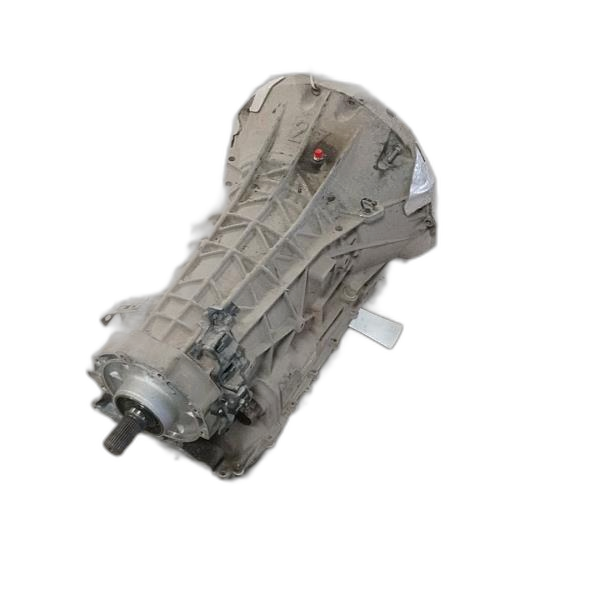
Shop the Parts Behind P0768
Below are the parts most often responsible for code P0768, ranked by how frequently each one is the actual culprit (per the diagnosis above). Tap any to see what we have for your vehicle.



The information in this article is provided for general reference and educational purposes only. Vehicle specifications, procedures, and part compatibility can vary by production date, trim level, and region. Always consult your vehicle's factory service manual and verify part numbers before purchasing or performing repairs. Safety-critical components such as airbags, seat belts, and braking systems should be installed by a qualified professional.
- 🧭 Diagnostic Flowchart
- 🛍️ Shop This Part
- What Does P0768 Mean?
- Can I Drive With P0768?
- Common Causes
- Symptoms
- Used vs. New Parts: Buying Guide
- What Happens If You Wait — Timeline
- Cost of Not Fixing It
- When This Code Triggers (Freeze-Frame Conditions)
- Related Codes
- Climate & Environmental Factors
- How to Talk to a Mechanic About This Code
- Where to Take It: Dealer vs Independent vs Chain
- When to Walk Away From the Repair
- What Scan Tool You Need for This Code
- How to Clear the Code After You Fix It
- Will This Fail Emissions / State Inspection?
- Most Commonly Affected Vehicles
- Manufacturer-Specific Notes
- Real Owner Stories
- 2000 Lexus RX300 at 240K miles - The Intermittent Fix
- 2005 Subaru Outback 3.0R - The Misdiagnosis & Expensive Reality
- 2011 Mazda 3 at 100K+ miles - The Limp Mode Nightmare
- How to Prevent This Code From Triggering
- Frequently Asked Questions
- What is the most common misdiagnosis for P0768?
- My scanner shows P0768, but the parts store calls the solenoid something different. Why?
- Can a bad battery or low voltage cause a P0768 code?
- What is a shift solenoid and how does it work?
- Can I just clear the code and keep driving?
- How much does it cost to fix P0768?
- Is it hard to replace a shift solenoid myself?
- What happens when a car is in 'limp mode'?
- Key Takeaways
- 🎟️ Get 5% Off