

P0771 on 2020-2023 Ford TRANSIT: Shift Solenoid 'E' Causes and Fixes
On a 2020-2023 Ford Transit, P0771 is almost always a symptom of a larger internal transmission problem, not just a single bad solenoid. The most common fix is replacing the entire transmission main control (valve body) assembly or performing a more intensive internal repair of the CDF clutch drum, as outlined in multiple Ford TSBs. Repairs can cost between $1,000 and $3,500 or more.
- P0771 on a 2020-2023 Transit is a serious code that points to an internal transmission problem, not just a simple sensor.
- Check for other transmission codes. If multiple solenoid codes are present, the cause is very likely a faulty valve body or an internal hydraulic leak related to the CDF drum, as per Ford's TSBs.
- Do not simply replace the 'E' solenoid. This is a common misdiagnosis that will not solve the underlying problem.
- This is not a beginner-friendly DIY repair. Due to the complexity of the 10R80 transmission, professional diagnosis and service are strongly recommended.
- Always use the specified Motorcraft MERCON ULV transmission fluid. Using the wrong fluid can cause severe damage.
What's Unique About the 2020-2023 Ford TRANSIT
The 2020-2023 Ford Transit uses the 10-speed 10R80 automatic transmission, which is known for specific internal issues. 🎬 Learn more about common 10R80 transmission failures and problems. While P0771 points to a single solenoid, Ford has issued multiple Technical Service Bulletins (TSBs) indicating that this code, often appearing with other solenoid codes, is typically caused by a failure within the transmission's main control (valve body) or, more seriously, a hydraulic leak from the CDF clutch drum. TSB 24-2254 specifically notes that a sleeve on the CDF clutch cylinder can move axially (walk out of position), uncovering an oil passage and causing a pressure loss that triggers a cascade of solenoid performance codes. This makes it a platform-specific pattern where the root cause is a known mechanical design flaw, not just an electrical fault with one solenoid.
Diagnostic Flowchart
Tap your situation to follow the diagnostic path that matches what you're seeing on this vehicle.
Symptoms You May Notice
- Harsh, jerky, or delayed gear shifts.
- Illuminated Malfunction Indicator Lamp (Check Engine Light).
- Transmission getting stuck in one gear or entering "limp mode".
- Delayed engagement when shifting from Park to Drive or Reverse.
- A sudden, loud 'thud' or 'bang' during acceleration or shifting.
- Vehicle fails to shift into a specific gear.
- Reduced fuel economy.
- Torque converter shudder or vibration at cruising speeds.
- Replacing only the 'E' shift solenoid. On this specific platform, P0771 is overwhelmingly a symptom of a larger valve body or internal CDF drum issue. Replacing just one solenoid is highly unlikely to fix the problem if other solenoid codes are present or if the root cause is a hydraulic leak elsewhere in the system.
Most Likely Causes
- Internal Failure of the Main Control (Valve Body) Assembly 🔴 High Probability → Shop Transmission Valve Body The 10R80 transmission is known for issues within the valve body, such as sticking solenoid valves or internal cross-leaks in the separator plate. Ford's TSBs like 22-2428 point to this as a primary cause when multiple solenoid codes are present, often recommending a valve body overhaul or replacement after a software update fails to resolve the issue.
How to confirm: A technician will scan for a pattern of multiple solenoid codes (P0751, P0756, P0771, etc.) as listed in TSBs. Diagnosis often involves following the TSB procedure, which may start with a transmission re-learn and progress to valve body inspection and testing.
Typical fix: Replacement of the entire transmission main control (valve body) assembly. Some TSBs detail an overhaul procedure for the existing valve body.
Est. part cost: $400-$1500 - Internal Failure of the CDF Clutch Drum 🔴 High Probability → Shop Transmission Clutch Pressure Plate This is a well-documented design flaw in 10R80 transmissions built before mid-2022. TSB 24-2254 and TSB 26-2046 directly identify a problem where a sleeve on the CDF clutch cylinder can 'walk' or move out of position, exposing a hydraulic passage and causing a significant pressure leak. This leak starves the clutches and triggers a host of solenoid performance codes, including P0771.
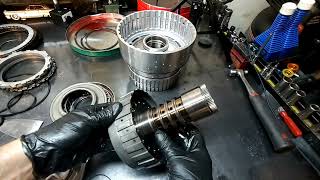
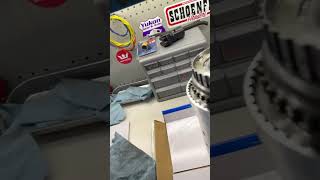
How to confirm: This requires internal transmission inspection and specific pressure/vacuum tests on the CDF clutch circuit as outlined by Ford in TSB 24-2254. The failure is confirmed visually by seeing the displaced sleeve on the drum. 🎬 Watch: See exactly how the CDF drum sleeve fails internally.
Typical fix: Replacement of the CDF clutch cylinder/drum with an updated part (Part No. JL3Z-7H351-B) that has a machined lip to prevent the sleeve from moving. This is a major internal transmission repair.
Est. part cost: $200-$500 (part only, labor is extensive) - Low or Contaminated Transmission Fluid 🟡 Medium Probability → Shop Transmission Assembly Low fluid levels can cause pressure drops that mimic other hydraulic faults, while old or contaminated fluid can cause solenoids to stick or passages in the valve body to clog. This is a common cause for any automatic transmission issue. The 10R80 is particularly sensitive to fluid type and condition, requiring Motorcraft MERCON ULV.
How to confirm: Check the transmission fluid level and condition according to the manufacturer's procedure. The fluid should be clean, red, and free of debris or a burnt smell. Metal shavings indicate a severe mechanical failure.
Typical fix: Perform a transmission fluid and filter change using only the specified Motorcraft MERCON ULV fluid. If the fluid is very dirty or contains metal, further internal inspection is required.
Est. part cost: $150-$350 - Damaged Wiring or Electrical Connectors ⚪ Low Probability
How to confirm: Visually inspect the wiring harness leading to the transmission for any signs of damage, corrosion, or loose connections. A multimeter can be used to test for continuity and proper voltage at the solenoid connector, though this is less common on this platform due to the known mechanical issues.
Typical fix: Repair or replace the damaged section of the wiring harness or the connector.
Est. part cost: $50-$300
Rare But Worth Checking
- Faulty Transmission Control Module (TCM): → Shop Transmission Assembly While rare, the TCM itself can fail, causing it to send incorrect signals or falsely report a solenoid issue. This should only be considered after all other possibilities, especially the TSB-related mechanical failures, have been thoroughly ruled out.
- Failing Torque Converter Clutch (TCC): → Shop Automatic Transmission Torque Converter A failing TCC can cause shuddering, vibrations, and sometimes trigger other transmission codes as the debris contaminates the fluid and valve body. While not a direct cause of P0771, its failure can contribute to the overall poor health of the transmission.
Diagnosis Steps
- Check and verify the transmission fluid level and condition. Ensure the correct Motorcraft MERCON ULV fluid is being used.
- Use an advanced OBD-II scanner to check for any other pending or stored transmission codes. The presence of multiple solenoid codes (P0751, P0771, etc.) is a key indicator of the TSB-related issues.
- Review the vehicle's build date and history against Ford TSBs 26-2046, 24-2254, and 22-2428, as the diagnostic path is heavily influenced by these documents.
- If multiple solenoid codes are present, the TSBs often direct the technician to perform specific hydraulic/vacuum tests on the CDF clutch circuit to check for the characteristic leak caused by the displaced sleeve.
- If the CDF drum circuit passes the vacuum test, the next step is typically to inspect, overhaul, or replace the main control (valve body) assembly.
- Visually inspect the transmission's external wiring harness and main connector for any signs of corrosion, damage, or fluid intrusion.
- If only P0771 is present (which is rare for this platform), a technician might test the individual solenoid's resistance and the circuit's voltage and ground before condemning the entire valve body.
- Based on findings, replace the faulty component. This is most often the CDF clutch drum (requiring a transmission teardown 🎬 See a quick overview of the CDF drum replacement process.) or the complete valve body assembly.
Parts You'll Likely Need
- Transmission Main Control (Valve Body)
(OEM #JL3Z-7A100-B (supersedes HL3Z-7A100-A, HL3Z-7A100-B))— This is a common failure point for multiple solenoid codes. The entire assembly is replaced to fix sticking valves and internal leaks. Part number may vary by specific model year and application.
Trusted brands: Motorcraft
OEM price range: $800-$1500
Aftermarket price range: $400-$900 - CDF Clutch Cylinder / Drum
(OEM #JL3Z-7H351-B)— This is the updated part that fixes the 'walking' sleeve issue described in TSBs. It has a redesigned lip to hold the sleeve in place. This is a primary cause of P0771 and related codes.
Trusted brands: Motorcraft
OEM price range: $200-$500 (part only, labor is extensive)
Related Codes That Often Appear With This One
- P0751, P0756, P0761, P0766 — These are performance codes for shift solenoids 'A', 'B', 'C', and 'D'. When seen together with P0771, it strongly indicates a systemic problem like a faulty valve body or a major hydraulic leak from the CDF drum, as documented in Ford TSBs 24-2254 and 26-2046.
- P0729 - P0736 — These codes indicate incorrect gear ratios. They often accompany solenoid codes because if the solenoids can't direct fluid correctly due to low pressure or a fault, the transmission can't achieve or hold the correct gear, leading to these ratio errors.
- P2704, P2705 — These codes relate to the apply time for friction elements 'E' and 'F'. They are often seen with P0771 after a failed rebuild or when the CDF drum issue is severe, indicating the clutches are not engaging in the time expected by the TCM.
Technical Service Bulletins (TSBs) & Recalls
- TSB 26-2046: Supersedes previous TSBs and addresses harsh/delayed shifts and a long list of DTCs (including P0771) due to PCM software and/or the axial movement of the CDF clutch cylinder sleeve.
- TSB 24-2254: Specifically for vehicles including the 2020-2023 Transit, this TSB details the diagnostic procedure for verifying the CDF clutch cylinder sleeve hydraulic leak and replacing the part if necessary.
- TSB 22-2428: An earlier TSB that also addressed the harsh shifting and solenoid codes, which was later superseded by updated bulletins with more refined diagnostic procedures.
- TSB 24-2176: A TSB that was superseded by 24-2254, indicating Ford's evolving process for diagnosing and repairing this widespread 10R80 issue.
Platform-Specific Known Issues
- TSB 24-2254 & 26-2046: The CDF Clutch Drum Sleeve Failure: → Shop Transmission Clutch Pressure Plate Ford has issued multiple Technical Service Bulletins for 2020-2023 Transits with the 10R80 transmission that exhibit harsh shifts and numerous DTCs, including P0771. The bulletins point to a specific manufacturing defect where a sleeve inside the CDF clutch drum can slide out of place, causing a major hydraulic leak. The official fix is a transmission teardown to replace the drum with an updated part.
- 10R80 Transmission Weaknesses: → Shop Transmission Assembly The 10R80 transmission used in these vans has documented issues with both the valve body (sticking solenoids, cross-leaks) and the CDF clutch drum. This means P0771 is less likely to be an isolated solenoid failure and more likely a symptom of these wider, known problems that often require significant, expensive repairs.
Mechanic-Grade Diagnostic Values
- Shift Solenoid (A-F) Coil Resistance — expected: Approximately 3–5 Ω. Failure: A reading outside this range (open or shorted) indicates a failed solenoid coil.
- Transmission Fluid Temperature (for fluid level check) — expected: 96°C - 101°C (206°F - 215°F). Failure: Checking the fluid level when the transmission is too cold or too hot will result in an inaccurate reading, potentially leading to an underfill or overfill condition.
Scan Tool Commands That Help
- Ford IDS, FORScan, or equivalent professional scanner: Clear Transmission Adaptive Tables / Reset KAM — This function must be performed after replacing the valve body, CDF drum, or the entire transmission. It erases the learned shift parameters, allowing the TCM to relearn with the new components. Failure to perform this reset can result in continued poor shifting even after the mechanical repair is complete.
- Ford IDS, FORScan, or equivalent professional scanner: Adaptive Learning Drive Cycle — After clearing the adaptive tables, a specific, lengthy drive cycle procedure is required to allow the transmission to properly relearn shift points and clutch apply pressures. This involves a series of gentle accelerations and stops, which many technicians may not perform correctly, leading to complaints of poor shift quality after a repair.
- Ford IDS or equivalent: Solenoid Actuation Test — This bidirectional command allows a technician to command a specific solenoid (e.g., Solenoid 'E') on and off while monitoring system pressure or feedback. It can help isolate a faulty solenoid or circuit from the driver's seat, though on the 10R80, this is less definitive due to the common systemic issues (valve body/CDF drum).
Wiring & Ground Locations
- Transmission Case Connector (C175T) - Pin 20 — The main electrical connector on the driver's side of the 10R80 transmission case.. Pin 20 is the control circuit for Shift Solenoid 'E' (SSE). A technician can perform voltage and continuity checks at this pin to diagnose electrical issues between the TCM and the solenoid itself, helping to rule out a wiring harness problem.
- Main Body Ground Points — Ford provides multiple designated ground points on the vehicle chassis, such as the B-Pillar D-Ring mounting point or specific threaded holes behind the driver's seat. A common engine/gearbox to chassis ground strap is typically located from the gearbox to the inner wing below the fuse box.. A poor or corroded main ground connection for the transmission or TCM can cause erratic behavior, incorrect sensor readings, and faulty solenoid operation, potentially triggering false codes. Ensuring all ground points are clean and secure is a critical, though often overlooked, diagnostic step.
Real Owner Repair Stories
- YouTube Channel 'National Transmission' (2021 Ford Transit with 10R80 Transmission) — Clunking when shifting into 3rd, 5th, or 8th gear; erratic shifting conditions.
❌ Tried (didn't work) The video focuses on direct diagnosis of the known failure points, implying that simpler fixes like fluid changes or software updates are insufficient for this mechanical issue.
✅ What actually fixed it The root cause was identified as the internal sleeve on the CDF drum having moved out of position, exposing fluid passages and causing a hydraulic leak. The permanent fix shown is the replacement of the original CDF drum with an updated Ford part that has a machined lip to prevent the sleeve from moving.
OEM Part Supersession History
HL3Z-7H351-A, JL3Z-7H351-A→JL3Z-7H351-B— The original CDF clutch drum (cylinder) design allowed an internal sleeve to move axially, causing a major hydraulic leak. The updated part, JL3Z-7H351-B, incorporates a machined lip that physically prevents the sleeve from walking out of position.
Heads up: Using an older-style drum will lead to a repeat failure. Only the updated part number should be used for this repair.
Model Year Variations Within This Range
- 2020 - Mid-2022: Vehicles built on or before August 15, 2022, were equipped with the original CDF clutch drum design that is prone to the sleeve failure outlined in TSBs 22-2428 and 24-2254. Vehicles built after this date should have the updated drum from the factory, making this specific failure less likely, though not impossible due to supply chain variations.
Helpful Videos

We Have This Part in Stock


The information in this article is provided for general reference and educational purposes only. Vehicle specifications, procedures, and part compatibility can vary by production date, trim level, and region. Always consult your vehicle's factory service manual and verify part numbers before purchasing or performing repairs. Safety-critical components such as airbags, seat belts, and braking systems should be installed by a qualified professional.
- Ford TRANSIT:
- 🧭 Diagnostic Flowchart
- 🎬 Helpful Videos
- 🛍️ Shop This Part
- What's Unique About the 2020-2023 Ford TRANSIT
- Symptoms You May Notice
- Most Likely Causes
- Rare But Worth Checking
- Diagnosis Steps
- Parts You'll Likely Need
- Related Codes That Often Appear With This One
- Technical Service Bulletins (TSBs) & Recalls
- Platform-Specific Known Issues
- Mechanic-Grade Diagnostic Values
- Scan Tool Commands That Help
- Wiring & Ground Locations
- Real Owner Repair Stories
- OEM Part Supersession History
- Model Year Variations Within This Range
- 🎟️ Get 5% Off