

P0771 on 2018-2023 Lincoln Navigator: 10R80 Transmission Shift Solenoid 'E' Issues
P0771 on a Lincoln Navigator indicates a 'Shift Solenoid E Performance/Stuck Off' problem within the 10R80 10-speed transmission. This code rarely points to a bad solenoid. Instead, it's a symptom of systemic issues like sticking valves in the main control (valve body) or internal hydraulic leaks from a faulty CDF clutch cylinder sleeve. The most common fix is replacing the entire valve body assembly, as outlined in multiple Ford/Lincoln technical service bulletins. This is not a simple solenoid
- P0771 on a 2018-2023 Navigator is a serious transmission code that points to a well-known issue with the 10R80 transmission.
- Do not simply replace the 'E' shift solenoid. The actual cause is almost always a faulty main control (valve body) or an internal hydraulic leak.
- Reference Ford/Lincoln TSBs like 24-2176 for the most accurate diagnosis and repair procedure.
- This is a complex and expensive repair that should be performed by a professional technician familiar with Ford transmissions.
- Continuing to drive with these symptoms can lead to catastrophic transmission failure.
What's Unique About the 2018-2023 Lincoln NAVIGATOR
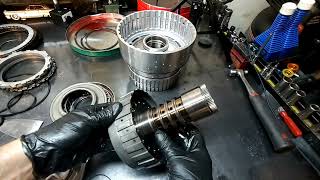
The 2018-2023 Lincoln Navigator uses the Ford 10R80 10-speed automatic transmission 🎬 Watch: Expert breakdown of the four most common 10R80 failures., which is known for experiencing issues related to harsh and erratic shifting. Ford has issued numerous Technical Service Bulletins (TSBs) that group P0771 with over two dozen other codes, all pointing toward common root causes like sticking valves in the main control (valve body) or internal hydraulic leaks in the CDF clutch drum. This means that unlike on other vehicles, simply replacing the 'E' solenoid is highly unlikely to fix the problem; a more comprehensive repair like a valve body replacement or CDF drum service is usually required.
Diagnostic Flowchart
Tap your situation to follow the diagnostic path that matches what you're seeing on this vehicle.
Symptoms You May Notice
- Harsh or abrupt shifts, particularly the 1-3 and 3-5 upshifts when cold.
- Delayed engagement or a loud 'clunk' when shifting from Park to Drive or Reverse.
- Vehicle jerking, lunging, or shuddering during acceleration.
- Transmission may get stuck in one gear or go into 'limp mode'.
- Illuminated Malfunction Indicator Lamp (MIL) or Check Engine Light.
- Sudden loss of power or hesitation, sometimes described as a 'neutral drop' where the engine revs without moving the vehicle.
- Inability to select Reverse without first turning the vehicle off and on again.
- Replacing only the 'E' shift solenoid. The problem is almost always systemic to the valve body or an internal hydraulic leak, so replacing a single solenoid will not resolve the issue.
- Performing a transmission fluid flush without addressing the root mechanical cause. While fresh fluid might temporarily improve symptoms, it will not fix a sticking valve or a leaking clutch sleeve.
Most Likely Causes
- Faulty Transmission Main Control (Valve Body) Assembly 🔴 High Probability → Shop Transmission Valve Body This is a widely documented issue on the 10R80 transmission. TSBs 24-2176, 22-2428, and others explicitly name 'sticking valves in the main control valve body' as a primary cause for a host of shift-related codes, including P0771. Debris or normal wear can cause valves to bind, preventing correct hydraulic pressure regulation.
How to confirm: A technician will follow the diagnostic procedure outlined in the relevant TSB, which often leads to valve body replacement after ruling out fluid and software issues. A professional scan tool can monitor solenoid commands vs. actual states.
Typical fix: Replacement of the entire main control valve body assembly and reprogramming the TCM. An adaptive learning drive cycle must be performed afterward.
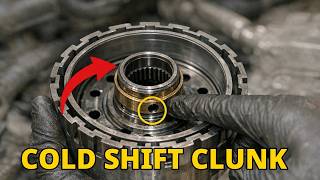
Est. part cost: $800-$1500 - Internal Hydraulic Leak (CDF Clutch Cylinder Sleeve) 🟡 Medium Probability Ford TSBs also identify 'axial movement of the CDF clutch cylinder sleeve' as a cause for these symptoms and codes. A bushing inside the CDF drum can 'walk' out of position, blocking fluid passages and causing a severe pressure drop, especially when the fluid is cold and thick. Ford has since released a redesigned part to prevent this movement.
How to confirm: This requires internal transmission inspection and specialized pressure/vacuum testing as detailed in Ford's service procedures outlined in TSBs like 24-2254. This is a dealer-level diagnosis.
Typical fix: Requires transmission disassembly to replace the CDF clutch cylinder and its sleeve with the updated part (Part # L1MZ-7H351-B). This is a significant labor-intensive repair. 🎬 See how the CDF bushing fix resolves harsh cold shifts.
Est. part cost: $200-$400 (plus significant labor) - Low or Contaminated Transmission Fluid ⚪ Low Probability → Shop Transmission Assembly While less common as the root cause for this specific code on this platform, low or dirty fluid can cause a wide range of transmission problems, including solenoid performance issues. The 10R80 is very sensitive to fluid level and condition, requiring only Motorcraft MERCON ULV. Using the wrong fluid can cause damage.
How to confirm: Check the transmission fluid level and condition according to the manufacturer's procedure. The fluid should be clean, red, and free of debris or a burnt smell. Metal shavings in the pan are a sign of severe internal damage.
Typical fix: Perform a transmission fluid and filter change using the correct Motorcraft MERCON ULV fluid. This is often done as a first step but rarely solves the P0771 code on its own if a mechanical fault exists.
Est. part cost: $150-$300
Rare But Worth Checking
- Faulty Shift Solenoid 'E': → Shop Transmission Valve Body While the code directly names this solenoid, it is rarely the true cause on the 10R80 transmission. It's usually replaced as part of the entire valve body assembly, which contains all the solenoids.
- Wiring Harness Issue: Damage to the wiring leading to or within the transmission can cause a loss of signal to the solenoid, but this is less common than the internal mechanical and hydraulic issues documented in TSBs.
- Powertrain Control Module (PCM) Software Issue: Some TSBs note that the issue can be due to software in the PCM/TCM. A dealer will typically check for and apply any available software updates as a first step before recommending mechanical repairs.
Diagnosis Steps
- Verify the transmission fluid level and condition. Ensure it is full and the fluid is clean, using only MERCON ULV.
- Use a professional scan tool to check for any other accompanying transmission codes. Note the entire family of codes present.
- Consult Ford/Lincoln Technical Service Bulletins (TSBs) like 24-2176, 24-2254, or 23-2250. These provide the most direct diagnostic path from the manufacturer.
- Check for available PCM/TCM software updates, as this is the first step recommended by Ford.
- Follow the TSB procedure, which typically involves diagnostic steps leading to the replacement of the main control valve body.
- If a new valve body does not resolve the issue, or if specified by the TSB, further diagnosis for internal hydraulic leaks at the CDF clutch cylinder sleeve is necessary. This may require specialized pressure testing equipment.
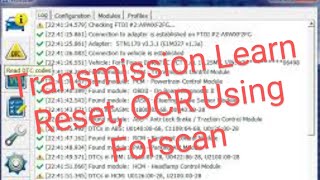
- After the repair, perform the transmission adaptive learning strategy relearn procedure using a compatible scan tool. This is critical for shift quality. 🎬 Watch: How to reset transmission adaptive learning using Forscan.
Parts You'll Likely Need
- Transmission Main Control Valve Body Assembly
(OEM #JL1Z-7A100-A)— This is the most frequent cause of P0771 and related shift codes on the 10R80 transmission, as documented in manufacturer TSBs. It contains the sticking valves and solenoids causing the issue.
Trusted brands: Motorcraft
OEM price range: $800-$1500
Aftermarket price range: $600-$1200 - CDF Clutch Cylinder
(OEM #L1MZ-7H351-B)— This is the updated part required if the cause is determined to be the migrating bushing creating an internal leak. This repair is more involved than a valve body replacement.
Trusted brands: Motorcraft
OEM price range: $150-$300
Aftermarket price range: N/A - Transmission Fluid
(OEM #Motorcraft MERCON ULV (XT-12-QULV))— Required when replacing the valve body or servicing the transmission. Approximately 10-11 quarts are needed for a valve body job.
Trusted brands: Motorcraft
OEM price range: $15-$25 per quart
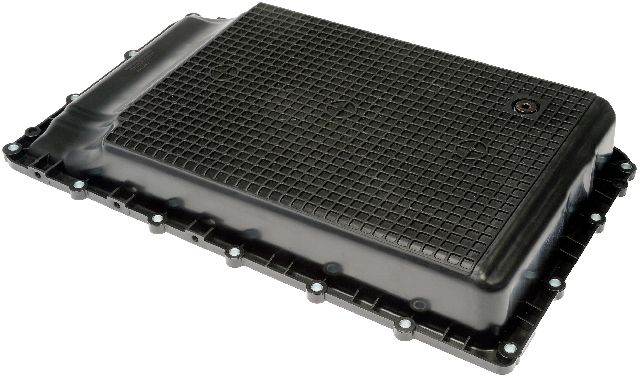
Aftermarket price range: $10-$20 per quart - Transmission Oil Pan Gasket — Must be replaced anytime the transmission pan is removed for service.
Trusted brands: Motorcraft, Fel-Pro
OEM price range: $40-$70
Aftermarket price range: $20-$40
Related Codes That Often Appear With This One
- P0751, P0756, P0761, P0766, P2700-P2708, etc. — Ford Technical Service Bulletins group P0771 with a large family of other shift solenoid and clutch performance codes because the root cause (faulty valve body or internal CDF leak) affects multiple hydraulic circuits simultaneously.
- P2704 (Transmission Friction Element 'E' Apply Time Range/Performance) — This code often appears with P0771 as it indicates that the clutch pack associated with solenoid 'E' is not engaging within the expected timeframe, which is a direct consequence of the solenoid being 'stuck off'.
Technical Service Bulletins (TSBs) & Recalls
- TSB 24-2176: Supersedes earlier versions. Notes that harsh/delayed shifts with code P0771 (and others) may be due to PCM/TCM software, sticking valves in the main control body, or a faulty CDF clutch cylinder sleeve.
- TSB 24-2254: Focuses specifically on the internal hydraulic leak caused by the CDF clutch cylinder sleeve on vehicles built before mid-August 2022 and provides procedures for pressure/vacuum testing.
- TSB 23-2250 / 22-2428: Earlier, superseded versions of the main TSB that also identified the valve body and CDF clutch cylinder sleeve as the culprits for these symptoms. A transmission specialist on a forum cited TSB 22-2428 as the key document for the CDF clutch housing issue.
- TSB 23-2123: An earlier bulletin that instructed technicians to overhaul the main control valve body to correct the condition.
Platform-Specific Known Issues
- The 10R80 transmission in these Navigators is the subject of multiple TSBs and class-action lawsuits concerning harsh/erratic shifting, hesitation, and sudden gear changes.
- The primary documented failure points leading to codes like P0771 are sticking valves within the main control (valve body) and a migrating bushing in the CDF clutch drum.
Mechanic-Grade Diagnostic Values
- Shift Solenoid Resistance — expected: 5.0 - 5.4 Ohms at 20°C (68°F). Failure: A reading outside of this range indicates a faulty solenoid coil. However, solenoids rarely fail electrically; the issue is typically mechanical or hydraulic.
- TCC Solenoid Current — expected: Proportional; low current (approx. 50 mA) results in low pressure, high current (approx. 850 mA) results in high pressure.. Failure: Current readings that do not correspond with commanded states on a scan tool.
- Line Pressure Control (LPC) Solenoid Current — expected: Inversely proportional; low current (approx. 50 mA) results in high pressure, high current (approx. 850 mA) results in low pressure.. Failure: Current readings that do not correspond with commanded states on a scan tool.
Scan Tool Commands That Help
- Ford IDS (Integrated Diagnostic System) or FORScan: Clear Transmission Adaptive Tables — This must be performed after a fluid change or any mechanical repair, including valve body replacement. It resets the learned shift pressure values to their baseline.
- Ford IDS: PCM – Transmission Strategy Download (also called Transmission Characterization/Solenoid IDN) — This is a mandatory procedure after installing a new main control (valve body) or a new transmission. It requires entering the 13-digit solenoid strategy and 12-digit ID from the new part's tag to program the PCM with the exact performance characteristics of the new hardware.
- Ford IDS or other professional scan tool: Adaptive Learning Drive Cycle — This is a specific, multi-step road test procedure that must be performed after clearing the adaptive tables. It allows the TCM to relearn clutch fill times and shift pressures for smooth operation. Failure to perform this correctly can result in continued erratic shifting.
Wiring & Ground Locations
- C175T — This is a primary connector at the Powertrain Control Module (PCM).. The C175T connector contains the circuits that control the transmission solenoids, including Shift Solenoid 'E'. A poor connection, corrosion, or damage at the specific pin for SSE could cause this code, although this is less common than the known internal mechanical faults.
Real Owner Repair Stories
- Ford Expedition Forum user (2019 Ford Expedition Max/Limited 2WD) — After a full transmission rebuild, vehicle got stuck in 7th gear, then bucked and went to 3rd. Rear tires locked up during a 1-2 shift. Reverse would not function correctly. Threw codes P0771, P2704, P2705, P2708.
❌ Tried (didn't work) A complete DIY transmission rebuild including a new, updated CDF drum, new valve body from Ford, and a new torque converter. Also performed a TCM reset and updated the shift strategy.
✅ What actually fixed it The user's problem was not resolved in the thread, but they noted a critical observation during installation: the new valve body did not feel like it seated fully against the transmission case, suspecting the cooler line gaskets were holding it off. This highlights that even with all new parts, a subtle installation error, like an unseated valve body, can cause catastrophic shifting issues and the same DTCs. - F150 Tremor Forum user (Ford F-150 with 10R80) — Delayed and hard shifts (1-2, 2-3, 6-7), harsh downshifts on stop.
❌ Tried (didn't work) Taking the truck to the dealer.
✅ What actually fixed it The user noted that the first dealership they tried had a three-month waiting list for transmission service specifically because of the high volume of 10R80 issues, confirming the widespread nature of the problem. The fix for these symptoms is typically a valve body replacement or more extensive internal repairs per TSBs.
"I Checked Everything" — The Actual Cause
- The entire P0771 fault pattern on the 10R80 transmission is a classic example of this. Standard electrical tests on the Shift Solenoid 'E' (resistance, voltage at the connector) will almost always pass because the solenoid itself is not the point of failure. The true cause is either sticking mechanical valves within the sealed valve body assembly or a hydraulic pressure leak from the CDF clutch drum sleeve. The correct diagnosis requires a specific hydraulic/vacuum test procedure outlined in TSB 24-2254, not just electrical checks.
OEM Part Supersession History
Unknown→L1MZ-7H351-B— The original CDF clutch cylinder contained a sleeve/bushing that was prone to 'walking' or migrating out of position, causing a major internal hydraulic leak. The updated part (L1MZ-7H351-B) is a redesign to prevent this movement.
Heads up: This is the required replacement part to permanently fix the CDF drum sleeve issue. Some owner forums report this is the third iteration of the part, indicating previous fixes were not fully effective.
Model Year Variations Within This Range
- 2018-2022 (specifically vehicles built on or before August 15, 2022): Vehicles built on or before this date are explicitly mentioned in TSBs like 24-2254 as being prone to the CDF clutch cylinder sleeve failure. This implies that vehicles built after this date may have received the updated CDF drum assembly from the factory, making them less likely to experience this specific cause of P0771.
Helpful Videos

We Have This Part in Stock


The information in this article is provided for general reference and educational purposes only. Vehicle specifications, procedures, and part compatibility can vary by production date, trim level, and region. Always consult your vehicle's factory service manual and verify part numbers before purchasing or performing repairs. Safety-critical components such as airbags, seat belts, and braking systems should be installed by a qualified professional.
- Lincoln NAVIGATOR:
- 🧭 Diagnostic Flowchart
- 🎬 Helpful Videos
- 🛍️ Shop This Part
- What's Unique About the 2018-2023 Lincoln NAVIGATOR
- Symptoms You May Notice
- Most Likely Causes
- Rare But Worth Checking
- Diagnosis Steps
- Parts You'll Likely Need
- Related Codes That Often Appear With This One
- Technical Service Bulletins (TSBs) & Recalls
- Platform-Specific Known Issues
- Mechanic-Grade Diagnostic Values
- Scan Tool Commands That Help
- Wiring & Ground Locations
- Real Owner Repair Stories
- "I Checked Everything" — The Actual Cause
- OEM Part Supersession History
- Model Year Variations Within This Range
- 🎟️ Get 5% Off