

P0772 on 2018-2023 Ford Expedition: Shift Solenoid E Stuck On Causes & Fixes
On a 2018-2023 Expedition, code P0772 almost always indicates a significant issue within the 10R80 transmission, most commonly a faulty main control valve body or a failing CDF drum. This is not a simple DIY fix and typically requires professional service, with costs potentially ranging from $1,500 for a valve body replacement to over $7,000 for a transmission overhaul.
- P0772 on a 2018-2023 Expedition is a serious code that points to a well-documented problem with the 10R80 transmission's main control valve body.
- This is not a simple or cheap fix. Do not be surprised if a repair shop quotes a multi-thousand dollar repair involving a valve body replacement.
- Always check for other stored transmission codes; P0772 rarely appears alone and is usually part of a larger pattern.
- This is not a DIY-friendly repair. Professional diagnosis with the proper scan tools is essential to avoid replacing incorrect parts.
- Ensure only Motorcraft MERCON® ULV automatic transmission fluid is used, as specified by Ford.
What's Unique About the 2018-2023 Ford EXPEDITION
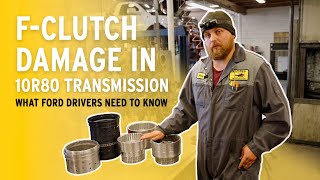
The 2018-2023 Ford Expedition uses the 10-speed 10R80 automatic transmission, which was co-developed with GM. 🎬 Watch: Overview of common 10R80 transmission failures and problems. This transmission is known for experiencing harsh and erratic shifting issues, which are the subject of multiple class-action lawsuits. Ford has released numerous Technical Service Bulletins (TSBs) that address these drivability complaints and list P0772 among dozens of other related codes. These bulletins often point to problems with sticking valves within the main control valve body and a known design flaw in the CDF (Clutch D/F) drum, where an internal sleeve can move and cause hydraulic pressure loss. This means P0772 is frequently a symptom of a larger, well-documented pattern of transmission issues rather than a simple, isolated solenoid failure.
Diagnostic Flowchart
Tap your situation to follow the diagnostic path that matches what you're seeing on this vehicle.
Symptoms You May Notice
- Harsh, jerky, or delayed gear shifts.
- Abrupt or delayed engagement when shifting from Park to Drive or Reverse.
- Check Engine Light or Malfunction Indicator Lamp (MIL) is illuminated.
- Transmission slipping, flaring, or feeling like it's losing power.
- Vehicle may enter a "limp mode," getting stuck in one gear.
- Loud clunking or banging noises during shifts.
- Decreased fuel efficiency.
- Replacing only the single 'E' shift solenoid when the broader issue is sticking valves or contamination within the main control valve body. This often results in the code returning.
- Replacing the valve body when the root cause is a failed CDF drum sleeve. This can lead to a costly, ineffective repair, as the underlying pressure loss issue remains. TSB 24-2254 was issued to provide dealers with a method to test for CDF drum leaks to prevent this misdiagnosis.
Most Likely Causes
- Faulty Main Control Valve Body 🔴 High Probability → Shop Transmission Valve Body The 10R80 transmission is known for issues with sticking valves in the main control. Multiple Ford TSBs, including TSB 24-2176, point to this as a primary cause for a cluster of codes including P0772. Cross-leaks within the valve body can also starve clutches of necessary line pressure.
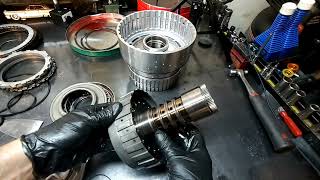
How to confirm: Diagnosis typically requires a professional scan tool to monitor solenoid commands vs. actual gear state. 🎬 See a professional diagnostic process for 10R80 harsh shifting. If other solenoid or gear ratio codes are present and fluid is clean, the valve body is the prime suspect. A technician may first attempt a PCM break-in routine before recommending replacement.
Typical fix: Replacement of the entire main control valve body assembly. This is a common repair detailed in forum discussions and TSBs. After replacement, the TCM must be reprogrammed and an adaptive learning drive cycle performed.
Est. part cost: $600-$1200 - Failed or Migrated CDF Drum Sleeve 🔴 High Probability A widely recognized design flaw in the 10R80's CDF (Clutch D/F) drum involves an internal bushing/sleeve that can slide out of position. This uncovers oil passages, causing significant hydraulic pressure loss and leading to erratic shifting and a host of trouble codes, including P0772. Ford has released updated parts to correct this.
How to confirm: This is a major internal failure requiring transmission disassembly to visually inspect the CDF drum. It is often diagnosed after a valve body replacement fails to fix the issue. TSB 24-2254 outlines a new procedure for dealers using a Pressure Vacuum Transducer Kit (Rotunda 164-R9833) to verify hydraulic circuit leakage related to the CDF drum before transmission removal.
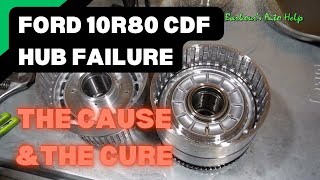
Typical fix: A partial or full transmission overhaul to replace the CDF drum with the updated part (Part No. JL3Z-7H351-B). 🎬 Watch: Understanding the CDF hub failure and the permanent fix. This is an expensive repair, often costing several thousand dollars.
Est. part cost: $150-$300 for the drum itself, but labor is extensive. - Low or Contaminated Transmission Fluid 🟡 Medium Probability → Shop Transmission Assembly
How to confirm: Check the transmission fluid level and condition. The fluid should be at the correct level and appear clean and red, not dark, burnt, or full of debris ('glitter'). The 10R80 transmission requires a specific Mercon® ULV fluid.
Typical fix: Perform a transmission fluid and filter change using the correct Motorcraft MERCON® ULV fluid (XT-12-QULV). If the fluid is heavily contaminated with metal shavings, it indicates a more severe internal failure like the CDF drum.
Est. part cost: $100-$200 - Failed Shift Solenoid 'E' ⚪ Low Probability → Shop Transmission Valve Body While the solenoid itself can fail electrically, it is often integral to the valve body. On the 10R80, the entire valve body is typically replaced as a unit to address the more common root cause of sticking valves or hydraulic leaks, making an isolated solenoid failure less common.
How to confirm: A technician can use a scan tool to command the solenoid on and off. The solenoid's electrical circuit can also be tested for resistance and continuity. The 10R80 solenoids are mechanical (CIDAS) and do not have fluid passing through them; they actuate valves in the valve body.
Typical fix: Replace the shift solenoid. However, due to the design and common failure patterns of the 10R80, replacing the entire valve body assembly is the more common and recommended repair.
Est. part cost: $50-$150 for a single solenoid, but see valve body cost.
Rare But Worth Checking
- Wiring Harness Issue: Damage to the internal transmission wiring harness or the external connector can cause an electrical fault for the solenoid. This should be inspected when the transmission pan is removed.
- Faulty Transmission Control Module (TCM) or Powertrain Control Module (PCM): → Shop Transmission Assembly It is rare for the control module to fail, but it's a possibility if all other components and wiring check out. This is typically the last item to be diagnosed.
Diagnosis Steps
- Check the transmission fluid level and condition. Ensure it meets the specification for Motorcraft MERCON® ULV.
- Use a professional-grade scan tool to check for any other accompanying transmission codes to see if it's part of the pattern described in Ford's TSBs.
- Review the live data on the scan tool to monitor the commanded state of Shift Solenoid 'E' versus its actual state.
- Follow the diagnostic procedure outlined in the latest TSB (e.g., TSB 24-2176 or 24-2254), which may include performing a PCM - Transmission Accelerated Main Control Break In routine up to two times to see if the issue resolves.
- If the break-in procedure fails, inspect the transmission wiring harness and connector for any visible damage, corrosion, or loose connections.
- If wiring is good, drop the transmission pan.
- Inspect the pan for excessive metal shavings ('glitter') or clutch material, which would indicate a severe internal failure, likely pointing towards the CDF drum.
- If the pan is relatively clean, the next step is typically the replacement of the main control valve body.
- If a valve body replacement does not fix the issue, or if there was significant debris in the pan, a transmission overhaul is required to inspect and replace the CDF drum.
- After any major repair like a valve body or overhaul, the TCM must be reprogrammed with the new Solenoid Body Strategy Data and a transmission adaptive learning drive cycle must be performed.
Parts You'll Likely Need
- Transmission Main Control Valve Body Assembly
(OEM #HL3Z-7A100-B)— This is the most common failure point for a wide range of shifting issues and related codes on the 10R80 transmission, as documented in multiple Ford TSBs. This part number supersedes HL3Z-7A100-A.
Trusted brands: Motorcraft
OEM price range: $600-$1200
Aftermarket price range: $500-$1000 - Updated CDF Clutch Cylinder/Drum
(OEM #JL3Z-7H351-B)— This is the updated part from Ford designed to fix the common failure where the internal sleeve migrates, causing massive fluid pressure loss and numerous shifting problems. This part is required if a transmission overhaul is necessary.
Trusted brands: Motorcraft
OEM price range: $150-$300 - Motorcraft MERCON ULV Automatic Transmission Fluid
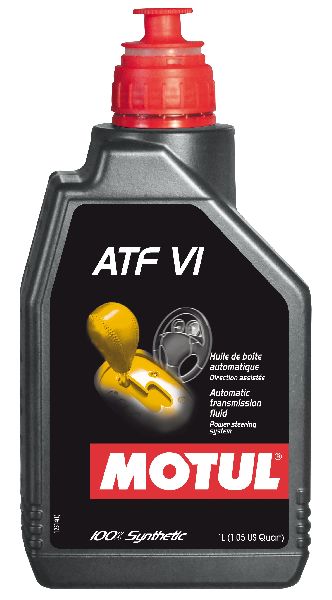
(OEM #XT-12-QULV)— This is the required, specific ultra-low viscosity fluid for the 10R80 transmission. Using any other fluid type can cause damage. A valve body replacement requires approximately 11 quarts to refill.
Trusted brands: Motorcraft
OEM price range: $12-$20 per quart
Related Codes That Often Appear With This One
- P0751, P0756, P0761, P0766, P0771, P2700-P2708, P0729-P0736 — These are all transmission solenoid and gear ratio error codes. Ford TSBs like 24-2176 list them together because a single underlying fault in the 10R80's main control valve body or CDF drum can trigger a wide array of these codes simultaneously.
Technical Service Bulletins (TSBs) & Recalls
- TSB 23-2250: Supersedes earlier TSBs. Outlines a comprehensive diagnostic procedure for a long list of codes including P0772, pointing to software, the main control valve body, and/or the CDF clutch cylinder sleeve as potential causes.
- TSB 24-2176, 26-2046, 22-2428, 25-2023, 24-2254: These TSBs all list P0772 among a large group of codes related to various harsh/delayed shifting and engagement problems on the 10R80 transmission.
- An older TSB for the 2020 Transit (20-2226) specifically mentions P0772 and P2704 for harsh engagement and points to sticking valves in the main control valve body as the cause.
Platform-Specific Known Issues
- The 10R80 transmission in 2018-2023 Expeditions is the subject of numerous customer complaints and several class-action lawsuits regarding harsh shifting, hesitation, and sudden loss of power.
- Ford has issued multiple Technical Service Bulletins (TSBs) like TSB 23-2250 that directly address these symptoms and the associated cluster of diagnostic trouble codes, including P0772.
- The official repair procedure in these TSBs has multiple stages, starting with software routines, then valve body overhaul/replacement, and finally addressing the CDF clutch cylinder sleeve if the issue persists.
- Owner experiences on forums like FordExpeditionForum.com and Reddit frequently discuss getting the valve body replaced, only to later need a full transmission overhaul to fix the CDF drum.
Mechanic-Grade Diagnostic Values
- Shift Solenoid Coil Resistance — expected: 5 Ω to 15 Ω (general), or 16-45 Ω (older Ford models). Failure: An open circuit (∞ Ω) or a direct short (<1 Ω) indicates a failed solenoid coil.
- Valve Body Vacuum Test — expected: Specific vacuum readings vary by port, but should hold steady above a specified minimum (e.g., 23-25 inHg for a healthy circuit).. Failure: A low or rapidly dropping vacuum reading on a specific valve's test port indicates a leak in that circuit, likely from a worn valve bore or sticking valve.
Hidden / Shadow Codes Worth Checking
- P163E: Transmission Control Module (TCM) - Solenoid Body Strategy Not Programmed (see via This code may appear after replacing the main control valve body if the new 13-digit solenoid body strategy is not correctly downloaded to the TCM/PCM using a Ford scan tool. It indicates a software incompatibility.)
Scan Tool Commands That Help
- Ford IDS/FDRS: Transmission Accelerated Main Control Break-in — This procedure is used as a first step to attempt to free sticking valves within the main control valve body before resorting to replacement. TSBs instruct technicians to run this routine up to two times.
- Ford IDS/FDRS: Clear Transmission Adaptive Tables — This must be performed after replacing the valve body or transmission, or after reprogramming. It resets the learned shift strategy, forcing the TCM to start a new learning process.
- Ford IDS/FDRS: Transmission Strategy Download — Required after installing a new main control valve body. The technician must enter the 13-digit solenoid body strategy number found on the new valve body to ensure the TCM software is compatible with the new hardware.
Wiring & Ground Locations
- Main Transmission Case Connector — On the exterior of the transmission case, connecting the main vehicle harness to the transmission's internal components.. This is the primary electrical interface for the entire transmission. Damage, corrosion, or a loose connection here can cause a wide range of electrical faults, including for Shift Solenoid E.
- Internal Transmission Wiring Harness Connector — Inside the transmission, connecting the main case connector pass-through to the valve body solenoid assembly.. This connector must be disconnected when lowering the valve body. It's a common point of failure if not seated correctly during reassembly, or if the harness is damaged during service.
- Fuse F14 (Underhood Fuse Box) — In the underhood fuse box, identified as a 10A fuse in position 14.. This fuse supplies power to the Transmission Control Module (TCM). While a blown fuse would likely cause more codes than just P0772, it's a basic electrical check.
Real Owner Repair Stories
- Mustang6G.com user 'Velocity10gear' (2020 Mustang GT (10R80 Transmission) with 808whp and a rebuilt transmission.) — Vehicle would not move when gas was pressed. After restart, gear indicator jumped between 10th and 7th while stationary. Only Park and Neutral would engage. Codes P0772 and P2704 were present.
❌ Tried (didn't work) Disconnecting the battery., Reflashing the vehicle's tune.
✅ What actually fixed it Replacement of the main control valve body solved all issues.
OEM Part Supersession History
Various older CDF drums→JL3Z-7H351-B— The original design allowed an internal bushing/sleeve to migrate or 'walk' out of position, uncovering oil passages and causing a major hydraulic leak. The updated part has a machined lip on the inner half of the drum that physically prevents the sleeve from moving, providing a permanent fix.
Model Year Variations Within This Range
- 2018-2022: TSB 22-2428, which covers harsh shifts and related codes including P0772, specifically applies to vehicles with a 10R80 transmission built on or before August 15, 2022. Vehicles built after this date may have updated components or software from the factory.
- 2024 and later service: TSB 24-2254 introduced a new diagnostic procedure requiring a 'Pressure Vacuum Transducer Kit' (Rotunda 164-R9833) to test for CDF drum leaks. Dealers without this specific tool are instructed to fall back to the older TSB 24-2176 procedure. This creates a variation in diagnostic capability and accuracy depending on the dealership's equipment.
Helpful Videos

We Have This Part in Stock


The information in this article is provided for general reference and educational purposes only. Vehicle specifications, procedures, and part compatibility can vary by production date, trim level, and region. Always consult your vehicle's factory service manual and verify part numbers before purchasing or performing repairs. Safety-critical components such as airbags, seat belts, and braking systems should be installed by a qualified professional.
- Ford EXPEDITION:
- 🧭 Diagnostic Flowchart
- 🎬 Helpful Videos
- 🛍️ Shop This Part
- What's Unique About the 2018-2023 Ford EXPEDITION
- Symptoms You May Notice
- Most Likely Causes
- Rare But Worth Checking
- Diagnosis Steps
- Parts You'll Likely Need
- Related Codes That Often Appear With This One
- Technical Service Bulletins (TSBs) & Recalls
- Platform-Specific Known Issues
- Mechanic-Grade Diagnostic Values
- Hidden / Shadow Codes Worth Checking
- Scan Tool Commands That Help
- Wiring & Ground Locations
- Real Owner Repair Stories
- OEM Part Supersession History
- Model Year Variations Within This Range
- 🎟️ Get 5% Off