

P0772 on 2020-2023 Ford Transit: Shift Solenoid 'E' Stuck On Causes & Fixes
On a 2020-2023 Ford Transit, code P0772 is most often caused by sticking valves inside the transmission's main control valve body, a known issue documented in Ford Technical Service Bulletins. This is a complex repair requiring professional service, with costs ranging from several hundred to over two thousand dollars.
- P0772 on a 2020-2023 Ford Transit indicates Shift Solenoid 'E' is stuck on, usually causing harsh, erratic shifting.
- Ford has specifically identified that the most common cause is not the solenoid itself, but sticking valves within the main control valve body.
- Before condemning expensive parts, always check the transmission fluid level and condition first, as low or dirty fluid can cause similar symptoms.
- Due to the complexity of diagnosing and repairing internal transmission components, this issue is best handled by a professional technician.
- If repair is needed, ensure only the correct Motorcraft MERCON ULV transmission fluid is used.
What's Unique About the 2020-2023 Ford TRANSIT

The 2020-2023 Ford Transit, often equipped with the 10-speed 10R80 automatic transmission, has a documented history of issues related to this code. This transmission was a joint venture between Ford and General Motors (where it is known as the 10L series). Ford has issued multiple Technical Service Bulletins (TSBs) acknowledging that symptoms like harsh shifting are often due to sticking valves within the main control valve body, not just a simple solenoid failure. This makes diagnosis more complex, as the root cause is frequently a mechanical problem within the larger valve body assembly rather than a simple electrical fault with the solenoid itself. TSB 24-2254 also links this code to potential axial movement of the CDF clutch cylinder sleeve, which can cause hydraulic leaks.
Diagnostic Flowchart

Tap your situation to follow the diagnostic path that matches what you're seeing on this vehicle.
Symptoms You May Notice
- Harsh or delayed shifts between gears
- Harsh engagement when shifting into Drive
- Illuminated Malfunction Indicator Lamp (Check Engine Light)
- Transmission may enter a "limp mode" or fail-safe mode
- Inability to shift into or out of a specific gear
- Decreased fuel efficiency
- Transmission slipping, followed by a "CLUNK" or slam into gear
- Engine may stall when coming to a stop
- Replacing only the shift solenoid 'E' when the root cause is a sticking valve or contaminated passages within the main control valve body. This is a common mistake that leads to the code returning, as the underlying hydraulic issue is not resolved.
Most Likely Causes

- Sticking Valves in the Main Control Valve Body 🔴 High Probability → Shop Transmission Valve Body This is a well-documented issue for this vehicle and the 10R80 transmission, as cited in multiple Ford TSBs (TSB 21-2044, TSB 21-2321, TSB 20-2226). Debris or manufacturing tolerances can cause valves to bind in their bores, a known weakness.
How to confirm: A technician can perform a detailed inspection and cleaning of the valve body. Per TSB 20-2226, if the vehicle has under 5,000 miles, a specific 'accelerated main control break-in routine' should be performed twice with a scan tool before considering replacement. If the issue persists or the vehicle has higher mileage, replacement is the recommended fix.
Typical fix: Overhaul (cleaning and inspection) or complete replacement of the main control valve body assembly. Aftermarket companies also offer upgraded valve bodies designed to prevent future issues.
Est. part cost: $500-$2500 - Low or Contaminated Transmission Fluid 🟡 Medium Probability → Shop Transmission Assembly The 10R80 transmission is highly sensitive to fluid type and condition. Using anything other than the specified Motorcraft MERCON ULV can cause shifting problems and internal wear.
How to confirm: Check the transmission fluid level and condition via the service plug. Fluid should be at the correct level, red in color, and free of debris or a burnt smell. Dirty fluid can clog passages in the valve body.
Typical fix: Perform a transmission fluid and filter change. Use only the specified Motorcraft MERCON ULV fluid.
Est. part cost: $100-$250 - Failed Shift Solenoid 'E' 🟡 Medium Probability → Shop Transmission Valve Body
How to confirm: A technician can use a scan tool to command the solenoid on and off. The solenoid's electrical resistance can also be tested with a multimeter to see if it's within factory specifications. Typical resistance is 5.0-5.4 ohms at 68°F (20°C).
Typical fix: Drop the transmission pan and replace the individual shift solenoid. However, this is often misdiagnosed, and the problem may be the valve body itself.
Est. part cost: $50-$150 - Wiring Harness or Connector Issue ⚪ Low Probability
How to confirm: Visually inspect the transmission wiring harness and connectors for damage, corrosion, or fluid intrusion. A multimeter can be used to check for continuity and shorts in the circuit between the TCM and the solenoid. The control circuit for Shift Solenoid E (SSE) is on Pin 11 (VT-GY wire) of the C175T connector at the PCM.
Typical fix: Repair the damaged section of wiring or replace the affected connector.
Est. part cost: $20-$200
Rare But Worth Checking
- Faulty Powertrain Control Module (PCM) or Transmission Control Module (TCM): → Shop Transmission Assembly This is a rare cause and should only be considered after all other possibilities (solenoid, wiring, valve body) have been exhaustively ruled out. Sometimes a PCM software update is all that is needed.
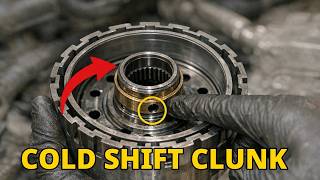
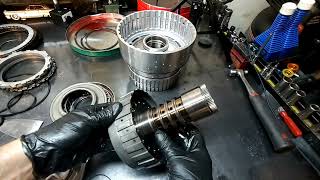
- Internal CDF Clutch Drum Failure: → Shop Transmission Clutch Pressure Plate A known weakness in earlier 10R80s involves a bushing in the CDF clutch drum that can move out of place, causing hydraulic leaks and a host of shifting problems. TSB 24-2254 addresses this issue, which is a more intensive repair than a valve body replacement. Ford later revised the CDF drum with a lip to prevent the bushing from slipping. 🎬 Watch: How the CDF drum failure causes shifting issues.
Diagnosis Steps
- Check and verify the transmission fluid is at the correct level and in good condition (not burnt or dirty). Ensure only MERCON ULV is used.
- Use a professional scan tool to check for any other transmission-related trouble codes.
- Review the freeze-frame data to understand the conditions under which the code was set.
- Consult TSBs 20-2226 and 21-2321. If the vehicle has low mileage (e.g., under 5,000 miles), use a Ford diagnostic scan tool to perform the 'transmission accelerated main control break-in routine' twice. Clear the transmission adaptive tables and perform a drive cycle.
- If the break-in routine fails or the vehicle has higher mileage, proceed with physical inspection.
- Inspect the external transmission wiring harness and connectors for any signs of damage, corrosion, or loose connections. Pay attention to the C175T connector at the PCM.
- Using the scan tool, command Shift Solenoid 'E' on and off to monitor its response in the live data stream.
- If the solenoid does not respond correctly, drop the transmission oil pan to gain access to the internal components.
- Test the solenoid's resistance with a multimeter. The expected value is between 5.0 and 5.4 ohms at 68°F (20°C). Check for power and ground at the solenoid connector.
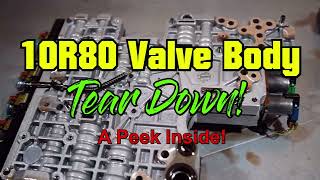
- If the solenoid and wiring test good, the problem is highly likely to be within the main control valve body, as indicated by multiple Ford TSBs. The valve body should be inspected for sticking valves or blockages 🎬 See a detailed teardown of the 10R80 valve body internals. and replaced if necessary.
Parts You'll Likely Need

- Main Control Valve Body
(OEM #L1MZ-7A100-A (or L1MZ-7A100-C for hybrid models))— This is the most common cause of P0772 on this vehicle, as identified in multiple manufacturer TSBs.
Trusted brands: Motorcraft, SunCoast Performance, BD Diesel Performance
OEM price range: $800-$2500
Aftermarket price range: $500-$1500 - Transmission Fluid
(OEM #XT-12-QULV (Motorcraft MERCON ULV))— Fluid must be replaced anytime the transmission pan is removed for service. The 10R80 is extremely sensitive to correct fluid type.
Trusted brands: Motorcraft
OEM price range: $20-$30 per quart - Transmission Filter
(OEM #FT-202 (Often part of a kit like L1MZ-7A098-B))— Should always be replaced when servicing the transmission to ensure the new fluid stays clean.
Trusted brands: Motorcraft
OEM price range: $70-$115
Aftermarket price range: $40-$80 - Shift Solenoid
(OEM #HL3Z-7G383-P (Example, verify specific solenoid))— If the valve body is not the issue, the solenoid itself may have failed electrically or mechanically.
Trusted brands: Motorcraft
OEM price range: $75-$150
Aftermarket price range: $40-$100
Related Codes That Often Appear With This One
- P2704 — This code for 'Transmission Friction Element E Apply Time Range/Performance' is explicitly mentioned alongside P0772 in Ford TSBs 21-2044, 21-2321, and 20-2226, indicating they stem from the same valve body issue.
- P0751, P0756, P0761, P0766 — These are codes for other shift solenoids ('A', 'B', 'C', 'D'). Their presence alongside P0772 strongly suggests a systemic issue like contaminated fluid, a faulty valve body, or a failing CDF clutch drum affecting multiple solenoids, as listed in TSBs 24-2254 and 23-2250.
Technical Service Bulletins (TSBs) & Recalls
- TSB 21-2321: Supersedes earlier versions, confirming P0772 and P2704 can be caused by sticking valves in the main control body causing harsh engagement. Recommends a 'break-in' routine or valve body overhaul.
- TSB 20-2226: An earlier TSB for 2020 Transits with the same issue, noting that the condition may resolve itself within the first 5,000 miles.
- TSB 24-2254: Links a wide range of shift codes, including P0772, to axial movement of the CDF clutch cylinder sleeve causing hydraulic leaks.
- TSB 23-2250: A comprehensive TSB that lists multiple potential causes for harsh shifting and various DTCs, including P0772, such as PCM/TCM software, solenoid ID strategy, sticking valves, and the CDF clutch sleeve issue.
Platform-Specific Known Issues
- Ford has issued multiple Technical Service Bulletins for the 2020-2023 Transit regarding this code. TSB 21-2321 specifically states that P0772 can be caused by 'sticking valves in the main control valve body,' leading to harsh engagement into drive. The bulletin outlines a procedure to either perform a 'break-in' routine with a scan tool or overhaul/replace the valve body entirely. TSB 20-2226 notes that for many vehicles, the condition may improve on its own within the first 8,000 km (5,000 mi), but if it persists or the code is present, service is required.
Mechanic-Grade Diagnostic Values
- Shift Solenoid 'E' Coil Resistance — expected: 5.0 - 5.4 ohms at 68°F (20°C). Failure: An open circuit (infinite ohms) or very low resistance indicates a damaged solenoid coil.
- Shift Solenoid 'E' (SSE) Circuit Voltage at PCM — expected: Varies based on command from TCM/PCM. A constant 12V when the solenoid should be off can indicate a short to power or a faulty driver in the control module.. Failure: Voltage that does not change when commanded by a scan tool, or a constant 12V signal.
Scan Tool Commands That Help
- Ford IDS / FDRS / FORScan (licensed): PCM – Transmission Strategy Download — This is required after replacing the main control valve body or the entire transmission. It programs the unique 13-digit strategy number from the new solenoid body into the PCM/TCM for correct operation.
- Ford IDS / FDRS / FORScan: Clear Transmission Adaptive Tables — This must be performed after replacing the valve body or solenoids. It erases the learned values for clutch apply times, forcing the transmission to relearn the characteristics of the new components.
- Ford IDS / FDRS: Transmission Accelerated Main Control Break-In Routine — Per TSB 20-2226, this should be performed twice on low-mileage vehicles (under 5,000 miles) exhibiting harsh shifts with code P0772 before replacing the valve body.
- Ford IDS / FDRS / FORScan: Solenoid State Control / Output State Control — Used during diagnosis to manually command Shift Solenoid 'E' on and off to verify its electrical function and listen for a mechanical click from the solenoid.
Wiring & Ground Locations
- C175T, Pin 11 — This is one of the main connectors at the Powertrain Control Module (PCM).. Pin 11 on connector C175T is the control circuit for Shift Solenoid E (SSE). The wire color is Violet/Grey (VT-GY). This is the specific pin to test for voltage, shorts, or opens when diagnosing a circuit fault for P0772.
Real Owner Repair Stories
- Reddit user in r/AskMechanics (2012 Ford Transit Connect (Note: different model year/chassis but similar diagnostic logic)) — Codes P0772 (Shift Solenoid E Stuck On) and P0751 (Shift Solenoid A Stuck Off), resulting in failure to shift from 3rd to 4th gear.
❌ Tried (didn't work) Replaced shift solenoids A & B, changed transmission fluid and filter. The problem persisted.
✅ What actually fixed it The user stated that for these transmissions, swapping out the entire main control valve body assembly is the fix for about 80% of issues and that their issue was, in fact, the valve body. - Reddit user in r/f150 (2018 F-150 EcoBoost with 10R80 transmission at 145k miles (Note: different vehicle but same transmission and known issue)) — "CRAZY shift problems. Floating gears then slamming into others, even tries to shift into first gear going 80mph."
❌ Tried (didn't work) A transmission relearn procedure and a valve body replacement did not fix the issue.
✅ What actually fixed it The final diagnosis, guided by a TSB, was a failed CDF clutch drum due to the internal sleeve moving out of place. This required a more intensive transmission repair beyond the valve body.
OEM Part Supersession History
Unknown (pre-2023 CDF Clutch Drum)→Revised CDF Clutch Drum (Post-2023)— The original CDF drum design allowed an internal bushing/sleeve to slide out of position, causing a major hydraulic pressure loss.
Heads up: The new drum has a visible lip at the top of the bushing bore to prevent it from slipping. This is a direct upgrade and replacement for the older, failure-prone part.
Model Year Variations Within This Range
- 2020 - mid-2022: Vehicles built on or before August 15, 2022, are specifically called out in TSB 24-2254 as being prone to the CDF clutch cylinder sleeve movement causing hydraulic leaks and numerous shift codes, including P0772. Later models may have the revised part from the factory.
Helpful Videos





We Have This Part in Stock


The information in this article is provided for general reference and educational purposes only. Vehicle specifications, procedures, and part compatibility can vary by production date, trim level, and region. Always consult your vehicle's factory service manual and verify part numbers before purchasing or performing repairs. Safety-critical components such as airbags, seat belts, and braking systems should be installed by a qualified professional.
- Ford TRANSIT:
- 🧭 Diagnostic Flowchart
- 🎬 Helpful Videos
- 🛍️ Shop This Part
- What's Unique About the 2020-2023 Ford TRANSIT
- Symptoms You May Notice
- Most Likely Causes
- Rare But Worth Checking
- Diagnosis Steps
- Parts You'll Likely Need
- Related Codes That Often Appear With This One
- Technical Service Bulletins (TSBs) & Recalls
- Platform-Specific Known Issues
- Mechanic-Grade Diagnostic Values
- Scan Tool Commands That Help
- Wiring & Ground Locations
- Real Owner Repair Stories
- OEM Part Supersession History
- Model Year Variations Within This Range
- 🎟️ Get 5% Off