

P0772 on 2020-2023 Lincoln Aviator: Shift Solenoid 'E' Stuck On Causes and Fixes
On a 2020-2023 Lincoln Aviator, code P0772 almost never means the shift solenoid is bad. It indicates a serious internal issue with the 10-speed 10R60/10R80 transmission, most often a faulty main control valve body or a failed CDF clutch drum. This is a complex, expensive repair ($2,000-$5,000+) that requires a professional and is the subject of multiple TSBs and class-action lawsuits.
- P0772 on a 2020-2023 Aviator indicates a serious internal transmission problem, not a simple solenoid failure.
- The most likely causes are a faulty main control valve body or a failed CDF clutch drum, both known issues covered by Ford/Lincoln TSBs.
- Do not replace only the shift solenoid, as this will not fix the problem.
- This repair is complex and expensive, requiring a professional technician familiar with the 10R80 transmission.
- Always ask the repair shop to check for the latest TSBs and software updates before beginning mechanical repairs.
What's Unique About the 2020-2023 Lincoln AVIATOR
The 2020-2023 Aviator uses Ford's 10R60/10R80 10-speed automatic transmission, which is known for specific mechanical and hydraulic failures that trigger P0772. Unlike many vehicles where this code might point to a simple solenoid, on this platform, it's a strong indicator of deeper issues. Ford has issued numerous Technical Service Bulletins (TSBs), such as TSB 23-2250, acknowledging that the root cause is typically either sticking valves in the main control valve body or a mechanical failure of the CDF clutch drum assembly, not the solenoid itself. Multiple class-action lawsuits have been filed concerning the reliability and harsh shifting behavior of this transmission in various Ford and Lincoln models 🎬 Watch: A Ford technician explains common 10-speed transmission issues, alleging Ford knew of the defects but did not issue a recall.
Diagnostic Flowchart
Tap your situation to follow the diagnostic path that matches what you're seeing on this vehicle.
Symptoms You May Notice
- Harsh, delayed, or erratic shifting, sometimes feeling like being rear-ended.
- Loud clunking or banging sounds when the transmission tries to shift, especially when slowing down.
- Vehicle enters 'limp mode,' often getting stuck in a single gear.
- Complete loss of drive or reverse gears after coming to a stop.
- Powertrain Malfunction / Reduced Power warning light on the dashboard.
- Illuminated Check Engine Light.
- Vehicle lunging or jerking when shifting from Park to Drive.
- Replacing only the Shift Solenoid 'E'. This is the most common mistake, as the code is almost always a symptom of the failing valve body or CDF drum, not the solenoid itself.
- Performing a transmission fluid flush without addressing the root mechanical cause. This will not fix a sticking valve or a migrated CDF drum sleeve.
Most Likely Causes
- Sticking Valves in the Main Control Valve Body 🔴 High Probability → Shop Transmission Valve Body This is a widely documented issue in Ford's 10R60/10R80 transmissions, addressed in multiple TSBs (like TSB 23-2250). Debris or design flaws can cause valves to stick, preventing correct hydraulic pressure routing. TSB 20-2226 for the related Transit specifically links P0772 to sticking valves.
How to confirm: A technician must follow the diagnostic procedure outlined in the relevant TSB. This often involves a software update and a specific 'transmission accelerated main control break-in routine' performed with a scan tool. If the issue persists after these steps, the valve body is condemned.
Typical fix: Replacement of the main control valve body assembly and performing a 'Transmission Characterization Update' to program the new solenoid strategy.
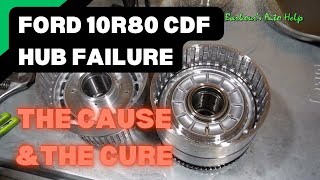
Est. part cost: $700-$1500 - Failed CDF Clutch Drum Assembly 🔴 High Probability → Shop Transmission Assembly A known design flaw where a bushing/sleeve inside the CDF drum can move axially ('walk out'), uncovering a hydraulic passage. This causes a major internal pressure leak, starving the clutch pack of fluid and triggering numerous codes, including P0772. TSB 24-2254 specifically addresses this failure mode.
How to confirm: This requires transmission removal and disassembly for visual inspection. A technician can also perform hydraulic pressure tests as outlined in TSB 24-2254 to identify the internal leak without a full teardown first. The migrated sleeve will be clearly visible upon inspection of the drum.
Typical fix: The transmission must be removed and completely disassembled to replace the CDF clutch drum with an updated part (e.g., JL3Z-7H351-B) which has a machined lip to prevent the sleeve from moving. Aftermarket solutions, like the Sonnax CDF Drum Saver Kit (129910-01K), also exist to repair a damaged drum.
Est. part cost: $200-$600 for the drum, plus extensive labor. - Low or Contaminated Transmission Fluid ⚪ Low Probability → Shop Transmission Assembly The 10R80 is highly sensitive to fluid condition. While low fluid is a general issue, contaminated or broken-down fluid can accelerate wear and cause the sensitive valves in the main control body to stick.
How to confirm: Check the transmission fluid level and condition. The fluid should be Mercon ULV. If it is dark, burnt-smelling, or contains metal shavings, it indicates significant internal wear or failure, likely from the CDF drum or another clutch pack.
Typical fix: If caught very early with no other symptoms, a fluid and filter change might help. However, if P0772 is present, the fluid condition is almost certainly a symptom of the larger valve body or CDF drum failure.
Est. part cost: $150-$300
Rare But Worth Checking
- Faulty Shift Solenoid 'E': → Shop Transmission Valve Body While the code directly names the solenoid, it is very rarely the actual point of failure on this specific platform. The solenoid is part of the valve body assembly, and TSBs consistently point to mechanical issues in the valve body or CDF drum as the root cause.
- Transmission Control Module (TCM) or Software Issue: → Shop Transmission Assembly Outdated software can contribute to harsh shifting and incorrect diagnostic strategies. TSBs like 23-2250 list a software update as the very first diagnostic step before any mechanical repairs are attempted.
Diagnosis Steps
- Verify the code with a professional OBD-II scanner.
- Check for any available Powertrain Control Module (PCM) or Transmission Control Module (TCM) software updates using a Ford-specific scan tool (like FDRS). Reprogram if an update is available, as per TSB 23-2250.
- Check the transmission fluid level and condition. Note any burning smell or metallic debris.
- If the vehicle has low mileage (e.g., under 5,000 miles), perform the 'transmission accelerated main control break-in routine' using the scan tool, as specified in TSBs like 20-2226.
- If symptoms persist, a technician should follow the advanced diagnostics in TSB 24-2254, which involves using a Pressure Vacuum Transducer Kit to test hydraulic circuits for leaks.
- If pressure tests fail or the break-in routine does not resolve the issue, suspect the main control valve body. Replace the valve body assembly.
- If pressure tests point to a major internal leak, or if the valve body replacement does not fix the issue, the transmission must be removed and disassembled to inspect the CDF clutch drum for a migrated bushing and damaged seals.
Parts You'll Likely Need
- Main Control Valve Body
(OEM #L1MZ-7A100-A (and subsequent revisions like L1MZ-7A100-C, F, K))— This is a primary point of failure, containing valves that are known to stick, causing hydraulic pressure issues that trigger P0772. Part numbers are frequently superseded.
Trusted brands: Motorcraft
OEM price range: $700-$1500 - CDF Clutch Drum Assembly (Updated)
(OEM #JL3Z-7H351-B (replaces HL3Z-7H351-A and JL3Z-7H351-A))— A known mechanical failure point where an internal sleeve moves, causing a major hydraulic leak. The updated part has a machined lip to prevent this movement. Requires a full transmission teardown to replace.
Trusted brands: Motorcraft
OEM price range: $200-$600
Aftermarket price range: Sonnax makes a repair kit (129910-01K) to fix a failed drum without full replacement.
Related Codes That Often Appear With This One
- P2704 — This code for 'Transmission Friction Element 'E' Apply Time Range/Performance' is frequently seen with P0772 as it directly relates to the clutch pack ('E') controlled by the circuit that is malfunctioning.
- P0751, P0756, P0761, P0766, P0771, etc. — Codes for other shift solenoids (A, B, C, D, E) often appear in a group with P0772. This indicates a systemic hydraulic failure (valve body or CDF drum) affecting multiple circuits, not multiple individual solenoid failures.
- P0729, P0731-P0736 — These codes indicate incorrect gear ratios. They are a direct result of the hydraulic pressure loss and clutch slip caused by the failing valve body or CDF drum, which prevents the transmission from physically achieving or holding the commanded gear.
Technical Service Bulletins (TSBs) & Recalls
- TSB 23-2250: Supersedes earlier TSBs (like 22-2428) and identifies the cause of P0772 and dozens of other codes as sticking valves in the main control valve body or movement of the CDF clutch cylinder sleeve.
- TSB 24-2254: Outlines a specific diagnostic procedure for vehicles built be
Platform-Specific Known Issues
- The 10R80 transmission in the 2020-2023 Aviator is subject to multiple TSBs. TSB 23-2250 is a comprehensive bulletin that supersedes earlier ones and identifies the primary causes of a wide range of DTCs (including P0772) as either sticking valves in the main control body or axial movement of the CDF clutch cylinder sleeve.
- TSB 24-2254 provides a specific diagnostic procedure using pressure transducers to verify hydraulic leaks caused by the failed CDF clutch cylinder sleeve on vehicles built before August 15, 2022.
Mechanic-Grade Diagnostic Values
- CDF Drum Leakage Percentage — expected: A low percentage calculated by Ford's diagnostic tools.. Failure: A high percentage of leakage confirms that the CDF drum bushing has slipped and the drum must be replaced. This value is calculated by the dealership tool after performing a series of pressure tests with a transducer kit.
Hidden / Shadow Codes Worth Checking
- Mode $06 Data: While not a specific shadow code, Mode $06 provides access to non-continuous monitor test results. For the 10R80 transmission, this can include data on shift timing and solenoid performance that can provide clues about developing issues before a hard fault code like P0772 is set. (see via Professional scan tool or an advanced DIY tool like FORScan that has Mode $06 test capability.)
Scan Tool Commands That Help
- Ford IDS / FDRS / FORScan: PCM - Transmission Accelerated Main Control Break In — This routine is used on low-mileage vehicles (typically under 5,000 miles) or as a first step to attempt to free up sticking valves in the main control body. It cycles the clutches and solenoids rapidly to 'break in' the components. If this procedure fails to resolve the issue, it points towards a more severe mechanical failure.
- Ford IDS / FDRS / FORScan: Clear Transmission Adaptive Tables — This is a mandatory step after any transmission repair, including valve body replacement or running the break-in routine. It resets the transmission's learned shift strategy, allowing it to relearn the characteristics of the new or cleaned components.
- Ford IDS / FDRS / FORScan: Transmission Characterization Update / Solenoid Body Strategy Programming — This is a required procedure when a new main control (valve body) assembly is installed. It programs the unique flow characteristics of the new solenoids (from a tag on the new part) into the TCM for proper operation.
Wiring & Ground Locations
- Main Transmission Case Connector (26-Way) — On the exterior of the transmission case, where the main vehicle harness connects to the transmission's internal wiring.. Pin A11 (typically a Blue/Green wire) is the shared power supply for the bank of shift solenoids that includes A, B, C, D, E, and F. While a wiring issue here is less common than the mechanical failures, a problem at this pin could theoretically cause issues across multiple solenoid circuits, aligning with the symptom of seeing multiple solenoid codes at once.
Real Owner Repair Stories
- Synthesized from multiple owner accounts on F150Forum.com and Reddit's r/f150 (Various 2018-2022 Ford F-150s and Expeditions with the 10R80 transmission (same powertrain as the Aviator).) — Initial symptoms of harsh shifting, particularly 3-5 shift, and clunking on downshifts. Eventually, the Check Engine Light illuminated with multiple codes, including P0772 and other solenoid performance codes.
❌ Tried (didn't work) A transmission fluid and filter change provided no improvement., In several documented cases, the dealer first replaced the main control valve body. The problem persisted or returned shortly after, indicating the valve body was not the ultimate root cause.
✅ What actually fixed it The final, successful repair was the complete removal and teardown of the transmission to replace the CDF clutch drum with the updated part (JL3Z-7H351-B). This resolved the internal hydraulic leak that was causing the cluster of fault codes.
"I Checked Everything" — The Actual Cause
- A common scenario for P0772 on the 10R80 is not a failed smoke test, but a failed first-line repair. Many owners and shops have reported replacing the main control valve body (a 6-8 hour job) only to have the harsh shifting and codes return. The actual cause, discoverable through advanced pressure testing or a full teardown, was the failed CDF clutch drum, which required a much more intensive, 12-14 hour repair.
OEM Part Supersession History
HL3Z-7H351-A, JL3Z-7H351-A→JL3Z-7H351-B— The original CDF clutch drum design allowed an internal bushing/sleeve to move axially ('walk out'), uncovering oil passages and causing a major internal hydraulic pressure leak. The updated JL3Z-7H351-B part has a machined lip that physically prevents the sleeve from moving, providing a permanent solution to this failure mode.
Heads up: Not incompatible, but the older parts are fundamentally flawed and should not be used as replacements.
Model Year Variations Within This Range
- 2020-2022: Vehicles built on or before August 15, 2022, are susceptible to the CDF clutch drum failure due to the original part design. For these vehicles, both the valve body and the CDF drum are high-probability causes.
- Late 2022-2023: Vehicles built after August 15, 2022, should have the updated CDF clutch drum (JL3Z-7H351-B) from the factory. While a failure is still possible, it is much less likely. On these newer models, a P0772 code points more strongly toward the main control valve body as the primary suspect.
Helpful Videos
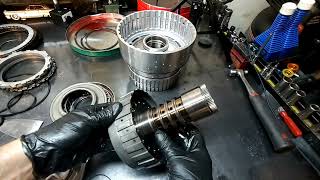
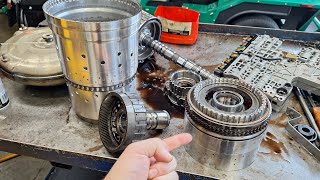

The information in this article is provided for general reference and educational purposes only. Vehicle specifications, procedures, and part compatibility can vary by production date, trim level, and region. Always consult your vehicle's factory service manual and verify part numbers before purchasing or performing repairs. Safety-critical components such as airbags, seat belts, and braking systems should be installed by a qualified professional.
- Lincoln AVIATOR:
- 🧭 Diagnostic Flowchart
- 🎬 Helpful Videos
- What's Unique About the 2020-2023 Lincoln AVIATOR
- Symptoms You May Notice
- Most Likely Causes
- Rare But Worth Checking
- Diagnosis Steps
- Parts You'll Likely Need
- Related Codes That Often Appear With This One
- Technical Service Bulletins (TSBs) & Recalls
- Platform-Specific Known Issues
- Mechanic-Grade Diagnostic Values
- Hidden / Shadow Codes Worth Checking
- Scan Tool Commands That Help
- Wiring & Ground Locations
- Real Owner Repair Stories
- "I Checked Everything" — The Actual Cause
- OEM Part Supersession History
- Model Year Variations Within This Range
- 🎟️ Get 5% Off