

P0772 on 2018-2023 Lincoln Navigator: Shift Solenoid 'E' Stuck On Causes and Fixes
On a 2018-2023 Lincoln Navigator, code P0772 is rarely a simple solenoid issue. It almost always indicates a significant internal problem with the 10R80 transmission, most commonly a failed CDF clutch drum where a bushing walks out of place. This is a complex, expensive repair requiring transmission removal and teardown, often costing $3,000-$5,000+. Ford has issued multiple TSBs (e.g., TSB 24-2176, TSB 24-2254) for this known issue.
- P0772 on a 2018-2023 Navigator is a serious code indicating a probable internal transmission failure.
- The most likely cause is a design flaw in the 10R80 transmission's CDF clutch drum, not a simple bad solenoid.
- Repair is complex and expensive, requiring transmission removal and disassembly by a qualified professional.
- Ensure the technician is aware of Ford's TSBs for the 10R80 transmission and uses the updated CDF drum for the repair.
- Do not simply replace the shift solenoid, as this is unlikely to fix the problem.
What's Unique About the 2018-2023 Lincoln NAVIGATOR
The 2018-2023 Navigator uses the Ford 10R80 10-speed automatic transmission, which is known for a specific, widespread design flaw. While the code points to an electrical solenoid, the true root cause is often a mechanical failure within the transmission's CDF (Clutch C, D, and F) clutch drum assembly. A bushing inside the original drum design can 'walk' or slide out of its intended position, uncovering oil passages and causing a critical loss of hydraulic pressure to the clutch packs. This pressure loss triggers numerous fault codes, including P0772. Ford has issued multiple Technical Service Bulletins (TSBs) and released updated parts to address this well-documented problem across many vehicle lines.
Diagnostic Flowchart
Tap your situation to follow the diagnostic path that matches what you're seeing on this vehicle.
Symptoms You May Notice
- Harsh, abrupt, or violent shifts, especially between 3rd and 5th gear.
- Delayed gear engagement when shifting from Park to Drive or Reverse.
- Transmission slipping or flaring between gears.
- Vehicle entering 'limp mode' (stuck in one gear) or refusing to move.
- Check Engine Light or illuminated Malfunction Indicator Lamp (MIL).
- Decreased fuel efficiency.
- Engine stalling when coming to a stop.
- A grinding or groaning noise under light throttle.
- Traction control light flashing at highway speeds as the transmission slip is misinterpreted as wheel spin.
- Replacing only Shift Solenoid 'E' without addressing the underlying mechanical or hydraulic cause. The code will almost certainly return.
- Performing a fluid flush without inspecting for the underlying mechanical failure. This may temporarily improve symptoms but will not fix the root cause.
- Replacing the valve body when the root cause is the CDF clutch drum. While the valve body can be a contributor or a secondary failure, the primary issue is often the drum.
Most Likely Causes
- Worn or Failed CDF Clutch Drum Assembly 🔴 High Probability → Shop Transmission Assembly This is a well-documented design flaw in early 10R80 transmissions. A bushing inside the drum assembly can slide out of place, exposing hydraulic passages and causing a pressure leak that starves a clutch pack of fluid. This is the most common root cause for P0772 and a host of other codes.
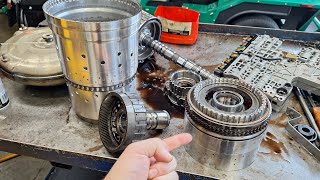
How to confirm: A technician must perform hydraulic pressure tests on the transmission circuits as outlined in Ford TSB 24-2254. This requires special tools like the Pressure Vacuum Transducer Kit (Rotunda 164-R9833). Visual inspection after transmission disassembly will clearly show the migrated bushing and likely scoring or burning on the drum and clutches. 🎬 See this teardown showing exactly how the CDF bushing fails.
Typical fix: The transmission must be removed and disassembled to replace the CDF clutch drum with an updated version (Part No. JL3Z-7H351-B) that has a machined lip to prevent the bushing from moving. Often, the affected clutch plates and seals are replaced at the same time.
Est. part cost: $150-$400 for the drum itself. - Sticking Valves in Main Control Valve Body 🟡 Medium Probability → Shop Transmission Valve Body Fine metallic debris from normal wear (or accelerated wear from the CDF drum issue) can contaminate the fluid and cause precision valves within the valve body to stick or operate slowly. This disrupts the routing of hydraulic fluid.
How to confirm: This is often diagnosed after a software update fails to fix the issue. A technician may follow TSB 23-2250, which can involve a valve body overhaul or replacement if symptoms persist after a relearn procedure. In some cases, a specific 'break-in' routine is performed with a scan tool.
Typical fix: Replacement of the entire main control valve body assembly. This is done by dropping the transmission pan. After replacement, the 'Transmission Characterization Update' must be performed with a scan tool to program the new solenoid strategy into the TCM.
Est. part cost: $800-$1500 - Low or Contaminated Transmission Fluid ⚪ Low Probability → Shop Transmission Assembly While not a design flaw, the 10R80 is very sensitive to fluid level and condition. The required Mercon ULV is a very thin fluid, and any contamination can affect the operation of the tight-tolerance solenoids and valves.
How to confirm: Check the transmission fluid level and condition at the correct operating temperature (206°F - 215°F). The fluid should be red and clear. Dark, burnt-smelling fluid, or fluid containing clutch material or metal shavings ('glitter'), indicates significant internal damage, likely from the CDF drum failure.
Typical fix: Perform a transmission fluid and filter change using only Motorcraft MERCON ULV fluid. This is highly unlikely to be a permanent fix if a mechanical issue like the CDF drum has already occurred and is generally not the primary cause.
Est. part cost: $150-$300 - Faulty Powertrain/Transmission Control Module (PCM/TCM) or Software ⚪ Low Probability → Shop Transmission Assembly Ford has issued numerous software updates to improve shift logic and adapt to component wear. An outdated calibration can contribute to harsh shifting.
How to confirm: A dealer or qualified shop must use a diagnostic tool (like Ford's FDRS or FORScan) to check for and apply the latest software updates. This is the first step in nearly all related TSB diagnostic procedures. 🎬 Watch: A professional walkthrough of the 10R80 diagnostic process.
Typical fix: Reprogramming the PCM/TCM with the latest software. In very rare cases, the module itself may need replacement if it fails electrically.
Est. part cost: $100-$1500
Rare But Worth Checking
- Failed Shift Solenoid 'E': → Shop Transmission Valve Body While this is what the code name suggests, it is rarely the root cause on this platform. The solenoid is usually commanded 'stuck on' or is unable to function correctly due to the hydraulic pressure loss caused by the CDF drum or a sticking valve in the valve body. Replacing only the solenoid is a common misdiagnosis and will not solve the problem.
Diagnosis Steps
- Verify the code with a professional OBD-II scanner that can read Ford-specific transmission data.
- Check for and perform any available software updates for the PCM/TCM using a Ford diagnostic tool (FDRS), as this is the first step recommended in all related TSBs.
- Check the transmission fluid level and condition. If fluid is dark, burnt, or contains debris, suspect severe internal damage originating from the CDF drum/clutches.
- If symptoms persist after the software update, follow the diagnostic procedure in TSB 24-2254, which involves using a special tool kit (Rotunda 164-R9833 and 164-R9534) to perform a hydraulic pressure test on the CDF clutch circuit.
- If the pressure test fails, the transmission must be removed and disassembled for inspection and replacement of the CDF clutch drum assembly.
- If the pressure test passes, diagnostics will then focus on the main control valve body, which may require an overhaul or replacement as per TSB procedures.
Parts You'll Likely Need
- CDF Clutch Drum Hub Assembly
(OEM #JL3Z-7H351-B)— This is the updated OEM part from Ford designed to fix the core issue of the walking bushing. It supersedes previous part numbers HL3Z-7H351-A and JL3Z-7H351-A.
Trusted brands: Motorcraft (Ford OEM)
OEM price range: $150-$350 - Main Control Valve Body Assembly
(OEM #FL3Z-7A100-E)— If diagnostics point to sticking valves or internal leaks not related to the CDF drum, the entire valve body is typically replaced.
Trusted brands: Motorcraft (Ford OEM)
OEM price range: $800-$1500 - Automatic Transmission Fluid (MERCON ULV)
(OEM #XT-12-QULV)— Required for any transmission service. The 10R80 specifically requires MERCON ULV fluid; using any other type can cause damage.
Trusted brands: Motorcraft
OEM price range: $10-$20 per quart
Related Codes That Often Appear With This One
- P0751 — Related to Shift Solenoid 'A' performance; often triggered by the same underlying hydraulic issue from the CDF drum or valve body.
- P0756 — Related to Shift Solenoid 'B' performance; often triggered by the same underlying hydraulic issue.
- P0761 — Related to Shift Solenoid 'C' performance; often triggered by the same underlying hydraulic issue.
- P2704 — Related to Transmission Friction Element 'E' Apply Time Range/Performance. This code is frequently seen with P0772 as it directly relates to the clutch pack controlled by Solenoid E.
- P0729, P0731-P0736 — These codes indicate incorrect gear ratios, which are a direct symptom of the hydraulic pressure loss and clutch slip caused by the failing CDF drum or valve body.
Technical Service Bulletins (TSBs) & Recalls
- TSB 24-2254: Supersedes previous TSBs and provides a specific hydraulic test procedure using special tools to confirm a leak at the CDF clutch cylinder. If a leak is found, the drum must be replaced.
- TSB 24-2176: A comprehensive TSB that lists P0772 among many other codes. It acknowledges the potential causes as software, the valve body, or the CDF clutch cylinder sleeve. This TSB is sometimes used when a dealer lacks the equipment for TSB 24-2254.
- TSB 23-2250: An earlier, superseded TSB that also covers the wide range of codes and symptoms, pointing to the same set of potential causes (software, valve body, CDF drum).
- TSB 20-2226: Specifically addresses P0772 and P2704 on some models, pointing to sticking valves in the main control valve body and recommending a 'break-in' procedure or valve body replacement.
Platform-Specific Known Issues
- Multiple TSBs have been issued by Ford for the 10R80 transmission concerning harsh shifts, delayed engagement, and a wide range of trouble codes including P0772.
- The primary mechanical failure point identified in these TSBs is the 'axial movement of the CDF clutch cylinder sleeve', which causes hydraulic leaks.
- A class-action lawsuit was filed against Ford regarding the performance and reliability of the 10R80 transmission in various vehicles, including the Lincoln Navigator, alleging the company knew of the defects but failed to issue a recall.
Mechanic-Grade Diagnostic Values
- Shift Solenoid (A-F) Coil Resistance — expected: 5.0 - 5.4 Ohms at 68°F (20°C). Failure: A reading significantly outside this range, or an open/short circuit, indicates a failed solenoid coil.
- Transmission Fluid Temperature for Level Check — expected: 206°F - 215°F (96°C - 101°C). Failure: Checking the fluid level when the fluid is too cold will result in an inaccurate, low reading.
- Line Pressure at Idle (in Park/Neutral) — expected: Approximately 90 psi (619 kPa). Failure: Significantly lower pressure can indicate a worn pump, clogged filter, or major internal leaks (like from the CDF drum).
Scan Tool Commands That Help
- Ford FDRS / FORScan: Transmission Characterization Update — This is mandatory after replacing the main control valve body. It programs the unique 13-digit solenoid strategy number from the new valve body into the TCM/PCM to ensure correct shift pressures and timing.
- Ford FDRS / FORScan: Clear Transmission Adaptive Tables — This should be performed after any major transmission repair, including valve body or CDF drum replacement. It erases the learned shift adjustments so the TCM can perform a fresh adaptive learning drive cycle with the new components.
- Ford FDRS: Transmission Accelerated Main Control Break-In Routine — Mentioned in TSB 20-2226 for the 10R80 in Transit vans, this procedure is used to address harsh engagements on low-mileage vehicles by cycling the solenoids and valves to burnish contact surfaces. It can be an early diagnostic step before replacing hardware.
Wiring & Ground Locations
- Main Transmission Case Connector — External connector on the transmission housing, which connects the internal transmission harness to the main vehicle harness.. This is the primary point for checking electrical signals to and from all transmission solenoids. A pinout guide shows which pins correspond to Shift Solenoid 'E' control and ground, allowing for targeted voltage and resistance checks without dropping the pan.
- Passenger Compartment Fuse Panel, Fuse 42 — Under the right-hand side of the instrument panel.. On a 2019 Navigator, this 10A fuse provides power to the Transmission Control Module (TCM). A loss of power here would cause multiple transmission codes and a no-shift condition.
- Engine Compartment Fuse Box, Fuse 15 — In the fuse box located in the engine bay.. On a 2019 Navigator, this 10A fuse powers the Transmission coil module. An issue with this fuse could interrupt power to the solenoid pack.
Real Owner Repair Stories
- Reddit user on r/f150 (2019 F-150 Lariat 2.7L 4x4) — Initially had harsh upshifts/downshifts. Later developed a 2-3 second delay when shifting from Park to Drive/Reverse.
❌ Tried (didn't work) A PCM reflash and swapping some parts per a TSB did not fix the delayed engagement issue.
✅ What actually fixed it The delayed engagement was fixed by replacing the CDF clutch drum. However, 900km later, the truck developed very hard shifts into 3rd gear, which then required the replacement of the main control valve body assembly. - Reddit user on r/f150 (2021 F-150 STX 5.0L, failure at ~44,900 miles) — Traction control light would flash at highway speeds (40-70 mph) and the engine would rev to 5000 RPM at full throttle, indicating severe slip.
❌ Tried (didn't work) No other attempts mentioned; vehicle was taken directly to the dealer for diagnosis.
✅ What actually fixed it The dealer diagnosed a CDF drum bushing failure. The confirmed fix was the replacement of the CDF drum assembly.
OEM Part Supersession History
HL3Z-7H351-A, JL3Z-7H351-A→JL3Z-7H351-B— The original CDF clutch drum design had a press-fit bushing that could 'walk' or slide out of position, uncovering hydraulic ports. The updated JL3Z-7H351-B part has a machined lip that acts as a physical stop, preventing the bushing from migrating.
Model Year Variations Within This Range
- 2018 - Mid-2022: Vehicles built on or before August 15, 2022, were likely equipped with the original CDF clutch drum design prone to bushing failure.
- Mid-2022 - 2023: Vehicles built after August 15, 2022, should have the updated CDF clutch drum (JL3Z-7H351-B) installed from the factory, which has a machined lip to prevent the bushing from walking out. While not impossible, failure of this component is much less likely on these later models.
Helpful Videos

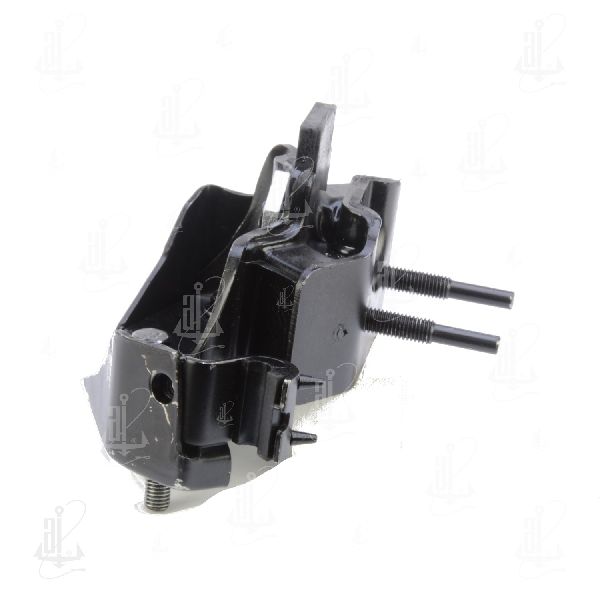
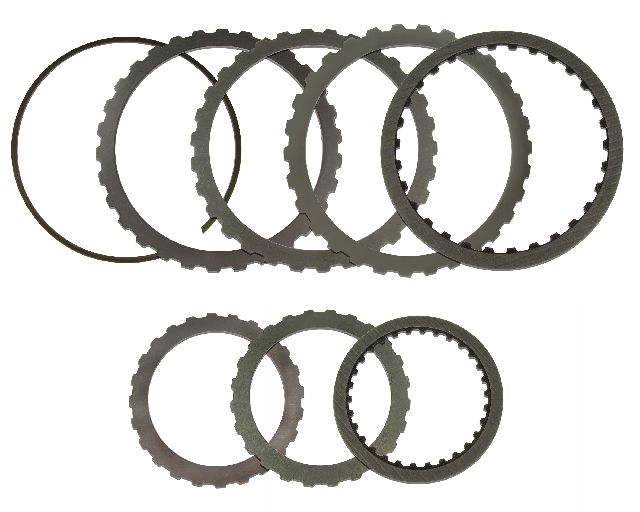
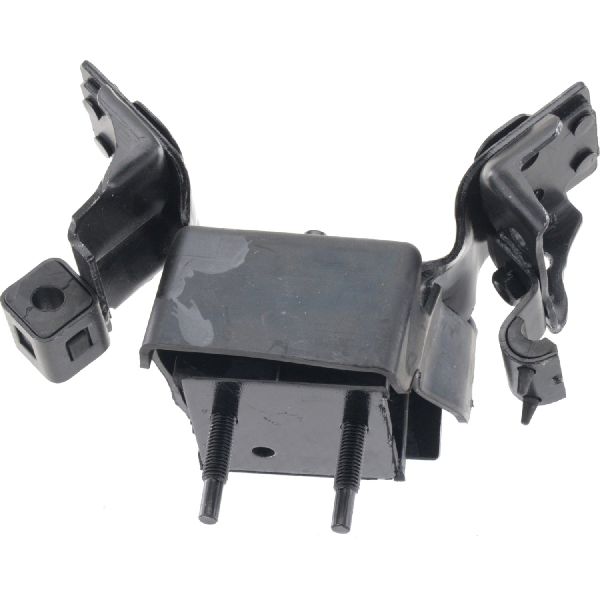
We Have This Part in Stock


The information in this article is provided for general reference and educational purposes only. Vehicle specifications, procedures, and part compatibility can vary by production date, trim level, and region. Always consult your vehicle's factory service manual and verify part numbers before purchasing or performing repairs. Safety-critical components such as airbags, seat belts, and braking systems should be installed by a qualified professional.
- Lincoln NAVIGATOR:
- 🧭 Diagnostic Flowchart
- 🎬 Helpful Videos
- 🛍️ Shop This Part
- What's Unique About the 2018-2023 Lincoln NAVIGATOR
- Symptoms You May Notice
- Most Likely Causes
- Rare But Worth Checking
- Diagnosis Steps
- Parts You'll Likely Need
- Related Codes That Often Appear With This One
- Technical Service Bulletins (TSBs) & Recalls
- Platform-Specific Known Issues
- Mechanic-Grade Diagnostic Values
- Scan Tool Commands That Help
- Wiring & Ground Locations
- Real Owner Repair Stories
- OEM Part Supersession History
- Model Year Variations Within This Range
- 🎟️ Get 5% Off