

P0772 on 2012-2013 Mazda MAZDA3: Shift Solenoid 'E' Stuck On Causes and Fixes
On a 2012-2013 Mazda3, code P0772 typically indicates a problem with the automatic transmission's valve body or the shift solenoid 'E' itself within the FN4A-EL 4-speed transmission. The most common fix, documented by Mazda TSBs, is the replacement of the entire valve body assembly with an updated, pre-programmed unit. This is not a simple DIY job and is the most reliable long-term solution.
- P0772 on a 2012-2013 Mazda3 indicates Shift Solenoid 'E' is stuck on, causing serious shifting problems.
- The most likely cause is a faulty transmission valve body, a known issue addressed by a Mazda TSB.
- Always check the transmission fluid level and condition first, as low or dirty fluid can cause similar symptoms.
- This is not a recommended DIY repair. Replacing the valve body is a complex job best left to a professional.
- The official fix is often to replace the entire valve body assembly with an updated part, not just the single solenoid.
What's Unique About the 2012-2013 Mazda MAZDA3
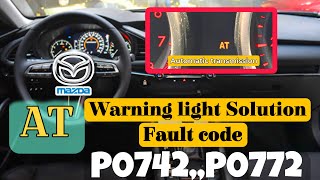
The 2012-2013 Mazda3, part of the second generation (BL), has a known issue documented in official manufacturer bulletins (TSB #05-003-14-2898A). A wide range of transmission codes, including P0772, are often traced back 🎬 Watch: A technician explains the P0772 shift solenoid solution. to a faulty valve body. Mazda's official fix involves replacing the entire valve body with a new, pre-programmed unit, rather than just an individual solenoid. This suggests a systemic design or manufacturing issue with the original component, possibly related to internal contamination or sticking valves, that was later corrected in the replacement part. This makes valve body replacement a much more common and recommended repair on this platform compared to others where a single solenoid swap might suffice.
Diagnostic Flowchart
Tap your situation to follow the diagnostic path that matches what you're seeing on this vehicle.
Symptoms You May Notice
- Harsh, jerky, or delayed gear shifts.
- Transmission slipping between gears.
- Vehicle getting stuck in one gear (limp mode).
- A hard 'slam' when shifting into Reverse from Park.
- Illuminated Check Engine Light and/or AT (Automatic Transaxle) warning light.
- Decreased fuel efficiency.
- Transmission overheating.
- Replacing only the Transmission Control Module (TCM) when the root cause is the internal valve body.
- Assuming a full transmission rebuild is needed when only the valve body or a solenoid is at fault.
- Replacing a single solenoid when the entire valve body is faulty, leading to the problem returning.
Most Likely Causes
- Faulty Transmission Valve Body or Shift Solenoid 'E' 🔴 High Probability → Shop Transmission Valve Body Mazda issued Technical Service Bulletins (TSBs) indicating that a range of transmission codes, including P0772, are corrected by replacing the valve body with a new, programmed unit. This points to a known design or manufacturing flaw in the original part, likely related to internal valves sticking or passages becoming contaminated.
How to confirm: After confirming fluid level and condition are good, a technician will use a scan tool to monitor solenoid commands versus actual gear state. If the solenoid is commanded 'off' but the transmission remains in a state indicating it's 'on', the solenoid or valve body is faulty. The resistance of the solenoid can also be tested with a multimeter; for the FN4A-EL/FS5A-EL, shift solenoid E resistance should be between 10.9 and 26.2 ohms.
Typical fix: Replace the entire transmission valve body assembly with the updated Mazda part. In some cases, just the shift solenoid pack can be replaced, but this may not be a permanent fix if the valve body itself is the root cause.
Est. part cost: $400-$800 for a valve body, $40-$100 for a solenoid kit. - Low or Dirty Transmission Fluid 🟡 Medium Probability → Shop Transmission Assembly
How to confirm: Check the transmission fluid dipstick for level and inspect the fluid's color and smell. It should be bright red and not smell burnt. Dark, brown, or burnt-smelling fluid indicates a problem and can cause solenoids to stick.
Typical fix: Perform a transmission fluid drain and fill, or a full fluid exchange if the fluid is heavily contaminated. Use only Mazda Type M-V (M5) ATF or a compatible equivalent. Replace the transmission filter at the same time.
Est. part cost: $50-$150 for fluid and a filter. - Faulty Transmission Control Module (TCM) ⚪ Low Probability → Shop Transmission Assembly While less common for this specific code than the valve body, TCM failures are a known issue on this generation of Mazda3 and can cause a variety of solenoid-related codes.
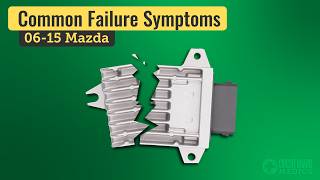
How to confirm: This is typically diagnosed by exclusion. If the fluid, wiring, and valve body/solenoids are all confirmed to be good, the TCM is the likely culprit. 🎬 See this guide on identifying and fixing common TCM symptoms. A technician may need to check for proper voltage signals from the TCM to the solenoid. In some forum cases, users replaced the valve body only to find the issue was the TCM all along.
Typical fix: Replace the TCM and program the new module to the vehicle.
Est. part cost: $300-$700
Rare But Worth Checking
- Internal Wiring Harness Damage: The wiring inside the transmission pan can become brittle from heat and age, leading to shorts or open circuits. This should be inspected when the oil pan is removed to access the solenoids. A Reddit user documented needing to replace this harness to solve their issue.
- Blocked Hydraulic Passages: Sludge from old, broken-down fluid can clog the small passages within the valve body, preventing the solenoid from operating correctly even if it's electronically functional. A transmission flush might be a temporary fix, but often the valve body requires replacement.
Diagnosis Steps
- Check Transmission Fluid: Verify the automatic transmission fluid (ATF) level is correct and the fluid is in good condition (not burnt or dirty). The correct fluid is Mazda Type M-V (M5). Top off or replace as necessary.
- Scan for Codes: Use an OBD-II scanner to confirm P0772 is present and check for any other related transmission codes listed in the TSBs.
- Inspect External Wiring: Visually inspect the wiring harness and connector going to the transmission for any signs of damage, corrosion, or loose connections.
- Drop the Transmission Pan: A technician will drain the fluid and remove the transmission oil pan to gain access to the valve body and shift solenoids.
- Inspect Internal Components: Visually inspect the solenoids, internal wiring harness, and look for excessive metal shavings or debris on the pan magnet.
- Test the Solenoid (Optional): The resistance of the solenoid can be tested with a multimeter. For the FN4A-EL, the resistance for shift solenoids should be between 10.9 and 26.2 ohms. A solenoid can test good electrically but still be mechanically stuck.
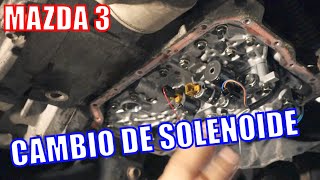
- Replace the Faulty Component: Based on the TSBs, the most reliable repair is to replace the entire valve body assembly. 🎬 Watch: A close-up look at the Mazda 3 valve body. Alternatively, just the shift solenoid pack may be replaced.
- Reassemble and Refill: Install the new component, replace the transmission filter and pan gasket, and refill with the correct type of Mazda ATF (Type M-V, Part #: 0000-77-112E-01).
- Clear Codes and Perform Initial Learning: Clear the DTCs. For a new valve body, an 'Initial Learning Procedure' must be performed with a compatible scan tool to allow the TCM to adapt to the new component.
- Test Drive: Perform a test drive to ensure the transmission shifts smoothly through all gears and the AT/Check Engine lights do not return.
Parts You'll Likely Need
- Transmission Valve Body
(OEM #FZ01-21-2C0 (This is a common part number associated with the valve body in TSBs, but always verify with VIN))— This is the most common cause according to Mazda's own Technical Service Bulletins. The replacement part is an updated, pre-programmed unit that resolves the original fault.
Trusted brands: Mazda OE
OEM price range: $500-$800
Aftermarket price range: $350-$600 - Shift Solenoid Kit — If the valve body itself is not faulty, the individual solenoid may have failed. This is a less expensive but potentially less reliable fix if the root cause is the valve body. Aftermarket kits are widely available.
Trusted brands: Rostra, Sonnax
OEM price range: $150-$250
Aftermarket price range: $40-$100 - Automatic Transmission Fluid (ATF)
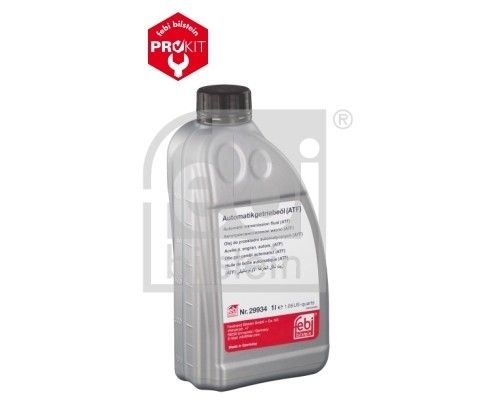
(OEM #0000-77-112E-01 (Mazda Type M-V / M5))— The fluid must be drained to perform the repair and should be replaced with the manufacturer-specified type to ensure proper transmission function.
Trusted brands: Mazda OE
OEM price range: $15-$25 per quart
Aftermarket price range: $8-$15 per quart - Transmission Filter and Pan Gasket — These should always be replaced whenever the transmission pan is removed for service to prevent leaks and ensure proper fluid filtration.
Trusted brands: Wix, ATP, Mazda OE
OEM price range: $40-$70
Aftermarket price range: $20-$40
Related Codes That Often Appear With This One
- P0771 — Shift Solenoid 'E' Performance/Stuck Off. This is the opposite fault for the same solenoid and is often listed in the same group of TSB-related codes.
- P0751 — Shift Solenoid 'A' Stuck Off. The TSBs from Mazda group many solenoid codes together, suggesting a common failure of the valve body can trigger multiple codes. [Bulletin #05-003-14-2898A]
- P0752 — Shift Solenoid 'A' Stuck On. Like P0751, this is often seen with other solenoid codes due to a failing valve body. [Bulletin #05-003-14-2898A]
- P0780 — Gear Shifting Malfunction. This is a more general shifting error code that is explicitly mentioned in the TSBs along with the specific solenoid codes.
Technical Service Bulletins (TSBs) & Recalls
- 05-003-14-2898A
- 05-003-14-2898
- 05-002/15
Platform-Specific Known Issues
- Mazda TSB #05-003-14-2898A and #05-003-14-2898 explicitly list P0772 as one of many codes that can be resolved by replacing the valve body with a 'new programmed valve body'. This indicates the replacement part may have updated hardware and software calibration to prevent the issue from reoccurring.
Mechanic-Grade Diagnostic Values
- Shift Solenoid 'E' Resistance — expected: 10.9 - 26.2 Ohms. Failure: A reading outside this range (open or shorted) indicates an electrically failed solenoid.
- TCM Voltage Output to Solenoid (Bidirectional Test) — expected: Voltage should increase as the commanded duty cycle increases, reaching approximately 4.8V at 100% command.. Failure: No voltage or voltage that does not change when commanded indicates a faulty TCM or wiring issue.
Scan Tool Commands That Help
- Mazda M-MDS (or equivalent professional scanner): Solenoid Bidirectional Control — To actively command the shift solenoid on and off while monitoring voltage at the TCM connector. This isolates the fault between the TCM, wiring, and the solenoid itself, confirming if the TCM is sending the correct signal.
- Mazda M-MDS (or equivalent professional scanner): Reset Adaptive Values / Initial Learning Procedure — This is required after replacing the valve body or TCM to make the control module relearn the hydraulic and electrical characteristics of the new components for smooth shifting.
Wiring & Ground Locations
- TCM (Transmission Control Module) — Located in the engine compartment at the left rear, typically under the airbox and battery tray.. This is the source of the command signal for Shift Solenoid E. The main transmission connector attaches here, making it a primary test point for voltage and continuity checks.
- G07 — Ground point located on the top rear of the engine.. A poor ground at this location can cause a variety of transmission control issues and erratic behavior from sensors and solenoids.
- G06 — Ground point located on the left rear of the engine.. Similar to G07, this is a critical ground for the powertrain control system. Verifying it is clean and tight is a key step in diagnosing electrical faults.
Real Owner Repair Stories
- YouTube user 'Mazdamods' (2003 Mazda Protege5 (uses related FN4A-EL transmission)) — Rough shifting, check engine light with a solenoid 'B' code (a similar fault).
❌ Tried (didn't work) The user went straight to the solenoid replacement based on the code.
✅ What actually fixed it The user replaced both shift solenoids (A and B), the transmission filter, and the pan gasket. After the repair and refilling with Mercon V ATF, the user confirmed the 'transmission is shifting smoothly an back to normal'.
OEM Part Supersession History
Shift Solenoid E→N/A— Interchangeability
Heads up: Within the FN4A-EL transmission, the PWM Shift Control Solenoids 'C', 'D', and 'E' are the same part and are interchangeable. This can be useful when sourcing a replacement.
Model Year Variations Within This Range
- 2012-2013: The primary difference is the availability of the Skyactiv powertrain. This P0772 code and the associated TSBs apply to the non-Skyactiv models with the 2.0L MZR engine and the 4-speed FN4A-EL automatic transmission. Models equipped with the 2.0L Skyactiv-G engine use a different 6-speed automatic (Skyactiv-Drive) and are not subject to this specific TSB-documented failure mode.
Helpful Videos
We Have This Part in Stock

The information in this article is provided for general reference and educational purposes only. Vehicle specifications, procedures, and part compatibility can vary by production date, trim level, and region. Always consult your vehicle's factory service manual and verify part numbers before purchasing or performing repairs. Safety-critical components such as airbags, seat belts, and braking systems should be installed by a qualified professional.
- Mazda MAZDA3:
- 🧭 Diagnostic Flowchart
- 🎬 Helpful Videos
- 🛍️ Shop This Part
- What's Unique About the 2012-2013 Mazda MAZDA3
- Symptoms You May Notice
- Most Likely Causes
- Rare But Worth Checking
- Diagnosis Steps
- Parts You'll Likely Need
- Related Codes That Often Appear With This One
- Technical Service Bulletins (TSBs) & Recalls
- Platform-Specific Known Issues
- Mechanic-Grade Diagnostic Values
- Scan Tool Commands That Help
- Wiring & Ground Locations
- Real Owner Repair Stories
- OEM Part Supersession History
- Model Year Variations Within This Range
- 🎟️ Get 5% Off