

P0772 on 2009-2011 Mercury Milan 6F35: Shift Solenoid 'E' Stuck On Causes and Fixes
P0772 on a Mercury Milan with the 6F35 transmission indicates Shift Solenoid 'E' is stuck on. This is often caused by dirty transmission fluid, a failing solenoid, or a worn valve body. Expect repair costs from $250 for a single solenoid replacement to over $1,500 for a valve body replacement. This is a common issue on the Ford CD3 platform.
- P0772 is a serious code indicating a mechanical or hydraulic problem with Shift Solenoid 'E'; do not ignore it.
- The first and easiest step is to check your transmission fluid. If it's low, dark, or smells burnt, a fluid service might solve the problem.
- This is not a DIY-friendly repair for most home mechanics due to the need to open the transmission and potentially reprogram the computer.
- If a solenoid needs replacement, you MUST use a new solenoid with the exact same part number as the one you removed.
- If the valve body is replaced, the PCM must be reprogrammed with the new solenoid strategy, a step that requires special software.
What's Unique About the 2009-2011 Mercury Milan
This guide applies specifically to 2009-2011 Mercury Milan models equipped with the 6F35 6-speed automatic transmission. This transmission, co-developed by Ford and GM, was introduced in 2009 and is known to be sensitive to fluid condition and maintenance. Degraded or contaminated fluid can cause solenoids and valves within the valve body to stick, leading to various shifting problems, including the P0772 code. While a single solenoid can fail, issues on higher-mileage vehicles are often traced back to wear and tear or blockages within the larger valve body assembly, a known weak point.
Symptoms You May Notice
- Harsh, jerky, or delayed shifts.
- Transmission slipping between gears.
- Vehicle entering 'limp mode,' often stuck in a single gear.
- Transmission overheating.
- Check Engine Light and/or Transmission Warning Light is on.
- Decreased fuel economy.
- Inability to shift into a specific gear.
- Replacing only the solenoid when the valve body is the actual problem. Debris causing one solenoid to stick has likely affected other valves and passages as well. Many owners and shops end up replacing the valve body after a single solenoid replacement fails to fix the issue.
Most Likely Causes
- Low or Dirty Transmission Fluid 🔴 High Probability → Shop Transmission Assembly The 6F35 transmission is known to be hard on its fluid, causing it to break down and become contaminated, which can lead to sticky solenoids and valves.
How to confirm: Check the transmission fluid level and condition via the dipstick. The fluid should be bright red and clear, not brown, black, or smelling burnt. Debris or metal shavings in the fluid indicate a more severe internal problem requiring a pan drop for inspection.
Typical fix: Perform a transmission fluid drain and fill with MERCON LV fluid. If the fluid is very dirty, a professional fluid exchange (flush) may be recommended, but this can sometimes dislodge debris and worsen the problem. A pan drop, filter change, and fluid refill is the safest approach.
Est. part cost: $50-$150 for OEM Mercon LV fluid - Faulty Shift Solenoid 'E' 🟡 Medium Probability → Shop Transmission Valve Body Contaminated fluid can cause the solenoid's internal valve to stick mechanically, or the solenoid's electronic coil can fail. This is an on/off solenoid, distinct from the variable force solenoids in the same transmission.
How to confirm: A technician can test the solenoid's resistance with a multimeter. According to ATRA Technical Bulletin #1718, the resistance for Shift Solenoid 'E' (SSE) should be between 19.05 - 27.95 ohms at room temperature (68-86°F). An out-of-spec reading indicates electrical failure. A mechanical 'stuck' condition is harder to test without removing it and checking for free plunger movement.
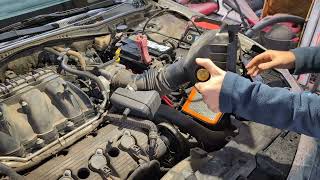
Typical fix: Replace the individual shift solenoid. This requires removing the transmission side cover 🎬 Watch: Step-by-step guide for replacing an individual shift solenoid. and valve body. It is critical to order the exact same part number stamped on the original solenoid, as there are multiple versions with different flow rates. Installing the wrong one can cause harsh shifts or damage.
Est. part cost: $60-$120 for a single Motorcraft solenoid - Failed Transmission Valve Body 🔴 High Probability → Shop Transmission Valve Body This is a very common failure point for the 6F35. Wear and tear or debris can score the bores within the valve body, causing valves to stick or create hydraulic leaks, preventing solenoids from operating correctly. Often, the issue is the valve body itself, not just one solenoid.
How to confirm: This is typically diagnosed after ruling out fluid issues and individual solenoid electrical failure. A technician may perform hydraulic pressure tests. Often, it's a process-of-elimination diagnosis where replacing the valve body is the ultimate fix after other attempts fail.
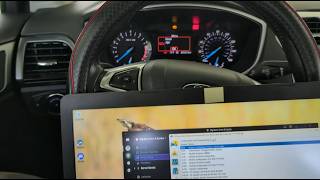
Typical fix: Replace the entire valve body assembly, which typically includes a new set of solenoids. This is a complex job that also requires reprogramming the transmission's solenoid strategy to the new valve body using a tool like FORScan 🎬 Watch: How to program your transmission after a repair. or the dealer's IDS.
Est. part cost: $500-$900 for a remanufactured or new valve body
Rare But Worth Checking
- Damaged Wiring or Connectors: Although less common for a 'stuck on' code (which is often mechanical), corrosion or damage to the internal transmission wiring harness or the main connector at the transmission case can cause intermittent electrical issues that could be misinterpreted by the PCM.
- Faulty Powertrain Control Module (PCM): This is extremely rare. The PCM's internal driver for the solenoid could fail, but this should be the last consideration after all other transmission-related components have been thoroughly checked.
Diagnosis Steps
- Check the transmission fluid level and condition. If low, top it off with MERCON LV. If dark, burnt, or full of debris, a fluid and filter change is the first logical step.
- Scan the PCM for any other transmission-related codes to get a broader picture of the issue.
- Using a professional scan tool, monitor the commanded state of Shift Solenoid 'E' versus the actual gear ratio to confirm the fault.
- Inspect the external transmission wiring harness and connectors for any visible damage or corrosion.
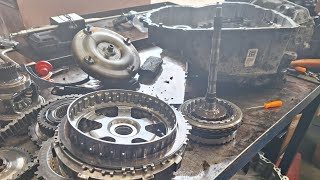
- If the fluid is clean and the problem persists, the next step is to access the internal components. This involves removing the transmission side pan/cover. 🎬 See this walkthrough for valve body and harness replacement.
- Visually inspect the internal wiring harness for damage.
- Test Shift Solenoid 'E'. Check its coil resistance with a multimeter, comparing it to the spec of 19.05 - 27.95 ohms at operating temperature (68-86°F). Remove the solenoid and check for free movement of its internal plunger.
- If the solenoid is electrically faulty or mechanically stuck, replace it. CRITICAL: The replacement solenoid must have the identical part number stamped on its body.
- If the solenoid tests good, the issue is highly likely within the valve body. At this point, replacement of the valve body assembly is the recommended repair.
Parts You'll Likely Need
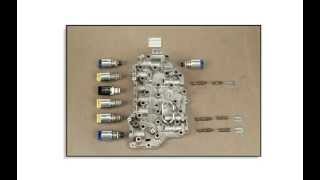
- Transmission Valve Body with Solenoids
(OEM #9L8Z-7A100-C)— Often, the root cause is not a single solenoid but widespread contamination or wear within the valve body. Replacing the complete assembly is the most reliable fix for the 6F35. This part number is cited in forums as a common replacement.
Trusted brands: Motorcraft
OEM price range: $700-$1200
Aftermarket price range: $500-$900 - Shift Solenoid Kit (7-piece) — If not replacing the entire valve body, it is often wise to replace all solenoids at once due to the high labor cost to access them. This kit replaces all shift and control solenoids.
Trusted brands: Motorcraft, Aftermarket kits
OEM price range: $300-$450
Aftermarket price range: $70-$150 - Mercon LV Automatic Transmission Fluid
(OEM #XT-10-QLVC)— Dirty or low fluid is a primary cause of solenoid issues. A fluid change is the first diagnostic step and is required for any internal repair. Only MERCON LV should be used in the 6F35.
Trusted brands: Motorcraft
OEM price range: $10-$15 per quart
Aftermarket price range: $8-$12 per quart
Related Codes That Often Appear With This One
- P0770 — This is a general malfunction code for Shift Solenoid 'E'. It may appear alongside P0772 and is mentioned in the same TSB.
- P0771 — Indicates Shift Solenoid 'E' is stuck off, the opposite of P0772. Seeing both could point to an intermittent sticking issue within the solenoid or valve body.
- P0773 — Indicates an electrical circuit fault for Shift Solenoid 'E'. If you have this code, the problem is more likely wiring or the solenoid coil itself, rather than a mechanical blockage.
Technical Service Bulletins (TSBs) & Recalls
- TSB-09-19-5: Mentions DTC P0772 for some 2009-2010 vehicles with the 6F35 transmission, related to the Shift Solenoid 'E' (SSE) circuit.
- ATRA Technical Bulletin #1718: Provides specific resistance values for all 6F35 solenoids, including the on/off Shift Solenoid 'E', which is critical for accurate electrical diagnosis.
Platform-Specific Known Issues
- A Ford Technical Service Bulletin (TSB 09-19-5) was issued for 2009-2010 Ford/Mercury vehicles with the 6F35 transmission for DTCs including P0770, P0772, P0773, and P0774, indicating known issues with the Shift Solenoid 'E' circuit early in production.
- Owners on forums like Blue Oval Forums frequently report that P0772 and other shifting issues on the 6F35 are ultimately resolved by replacing the entire valve body, not just a single solenoid.
Mechanic-Grade Diagnostic Values
- Shift Solenoid 'E' (SSE) Coil Resistance — expected: 19.05 - 27.95 Ohms at 20-30°C (68-86°F). The resistance changes with temperature, for example: 17.25 - 26.15 Ohms at 0-10°C (32-50°F).. Failure: A reading outside the specified range for a given temperature indicates an electrical failure of the solenoid coil.
- Shift Solenoid 'E' (SSE) Circuit Voltage at PCM — expected: Should show near battery voltage when commanded OFF by the PCM and near 0V when commanded ON (grounded by the PCM).. Failure: Voltage that does not change when commanded, or is always low/high, points to a wiring issue or a failed PCM driver.
Scan Tool Commands That Help
- FORScan: Transmission Characterization Update — This function is mandatory after replacing the valve body or the entire transmission. It writes the new 13-digit Solenoid Body Strategy Number and 7-digit Solenoid Body ID from the sticker on the new part to the PCM. Failure to perform this step will result in poor shift quality, harsh engagement, and potential damage.
- FORScan: Clear Transmission Adaptive Tables — This service procedure should be performed after replacing any transmission components, especially the valve body or solenoids. It erases the PCM's learned values for shift timing, forcing it to relearn the hydraulic characteristics of the new/repaired components. This helps resolve harsh or erratic shifting after a repair.
Wiring & Ground Locations
- PCM Connector C1551B, Pin 11 — At the Powertrain Control Module (PCM), which is typically located in the engine bay.. This is the specific pin for the Shift Solenoid 'E' (SSE) control circuit. A technician can test for voltage and continuity here to diagnose issues between the PCM and the transmission. The wire color is typically Gray/Yellow (GY/YEL).
- Transmission Bulkhead Connector (C168) — The main external electrical connector on the front of the 6F35 transmission case.. This is the primary connection point for all transmission electronics. The pin for SSE passes through here. It's a common spot for corrosion, pin damage, or fluid intrusion, which can cause electrical faults for any solenoid.
- Ground Point G101 / G105 — G101 is typically on the left front of the engine compartment. G105 is on the right side of the engine compartment. A ground cable also attaches to a starter mounting bolt.. A poor ground connection for the PCM or transmission can cause a host of erratic electrical issues, including incorrect solenoid operation and false codes. Verifying these grounds are clean and tight is a critical step in diagnosing electrical faults.
Real Owner Repair Stories
- AliExpress Review / Forum-style post (2011 Ford Escape, 2.5L Duratec, 87,000 miles) — Slipping between 2nd and 3rd gear, Check Engine Light with codes P0750, P0755, and P2701.
❌ Tried (didn't work) One shop recommended replacing the entire transmission., Another shop suggested cleaning the solenoids with no guarantee of success.
✅ What actually fixed it The owner replaced the entire valve body assembly with a remanufactured unit. This resolved the slipping and shifting issues immediately after the repair and clearing of fault codes.
OEM Part Supersession History
9L8Z-7A100-B→9L8Z-7A100-C— This part number refers to the valve body assembly (Control Assembly). Supersessions typically involve internal updates to address known failure points or manufacturing process improvements.
Heads up: While the part number in the Pass 2 data (9L8Z-7A100-C) is for a 6F35, some vendor sites show it replacing parts for other transmissions like the 6R80. It is critical to verify the part number against the vehicle's VIN. The part 9L8Z-7A100-A for the 2009-2012 Escape with the 6F35 is listed as discontinued.
Model Year Variations Within This Range
- 2013+: The 6F35 was updated to a 'Generation 2' design around 2013. These valve bodies use different colored solenoids (tan) and may have different casting numbers (e.g., RF-CV8P). While the fundamental operation is similar, parts are not always interchangeable between Gen 1 (2009-2012) and Gen 2 (2013+) units.
Diagnostic Flowchart
Other Known Issues on This Vehicle
Issues unrelated to this code that are worth knowing about as an owner of this generation:
- Electronic Throttle Body (ETB) Failure 🔴 High — Very common. Can cause sudden loss of power and vehicle entering 'limp home mode'. Often occurs between 70,000 and 150,000 miles. (Ref: Ford Customer Satisfaction Program 13N03 (extended warranty), not a formal recall.)
- Electric Power Steering Assist Failure 🔴 High — Common enough to warrant a recall. Can result in a sudden loss of power steering, making the vehicle very difficult to steer at low speeds. (Ref: NHTSA Campaign ID: 15V340000 (Ford Recall 15S18).)
- Harsh or Delayed Shifting (General) 🟠 Medium — Frequently reported by owners, often related to fluid condition, software, or early signs of valve body wear in the 6F35 transmission.
- Fuel Tank Crack from Canister Purge Valve Failure 🔴 High — Affects 2010-2011 models. A faulty canister purge valve can cause pressure changes that crack the fuel tank, leading to a fuel leak. (Ref: NHTSA ID: 16V730000 (Ford Recall 16S45).)
- ABS Hydraulic Control Unit (HCU) Valve Failure 🟠 Medium — Affects 2006-2010 models. Valves in the ABS module can stick, leading to extended brake pedal travel and increased stopping distances. (Ref: NHTSA Campaign ID: 19V904000 (Ford Recall 19S54).)
Used vs. New Parts: Buying Guide for This Vehicle
When a used part is the smart pick: A used valve body is highly discouraged for the 6F35. The primary failure mode is internal bore wear and sticking valves from contaminated fluid, which are invisible problems that a used part is very likely to have. The cost of labor and the required programming make it a high-risk, low-reward choice.
Donor-vehicle mileage cap: roughly under 50000 miles for the part to have meaningful remaining life.
What to inspect on the donor part:
- Verify the Solenoid Body ID and Strategy tag is present and legible on the transmission case; it is required for programming.
- Ask for the VIN of the donor vehicle to verify its maintenance history if possible.
- Inspect the fluid from the donor transmission if possible. If it is dark, burnt, or contains metal, reject the part.
- Check the main electrical connector for any signs of fluid leakage, corrosion, or bent pins.
OEM-only on this vehicle (don't cheap out):
- Transmission Valve Body: Due to the critical need for correct hydraulic pressures and the requirement for solenoid strategy programming, a new OEM (Motorcraft) or a high-quality remanufactured unit from a specialist is the only reliable option.
Aftermarket brands forum-validated for this vehicle:
- Sonnax: Offers 'Zip Kits' and other components to rebuild and improve valve bodies, addressing known wear points.
- Street Smart Transmission: A known remanufacturer of complete valve bodies that are tested before shipping.
Brands owners have reported issues with on this vehicle:
- Unbranded, low-cost solenoid kits from online marketplaces. These often have incorrect flow rates or high failure rates, leading to a repeat repair. The labor to access the solenoids is too high to risk using low-quality parts.
Real Owner Stories
Aggregated from forums and TSBs cited above. Mileages and costs reflect what owners reported in those sources.
2010 Mercury Milan
Symptoms: Owner reported transmission failure related to overdrive/direct clutch issues.
What fixed it: The dealer replaced the valve body with part number 9L8Z-7A100-C, which was the factory-recommended solution.
Source hint: Blue Oval Forums - Thread: '**RESOLVED**2010 Mercury Milan - Transmission toast'
2009-2011 Mercury Milan
Symptoms: P0772 code accompanied by general shifting issues.
What fixed it: The issue was ultimately resolved by replacing the entire valve body, not just the single Shift Solenoid 'E'.
Source hint: vehicle_specific_issues section, citing frequent reports on Blue Oval Forums
Related OBD-II Codes
Frequently Asked Questions
Is there an official TSB for the P0772 code on my 2010 Mercury Milan?
What type of transmission fluid should I use if I'm servicing my Milan for a P0772 code?
My mechanic wants to replace just Shift Solenoid 'E'. Is this usually the right fix for a P0772?
How can I test Shift Solenoid 'E' to see if it's bad?
If I replace the valve body on my Milan, is any special programming required?
I found a replacement Shift Solenoid 'E' online. Can I use any version for the 6F35 transmission?
Helpful Videos
We Have This Part in Stock

The information in this article is provided for general reference and educational purposes only. Vehicle specifications, procedures, and part compatibility can vary by production date, trim level, and region. Always consult your vehicle's factory service manual and verify part numbers before purchasing or performing repairs. Safety-critical components such as airbags, seat belts, and braking systems should be installed by a qualified professional.
- Mercury Milan:
- 🧭 Diagnostic Flowchart
- 🎬 Helpful Videos
- 🛍️ Shop This Part
- What's Unique About the 2009-2011 Mercury Milan
- Symptoms You May Notice
- Most Likely Causes
- Rare But Worth Checking
- Diagnosis Steps
- Parts You'll Likely Need
- Related Codes That Often Appear With This One
- Technical Service Bulletins (TSBs) & Recalls
- Platform-Specific Known Issues
- Mechanic-Grade Diagnostic Values
- Scan Tool Commands That Help
- Wiring & Ground Locations
- Real Owner Repair Stories
- OEM Part Supersession History
- Model Year Variations Within This Range
- Other Known Issues on This Vehicle
- Used vs. New Parts: Buying Guide for This Vehicle
- Real Owner Stories
- 2010 Mercury Milan
- 2009-2011 Mercury Milan
- Related OBD-II Codes
- Frequently Asked Questions
- 🎟️ Get 5% Off